Posted on

Stop Wasting Your 2026 CME Budget: Try These 5 Quick Hacks Before June 30th

The calendar does not lie. Today is June 2nd, and the June 30th deadline for most mid-year CME budget cycles is approaching rapidly. If you are like many physician assistants, your employer-provided CME stipend reset is tied to the fiscal half-year, or you have 2026 funds that will expire if not allocated immediately.

At CME Review Courses, we understand the administrative pressure of clinical practice. You need to maintain your certification, secure your AAPA Category 1 credits, and maximize the value of your professional development funds without jumping through hoops.

Price: $399.99
Access: 30 Months
Deliverable: 100 Hours of AAPA Category 1 CME (PANRE Review)

Here are five clinical and administrative hacks to ensure you don’t leave a single dollar of your 2026 budget on the table.

1. Secure Your Entire 100-Hour Requirement in One Purchase

The most common mistake PAs make is "nickel-and-diming" their CME budget on small 1-hour or 2-hour modules. This creates an administrative nightmare when it comes time to log hours with the NCCPA.

By choosing the PANRE Review Course CME Package, you secure all 100 hours of AAPA Category 1 CME credit in a single transaction. This satisfies your entire two-year cycle requirement.

Hack: Purchase before June 30th to use your 2026 funds. Because you receive 30 months of access, you can buy the course now and complete the content at your own pace over the next two years.

2. Leverage the Gift Card Add-On for Educational Enrichment

Many clinicians are unaware that they can further enrich their educational experience by adding a gift card to their purchase. Our CME with Gift Card options allow you to add an Amazon or Apple Gift Card ranging from $100 to $1500 to your order.

An educational visual showing a digital tablet and a stack of medical books. Next to them is an Amazon and Apple gift card icon floating.

Hack: Use the gift card to purchase the hardware or supplemental texts you need for your clinical practice. Whether it is a new iPad for viewing our Dermatology and Cardiology modules or a new set of clinical reference books, this is the most efficient way to use your remaining 2026 stipend before the June 30th cutoff.

3. Prioritize Pharmacology Credits Early

If you are a nurse practitioner or a PA in a state with specific pharmacology requirements, the Pharmacology Course is essential. While the PANRE Review offers 100 hours of Category 1 credit, our targeted pharmacology content ensures you meet the stringent requirements for prescriptive authority.

Hack: Do not wait until December to find out you are short on "Pharm" hours. Using your 2026 budget now ensures you are compliant for the rest of the year. Our content covers high-yield topics in Cardiology, Neurology, and Internal Medicine, providing immediate clinical utility.

4. Cross-Professional Credit Utilization

While our courses are written by physician assistants for physician assistants, they provide significant value to the entire healthcare team.

  • Nurse Practitioners: AAPA Category 1 credit is accepted by the ANCC for NP certification renewal in many states.
  • Physicians: While this counts as Category 2 CME for physicians, the clinical depth of our Emergency Medicine and Family Medicine packages makes it a popular choice for MDs and DOs looking to sharpen their diagnostic skills using their departmental budget.

5. Beat the Mid-Year Price Adjustments

As the NCCPA Blueprint evolves and new clinical guidelines are released, course content is updated. By purchasing your PANRE/PANRE-LA Review before June 30th, you lock in current pricing and 30 months of access to the most up-to-date high-yield content in Orthopedics, Psychiatry, and OB/GYN.

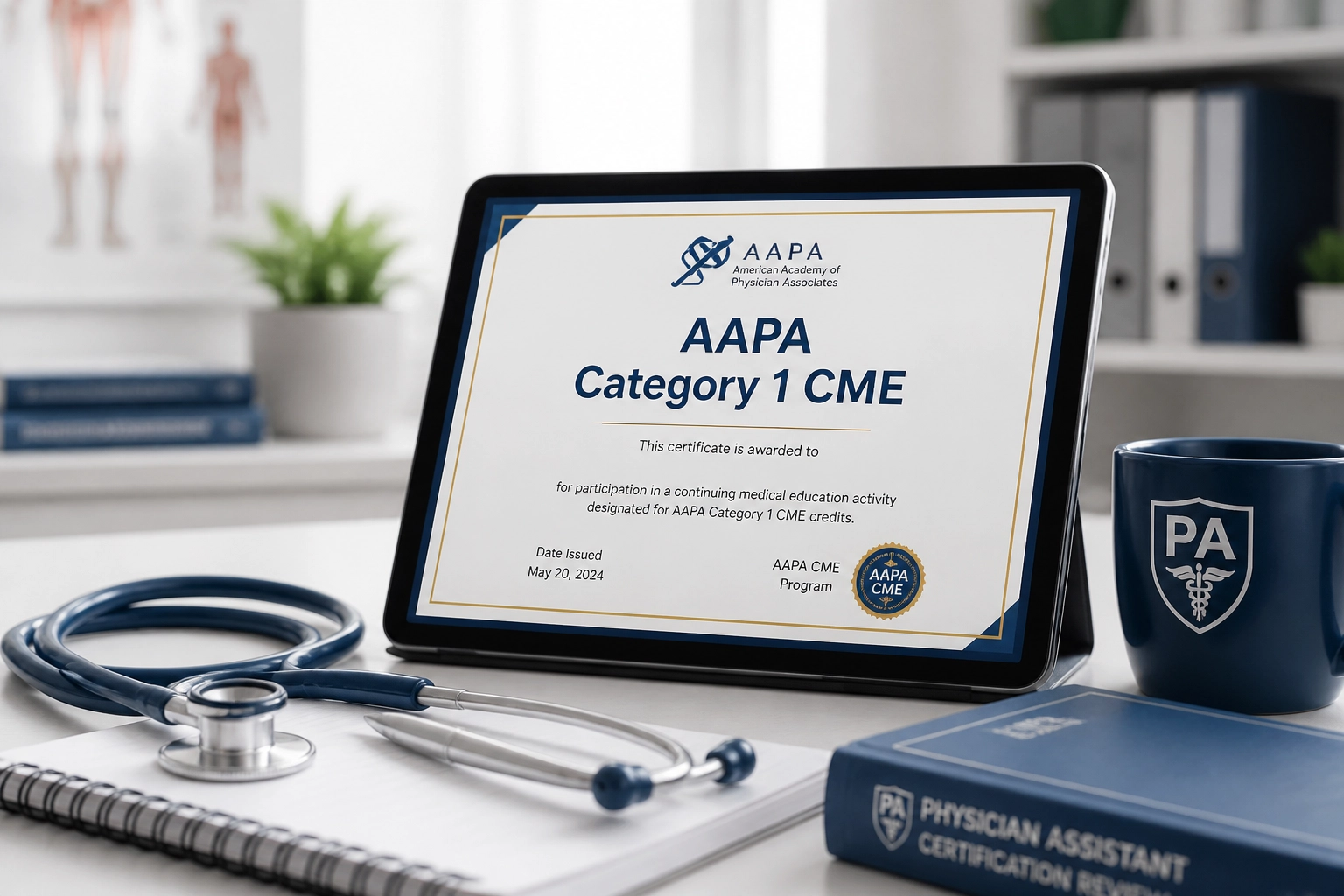
A close-up of a healthcare provider's hand checking a wristwatch in a clinical setting. In the background, out of focus, is a medical certificate.


Clinical Practice Challenge

To ensure you are ready for your next shift (or the PANRE), review the following clinical vignettes.

Scenario 1: Cardiology

Your patient is a 64-year-old male presenting to the emergency department with acute onset of "tearing" chest pain radiating to the back.
Vitals: BP 190/110 mmHg (right arm), 165/95 mmHg (left arm), HR 105 bpm, SaO2 96% on room air.
Physical Exam: A new grade II/VI diastolic murmur is heard at the right sternal border.

Question: What is the most appropriate initial diagnostic imaging study for this patient?
A. Chest X-ray
B. Transthoracic Echocardiogram (TTE)
C. Computed Tomography Angiography (CTA) of the chest and abdomen
D. Magnetic Resonance Angiography (MRA)

Answer: C. Computed Tomography Angiography (CTA) of the chest and abdomen.
In a stable patient with suspected aortic dissection, CTA is the gold standard due to its high sensitivity and ability to delineate the extent of the dissection. While a Chest X-ray (A) may show a widened mediastinum, it is not diagnostic. TTE (B) lacks the sensitivity of CTA for the descending aorta. MRA (D) is time-consuming and often inappropriate in an acute setting.

Scenario 2: Dermatology

Your patient is a 28-year-old female presenting with a pruritic rash on her wrists and between her fingers. She notes the itching is significantly worse at night.
Physical Exam: Small, linear, erythematous burrows are noted in the interdigital webs.

Question: What is the first-line pharmacological treatment for this condition?
A. Triamcinolone 0.1% cream
B. Permethrin 5% cream
C. Oral Fluconazole
D. Hydrocortisone 1% cream

Answer: B. Permethrin 5% cream.
The clinical presentation is classic for Scabies. Permethrin 5% cream is the first-line treatment and should be applied from the neck down and washed off after 8-14 hours. Topical steroids (A, D) will not treat the underlying infestation and may worsen the condition. Fluconazole (C) is an antifungal and is ineffective against mites.

Scenario 3: Internal Medicine

Your patient is a 52-year-old male with a history of type 2 diabetes mellitus and hypertension. His current A1c is 8.4% despite adherence to Metformin 1000mg BID. He has a BMI of 34.

Question: Which class of medication would be the most beneficial next step to improve glycemic control and provide cardiovascular protection?
A. Sulfonylureas
B. GLP-1 Receptor Agonists
C. DPP-4 Inhibitors
D. Meglitinides

Answer: B. GLP-1 Receptor Agonists.
GLP-1 receptor agonists (such as Liraglutide or Semaglutide) are preferred as second-line agents for patients with T2DM who have established atherosclerotic cardiovascular disease or are at high risk. They also assist with weight loss, which is beneficial given the patient's BMI. Sulfonylureas (A) carry a high risk of hypoglycemia and weight gain. DPP-4 inhibitors (C) and Meglitinides (D) do not offer the same cardiovascular benefits.


Don't Let Your Budget Expire

The June 30th deadline is a hard cutoff for many organizations. Secure your 100 hours of AAPA Category 1 CME today and take advantage of our gift card add-ons to enhance your clinical toolkit.

Browse all CME Packages with Gift Cards here.

Posted on

PANRE Vs PANRE-LA: Which Is Better For Your Recertification Timeline?

Course Title: PANRE Review Course
Quantifiable Deliverables: 100 Hours of AAPA Category 1 CME Credit
Access Duration: 12 Months
Practice Questions: 1,000+ NCCPA-style questions

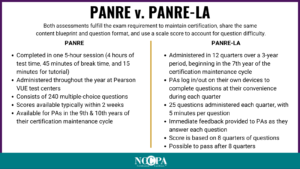
The decision between the traditional Physician Assistant National Recertifying Examination (PANRE) and the Physician Assistant National Recertifying Examination-Longitudinal Assessment (PANRE-LA) is primarily a matter of logistics and stress management. For Physician Assistants (PAs) nearing the end of their 10-year recertification cycle, the choice dictates how they will allocate their study time and professional energy over several years. Both pathways lead to the same result: maintenance of NCCPA certification: but the timelines are fundamentally different.

The Traditional PANRE: The One-Day Sprint

The traditional PANRE is the legacy pathway. It is a proctored, four-hour examination administered at Pearson VUE testing centers. This option is designed for PAs who prefer to consolidate their preparation into a single high-intensity window.

Timeline Logistics

PAs are eligible to take the traditional PANRE during years nine or ten of their maintenance cycle. You have up to three opportunities to pass the exam, provided you do not exceed the December 31 deadline of your tenth year. The schedule is rigid: once you apply, you have a 180-day window to schedule and complete the exam.

Pros and Cons

  • Pros: The primary advantage is speed. Once the exam is passed, the requirement is fulfilled for another decade. There is no ongoing obligation to participate in quarterly assessments.
  • Cons: The "high-stakes" nature of a single exam day can be a significant stressor. It requires a dedicated block of study time, often involving several weeks of intensive review of the NCCPA Blueprint.

PANRE Review Exam Book 1 by Jeremy Boroff PA-C

The PANRE-LA: The Three-Year Marathon

The PANRE-LA is a longitudinal assessment that moved out of its pilot phase to become a permanent option. It is designed to move away from the "cram and pass" model toward a more continuous learning experience.

Timeline Logistics

The PANRE-LA spans three years (12 quarters). PAs must apply for this pathway in year six of their cycle. The assessment officially begins in year seven and continues through year nine.

  • Quarterly Requirement: You are given 25 questions every quarter.
  • Participation: You must complete at least 8 out of 12 quarters.
  • Flexibility: You can skip up to 4 quarters if your clinical or personal schedule becomes overwhelming.

Pros and Cons

  • Pros: The exam is "open resource," meaning you can use clinical references while answering questions. It reduces the acute anxiety associated with a proctored exam center.
  • Cons: It requires a long-term commitment. Forgetting to log in or missing too many quarters can result in being withdrawn from the program, forcing a late-cycle pivot back to the traditional PANRE.

Choosing Your Path Based on Your Clinical Schedule

If you work in a high-volume specialty like Emergency Medicine or Internal Medicine, your ability to sit for a four-hour exam may be limited. Conversely, if you prefer to "get it over with," the three-year duration of the PANRE-LA might feel like an unnecessary lingering chore.

For those choosing the traditional route, efficiency is paramount. Utilizing a PANRE Review Course that provides 100 hours of AAPA Category 1 CME Credit allows you to satisfy your biennial CME requirements while simultaneously preparing for the exam.

PANRE Review Exam Book 2 by Jeremy Boroff PA-C

Clinical Practice Assessment: Cardiology

Your patient is a 64-year-old male with a history of hypertension and hyperlipidemia who presents to the clinic for a routine follow-up. He reports occasional palpitations but denies chest pain or shortness of breath.

Vitals:

  • HR: 105 bpm (Irregular)
  • BP: 138/88 mmHg
  • SaO2: 98% on room air

Clinical ECG monitor showing sinus tachycardia

Question: Which of the following is the most appropriate next step in the diagnostic workup for this patient?

A) 12-lead Electrocardiogram (ECG)
B) Exercise Stress Test
C) Cardiac Catheterization
D) Echocardiogram

Correct Answer: A) 12-lead Electrocardiogram (ECG)

Explanation: A 12-lead ECG is the gold standard for the initial evaluation of an irregular heart rate or palpitations. It is necessary to differentiate between atrial fibrillation, premature atrial contractions (PACs), or other arrhythmias. An exercise stress test (B) is used for ischemia evaluation, while cardiac catheterization (C) is an invasive procedure for definitive coronary artery disease diagnosis. An echocardiogram (D) evaluates structural heart disease but does not serve as the primary tool for rhythm identification.

Maximizing Your CME Budget

Regardless of which path you choose, you must manage your CME funds effectively. Many employers provide an annual stipend that must be used or lost. At CME Review Courses, we offer a way to maximize this benefit by adding an Amazon or Apple Gift Card to your purchase.

You can add a gift card ranging from $100 to $1,500 to your order. This allows you to purchase the educational content you need: such as our Pharmacology Review (which also offers Category 1 AAPA Credit) or our comprehensive PANRE Review: while receiving a gift card that can be used for further educational materials, hardware like an iPad for clinical use, or other professional resources.

Clinical Practice Assessment: Dermatology

Your patient is a 42-year-old female who presents with a painful, red, and swollen area on her right lower leg that has progressed over the last 48 hours. She remembers a small insect bite in the area prior to the onset of symptoms.

Vitals:

  • Temp: 100.8°F
  • HR: 92 bpm
  • BP: 122/78 mmHg

Clinical photo of cellulitis on a lower leg

Question: What is the most likely diagnosis?

A) Cellulitis
B) Deep Vein Thrombosis (DVT)
C) Contact Dermatitis
D) Erythema Nodosum

Correct Answer: A) Cellulitis

Explanation: Cellulitis presents as a spreading area of red, swollen, tender, and warm skin, often accompanied by systemic symptoms like fever. The history of a skin break (insect bite) provides a portal of entry for bacteria. A DVT (B) would typically lack the intense surface erythema and warmth. Contact dermatitis (C) is usually pruritic (itchy) and lacks systemic fever. Erythema nodosum (D) presents as painful, nodules typically on the shins, but is usually bilateral and not associated with an acute portal of entry.

Final Decision: Sprint or Marathon?

If you are a PA who thrives under pressure and wants to clear your schedule for the next nine years, the traditional PANRE is your choice. If you prefer a lower-stress, incremental approach and can commit to quarterly check-ins, the PANRE-LA is superior.

Our PANRE Review Course is designed to support both pathways. With 100 hours of AAPA Category 1 CME credit, you can complete your entire two-year credit requirement in one go. For those focused on specific weaknesses, our Pharmacology Review provides a deep dive into the 18% of the NCCPA Blueprint dedicated to pharmaceutical therapeutics.

Clinical Practice Assessment: Internal Medicine

Your patient is a 55-year-old male with Type 2 Diabetes Mellitus who presents for a six-month check-up. His recent laboratory results show a fasting blood glucose of 145 mg/dL and an HbA1c of 8.2%. He is currently taking Metformin 1000mg twice daily.

Question: According to the current standard of care, which class of medication should be considered next if the patient also has a history of heart failure with reduced ejection fraction (HFrEF)?

A) SGLT2 Inhibitor
B) Sulfonylurea
C) DPP-4 Inhibitor
D) Meglitinide

Correct Answer: A) SGLT2 Inhibitor

Explanation: SGLT2 inhibitors (e.g., Empagliflozin) are the preferred second-line agents for patients with Type 2 Diabetes and HFrEF, as they have been proven to reduce the risk of heart failure hospitalization and cardiovascular death. Sulfonylureas (B) can cause hypoglycemia and weight gain without cardiovascular benefits. DPP-4 inhibitors (C) are generally neutral, though some (like saxagliptin) are contraindicated in heart failure. Meglitinides (D) have a short duration of action and do not provide the long-term cardioprotective benefits seen with SGLT2 inhibitors.

For more information on preparing for your recertification and maximizing your CME stipend, visit CME Review Courses.

Posted on

AAPA Category 1 Pharmacology Credit Explained in Under 3 Minutes

The June 30th deadline is rapidly approaching. For many physician assistants and nurse practitioners, this date marks the mid-year cutoff for using 2026 CME stipends. Leaving these funds on the table is a missed opportunity to secure high-value AAPA Category 1 Pharmacology Credit and essential review materials for the NCCPA Blueprint.

If you need to satisfy state prescribing requirements or bolster your pharmacology knowledge before your budget expires, the Pharmacology Review Course and PANRE Review Course provide an efficient, high-yield solution.

Quick Logistics: Pharmacology & PANRE Review

  • Price: Starting at $399.99
  • Duration of Access: 30 Months
  • Pharmacology Credits: 12.0 Hours of AAPA Category 1 Self-Assessment CME
  • PANRE Credits: 100 Hours of AAPA Category 1 CME
  • Deliverables: 120+ Pharmacology Questions | Comprehensive PANRE Question Bank
  • Add-ons: $100 to $1500 Amazon or Apple Gift Cards

Understanding AAPA Category 1 Pharmacology Credit

AAPA Category 1 credit is the gold standard for PA continuing education. Specifically, pharmacology-designated credits are required by many state medical boards to maintain prescriptive authority, particularly for controlled substances.

While the NCCPA requires 100 CME credits every two years (with at least 50 being Category 1), they do not mandate a specific number of pharmacology hours. However, your state licensing board likely does. Furthermore, Nurse Practitioners (NPs) often require 25 pharmacology hours per 5-year recertification cycle. AAPA Category 1 Pharmacology Credit is widely accepted by the AANPCB and ANCC for these requirements.

By completing the Pharmacology Review Course before the June 30th deadline, you ensure that your 2026 CME money is utilized for credits that satisfy both national and state-level mandates.

Why the June 30th Deadline Matters

Most employer-provided CME stipends are "use it or lose it." If your fiscal year or mid-year review falls on June 30th, any remaining 2026 balance will vanish. Our CME packages allow you to add an Amazon or Apple Gift Card (up to $1500) to your purchase. This allows you to maximize your educational budget by securing both your required credits and the tools you need for further self-study, such as medical texts, hardware, or clinical supplies.


Clinical Case Study: Pharmacology in Practice

PA consulting with a middle-aged male patient in a clinic

Your patient is a 58-year-old male with a history of hypertension and chronic kidney disease (CKD) Stage 3a. He presents for a follow-up regarding his blood pressure management. His current regimen includes Lisinopril 20mg daily. Today, his BP is 152/94 mmHg (confirmed on repeat). You decide to add a second agent.

Which of the following medications is most appropriate to add to this patient's regimen while minimizing the risk of worsening renal function?

A) Spironolactone
B) Amlodipine
C) Hydrochlorothiazide
D) Losartan

Explanation and Correct Answer

The correct answer is B) Amlodipine.

  • Amlodipine is a dihydropyridine calcium channel blocker (CCB). It is highly effective for blood pressure control in patients with CKD and does not require renal dose adjustment. Unlike diuretics or additional RAAS inhibitors, it carries a lower risk of causing acute fluctuations in serum creatinine or hyperkalemia in a patient already on an ACE inhibitor.
  • Spironolactone (Option A) would increase the risk of significant hyperkalemia when combined with Lisinopril, especially in the setting of Stage 3a CKD.
  • Hydrochlorothiazide (Option C) loses significant efficacy as the GFR drops below 30 mL/min, and while this patient is at Stage 3a, a CCB is generally preferred as a second-line agent for its superior BP reduction in this demographic.
  • Losartan (Option D) is an ARB. Combining an ACE inhibitor and an ARB is generally avoided due to the increased risk of hyperkalemia and acute kidney injury without significant additional cardiovascular benefit.

The 100-Hour PANRE Review Course

While the Pharmacology course focuses on medication management, the PANRE Review Course is designed for comprehensive exam preparation. It offers 100 hours of AAPA Category 1 credit, covering all organ systems identified in the NCCPA Blueprint.

Course Content Highlights:

  • Cardiology: Mastery of EKG rhythms and heart failure management.
  • Internal Medicine: In-depth coverage of Hospitalist medicine and chronic disease.
  • Specialties: Dermatology, Orthopedics, OB/GYN, and Psychiatry.

This content was written by physician assistants for physician assistants. It is designed to be the most efficient path to passing your recertification exam while earning a massive block of Category 1 credits.

PANRE Review Exam 1 Book Cover


Practice Question: Cardiology & Pharmacology

Your patient is a 64-year-old female with a history of persistent atrial fibrillation. She is currently taking Warfarin for stroke prevention. She presents with symptoms of a urinary tract infection, and you prescribe a 3-day course of Trimethoprim-Sulfamethoxazole (TMP-SMX).

What is the most likely effect of this antibiotic on the patient’s INR?

A) Decrease the INR, increasing the risk of thrombosis.
B) Increase the INR, increasing the risk of bleeding.
C) No effect on the INR.
D) Decrease the INR, requiring an increase in Warfarin dosage.

Explanation and Correct Answer

The correct answer is B) Increase the INR, increasing the risk of bleeding.

  • TMP-SMX is a potent inhibitor of the CYP2C9 enzyme, which is the primary pathway for the metabolism of S-warfarin (the more potent isomer). Inhibiting this metabolism leads to significantly increased levels of warfarin in the blood, leading to a dangerous rise in the INR.
  • Clinicians must either avoid this combination or proactively reduce the warfarin dose and perform frequent INR monitoring.
  • Options A, C, and D are incorrect as they do not reflect the known metabolic interaction between sulfonamides and warfarin.

Maximize Your 2026 CME Money Before June 30th

Don't let your professional development funds go to waste. Our packages are designed to provide the maximum return on your investment.

The CME Review Courses Advantage:

  1. Efficiency: Earn 12 hours of Pharmacology credit or 100 hours of PANRE credit quickly.
  2. Flexibility: Use the Amazon or Apple Gift Card add-on to buy the hardware or textbooks you need for your clinical practice.
  3. Longevity: With 30 months of access, you can review the material at your own pace, long after the June 30th deadline has passed.
  4. Authority: Our courses are meticulously updated to align with the NCCPA Blueprint.

Whether you are a Physician Assistant preparing for the PANRE, or a Nurse Practitioner needing pharmacology hours, our courses offer a streamlined, educational experience that respects your time and your budget.

Secure your credits and your gift card before June 30th at CMEReviewCourses.com.


Posted on

Looking for AAPA Category 1 Pharmacology Credit? 5 Things You Should Know

Price: $399.99
Duration: 30 Months of Access
Deliverables: 12.0 Hours of AAPA Category 1 Self-Assessment Pharmacology CME Credit

Finding high-quality, relevant pharmacology education that meets specific state and national requirements can be a challenge for the busy physician assistant. While general CME is abundant, targeted pharmacology credit often requires digging through fragmented resources. At CME Review Courses, we provide an efficient, consolidated solution designed by PAs for PAs.

Whether you are preparing for the PANRE or meeting a state mandate, understanding the nuances of pharmacology credit is essential for maintaining your license and certification.

1. State-Specific Prescribing Mandates (The Florida Example)

State licensing boards frequently impose requirements that exceed the baseline NCCPA certification standards. Florida is a primary example of a state with rigorous pharmacology and prescribing mandates. PAs in Florida who hold prescribing authority are required to complete specific hours in controlled substance prescribing and medical errors during every biennial renewal period.

These requirements often specify that the credit must be AAPA Category 1 and focused on the pharmacology of controlled substances or opioid stewardship. Our Pharmacology Review Course is designed to satisfy these topic-specific needs, ensuring you remain compliant with state law while simultaneously earning credit toward your national recertification.

Conceptual image of medical licensure and pharmacology

2. The MATE Act and DEA Requirements

As of June 2023, the Medication Access and Training Expansion (MATE) Act requires all DEA-registered practitioners to complete a one-time 8-hour training requirement on the treatment and management of patients with opioid or other substance use disorders.

This is not a suggestion; it is a federal requirement for renewing your DEA registration. When selecting a pharmacology course, PAs should look for content that addresses these specific competencies. Our pharmacology modules provide deep dives into medication-assisted treatment (MAT) and safe prescribing practices, helping you fulfill these critical federal obligations.

3. Pharmacology in the NCCPA Blueprint

The NCCPA Blueprint for the PANCE and PANRE integrates pharmacology across almost every organ system. It is not enough to simply know the medications; you must understand the pharmacokinetics and pharmacodynamics within the context of specific disease states.

For instance, Cardiology accounts for a significant portion of the NCCPA Blueprint. You are expected to know the difference between dihydropyridine and non-dihydropyridine calcium channel blockers, the indications for direct oral anticoagulants (DOACs), and the nuances of anti-arrhythmic management. Our course structure follows the NCCPA Blueprint, ensuring that your study time is spent on the topics most likely to appear on your exam.

PA studying pharmacology notes on a laptop

4. The Self-Assessment Credit Multiplier

One of the most efficient ways to manage your 100-hour CME cycle is to utilize Self-Assessment CME. The NCCPA provides a "bonus" for these credits: when you log AAPA Category 1 Self-Assessment CME, the NCCPA applies a 50% multiplier.

This means our Pharmacology Review Course, which offers 12.0 hours of AAPA Category 1 Self-Assessment credit, actually counts as 18.0 credits toward your 100-hour requirement when logged with the NCCPA. This efficiency allows you to satisfy state pharmacology mandates while making faster progress toward your total credit goal.

5. Practical Prescribing Competency

Beyond the requirements, there is the matter of clinical safety. Medical errors related to pharmacology are among the most common adverse events in clinical practice. A structured review of pharmacology helps mitigate these risks by reinforcing knowledge of drug-drug interactions, contraindications, and dosing adjustments for renal or hepatic impairment.

Our course content was written by experienced PAs who understand the daily clinical challenges of prescribing. We focus on high-yield, practical information that you can apply at the bedside immediately, moving beyond rote memorization to true clinical mastery.

PANRE/PANRE-LA Review Exam 1 Book Cover

Efficient Integration with PANRE Preparation

While our Pharmacology Review Course provides 12 hours of specialized credit, many PAs choose to pair it with our comprehensive PANRE Review Course.

The PANRE Review Course offers 100 hours of AAPA Category 1 CME credit (which equates to 150 NCCPA credits with the multiplier) and covers the entire spectrum of the NCCPA Blueprint. By using these courses in tandem, you can ensure that your pharmacology knowledge is robust while you simultaneously prepare for the broad range of topics found on the recertification exam.


Clinical Vignette Assessment

Scenario 1
Your patient is a 64-year-old male with a history of hypertension, Type 2 Diabetes, and chronic kidney disease (Stage 3). His current medications include lisinopril, metformin, and atorvastatin. His BP today is 152/94 mmHg, and his latest labs show a serum potassium of 5.1 mEq/L and a GFR of 42 mL/min/1.73m². You decide to add a second agent for blood pressure control. Which of the following is the most appropriate next step?

A) Add spironolactone
B) Add amlodipine
C) Increase lisinopril dose
D) Add hydrochlorothiazide

Explanation:
Correct Answer: B) Add amlodipine.
In a patient with Stage 3 CKD and a potassium level already at the high end of normal (5.1 mEq/L), adding a calcium channel blocker like amlodipine is the safest and most effective choice. Amlodipine does not affect potassium levels and is highly effective in diabetic patients. Spironolactone (A) is contraindicated here due to the high risk of hyperkalemia in a patient already on an ACE inhibitor with impaired renal function. Increasing the lisinopril (C) would further increase the risk of hyperkalemia and acute kidney injury. Hydrochlorothiazide (D) loses significant efficacy when the GFR is below 30-40 mL/min and would be less effective than amlodipine in this scenario.

Close up of EKG monitor and medical hand

Scenario 2
Your patient is a 45-year-old female presenting with symptoms of major depressive disorder. She also reports a 10-year history of smoking 1 pack of cigarettes per day and has expressed a desire to quit. Which of the following medications would be the best choice to address both her depression and her smoking cessation?

A) Fluoxetine
B) Bupropion
C) Varenicline
D) Amitriptyline

Explanation:
Correct Answer: B) Bupropion.
Bupropion (Wellbutrin/Zyban) is uniquely indicated for both the treatment of major depressive disorder and as an aid for smoking cessation. It works by inhibiting the reuptake of norepinephrine and dopamine. Fluoxetine (A) is an SSRI effective for depression but has no specific role in smoking cessation. Varenicline (C) is excellent for smoking cessation but is not an antidepressant. Amitriptyline (D) is a tricyclic antidepressant that is rarely used as a first-line agent due to its side effect profile and toxicity in overdose, and it has no role in smoking cessation.


Take the Next Step in Your Education

Don't let your recertification or state licensure requirements become a source of stress. Our courses are designed to provide the most efficient path to earning your AAPA Category 1 CME.

Invest in the Pharmacology Review Course or maximize your credits with our full PANRE Review Course today. Gain 30 months of access and start earning your credits on your own schedule.

Posted on

How to Choose the Best PANRE Review Course (Including Gift Card Add-On Options)

Price: $399.99 – $1,899.99 (Depending on Gift Card Add-On Selection)
Duration: 30 Months of Access
Deliverables: 100 Category 1 AAPA Credit Hours and 1,672 Board-Style Practice Questions

Selecting a panre review course is a critical decision for any Physician Assistant approaching their recertification window. The goal is twofold: you need to pass the exam with confidence and you need to satisfy your continuing medical education (CME) requirements efficiently. With the introduction of the PANRE-LA, the landscape of prep has changed, making longitudinal and on-demand resources more valuable than ever.

When evaluating pance prep courses and PANRE-specific materials, you should look for content that covers the entire NCCPA Blueprint while providing a high volume of Category 1 credits. Our PANRE Review Course provides 100 hours of AAPA Category 1 CME, designed specifically to help you master the material while checking off a massive portion of your CME cycle requirements.

1. Credit Volume and Quality

The most significant factor in choosing a course is the volume of accredited hours. While many courses offer 20 or 30 hours, a comprehensive review should offer more. Our program provides 100 hours of Category 1 AAPA credit. This credit is vital for PAs, though it is important to note that credit for nurse practitioners varies by state and for physicians, this counts as Category 2 CME.

2. Blueprint Alignment and Specialty Depth

The NCCPA Blueprint is the map for your exam. A high-quality course doesn't just skim the surface; it dives deep into the high-yield topics within Emergency Medicine, Family Medicine, Internal Medicine, Orthopedics, Dermatology, Psychiatry, Neurology, Cardiology, and OB/GYN.

PANRE Review Exam 1 Book Cover

3. The Value of CME Gift Cards

Many PAs have employer-provided CME funds that must be used within a specific timeframe. To help you maximize the utility of these funds, we offer cme gift cards as add-ons. You can choose to add an Amazon or Apple Gift Card ranging from $100 to $1,500 to your purchase.

It is important to understand that these are not free gifts. These are add-ons that are included in the total purchase price of the CME package. This allows you to use your CME budget to acquire the review materials you need while also gaining a gift card that can be used to further enrich your professional education through books, hardware, or other supplies.

Clinical Assessment: Cardiology

To prepare for the PANRE, you must be able to recognize patterns and make rapid diagnostic decisions.

Your patient is a 62-year-old male presenting to the emergency department with "crushing" substernal chest pain that began 45 minutes ago. He is diaphoretic and nauseated. His past medical history includes hypertension and tobacco use. Vital signs are: BP 110/70 mmHg, HR 92 bpm, RR 20 bpm, and SaO2 96% on room air. An EKG is performed.

12-lead EKG showing ST-segment elevation in inferior leads

Based on the EKG findings, what is the most likely location of the myocardial infarction?

A) Anteroseptal
B) Lateral
C) Inferior
D) Posterior

The correct answer is C) Inferior. The EKG demonstrates ST-segment elevation in leads II, III, and aVF. These leads look at the inferior wall of the heart, which is primarily supplied by the Right Coronary Artery (RCA) in most patients. Anteroseptal infarcts would show changes in V1-V2, lateral in V5-V6, I, and aVL, and posterior infarcts typically present with ST-segment depressions in the anterior leads (V1-V3).

4. Resource Longevity and Flexibility

Most PAs prefer to study over a longer period rather than cramming into a 3-day weekend. Our PANRE Review Course provides 30 months of access. This is particularly beneficial for those taking the PANRE-LA, as you can refer back to the content for every quarterly assessment.

Clinical Assessment: Orthopedics

Orthopedics constitutes a significant portion of the blueprint. Diagnostic accuracy is essential for proper management.

Your patient is a 19-year-old female athlete who felt a "pop" in her right knee while pivoting during a soccer game. She experienced immediate pain and rapid onset of swelling. On physical exam, she has a positive Lachman test and a positive anterior drawer sign.

3D illustration of human knee highlighting ACL

What is the most likely diagnosis?

A) Anterior Cruciate Ligament (ACL) Tear
B) Medial Collateral Ligament (MCL) Tear
C) Meniscal Tear
D) Patellar Tendinitis

The correct answer is A) Anterior Cruciate Ligament (ACL) Tear. The clinical history of a non-contact pivoting injury with an audible "pop" and immediate swelling (hemarthrosis) is classic for an ACL tear. The Lachman test is the most sensitive physical exam maneuver for this injury. MCL tears usually involve a valgus stress injury, meniscal tears often involve locking or catching, and patellar tendinitis is an overuse injury presenting with localized pain at the inferior patella.

Utilizing Your CME Funds Efficiently

When you choose a review course, you are making an investment. Our packages are designed by PAs, for PAs, ensuring that the clinical vignettes and educational content are relevant to your daily practice and your board exams.

CME with Amazon and Apple Gift Card add-on illustration

By selecting a package with a gift card add-on, you can streamline your educational spending. Whether you need $500 or $1,500 in additional funds for your educational tools, our flexible options allow you to tailor the purchase to your specific budget needs.

Clinical Assessment: Neurology

Neurological emergencies require a systematic approach to diagnosis.

Your patient is a 74-year-old female brought in by EMS for sudden onset of right-sided weakness and aphasia. Her symptoms began 2 hours ago. Her blood pressure is 185/95 mmHg. A non-contrast CT of the head shows no evidence of hemorrhage.

What is the most appropriate next step in management?

A) Administer 325 mg of Aspirin
B) Assess for tPA (Alteplase) eligibility
C) Immediate neurosurgical consultation for evacuation
D) Start a heparin drip

The correct answer is B) Assess for tPA (Alteplase) eligibility. The patient is presenting within the 3 to 4.5-hour window for thrombolytic therapy in the setting of an acute ischemic stroke (confirmed by the absence of hemorrhage on non-contrast CT). Aspirin is used in stroke management but is secondary to the immediate assessment for reperfusion therapies. Neurosurgery is required for hemorrhagic strokes, and heparin is not indicated for acute ischemic stroke management in the ED.

Final Considerations

Choosing the right panre review course involves more than just picking the cheapest option. It involves finding a resource that:

  • Provides the necessary 100 hours of Category 1 AAPA credit.
  • Offers long-term access (30 months) to accommodate the PANRE-LA.
  • Includes a robust bank of practice questions (1,672+).
  • Allows for the addition of cme gift cards to maximize your professional development budget.

Explore our full range of specialty packages, including Family Medicine and Psychiatry, to find the review that best fits your clinical practice.

Posted on

7 Mistakes You’re Making with Your PANRE Review (and How to Fix Them by the Mid-Year Deadline)

As the June 30th deadline approaches, many Physician Assistants are rushing to utilize their 2026 CME stipends before the mid-year cutoff. Whether you are preparing for the traditional PANRE or navigating the quarterly requirements of the PANRE-LA, your study strategy must be efficient. Mistaking "studying hard" for "studying right" is a common pitfall that leads to wasted time and unnecessary stress.

Below are the essential logistical details for our PANRE Review Course:

  • Price: $399.99 (Standalone) or $649.00 – $2,149.00 (with Gift Card add-on)
  • Duration of Access: 30 Months
  • Deliverables: 1,672 Board-Style Questions
  • CME Credit: 100 Hours of AAPA Category 1 Self-Assessment Credit (NCCPA logs this as 150 credits)

1. Studying All Organ Systems Equally

The NCCPA PANCE/PANRE blueprint is not a democracy; some systems are simply more important than others. A common mistake is spending as much time on Hematology (3%) as you do on Cardiology (13%). By the June 30th deadline, you should have prioritized the "Big Four": Cardiology, Pulmonary, GI, and Musculoskeletal. These four systems alone account for nearly 50% of your exam.

The Fix: Align your study schedule with the blueprint percentages. Our PANRE Review Course is structured specifically around the NCCPA blueprint, ensuring you spend your hours where the points are.

2. Ignoring the 1.5x NCCPA Self-Assessment Bonus

Many PAs are unaware that the NCCPA provides a 50% bonus for Self-Assessment CME. If you earn 100 hours of AAPA Category 1 Self-Assessment credit, it counts as 150 credits toward your certification maintenance.

The Fix: Stop grinding for standard Category 1 credits that only offer a 1:1 ratio. Our 100-hour PANRE Review Course is designated as AAPA Category 1 Self-Assessment CME, giving you the most efficient "bang for your buck" before your 2026 stipend expires.

3. Passive Learning Without Practice Questions

Reading a textbook or watching a video without testing your knowledge is a recipe for failure. The PANRE is a test of application, not just recognition. If you aren't doing at least 50 questions a day leading up to the deadline, you aren't preparing for the reality of the exam.

The Fix: Use a high-volume Q-bank. Our course includes 1,672 board-style questions with detailed explanations. This forces you to engage with the material and identifies your weak points before the NCCPA does.

PANRE/PANRE-LA Review Exam 1 Book Cover

4. Overlooking the "CME Gift Card" Strategy

Many employers require CME funds to be spent by June 30th. If you have a $2,000 stipend and only spend $400 on a course, you are leaving $1,600 on the table.

The Fix: Use our CME with Gift Card options. You can add an Amazon or Apple Gift Card ($100 to $1,500) to your purchase. This allows you to secure your 100 hours of Category 1 credit while also receiving a gift card to purchase medical equipment, books, or electronics to further your education.

5. Overcomplicating Pharmacology

Pharmacology is a significant hurdle for many PAs, especially those in specialized practice who haven't seen a broad range of medications in years. Trying to memorize every side effect for every drug class is inefficient.

The Fix: Focus on the most commonly tested drug interactions and contraindications. We offer a specific Pharmacology CME course providing 20 hours of AAPA Category 1 credit. It is a high-yield review designed to simplify the most complex drug classes found on the PANRE.

6. Opening PANRE-LA Questions Before You're Ready

For those choosing the PANRE-LA, the biggest mistake is "winging it." Once you open a question, the 5-minute timer starts. If you haven't reviewed the topic or don't have your references ready, you risk losing points on easy questions.

The Fix: Treat every PANRE-LA question like a mini-exam. Use our 30 months of access to review the specific organ system in our course before you open your quarterly NCCPA questions.

7. Waiting Until June 29th to Purchase

Waiting until the last minute to use your stipend often leads to technical hurdles or administrative delays with your employer's approval process.

The Fix: Secure your access today. Our courses provide immediate access to the 100 hours of CME and the test bank, ensuring you meet your mid-year requirements with time to spare.

PANRE/PANRE-LA Review Exam 2 Book Cover


Clinical Review: Practice Scenarios

To ensure you are ready for the board-style questions you'll face, review the following scenarios.

Scenario 1: Cardiology

A 12-lead EKG strip representing a cardiology board review question.

Your patient is a 64-year-old male presenting with a 2-hour history of "crushing" chest pain and diaphoresis. His PMH includes hypertension and tobacco use. Vital signs are: HR 102, BP 145/92, SaO2 96% on room air. The EKG shows 3mm ST-segment elevation in leads II, III, and aVF.

Which of the following is the most appropriate next step in management?
A. Administer sublingual nitroglycerin
B. Immediate referral for cardiac catheterization
C. Obtain a STAT chest X-ray
D. Administer 325mg of Aspirin

Answer: D. Administer 325mg of Aspirin.
In the setting of an acute STEMI, chewed aspirin is the most critical initial intervention to reduce mortality by inhibiting further platelet aggregation. While cardiac catheterization (B) is the definitive treatment, aspirin is the immediate management priority. Nitroglycerin (A) should be used with extreme caution in inferior MIs (leads II, III, aVF) due to the risk of profound hypotension from right ventricular involvement.

Scenario 2: Pulmonary

Your patient is a 28-year-old female with a history of asthma presenting with increased wheezing and shortness of breath for 3 days. She has been using her albuterol inhaler every 2 hours without relief. On exam, she is using accessory muscles to breathe. Vital signs: HR 115, RR 28, SaO2 91% on room air.

Which finding would be most concerning for impending respiratory failure?
A. Tachycardia
B. Loud, diffuse wheezing
C. A "silent" chest on auscultation
D. Use of accessory muscles

Answer: C. A "silent" chest on auscultation.
A "silent chest" indicates that airflow is so severely restricted that wheezing can no longer be heard. This is an ominous sign of impending respiratory failure. Loud wheezing (B) actually indicates that air is still moving. Tachycardia (A) and accessory muscle use (D) are expected in a severe asthma exacerbation but are not as definitive of imminent failure as the loss of breath sounds.

Scenario 3: Gastroenterology

Your patient is a 45-year-old male with a history of chronic alcohol use presenting with hematemesis. He is hypotensive (BP 90/60) and tachycardic (HR 120). Physical exam reveals spider angiomata and caput medusae.

What is the most likely source of the bleeding?
A. Mallory-Weiss tear
B. Peptic ulcer disease
C. Esophageal varices
D. Diverticulosis

Answer: C. Esophageal varices.
The physical exam findings (spider angiomata, caput medusae) and history of chronic alcohol use strongly suggest portal hypertension and cirrhosis. Esophageal varices are the most common cause of life-threatening upper GI bleeds in this population. A Mallory-Weiss tear (A) usually follows forceful vomiting, and Diverticulosis (D) is a cause of lower, not upper, GI bleeding.


Conclusion

Don't let the June 30th deadline catch you off guard. By avoiding these seven common mistakes and utilizing a structured review like our 100-Hour PANRE Review Course, you can fulfill your CME requirements and prepare for exam success simultaneously.

Whether you need the full course or the 20-hour Pharmacology update, ensure you maximize your 2026 CME stipend today.

Posted on

How to Choose the Best PANRE Review (Compared: Live Courses vs. On-Demand Packages)

Internal Plan:

  1. Classification: Comparison/Product Showcase.
  2. Strategy: Contrast the rigid schedules of live PANRE conferences with the efficiency and financial benefits of on-demand packages.
  3. Imagery: Utilize generated hero image, a studying scenario image, and existing marketing assets for course books.
  4. Logistics: Lead with the PANRE Review Course specifics: $399.99, 30 months access, 1,672 questions, and 100 hours of AAPA Category 1 CME.

Logistical Details:

  • Price: $399.99
  • Access Duration: 30 months
  • CME Credit: 100 Hours of AAPA Category 1 Self-Assessment Credit
  • Deliverables: 17 Hours of Video Lecture, 1,672 Board-Style Questions with Detailed Explanations
  • Add-ons: Amazon or Apple Gift Cards ($100–$1500) available at checkout

Clinical Assessment: Cardiovascular System

Your patient is a 64-year-old male presenting with a 3-month history of exertional chest pressure that is relieved by rest. He has a history of hypertension and hyperlipidemia. During your physical exam, his HR is 72 bpm and BP is 138/84 mmHg. You perform an EKG which shows no acute ST-segment changes. You order a stress echocardiogram, which reveals exercise-induced wall motion abnormalities in the left ventricle that resolve with rest.

Which of the following is the most appropriate next step in the diagnostic workup?

A) Coronary Angiography
B) Holter Monitoring
C) High-sensitivity Troponin I
D) Chest X-ray

Correct Answer: A) Coronary Angiography

Explanation: The patient’s clinical presentation and the results of the stress echocardiogram are highly suggestive of stable angina with significant coronary artery disease. Coronary Angiography is the gold standard for definitive diagnosis and to assess the feasibility of revascularization (PCI or CABG). Holter monitoring is used for arrhythmias, not ischemic heart disease workup. High-sensitivity troponins are used to rule out acute myocardial infarction (NSTEMI/STEMI) in an acute setting, whereas this patient has stable exertional symptoms. A chest X-ray provides information on cardiac size or pulmonary congestion but does not diagnose coronary artery stenosis.


Comparing PANRE Review Formats: Live vs. On-Demand

Physician Assistants (PAs) nearing their recertification cycle must choose between intensive live courses and flexible on-demand packages. Both formats aim to prepare the clinician for the NCCPA Blueprint, but the logistical and financial impacts differ significantly.

Live PANRE Review Courses

Live courses often take the form of 3-to-4-day intensive conferences. These are high-yield, covering the entire NCCPA Blueprint in a short period.

  • Structure: They offer a rigid schedule which provides accountability. You are required to be present for 8–10 hours of lecture daily.
  • Interaction: Real-time Q&A with faculty is a primary benefit.
  • Costs: Tuition for live courses is often higher ($500–$800). Additionally, clinicians must account for travel, hotel accommodations, and the loss of income from taking time off clinical practice.
  • Pace: The pace is fast. If you require more time on complex topics like Cardiology or Neurology, the live format does not wait.

On-Demand PANRE Review Packages

On-demand packages, such as the PANRE Review Course from CME Review Courses, prioritize flexibility and long-term retention.

  • Structure: 100% self-paced. You can access the 17 hours of video lectures whenever your schedule allows: during lunch breaks, post-shift, or on weekends.
  • Retention: On-demand access for 30 months allows for spaced repetition. Instead of cramming the entire NCCPA Blueprint into one weekend, you can review specific organ systems as needed.
  • Efficiency: There are no travel costs or days off work required.
  • Quantifiables: Our course includes 1,672 board-style questions. This volume of practice is often greater than what is provided in a condensed live seminar.

A Physician Assistant using on-demand video lectures and gift card add-ons to study for the PANRE.

Maximizing Your CME Budget with Gift Card Add-ons

A distinct advantage of the on-demand model at CME Review Courses is the ability to leverage your employer’s CME allowance more effectively. Most live conferences only offer the educational credit. We offer CME with Amazon gift card and CME with Apple gift card add-ons.

When purchasing the PANRE Review Course, you can add a gift card ranging from $100 to $1,500 to your order. The total is bundled into one price. This allows you to secure your 100 hours of AAPA Category 1 Credit while obtaining a bonus that can be used to purchase additional educational materials, such as medical textbooks, tablet devices for clinical use, or office supplies.

Understanding the 100-Hour AAPA Category 1 Credit

The PANRE Review Course is designated for 100 AAPA Category 1 Self-Assessment CME credits. This is a critical distinction for PAs managing their NCCPA cycles.

  1. NCCPA Weighting: The NCCPA applies a 50% additional weighting to self-assessment credits. When you log these 100 credits, they automatically count as 150 credits toward your maintenance requirements.
  2. Breadth of Content: To earn these credits, the course covers the entire NCCPA Blueprint, including:
    • Emergency Medicine
    • Family Medicine
    • Internal Medicine
    • Orthopedics
    • Dermatology
    • Psychiatry
    • Neurology
    • Cardiology
    • OB/GYN

This content is developed by physician assistants who understand the specific clinical demands and testing patterns of the PANRE. While the primary target is the PA, Nurse Practitioners and Physicians frequently use these packages. For physicians, it counts as Category 2 CME. For NPs, the AAPA is an acceptable accredited organization for CE in many states, though individual state boards should be verified.


Clinical Assessment: Pulmonary System

Your patient is a 28-year-old female complaining of a persistent non-productive cough and shortness of breath for the past 4 weeks. She notes the symptoms are worse at night and when she is exercising. She has no significant past medical history. Her vital signs are stable, and physical exam reveals end-expiratory wheezing bilaterally. You perform spirometry, which shows a FEV1/FVC ratio of 65%. After administering a short-acting beta-agonist, the FEV1 increases by 14% and 250 mL.

What is the most likely diagnosis?

A) Chronic Obstructive Pulmonary Disease (COPD)
B) Asthma
C) Congestive Heart Failure
D) Sarcoidosis

Correct Answer: B) Asthma

Explanation: The diagnosis of Asthma is confirmed by the presence of reversible airway obstruction. Reversibility is defined as an increase in FEV1 of >12% and >200 mL following bronchodilator administration. COPD is generally characterized by irreversible or only partially reversible airflow obstruction and typically presents in older patients with a smoking history. Congestive Heart Failure would likely present with rales, edema, or EKG changes, and Sarcoidosis would more commonly show restrictive patterns or hilar adenopathy on imaging.


Visualizing the Curriculum

The depth of the PANRE Review is reflected in our comprehensive study guides and lecture materials. Below are the official review books that accompany our curriculum, authored by Jeremy Boroff, PA-C.

ResourceDescription
PANRE Exam 1 Book CoverPANRE Review Exam 1: Covers the first half of the NCCPA Blueprint with high-yield questions.
PANRE Exam 2 Book CoverPANRE Review Exam 2: Focuses on specialty systems and complex clinical patterns.

Final Verdict: Which Should You Choose?

The decision between a live course and an on-demand package depends on your learning style and logistical constraints.

Choose a Live Course if:

  • You struggle with self-discipline and need a forced schedule.
  • You live near a host city and do not mind the travel expenses.
  • You prefer face-to-face networking with other clinicians.

Choose the CME Review Courses On-Demand Package if:

  • You want 100 hours of Category 1 AAPA Credit that scales to 150 hours with NCCPA weighting.
  • You want 30 months of access to ensure you can review the 17 hours of video lectures multiple times.
  • You want to practice with over 1,600 board-style questions.
  • You want to maximize your budget with Amazon or Apple gift cards up to $1,500.
  • You need to study around a full-time clinical schedule without taking time off.

For many PAs, the efficiency of on-demand learning far outweighs the high cost and rigid timing of live conferences. By integrating the Pharmacology Course or other specialty modules like Emergency Medicine, you can tailor your education to your specific practice area while securing the necessary credits for recertification.

Posted on

The Simple Trick to Maximize Your CME Stipend with an Amazon Gift Card Before June 30th

The mid-year deadline is approaching rapidly. For many physician assistants and nurse practitioners, June 30th represents the final opportunity to utilize 2026 CME stipends before they expire or reset. If you have unused educational funds, letting them sit on the table is an inefficient use of your professional benefits.

At CME Review Courses, we provide an streamlined solution to maximize your stipend. By bundling our high-yield clinical content with an Amazon or Apple gift card, you secure necessary AAPA Category 1 CME credits while simultaneously equipping yourself with funds for additional educational materials, medical equipment, or technology.

Essential Course Logistics

PANRE Review Course (100 Hours AAPA Category 1 CME)

  • Price: $399.99 (Base)
  • Duration of Access: 30 Months
  • Deliverables: 1,672 Board-Style Questions and 17 Hours of Clinical Video Content
  • Gift Card Options: $100 to $1,500 add-ons available
  • Link: PANRE Review Course with Gift Card

Pharmacology CME Review Package (12 Hours AAPA Category 1 CME)

A physician assistant looking at a June 30th deadline on a calendar while holding a tablet with review questions.

The June 30th Strategy: CME with Gift Cards

Most healthcare employers provide an annual or semi-annual CME allowance. However, these funds are often "use it or lose it." If you have $1,000 or $2,000 remaining in your budget, purchasing a standard $400 course leaves a significant portion of your benefit untouched.

The simple trick to maximizing this stipend is selecting a CME with Gift Card package. This allows you to choose a package price that matches your remaining budget. For example, if you have $1,500 remaining, you can purchase the PANRE Review Course and add a $1,100 Amazon Gift Card. You receive 100 hours of AAPA Category 1 CME credit and a gift card delivered digitally, ensuring your entire 2026 stipend is utilized effectively before the June 30th cutoff.

Our packages cover essential clinical domains, including Emergency Medicine, Family Medicine, Internal Medicine, Orthopedics, and more. This content was developed by physician assistants for physician assistants, ensuring the clinical vignettes and questions are relevant to your daily practice and the NCCPA blueprint.

A tablet showing pharmacology review content with medication vials in the background.

Meeting Your Pharmacology Credit Requirements

Many states require specific pharmacology-focused CME for prescriptive authority renewal. Our Pharmacology CME Review Package offers 12 hours of AAPA Category 1 Self-Assessment CME.

For PAs logging credits with the NCCPA, self-assessment credits are weighted heavily. The NCCPA applies an additional 50% weighting to these credits. Therefore, a 12-hour self-assessment course effectively counts as 18 hours toward your 100-hour requirement. This is the most efficient way to satisfy both state pharmacology requirements and NCCPA maintenance cycles before the mid-year deadline.

Clinical Scenario 1: Cardiology and Pharmacology

Your patient is a 64-year-old male with a history of hypertension and chronic stable angina. He presents to the clinic for a follow-up. His current medications include Lisinopril, Amlodipine, and Metoprolol Succinate. Despite adherence, he reports occasional chest pressure when walking up stairs. His heart rate (HR) is 78 bpm and his blood pressure (BP) is 138/84 mmHg. You decide to add Ranolazine to his regimen.

Which of the following is a known side effect of Ranolazine that requires monitoring via EKG?

A) Shortened PR interval
B) Prolonged QT interval
C) Delta waves
D) First-degree AV block

Correct Answer: B) Prolonged QT interval.
Ranolazine is an anti-anginal medication that inhibits the late inward sodium current. One of its primary clinical concerns is the dose-dependent prolongation of the QT interval. Patients with pre-existing QT prolongation or those taking other QT-prolonging drugs should be monitored closely or avoid this medication. It does not typically cause PR shortening, delta waves (associated with WPW), or AV block.

A medical professional purchasing a CME package with an Amazon and Apple gift card visible.

Clinical Scenario 2: Emergency Medicine and Internal Medicine

Your patient is a 42-year-old female presenting to the Emergency Department with acute onset of right upper quadrant pain that radiates to the right scapula. She reports nausea and two episodes of non-bilious emesis. On physical exam, she exhibits a positive Murphy’s sign. Her vitals are: T 101.2°F, HR 105, BP 122/78, and SaO2 98% on room air. Lab work shows a leukocytosis of 14,000.

What is the initial diagnostic study of choice for this patient?

A) CT Scan of the Abdomen/Pelvis with IV contrast
B) HIDA Scan
C) Ultrasound of the Right Upper Quadrant
D) ERCP

Correct Answer: C) Ultrasound of the Right Upper Quadrant.
In cases of suspected acute cholecystitis, the initial imaging modality of choice is a RUQ ultrasound due to its high sensitivity for gallstones, gallbladder wall thickening, and pericholecystic fluid. A HIDA scan is typically reserved for cases where ultrasound is inconclusive but clinical suspicion remains high. CT scans are less sensitive for gallstones, and ERCP is a therapeutic/diagnostic tool for choledocholithiasis, not the primary screening tool for cholecystitis.

Secure Your Credits Before June 30th

The deadline for 2026 mid-year stipends is firm. Whether you are preparing for the PANRE, fulfilling your 100-hour AAPA Category 1 requirement, or seeking specific Pharmacology credits, CME Review Courses offers the most efficient delivery method.

By utilizing the Amazon or Apple Gift Card add-on, you ensure your educational budget is spent fully and effectively. Our 30-month access window ensures that even if you purchase today, the material will be available for your next board cycle.

Act now to meet the June 30th deadline and maximize your professional benefits.

Posted on

PANRE-LA Secrets Revealed: What Experts Don’t Want You to Know About Open-Book Testing

Course Name: PANRE Review Course
Price: Starting at $499 (Varies by Gift Card Add-on)
Deliverables: 100 Hours of AAPA Category 1 CME Credit
Access: Immediate On-Demand Access
Gift Card Options: $100 to $1,500 Amazon or Apple Gift Cards Available

The NCCPA’s Physician Assistant National Recertifying Examination Longitudinal Assessment (PANRE-LA) has transformed the recertification landscape. The transition from a high-stakes, single-day proctored exam to a multi-year, open-book format is often perceived as a "easier" path. However, the open-book nature of the PANRE-LA is a double-edged sword. Without a strategic approach, the "open-book" feature can lead to time mismanagement, cognitive fatigue, and unexpected failures.

To succeed, you must understand that the PANRE-LA is not a test of what you know: it is a test of how efficiently you can verify what you don't know while maintaining clinical accuracy under a ticking clock.

The 5-Minute Barrier: Why "Open-Book" is a Trap

The most significant secret of the PANRE-LA is the strict five-minute time limit per question. While five minutes sounds generous for a single clinical scenario, it evaporates quickly when you are navigating complex medical databases. If you do not have a pre-determined search hierarchy, you will find yourself three minutes into a search with four browser tabs open and no clear answer.

Experts know that the PANRE-LA is designed to test "core medical knowledge." This means if you are searching for basic diagnostic criteria for common conditions like Heart Failure or Community-Acquired Pneumonia, you are already behind. The open-book resource should only be used to confirm specific nuances: such as second-line antibiotic choices in penicillin-allergic patients or the specific timeframe for a diagnostic "window."

Time management for medical exams

Two Devices: The Logistical Secret

The NCCPA requires you to take the exam on one device. However, there is no rule against having a second device, such as a tablet or a separate laptop, open to your primary medical references. Toggling between tabs on a single screen is a recipe for technical lag and accidental browser closures.

By using a dedicated second device for your references, you keep the exam interface clear and minimize the risk of a "time-out" error. Your primary reference should be a robust, searchable database like UpToDate, Medscape, or your PANRE Review Course materials. Having a physical copy of a trusted review book can also serve as a fast backup if your internet connection fluctuates.

The Remediation Loophole: Feedback is Your Best Friend

One of the least discussed "secrets" is how the PANRE-LA handles incorrect answers. Unlike the traditional PANRE, the PANRE-LA provides immediate feedback. If you miss a question, you are told immediately. More importantly, the NCCPA will re-test you on that same topic in a subsequent quarter.

The "secret" here is that your higher score on the follow-up question counts toward your final performance. This means you should keep a dedicated log of every topic you miss. Immediately after completing a 25-question block, use your 100 hours of AAPA Category 1 CME credits to deep-dive into those specific areas. If you missed a question on the management of chronic kidney disease, that topic is guaranteed to reappear. Prepare for it.

Digital medical resources and workstation

Curating Your Search Skills: Search Strings over Sentences

To maximize the open-book advantage, you must master the art of the clinical search string. Typing "What is the best treatment for a patient with a UTI who is pregnant?" into a search bar takes too long.

Instead, practice using Boolean operators and medical keywords: "UTI pregnancy first-line treatment" or "nitrofurantoin pregnancy contraindication." You must be able to navigate to the "Management" or "Treatment" section of a clinical monograph within 30 seconds. If your current reference tool doesn't allow for rapid navigation, it is the wrong tool for the PANRE-LA.

Clinical Practice Scenarios

To prepare for the type of rapid-fire clinical reasoning required for the PANRE-LA, review the following vignettes.

Case Study 1: Cardiology

Your patient is a 64-year-old male presenting with a 2-day history of worsening dyspnea on exertion and orthopnea. He has a history of hypertension and a previous myocardial infarction. On physical exam, you note a heart rate of 102 bpm, BP 148/92 mmHg, and 2+ bilateral pitting edema to the mid-calf. Auscultation reveals an S3 gallop and crackles at the lung bases.

Which of the following is the most appropriate initial diagnostic test to confirm the suspected diagnosis?

A. Chest X-ray
B. B-type natriuretic peptide (BNP)
C. Echocardiogram
D. 12-lead EKG

Explanation:
The correct answer is B. B-type natriuretic peptide (BNP). In the setting of suspected acute heart failure, BNP or NT-proBNP is the most appropriate initial laboratory test to differentiate cardiac from non-cardiac causes of dyspnea. While a Chest X-ray (A) can show pulmonary congestion and an Echocardiogram (C) is necessary for determining the ejection fraction, the BNP provides immediate biochemical evidence of myocardial wall stress. An EKG (D) is useful for identifying underlying ischemia but is not diagnostic for heart failure.

Case Study 2: Endocrinology

Your patient is a 32-year-old female with a known history of Type 1 Diabetes Mellitus. She is brought to the emergency department by her husband, who states she has been "acting confused" and "breathing deeply." Her fingerstick glucose is 450 mg/dL. Her vitals show a BP of 100/60 mmHg and a HR of 115 bpm. An arterial blood gas reveals a pH of 7.20 and a bicarbonate of 12 mEq/L. Ketones are present in the urine.

After initiating aggressive fluid resuscitation, what is the next most critical step in management?

A. Start an insulin drip at 0.1 units/kg/hr
B. Administer intravenous bicarbonate
C. Check the serum potassium level
D. Administer a 10-unit bolus of regular insulin

Explanation:
The correct answer is C. Check the serum potassium level. In Diabetic Ketoacidosis (DKA), initiating insulin (A and D) will cause potassium to shift intracellularly, which can lead to life-threatening hypokalemia. You must ensure the serum potassium is >3.3 mEq/L before starting insulin therapy. Bicarbonate (B) is generally reserved for patients with a pH <6.9 and is not the next most critical step here.

Clinical patient examination

Integrating the NCCPA Blueprint

Success on the PANRE-LA requires alignment with the NCCPA Blueprint. You should not waste time studying "zebras" that fall outside the core content areas. Our PANRE Review Course is specifically structured around the NCCPA Blueprint, ensuring that your study time is spent on the topics most likely to appear in your quarterly question sets.

By purchasing the course with a gift card add-on, you can utilize your employer's CME budget to its fullest extent. You receive high-yield, PA-led instruction plus an Amazon or Apple gift card ($100-$1500) that can be used for further educational resources, such as high-resolution monitors for your two-device setup or a premium tablet for mobile referencing.

PANRE Review Exam Book

Summary for Success

The PANRE-LA is an exercise in efficiency. To master the open-book format:

  1. Curate your references before the quarter begins.
  2. Utilize two devices to minimize technical friction.
  3. Log your misses to capitalize on the remediation re-tests.
  4. Practice timed searches using high-yield question banks.

Our PANRE Review Course provides the foundation you need to answer 80% of the questions from memory, leaving your five-minute "open-book" window available for the remaining 20% that require precise verification.

Enroll in the PANRE Review Course today and claim up to 100 hours of AAPA Category 1 CME credit plus your educational gift card.

Posted on

7 Mistakes You’re Making with Your PANRE Review (And How to Fix Them)

Maintaining your certification is a requirement of the profession, but the process of preparing for the PANRE or navigating the quarterly requirements of the PANRE-LA can be a logistical and academic burden. Many PAs approach recertification with the same study habits they used in PA school, often leading to wasted time, unnecessary stress, and suboptimal performance.

At CME Review Courses, we provide the tools to streamline this process. Our content is designed by physician assistants for physician assistants to ensure that your preparation is both efficient and clinically relevant.

Price: $450
Access: 12 months of unlimited access
Deliverables: 100 hours of AAPA Category 1 CME credit (applicable to the PANRE Review course), thousands of practice questions, and comprehensive review modules covering 9 major medical specialties.

1. Ignoring the NCCPA Blueprint Weighting

The most common mistake is treating every organ system as having equal importance. The NCCPA Blueprint specifically weights organ systems based on their prevalence in clinical practice. If you spend three days mastering the nuances of rare rheumatological conditions while only spending three hours on cardiology, you are mismanaging your study time.

The Fix: Align your study schedule with the NCCPA Blueprint percentages. Focus the majority of your energy on high-yield areas like Cardiology (13%), Pulmonology (10%), and GI/Nutrition (9%). Our course is structured to mirror these weights, ensuring you spend time where it counts most.

2. Relying on Passive Review

Reading through old textbooks or passively watching hours of video without engagement is an ineffective way to retain medical knowledge. Passive learning lacks the "desirable difficulty" required to move information into long-term memory.

The Fix: Use active recall and spaced repetition. Every module in our PANRE Review should be followed immediately by practice questions. We provide thousands of questions designed to simulate the actual exam environment. If you miss a question, you must understand the rationale before moving on.

PANRE/PANRE-LA Review Exam 1 Book Cover

3. Poor Timer Management During PANRE-LA

The PANRE-LA offers an open-resource format, but it comes with a strict 5-minute timer per question. A frequent mistake is spending the first four minutes searching for an answer in a textbook or online database, only to realize you don't have enough time to actually process the information and select the correct option.

The Fix: Treat every PANRE-LA question as if it were a closed-book exam first. Read the vignette, determine your "best guess" answer, and select it. Use the remaining time to confirm your choice with your resources. This ensures that even if your internet lags or you get distracted, you have a submitted answer.

4. Studying Like a Specialist, Not a Generalist

PAs who have spent years in a subspecialty, such as Orthopedics or Dermatology, often struggle with the PANRE because they have developed "specialist tunnel vision." They may know the latest experimental biologic for psoriasis but forget the first-line treatment for a simple community-acquired pneumonia.

The Fix: You must return to a "core" generalist mindset. The PANRE and PANRE-LA test "bread-and-butter" medicine. Focus on the first-line diagnostics and treatments defined by current clinical guidelines. Our course provides a comprehensive refresh across Emergency Medicine, Family Medicine, Internal Medicine, and more to pull you out of your specialty bubble.

Comprehensive Guide to EKGs Book Cover

5. Misinterpreting "Best Next Step" vs. "Most Definitive"

NCCPA questions are notorious for their specific phrasing. Many PAs lose points not because they lack medical knowledge, but because they answer a different question than the one asked. For example, if a patient presents with signs of an ectopic pregnancy, the "best next step" (HCG/Ultrasound) is different from the "most definitive" (Laparoscopy).

The Fix: Slow down and identify the specific task being asked in the lead-in of the question. Is the exam asking for the initial diagnostic test, the most likely diagnosis, or the definitive management? Training with our Q-bank helps you recognize these linguistic traps.

6. Opening PANRE-LA Questions Before You Are Ready

Because the PANRE-LA allows you to take questions at your own pace throughout the quarter, many PAs make the mistake of "peeking" at a question while they are busy at the clinic or on a mobile device with a spotty connection. Once you click "start," the 5-minute clock begins and cannot be paused.

The Fix: Only open PANRE-LA questions when you are in a quiet environment, with a stable internet connection, and your reference materials already open on your desktop. Treat each question with the respect it deserves.

PANRE/PANRE-LA Review Exam 2 Book Cover

7. Over-Relying on Search Engines

While the PANRE-LA is open-resource, relying on a Google search for every question is a recipe for failure. Search results can be contradictory, outdated, or overly broad.

The Fix: Use verified, concise clinical resources. Our review materials are specifically organized to provide the quick-access information you need. Having a structured review book or a trusted clinical database open is significantly more effective than a generic web search.

Clinical Practice Questions

Case 1: Cardiology

Your patient is a 64-year-old male with a history of hypertension and tobacco use who presents to the emergency department with sudden onset of substernal chest pain radiating to his left jaw. His HR is 110, BP is 145/90, and SaO2 is 96% on room air. An EKG reveals ST-segment elevation in leads II, III, and aVF. Which of the following is the most appropriate initial management for this patient?

A. Immediate administration of intravenous beta-blockers
B. Emergent cardiac catheterization for percutaneous coronary intervention (PCI)
C. Observation and serial cardiac enzymes
D. Administration of oral NSAIDs for pericarditis

Correct Answer: B. Emergent cardiac catheterization for percutaneous coronary intervention (PCI)

Explanation: The patient’s clinical presentation and EKG findings are diagnostic of an inferior ST-elevation myocardial infarction (STEMI). Emergent cardiac catheterization with PCI is the standard of care to restore myocardial perfusion. Beta-blockers (A) should be used with caution in the acute phase of an inferior MI due to the risk of bradycardia or heart block. Observation (C) is inappropriate for an active STEMI. NSAIDs (D) are contraindicated in acute MI as they can increase the risk of myocardial rupture and mortality.

Case 2: Pulmonology

A 28-year-old female with a history of mild intermittent asthma presents with increasing shortness of breath and wheezing over the past 48 hours. She has been using her albuterol inhaler every 3 hours with minimal relief. On exam, she is tachypneic with a respiratory rate of 28 and has diffuse expiratory wheezing. Her peak expiratory flow (PEF) is 65% of her personal best. What is the most appropriate next step in the management of this patient?

A. Start oral corticosteroids and continue frequent SABA use
B. Discharge home with a long-acting beta-agonist (LABA)
C. Order an emergent chest CT to rule out pulmonary embolism
D. Administer a dose of intravenous antibiotics

Correct Answer: A. Start oral corticosteroids and continue frequent SABA use

Explanation: This patient is experiencing an acute asthma exacerbation that is not responding to her usual rescue inhaler. Oral corticosteroids are indicated to reduce airway inflammation and prevent further progression of the exacerbation. LABAs (B) are for long-term maintenance and should not be initiated for acute relief. While PE (C) is a differential for SOB, the history of asthma and presence of wheezing makes an asthma exacerbation much more likely, and CT should not delay treatment. Antibiotics (D) are only indicated if there is evidence of a bacterial infection, which is not present here.

Case 3: Gastroenterology

A 45-year-old female presents with severe, steady epigastric pain that radiates to her back. The pain began acutely after a heavy meal. She also reports nausea and vomiting. On examination, she has significant epigastric tenderness but no rebound or guarding. Her serum lipase is found to be three times the upper limit of normal. Which of the following is the most important initial step in the management of this patient?

A. Aggressive intravenous fluid resuscitation
B. Urgent surgical consultation for cholecystectomy
C. Immediate initiation of total parenteral nutrition (TPN)
D. Administration of prophylactic broad-spectrum antibiotics

Correct Answer: A. Aggressive intravenous fluid resuscitation

Explanation: The patient’s symptoms and elevated lipase are diagnostic of acute pancreatitis. Aggressive intravenous fluid resuscitation is the cornerstone of early management to maintain organ perfusion and prevent complications like acute tubular necrosis. Urgent surgery (B) is not indicated unless there is a specific complication like infected necrosis or symptomatic gallstones once the inflammation has subsided. TPN (C) is reserved for severe cases where oral or enteral feeding is not possible for an extended period. Prophylactic antibiotics (D) are generally not recommended for sterile acute pancreatitis.

Case 4: Endocrinology

A 32-year-old female presents with complaints of heat intolerance, palpitations, and weight loss despite an increased appetite. On physical exam, you note a fine tremor and a diffusely enlarged, non-tender thyroid gland. Her TSH is 0.01 mIU/L (Low) and her Free T4 is elevated. Which of the following is the most likely diagnosis?

A. Graves' Disease
B. Hashimoto's Thyroiditis
C. De Quervain's Thyroiditis
D. Myxedema Crisis

Correct Answer: A. Graves' Disease

Explanation: The combination of hyperthyroid symptoms, a low TSH, and a diffusely enlarged, non-tender goiter is classic for Graves' Disease. Hashimoto's (B) typically presents with hypothyroidism and a firm, irregular goiter. De Quervain's (C) presents with hyperthyroidism but is characterized by a very painful, tender thyroid gland, usually following a viral illness. Myxedema crisis (D) is a life-threatening form of severe hypothyroidism.