
Posted on

AAPA Category 1 Credit for NPs: Do You Really Need It? Here’s the Truth

Navigating the world of Continuing Medical Education (CME) can be frustrating when your credentials don't perfectly align with the accrediting body of a specific course. For Nurse Practitioners (NPs), the question often arises: Can I claim AAPA Category 1 Credit? The short answer is yes, but the application of that credit depends heavily on your certifying body and your specific state board of nursing.

At CME Review Courses, we provide high-yield clinical content designed by PAs, for PAs: but our NP and physician colleagues have long found significant value in our curriculum. Whether you are looking for an online pharmacology cme for pas and NPs or a comprehensive panre review course to sharpen your clinical skills, understanding how these credits work for your license is essential.

Course Logistics and Deliverables

  • PANRE Review Course: $450.00 – $1,950.00 (depending on gift card add-on)
  • Pharmacology Review Course: $350.00 – $1,850.00 (depending on gift card add-on)
  • Access Duration: 30 Months
  • Deliverables: 100 Hours of AAPA Category 1 Credit (PANRE Course), clinical video modules, and over 1,000 practice questions.
  • Gift Card Options: Amazon or Apple Gift Cards available from $100 to $1,500 as an add-on to any purchase.

The Truth About AAPA Credit for Nurse Practitioners

The primary concern for most NPs is whether the American Academy of Physician Associates (AAPA) Category 1 credit will be accepted by the American Nurses Credentialing Center (ANCC) or the American Academy of Nurse Practitioners Certification Board (AANPCB).

National Certification Boards
Both the ANCC and the AANPCB generally accept AAPA Category 1 CME credits. These organizations recognize that AAPA credit is held to the same rigorous standards as AMA PRA Category 1 Credit™. Because the content is clinically relevant and accredited by a recognized national body, it usually fulfills the requirements for national recertification.

State Board Variations
While national boards are largely consistent, state boards of nursing have the final say on licensure renewal. Most states accept AAPA Category 1 credit because it falls under the umbrella of "Category 1" medical education. However, some states may require a specific percentage of your hours to be accredited specifically by nursing-focused organizations like the AANP. You must verify with your specific state board if they have a "hard cap" on non-nursing accredited CME.

Physician Category 2 Credit
Physicians often utilize our courses for Category 2 CME. While the AAPA Category 1 credit does not count as Category 1 for physicians (who typically require AMA PRA Category 1 Credit™), it is highly effective for fulfilling Category 2 requirements while gaining practical, specialty-specific knowledge in areas like Cardiology, Orthopedics, or Emergency Medicine.

High-Yield Clinical Content

The real value of our PANRE Review Course or our Pharmacology Course isn't just the certificate. It is the clinical pearls. For an NP working in a fast-paced Internal Medicine or Family Practice setting, the ability to review the NCCPA Blueprint topics: which mirror the most common clinical presentations: is invaluable for maintaining competency.

Official cover image for the Comprehensive PANCE/PANRE Review Book used in our courses.

Clinical Practice Questions

Test your clinical knowledge with these scenarios. These questions reflect the level of detail found in our full review packages.

Question 1
Your patient is a 64-year-old male with a history of HTN and HFrEF (EF 35%) who presents for a follow-up. He is currently taking Lisinopril and Carvedilol. His blood pressure is 142/88 mmHg, and his HR is 68 bpm. Lab work reveals a serum potassium of 4.2 mEq/L and a CrCl of 55 mL/min. Which of the following is the most appropriate next step in his medication management to reduce mortality?

A. Increase Carvedilol dose
B. Add Spironolactone
C. Add Amlodipine
D. Add Furosemide

Explanation
The correct answer is B: Add Spironolactone. In patients with symptomatic HFrEF (NYHA Class II-IV) who are already on optimal doses of an ACE inhibitor and a beta-blocker, the addition of an aldosterone antagonist like Spironolactone has been shown to significantly reduce mortality and hospitalizations. Amlodipine (C) is a calcium channel blocker and does not carry the same mortality benefit in HFrEF. Furosemide (D) is indicated for volume overload but does not improve long-term survival. Increasing the beta-blocker (A) is an option, but the patient is already at target heart rate, and the addition of an MRA is a priority.

Question 2
Your patient is a 28-year-old female presenting with acute pelvic pain and vaginal discharge. On physical exam, she has significant cervical motion tenderness. You suspect Pelvic Inflammatory Disease (PID). Which of the following is the recommended outpatient treatment regimen per current CDC guidelines?

A. Ceftriaxone 500mg IM once + Doxycycline 100mg BID x 14 days + Metronidazole 500mg BID x 14 days
B. Azithromycin 1g PO once
C. Ciprofloxacin 500mg BID x 7 days
D. Doxycycline 100mg BID x 7 days

Explanation
The correct answer is A: Ceftriaxone 500mg IM once + Doxycycline 100mg BID x 14 days + Metronidazole 500mg BID x 14 days. Current guidelines emphasize the need for anaerobic coverage (Metronidazole) in addition to covering N. gonorrhoeae and C. trachomatis. Choice B is insufficient for PID. Choice C (Ciprofloxacin) is no longer recommended due to high rates of resistance. Choice D lacks coverage for Gonorrhea.

The CME Gift Card Advantage

One of the most popular features for both PAs and NPs is our CME with Gift Card options. Many employers provide a CME allowance that is "use it or lose it." By adding an Amazon or Apple Gift Card to your purchase, you can maximize your educational budget.

This allows you to receive your 100 hours of AAPA Category 1 credit (for the PANRE course) while also obtaining a gift card that can be used for further educational materials, medical equipment, or technology to support your practice.

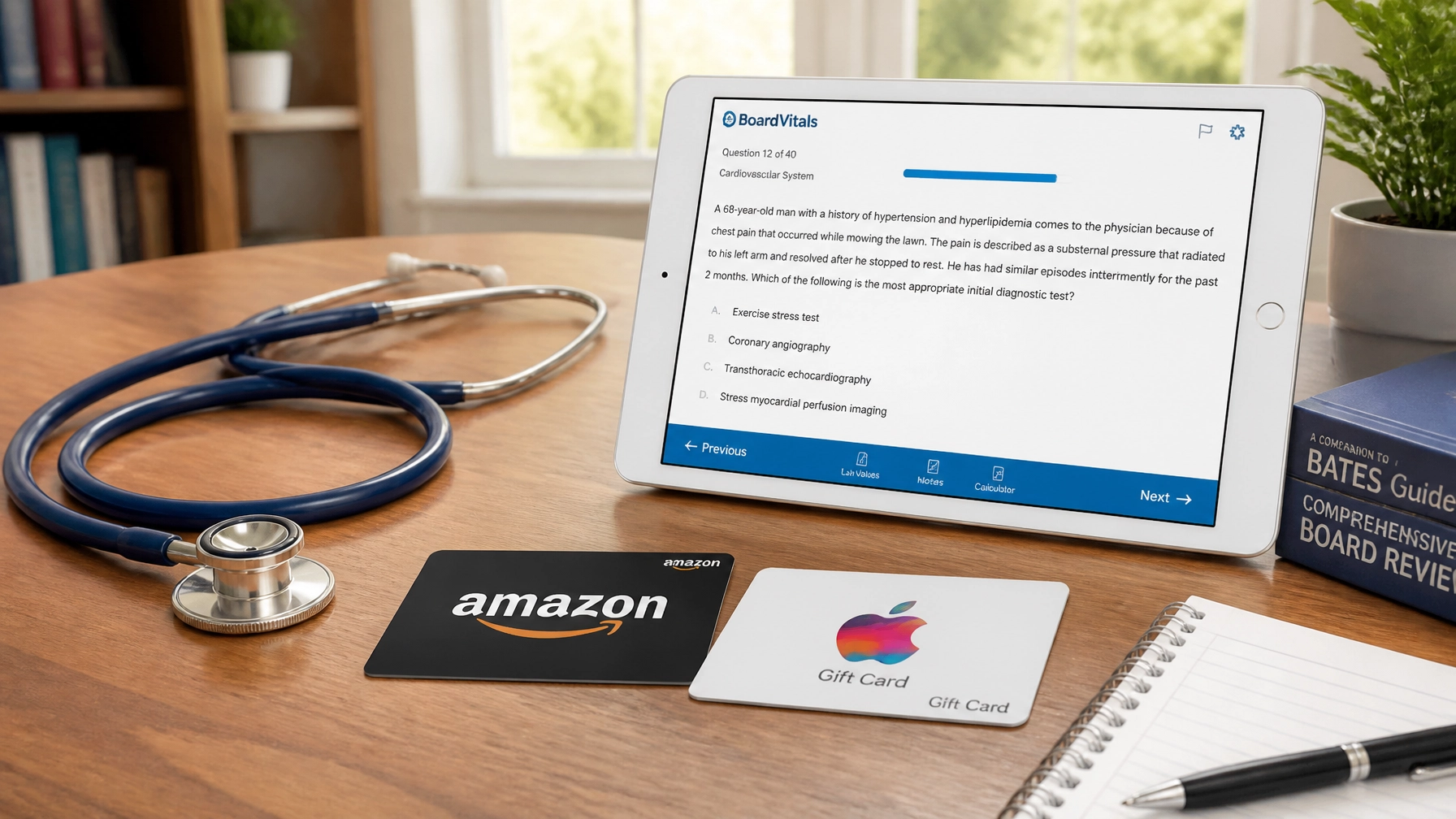
Abstract representation of an Amazon and Apple gift card alongside a stethoscope, highlighting the add-on benefits of our CME packages.

Why Choose CME Review Courses?

We recognize that your time is limited. Our content is written by PAs who understand the specific demands of the profession. However, the medicine is universal. Whether you are a PA preparing for the PANRE, an NP seeking high-quality online pharmacology cme, or a physician needing Category 2 credits, our courses deliver the information you need without the fluff.

We cover critical specialties including:

  • Emergency Medicine
  • Internal Medicine / Hospitalist
  • Orthopedics
  • Dermatology
  • Cardiology
  • OB/GYN

For PA students and recent graduates preparing for the PANCE and EOR exams, PAtopia delivers 11,000+ board-style questions in a single app — no subscription needed.

Our goal is to make your recertification and continuing education process as efficient as possible. If you need a comprehensive PANRE Review Course that offers meaningful credit and practical clinical knowledge, you are in the right place.

Posted on

7 Mistakes You’re Making with Your AAPA Category 1 Pharmacology Credit (and How to Fix Them)

Pharmacology Review CME Package: $399.99
Access Duration: 30 Months
Deliverables: 12 AAPA Category 1 Pharmacology Credits, 120+ Clinical Questions
CME Add-ons: $100 – $1500 Amazon or Apple Gift Cards

Physician Assistants (PAs) face a complex regulatory environment when maintaining national certification and state licensure. While the NCCPA manages the broader requirements for Category 1 and Category 2 CME, individual state medical boards often impose specific mandates for pharmacology and prescribing credits. Failure to accurately track and report these hours can lead to registration delays, licensure issues, or NCCPA audit failures.

Below are seven common mistakes PAs make with their pharmacology credits and the clinical steps necessary to correct them.

1. Misinterpreting Accreditation Statements

A common error is assuming any "pharmacology talk" automatically qualifies for AAPA Category 1 credit. Many industry-sponsored lectures or pharmaceutical dinners provide educational value but do not possess the necessary accreditation. To count as Category 1, the activity must be designated as such by an approved body, such as the AAPA or an ACCME-accredited organization (AMA PRA Category 1 Credit™), which the AAPA accepts for PAs.

The Fix: Always verify the accreditation statement before participating. It must specifically state, "This activity is designated for X AAPA Category 1 CME credits." If this language is absent, the activity must be logged as Category 2.

2. Failing to Distinguish Between Pharmacology and Prescribing Hours

Many state boards distinguish between general "pharmacology" and specific "prescribing" or "controlled substance" hours. For example, some states require two hours of opioid-specific education as part of your total pharmacology requirement. PAs often log general pharmacology credits and assume they meet these niche state mandates.

The Fix: Cross-reference your state medical board’s specific requirements. Use a dedicated pharmacology review, like the Pharmacology Review CME, to ensure you have a robust foundation of credits that can be categorized appropriately during licensure renewal.

3. Over-claiming Credits for Partial Participation

The AAPA and NCCPA are explicit: PAs should only claim credit commensurate with the extent of their participation in an activity. If a pharmacology course offers 12 credits but you only completed six hours of the material, claiming the full 12 is a violation of professional standards and an audit risk.

The Fix: Track your actual time spent on modules. For our pharmacology package, the 120+ questions and review content are designed to provide 12 hours of rigorous education. Ensure you complete the entire curriculum before claiming the full credit amount.

4. Missing the 1.5x Self-Assessment Bonus

Many PAs overlook the NCCPA "bonus" for Self-Assessment (SA) activities. While the Pharmacology course provides 12 hours of standard Category 1 credit, our PANRE Review Course provides 100 hours of AAPA Category 1 credit. If an activity is designated as Self-Assessment, the NCCPA applies a 1.5x multiplier (e.g., 20 SA credits become 30 credits in your total).

The Fix: Incorporate Self-Assessment activities into your CME cycle to reach your 100-hour requirement faster. This is particularly efficient when preparing for the NCCPA Blueprint content areas.

Female PA discussing medication with a patient in an exam room

5. Poor Record Keeping for NCCPA Audits

The NCCPA recommends that PAs maintain documentation of their Category 1 CME for the current and the previous two-year cycle. A frequent mistake is discarding digital certificates or relying solely on a provider's website to "host" your records. If that provider goes offline or you lose access, you are defenseless in an audit.

The Fix: Create a dedicated digital folder for each CME cycle. Store PDFs of your certificates immediately upon completion. Ensure the certificate includes your name, the provider, the date, the number of credits, and the accreditation statement.

6. Relying on Outdated Pharmacology Content

Pharmacology is one of the fastest-evolving fields in medicine. Using "leftover" review books from five years ago to meet your requirements often leads to practicing with outdated guidelines, especially in rapidly changing areas like anticoagulation, SGLT2 inhibitors, or biological therapies.

The Fix: Utilize content written by PAs for PAs. Our pharmacology review is updated to reflect current clinical practice and the NCCPA Blueprint. This ensures that while you earn your 12 Category 1 credits, you are also maintaining clinical competency.

7. Wasting Your CME Budget

Many PAs leave their employer-provided professional development funds on the table at the end of the year or spend them on low-value individual lectures. They fail to maximize the utility of these funds for their personal and professional enrichment.

The Fix: Use your CME money efficiently. We offer CME packages with Amazon and Apple Gift Card add-ons. By adding a $100 to $1,500 gift card to your purchase, you can acquire the pharmacology or PANRE review you need while also securing funds for additional educational tools, books, or technology.

Sleek Amazon and Apple gift cards on a mahogany desk with a medical textbook


Clinical Pharmacology Assessment

Test your knowledge with these clinical vignettes focused on pharmacology and patient management.

Question 1

Your patient is a 64-year-old male with a history of hypertension and heart failure with reduced ejection fraction (HFrEF). He was recently started on an ACE inhibitor. He presents today with a dry, non-productive cough that has persisted for two weeks. He denies fever, chills, or shortness of breath. His vital signs are stable, and his lungs are clear to auscultation.

Which of the following is the most appropriate next step in managing this patient’s medication?
A) Discontinue the ACE inhibitor and start a Calcium Channel Blocker
B) Discontinue the ACE inhibitor and start an Angiotensin II Receptor Blocker (ARB)
C) Add an antitussive and continue the ACE inhibitor
D) Decrease the dose of the ACE inhibitor by 50%

Correct Answer: B) Discontinue the ACE inhibitor and start an Angiotensin II Receptor Blocker (ARB)
Explanation: The patient is experiencing a classic side effect of ACE inhibitors caused by the accumulation of bradykinin. ARBs do not affect bradykinin levels and are the appropriate alternative for patients with HFrEF who cannot tolerate ACE inhibitors due to cough. Option A is incorrect because CCBs are not first-line for HFrEF management. Option C is inappropriate as the cough will likely persist as long as the ACE inhibitor is used. Option D is incorrect because the cough is not typically dose-dependent.

Question 2

Your patient is a 28-year-old female who presents with symptoms of an uncomplicated urinary tract infection (UTI), including dysuria and urinary frequency. She has a known severe allergy to sulfonamides (hives and respiratory distress).

Which of the following medications should be avoided in this patient?
A) Nitrofurantoin
B) Trimethoprim-Sulfamethoxazole
C) Fosfomycin
D) Ciprofloxacin

Correct Answer: B) Trimethoprim-Sulfamethoxazole
Explanation: Trimethoprim-Sulfamethoxazole (Bactrim) contains a sulfonamide component and must be avoided in patients with a sulfa allergy. Nitrofurantoin (A) and Fosfomycin (C) are first-line agents for uncomplicated UTIs and are safe in this patient. Ciprofloxacin (D) is a fluoroquinolone and is also an alternative, though typically reserved for more complex cases or when first-line agents cannot be used.

Question 3

Your patient is a 72-year-old male with a history of Parkinson's disease. His family reports that he has recently begun experiencing visual hallucinations and increased confusion. He is currently taking Carbidopa/Levodopa 25/100 mg three times daily. Physical examination shows no signs of acute infection or metabolic derangement.

Which of the following medications is specifically FDA-approved for the treatment of hallucinations and delusions associated with Parkinson's disease psychosis?
A) Haloperidol
B) Pimavanserin
C) Risperidone
D) Clozapine

Correct Answer: B) Pimavanserin
Explanation: Pimavanserin is a selective serotonin inverse agonist specifically indicated for Parkinson's disease psychosis. It does not interfere with dopaminergic therapy, unlike typical antipsychotics like Haloperidol (A) or atypical antipsychotics like Risperidone (C), which can worsen motor symptoms. While Clozapine (D) is effective, it is often a second-line choice due to the requirement for intensive blood monitoring for agranulocytosis.


Optimize Your CME Strategy

Whether you are preparing for the PANRE or need to satisfy state pharmacology requirements, CME Review Courses provides high-yield, PA-focused content.

Available Courses:

  • Pharmacology Review CME: Earn 12 AAPA Category 1 credits with over 120 practice questions. Ideal for meeting state-specific pharmacology mandates. Price: $399.99.
  • PANRE Review Course: A comprehensive review offering 100 hours of AAPA Category 1 credit. Designed to cover the NCCPA Blueprint efficiently.
  • CME with Gift Cards: Add an Amazon or Apple Gift Card ($100 – $1,500) to your purchase to maximize your professional development budget.

PANRE Review Exam 1 Book Cover

Managing your pharmacology credits doesn't have to be a source of stress. By avoiding these seven common mistakes and utilizing high-quality, accredited review materials, you can ensure your certification remains current while enhancing your clinical practice.

For more information on our packages and gift card options, visit cmereviewcourses.com.

Posted on

How to Choose the Best PANCE Prep Courses (Compared)

Course Specifications and Logistics

Price: $399.99 (Base Package)
Duration of Access: 30 Months
Deliverables: 100 Hours of AAPA Category 1 CME Credit, 2,500+ board-style questions with detailed explanations.
Available Add-ons: $100 – $1,500 Amazon or Apple Gift Cards.

Selecting a PANCE or PANRE prep course requires a strategic assessment of content depth, accreditation, and cost-effectiveness. Whether you are a student preparing for your initial certification or a practicing Physician Assistant (PA) navigating the recertification cycle, the quality of your review material directly correlates with your performance on NCCPA exams.

The following comparison evaluates the essential features of top-tier review courses, with a focus on how CME Review Courses provides high-yield content and significant professional value through accredited CME and educational enrichments.

Essential Features for PANCE and PANRE Success

1. Accredited Content and AAPA Category 1 Credit

For practicing PAs, the ability to earn Category 1 CME while studying is a critical efficiency. While many student-focused courses provide question banks, they often lack the accreditation required for professional maintenance. The PANRE Review Course from CME Review Courses provides 100 hours of AAPA Category 1 CME credit. This is a significant differentiator from competitors like UWorld or Rosh Review, which may offer high-quality questions but do not always provide the same level of Category 1 credit hours specifically recognized by the NCCPA for the 100-hour requirement.

2. Pharmacology Depth

Pharmacology remains one of the most challenging sections of the NCCPA blueprint. A superior prep course must offer a dedicated deep dive into clinical therapeutics. While general review courses cover pharmacology within system-based modules, a specialized Pharmacology Review Course ensures you master mechanisms of action, contraindications, and drug-drug interactions. Our pharmacology package provides 12.0 hours of AAPA Category 1 Pharmacology credit, ensuring that NPs and PAs in states with specific pharmacology requirements meet their mandates while preparing for exams.

3. Question Bank Volume and Quality

Practice questions are the foundation of exam readiness. To be effective, questions must mirror the style and difficulty of the actual PANCE/PANRE.

  • CME Review Courses: 2,500+ questions with rationales, including 3 full-length 240-question mock exams.
  • Rosh Review: Approximately 3,000 questions.
  • Hippo Education: 2,250+ questions.
  • UWorld: Large, exam-style bank focused on high-yield didactics.

While volume is important, the length of access is equally vital. Most competitors offer 3 to 12 months of access. CME Review Courses provides 30 months of access, allowing students to use the material throughout their clinical year and into their first months of practice.

4. Cost and CME Value

Budgetary considerations often drive the choice of a prep course. However, the true value is determined by what is included in the price. Many PAs use their employer-provided CME allowance to purchase review courses. CME Review Courses allows you to maximize this benefit by offering CME with Gift Card add-ons. You can add a $100 to $1,500 Amazon or Apple gift card to your purchase, allowing you to buy medical equipment, textbooks, or technology to further your education.

PANRE/PANRE-LA Review Exam 1 Book Cover by Jeremy Boroff PA-C

Comparing Top PANCE/PANRE Prep Providers

FeatureCME Review CoursesRosh ReviewUWorld PAHippo Education
Primary FocusStrategy & ContentQuestion BankHigh-Yield DidacticsVideo Lectures
CME Credit100 Hours Cat 1VariableMinimal/OptionalAvailable
Access Length30 Months3-12 MonthsSubscription Based12 Months
Gift Card Add-onsYes (Up to $1,500)NoNoNo
PharmacologyDedicated CourseIntegratedIntegratedIntegrated

Clinical Assessment and Practice Questions

Reviewing clinical vignettes is the most effective way to test your diagnostic reasoning. Use the following scenarios to assess your readiness.

Question 1

Your patient is a 64-year-old male with a history of hypertension and tobacco use who presents to the emergency department with sudden-onset, “tearing” chest pain radiating to his back. His blood pressure is 190/110 mmHg in the right arm and 160/90 mmHg in the left arm. A chest X-ray reveals a widened mediastinum. What is the most appropriate initial diagnostic test for a stable patient in this setting?

A. Transthoracic Echocardiogram (TTE)
B. CT Angiography (CTA)
C. Electrocardiogram (ECG)
D. Cardiac Enzymes

Explanation: CT Angiography (CTA) is the correct answer. It is the gold standard for diagnosing aortic dissection in hemodynamically stable patients due to its high sensitivity and specificity. TTE is less sensitive than CTA or TEE. ECG is necessary to rule out MI but is not diagnostic for dissection. Cardiac enzymes may be elevated but are non-specific for the acute vascular event described.

Question 2

Your patient is a 28-year-old female at 32 weeks gestation who presents with a blood pressure of 155/95 mmHg on two separate readings, four hours apart. She has 2+ proteinuria on dipstick but denies headache, visual changes, or right upper quadrant pain. Her liver enzymes and platelets are within normal limits. What is the most likely diagnosis?

A. Gestational Hypertension
B. Preeclampsia without severe features
C. Preeclampsia with severe features
D. Eclampsia

Explanation: Preeclampsia without severe features is the correct answer. The diagnosis of preeclampsia is based on hypertension (≥140/90 mmHg) and proteinuria (≥300 mg/24h or ≥1+ dipstick) after 20 weeks of gestation. Since she lacks severe symptoms (BP ≥160/110, thrombocytopenia, impaired liver function, or cerebral/visual disturbances), it is classified as “without severe features.” Gestational hypertension would not involve proteinuria.

Question 3

Your patient is a 45-year-old male complaining of polyuria, polydipsia, and unexplained weight loss. A fasting plasma glucose is 142 mg/dL. A repeat fasting plasma glucose on a subsequent day is 138 mg/dL. What is the most appropriate first-line pharmacological treatment if lifestyle modifications fail?

A. Glipizide
B. Metformin
C. Pioglitazone
D. Sitagliptin

Explanation: Metformin is the correct answer. It is the first-line medication for Type 2 Diabetes Mellitus due to its efficacy, safety profile, and lack of weight gain/hypoglycemia risk. Glipizide (a sulfonylurea) carries a risk of hypoglycemia. Pioglitazone is associated with weight gain and edema. Sitagliptin (a DPP-4 inhibitor) is generally considered a second-line or add-on therapy.

Family Medicine End Of Rotation (EOR) Exam Review and Test Prep by Jeremy Boroff PA-C

Making Your Decision

Choosing between PANCE prep courses depends on your specific needs. If you require a large volume of questions and a platform that serves as a professional CME Review Course, our packages offer the longest access and highest credit value in the industry.

By prioritizing courses that offer 100 hours of AAPA Category 1 credit and specialized pharmacology content, you ensure that your study time also satisfies your professional licensing requirements. Furthermore, utilizing your CME budget to include educational gift cards allows you to obtain the physical resources necessary for a successful clinical career.

And for PA students who want an app with 11,000+ practice questions spanning the PANCE, PACKRAT, and every EOR rotation, check out PAtopia — the newest addition to the CME Review Courses family. Visit cmereviewcourses.com/patopia-new-student-section/ to start your free trial.

For more information on maximizing your CME dollars or preparing for the NCCPA Blueprint, visit CME Review Courses.

Posted on

5 Steps to Earning the 50% NCCPA Bonus with AAPA Category 1 Credit (Easy Guide for PAs)

Price: $399.99 – $1,999.99
Duration: 30 months of access
Deliverables: 100 Hours of AAPA Category 1 CME Credit
Add-ons: $100 – $1500 Amazon or Apple Gift Cards available

The NCCPA cycle requires 100 total CME credits every two years, at least 50 of which must be Category 1. However, savvy Physician Assistants (PAs) utilize the NCCPA "bonus" system to reach these numbers more efficiently. By specifically selecting AAPA Category 1 Self-Assessment (SA) credits, you earn a 1.5x multiplier on every hour logged. This means 20 hours of self-assessment actually counts as 30 credits toward your certification maintenance.

Our PANRE Review Course and Pharmacology Review Course provide high-yield content designed to help you master the material for your exams while maximizing your CME budget.


Step 1: Understand the Self-Assessment Designation

The NCCPA offers a 50% bonus specifically for AAPA Category 1 Self-Assessment (SA) CME. Not all Category 1 credits are created equal. Regular Category 1 credits (like those earned through many lectures or clinical rotations) count as 1:1. To earn the bonus, the activity must be designated as "Self-Assessment" by the AAPA. This type of learning involves more active participation, such as answering questions and receiving immediate feedback on your performance.

Step 2: Choose a High-Yield Course

To make the most of your 2-year cycle, you should choose a course that provides a massive chunk of your required hours in one place. Our PANRE Review Course offers 100 hours of AAPA Category 1 CME credit. This single course covers the entire requirement for a typical cycle. While regular Category 1 hours provide direct credit, utilizing high-volume courses ensures you aren't chasing small 1-hour credits for months on end.

PANRE/PANRE-LA Review Exam 1 Book Cover by Jeremy Boroff PA-C

Step 3: Utilize Your CME Money with Gift Card Add-Ons

Maximizing your education often means purchasing materials like textbooks or upgraded medical equipment. We offer CME with Gift Card options that allow you to add an Amazon or Apple Gift Card (ranging from $100 to $1500) to your purchase. This allows you to bundle your learning materials with the tools you need to succeed in clinical practice, such as a new iPad for viewing our content or a medical reference text from Amazon.

A top-down view of a medical workspace with a stethoscope, a modern smartphone, an Amazon gift card, and an Apple gift card.

Step 4: Complete the Assessment Correctively

When taking a self-assessment course, you must complete the associated questions and evaluations. For the NCCPA to recognize the credit, you must fulfill the course requirements and receive a certificate specifically stating "AAPA Category 1 Self-Assessment Credit." If you are taking our Pharmacology Review Course, ensure you are engaging with the practice questions to reinforce your clinical knowledge of drug mechanisms, interactions, and side effects.

Step 5: Log the Credits in the NCCPA Portal

Once you have your certificate, log in to your NCCPA account. When entering the credit, select the "Self-Assessment" category. The NCCPA system is designed to automatically apply the 1.5x multiplier once the SA designation is selected. For example, if you log 20 hours of SA credit, you will see 30 hours credited toward your cycle total. If you have completed our 100-hour PANRE Review, you will have fulfilled your entire Category 1 requirement and can use any surplus for your next cycle or as "cushion" for your 100-hour total.


Clinical Practice Questions

Case 1: Cardiology

Your patient is a 64-year-old male with a history of hypertension and hyperlipidemia. He presents to the clinic complaining of intermittent "heaviness" in his chest that occurs during his morning walks and subsides with rest. He denies acute distress today. His BP is 142/88, HR 72, and SaO2 98% on room air. An EKG performed in the office shows no acute ST-segment changes but does reveal left ventricular hypertrophy.

What is the most appropriate next step in the diagnostic workup for this patient?

A. Coronary angiography
B. Exercise stress test
C. Cardiac MRI
D. Troponin I and CK-MB levels

Correct Answer: B. Exercise stress test
Explanation: The patient’s clinical presentation is classic for stable angina (predictable chest pain relieved by rest). An exercise stress test is the initial non-invasive test of choice to evaluate for inducible ischemia in a patient with a normal baseline EKG or non-specific changes (LVH is not a contraindication to a standard exercise EKG stress test, though some may prefer imaging). Coronary angiography is an invasive procedure reserved for patients with high-risk findings or refractory symptoms. Cardiac MRI is not a first-line diagnostic tool for stable angina. Troponin levels are useful in evaluating acute coronary syndrome (ACS), but this patient is currently asymptomatic and describing a chronic, stable pattern.

Case 2: Pulmonology

Your patient is a 55-year-old male smoker with a 40-pack-year history. He presents with a chronic cough that has recently become productive of blood-tinged sputum. He reports a 10-pound weight loss over the last two months. On physical exam, you note diminished breath sounds in the right upper lobe.

A 55-year-old male patient sitting on a clinical exam table, appearing slightly short of breath.

Which diagnostic study should be ordered first to evaluate this patient?

A. Sputum cytology
B. Chest X-ray
C. Bronchoscopy
D. PET scan

Correct Answer: B. Chest X-ray
Explanation: In a patient with significant smoking history, weight loss, and hemoptysis, lung malignancy must be ruled out. A chest X-ray is the appropriate initial screening study to identify a mass or infiltrate. While sputum cytology and bronchoscopy may eventually be used for tissue diagnosis, and a PET scan is used for staging, they are not the initial diagnostic step. A CXR provides a quick, low-cost baseline for further intervention.

Case 3: Orthopedics

Your patient is a 22-year-old female who sustained an inversion injury to her right ankle while playing soccer. She reports immediate pain and swelling. She is able to bear weight for four steps in the training room but has significant tenderness over the lateral malleolus.

Based on the Ottawa Ankle Rules, what is the most appropriate management?

A. Apply a compression wrap and follow up in 1 week
B. Order a 3-view ankle X-ray series
C. Order an MRI of the ankle
D. Recommend immediate weight-bearing as tolerated without imaging

Correct Answer: B. Order a 3-view ankle X-ray series
Explanation: According to the Ottawa Ankle Rules, an ankle X-ray series is required if there is bone tenderness at the posterior edge or tip of the lateral or medial malleolus OR an inability to bear weight both immediately and in the emergency department/clinic for four steps. Since this patient has tenderness over the lateral malleolus, imaging is indicated regardless of her ability to bear weight. MRI is not indicated for acute evaluation of a suspected fracture.


Conclusion

Navigating the NCCPA CME requirements does not have to be a burden on your time or your wallet. By understanding the 50% bonus for Self-Assessment credits and utilizing comprehensive courses like our PANRE Review, you can complete your requirements efficiently. Don't forget to take advantage of our CME Gift Card options to get more value out of your employer's CME allowance.

Whether you are preparing for the PANCE, PANRE, or just need to fulfill your biennial requirements, our content is written by PAs for PAs to ensure clinical relevance and exam success.

Posted on

PANRE-LA vs. Traditional PANRE: Which Path Is Right for You?

Price: $399.99 – $2,500.00
Access Duration: 30 Months
Deliverables: 100 Hours of AAPA Category 1 CME Credit, 1,200+ Practice Questions, and Comprehensive Study Library.

Physician Assistants (PAs) in their recertification year face a critical decision between two distinct pathways offered by the NCCPA: the traditional PANRE and the newer PANRE-LA (Longitudinal Assessment). While both lead to the same result: maintaining your C-status: the logistical and psychological demands of each vary significantly. Choosing the right path requires an understanding of your personal learning style, your clinical schedule, and how you intend to utilize your CME budget.

Understanding the Traditional PANRE

The traditional PANRE remains the standard "marathon" approach to recertification. It is a proctored, closed-book exam taken at a Pearson VUE testing center.

  • Format: A single-day event consisting of 240 multiple-choice questions.
  • Timeframe: You have five hours total, which includes four hours of testing time and 45 minutes of aggregate break time.
  • Location: Secure testing centers only.
  • Pressure Level: High. This is a high-stakes, one-day performance that determines your certification for the next decade.

For PAs who prefer a "one-and-done" approach, the traditional PANRE is often the preferred choice. It allows you to focus your study efforts into a concentrated period, sit for the exam, and move on with your career. However, it requires significant stamina and the ability to perform under the constraints of a proctored environment where no external resources are permitted.

The Rise of PANRE-LA

The PANRE-LA (Longitudinal Assessment) was developed as a more flexible, learning-focused alternative. Instead of a single high-stakes day, the assessment is spread over several years.

  • Format: 25 questions delivered quarterly over a period of 12 quarters (3 years).
  • Open-Book: Unlike the traditional exam, the PANRE-LA is open-book. You may use clinical resources, such as UpToDate or textbooks, during the exam.
  • Time per Question: You are typically allotted five minutes per question, allowing for research and clinical reflection.
  • Scoring: Your final score is calculated based on the best 8 of your first 12 quarters.

PANRE-LA is designed to identify and close knowledge gaps over time. It is an excellent fit for PAs who experience test anxiety or those who prefer to integrate their learning into their daily clinical practice. However, it requires a long-term commitment. Missing quarters or failing to engage consistently over three years can jeopardize your recertification, eventually forcing you back into the traditional PANRE track.

PANRE and PANRE-LA Review Exam 2 Book Cover

Maximize Your Recertification with 100 Category 1 AAPA Credits

Regardless of which path you choose, preparation is mandatory. Our PANRE Review Course is specifically designed to cover the NCCPA blueprint for both the PANRE and the PANRE-LA.

A critical advantage of our program is that it provides 100 hours of AAPA Category 1 CME credit. This is a significant deliverable, as it allows you to fulfill your entire Category 1 CME requirement for a two-year cycle in a single course. This credit is specific to our PANRE Review course and provides a high-efficiency way to handle both your board preparation and your professional licensing requirements simultaneously.

Our content is written by PAs for PAs, covering essential topics in:

  • Emergency Medicine
  • Family Medicine
  • Internal Medicine (Hospitalist)
  • Orthopedics
  • Dermatology
  • Psychiatry
  • Neurology
  • Cardiology
  • OB/GYN

While the content is tailored for PAs, many Nurse Practitioners and Physicians have found value in these packages for clinical review. Note that for Physicians, these credits count as Category 2 CME. Nurse Practitioners should verify their state's acceptance of AAPA Category 1 credits, as regulations vary.

CME Gift Card Add-Ons: Strategic Educational Enrichment

Most PAs receive an annual CME allowance from their employers. We offer an efficient way to utilize these funds through our CME with Gift Card add-ons.

When purchasing the PANRE Review Course, you have the option to add an Amazon or Apple Gift Card ranging from $100 to $1500. It is important to understand that these are not free gifts. The cost of the gift card is added to the total purchase price of the CME package. This allows you to use your CME stipend to acquire both the necessary credits and the technology or resources (such as an iPad for clinical use or medical texts from Amazon) that further enrich your professional education.

CME Gift Card and medical professional desk setup

PANCE Prep Courses and PANRE Strategy

If you are early in your career or a student, our pance prep courses utilize the same high-quality, clinical question bank to ensure you are ready for your initial certification. The transition from PANCE to PANRE or PANRE-LA is smoother when you are familiar with the style of questions and the depth of clinical knowledge required by the NCCPA.

Clinical Practice Question

Your patient is a 42-year-old male presenting to the emergency department with a 3-day history of progressive swelling, warmth, and erythema of the right lower extremity. He reports a recent scratch while gardening but denies fever or chills. On physical examination, his HR is 88 bpm, BP is 132/84 mmHg, and SaO2 is 98% on room air. There is a 10 cm area of confluent erythema on the right pretibial region that is tender to palpation. The borders are flat and not sharply demarcated. There is no evidence of fluctuance or crepitus.

Which of the following is the most appropriate initial management for this patient?

A. Immediate surgical debridement
B. Incision and drainage
C. Oral cephalexin
D. Intravenous vancomycin and piperacillin-tazobactam

Clinical image of cellulitis on a patient's leg

Correct Answer: C. Oral cephalexin

Explanation:
The patient presents with classic signs of non-purulent cellulitis, likely secondary to a break in the skin barrier (the gardening scratch). The absence of systemic symptoms (fever, tachycardia, hypotension) and the lack of fluctuance suggest a mild, non-purulent infection. Oral cephalexin is the appropriate first-line treatment as it provides coverage for the most common causative organisms, Streptococcus pyogenes and methicillin-susceptible Staphylococcus aureus (MSSA).

  • Choice A (Surgical debridement): Incorrect. This is indicated for necrotizing fasciitis, which would typically present with severe pain out of proportion to exam findings, crepitus, or systemic toxicity.
  • Choice B (Incision and drainage): Incorrect. I&D is the treatment of choice for an abscess (purulent collection). This patient has flat erythema without fluctuance, indicating cellulitis rather than an abscess.
  • Choice D (IV Vancomycin/Piperacillin-tazobactam): Incorrect. Broad-spectrum intravenous antibiotics are reserved for severe infections, immunocompromised patients, or those showing signs of systemic inflammatory response syndrome (SIRS). This patient is hemodynamically stable and suitable for outpatient management.

Final Considerations for Your Choice

Deciding between the PANRE-LA and the traditional PANRE involves balancing your schedule against your testing preferences. If you choose the PANRE-LA, ensure you have a dedicated system for completing your quarterly questions to avoid falling behind. If you choose the traditional PANRE, give yourself at least 3-6 months of dedicated study time using a comprehensive panre review course.

Using your CME money wisely is just as important as the study process itself. By choosing a package that includes cme gift cards, you ensure that your educational allowance is working as hard as you are.

Comprehensive Guide to EKGs Book Cover

Whether you are preparing for a 5-hour marathon at a testing center or a 3-year longitudinal journey, our resources provide the clinical depth and logistical ease necessary for success.

Posted on

7 Mistakes You’re Making with PANRE Review (and How to Fix Them)

Price: $399.99
Duration: 30 Months of Access
Deliverables: 1,672 Board-Style Questions, 17 Hours of Video content

Preparation for the Physician Assistant National Recertification Exam (PANRE) requires a strategic approach that balances clinical experience with the specific demands of the NCCPA blueprint. Many experienced PAs approach recertification with the assumption that daily clinical practice is sufficient preparation. This is a significant error. The exam tests "book medicine" and standardized guidelines, which often diverge from the nuanced, institutionalized practices found in local hospitals or clinics.

To ensure success and maximize your educational budget, avoid these seven common pitfalls during your study cycle.

1. Ignoring the NCCPA Content Blueprint Weighting

The most frequent mistake is treating every organ system as having equal value. The NCCPA is transparent about the distribution of topics on the exam. For example, Cardiology, Pulmonology, and GI typically carry significantly more weight than Hematology or Psychiatry.

The Fix: Align your study hours directly with the blueprint percentages. If Cardiology represents 13% of the exam and Hematology only 3%, your time allocation must reflect that reality. Focus your deepest review on high-yield, heavily weighted systems to maximize your score potential.

2. Overwhelming Yourself with Too Many Resources

It is common for PAs to purchase multiple review books, subscribe to three different question banks, and listen to various podcasts simultaneously. This leads to fragmented learning and cognitive overload. You spend more time deciding what to study than actually studying.

The Fix: Select 2-3 core tools. A comprehensive review course like the PANRE Review Course provides 100 hours of AAPA Category 1 Credit and over 1,600 questions, serving as a singular, robust foundation. Supplement this with one high-quality reference book.

PANRE/PANRE-LA Review Exam 1 Book Cover

3. Failing to Target Your Personal Weak Areas

Human nature leads us to study what we already know because it provides a false sense of security. If you work in Orthopedics, you likely find MSK questions easy. Spending 10 hours reviewing ACL tears is a waste of time if you haven't looked at an EKG or a thyroid panel in five years.

The Fix: Use a practice exam early in your preparation to identify your "knowledge gaps." Allocate 60% of your time to these weak domains. If your Cardiology scores are low, use targeted resources like the Comprehensive Guide to EKGs to bridge the gap.

4. Wasting CME Money on Courses Without Incentives

Many PAs use their employer-provided CME allowance on generic courses that offer nothing beyond the credits. Since you are required to earn these credits anyway, not maximizing the value of those funds is a financial oversight.

The Fix: Utilize a CME with Gift Card add-on. By selecting a package that includes an Amazon or Apple gift card ($100-$1500), you can purchase additional medical equipment, textbooks, or technology to further your education while staying within your professional development budget. This is a more efficient use of your allocated CME funds.

5. Neglecting High-Yield Pharmacology

Pharmacology is woven into every organ system on the PANRE. PAs often struggle with second-line treatments, contraindications, and specific side effects (e.g., which antihypertensive causes hyperkalemia vs. hypokalemia).

The Fix: Dedicate specific study blocks to pharmacotherapy. While our Pharmacology Course offers valuable Category 1 credit, remember that the 100 hours of AAPA Category 1 Credit specifically applies to the PANRE Review Course. Use pharmacology-specific questions to drill drug classes until the "next best step" in management becomes second nature.

PANRE Review Course Exam 2 Book Cover

6. Relying on Passive Reading Instead of Active Questions

Reading a textbook from cover to cover is a low-retention activity. The PANRE is an application-based exam, not a memorization-based exam. If you cannot apply a fact to a clinical vignette, knowing the fact is useless.

The Fix: Transition to a question-first approach. For every hour spent reading, spend two hours doing questions. Reviewing the rationales for wrong answers is just as important as understanding why the correct answer is right. This builds the "test-taking muscle" required for the 4-hour traditional exam or the PANRE-LA blocks.

7. Studying "Real-World" Medicine Instead of "Board" Medicine

In your clinic, you might order an MRI for a patient with back pain because you know they won't come back for a follow-up. On the PANRE, that is the wrong answer. The exam follows strict guidelines, usually favoring the "least invasive" or "initial" step.

The Fix: When answering questions, ignore your local facility's protocols. Ask yourself: "What do the national guidelines say is the first-line diagnostic test?" and "What is the most cost-effective initial management?" This "Board Mindset" is essential for passing the exam.


Practice Questions: Clinical Vignettes

Clinical EKG Pattern for Diagnostic Review

Question 1

Your patient is a 64-year-old male presenting with acute onset of crushing substernal chest pain radiating to the left jaw. He is diaphoretic. Vital signs show HR 110, BP 150/94, and SaO2 96% on room air. An EKG is performed and demonstrates 3mm ST-segment elevation in leads II, III, and aVF. What is the most appropriate next step in management?

A. Immediate administration of 324mg Aspirin
B. Start an IV infusion of unfractionated heparin
C. Administer 2L of Oxygen via nasal cannula
D. Obtain a stat portable Chest X-ray

Explanation:
The correct answer is A. Immediate administration of 324mg Aspirin. In the setting of an acute STEMI, chewed aspirin is the most critical initial intervention to reduce platelet aggregation and mortality. Choice C is incorrect because supplemental oxygen is only indicated if SaO2 is <90% or the patient is in respiratory distress. Choice D is a secondary diagnostic step that should not delay reperfusion therapy or initial aspirin administration. Choice B is appropriate but typically follows aspirin and initial stabilization.

Question 2

Your patient is a 28-year-old female with a history of asthma presenting with increased shortness of breath and wheezing. She is currently using an Albuterol inhaler three times per week. She denies nighttime awakenings or interference with daily activities. Her FEV1 is 85% of predicted. Which of the following represents the most appropriate treatment adjustment?

A. Add a Low-Dose Inhaled Corticosteroid (ICS)
B. Add a Long-Acting Beta-Agonist (LABA)
/C. Continue current PRN SABA therapy
D. Start a 5-day course of Oral Prednisone

Explanation:
The correct answer is A. Add a Low-Dose Inhaled Corticosteroid (ICS). According to GINA guidelines, patients using a SABA more than twice a week (but not daily) meet the criteria for Mild Persistent Asthma and require a daily controller medication, with a low-dose ICS being the first-line choice. Choice C is incorrect as it fails to address the underlying inflammation. Choice B is incorrect as LABAs should never be used as monotherapy in asthma. Choice D is reserved for acute exacerbations, not baseline management.

Question 3

Your patient is a 52-year-old male with a history of Type 2 Diabetes and Hypertension who presents for a routine follow-up. His current medications include Metformin and Lisinopril. His recent labs show a serum potassium of 5.6 mEq/L (Normal: 3.5-5.0). Which of his medications is the most likely cause of this finding?

A. Metformin
B. Lisinopril
C. Glipizide
D. Atorvastatin

Explanation:
The correct answer is B. Lisinopril. ACE inhibitors like Lisinopril interfere with the renin-angiotensin-aldosterone system, leading to decreased aldosterone secretion, which results in potassium retention (hyperkalemia). Metformin (Choice A) is more commonly associated with GI upset or lactic acidosis, not electrolyte shifts. Glipizide (Choice C) causes hypoglycemia. Atorvastatin (Choice D) is associated with myalgias and liver enzyme elevations.


And if you're a PA student or early-career clinician looking for an app-based study companion, PAtopia gives you 11,000+ board-style questions across the PANCE, PACKRAT, and all 7 EOR rotations — with instant analytics and a 3-day free trial.

Are you ready to stop making these mistakes and pass your PANRE with confidence?

Our PANRE Review Course is designed by PAs, for PAs, focusing exclusively on the NCCPA Blueprint. Gain access to 1,672 questions and 100 hours of AAPA Category 1 Credit today.

EKG Guide Book Cover

Posted on

Professional Practice Is Now on Every EOR Exam. Here’s What That Actually Means.

On July 27, 2026, PAEA publishes new versions of six End of Rotation exams: Emergency Medicine, Family Medicine, Gynecologic/Sexual/Reproductive Health (formerly Women’s Health), Internal Medicine, Pediatrics, and Psychiatric & Behavioral Health.

Buried in the blueprint changes is something easy to skim past and expensive to ignore: Professional Practice is now a scored task area on every one of them.

It did not exist before. Now it is worth between five and eight of your scored questions.

That is not a rounding error. On an exam where students routinely land within a few points of the pass mark, five to eight questions is the difference between a comfortable pass and a retake.

A note on the numbers: each EOR exam contains 120 items, of which 100 are scored and 20 are unscored pretest questions. PAEA’s blueprints are expressed against those 100 scored questions, so the percentages below translate directly into scored questions.

How much is it worth on your exam?

The weighting is not uniform. It varies by rotation:

ExamProfessional Practice
Emergency Medicine5%
Family Medicine6%
Psychiatric & Behavioral Health6%
Internal Medicine7%
Pediatrics8%
Gynecologic, Sexual & Reproductive Health8%

If you are heading into a Pediatrics or GSR rotation, roughly one in every twelve scored questions is a Professional Practice item.

This mirrors a change NCCPA already made. Professional Practice became a scored task area on the PANCE effective January 2025, where it carries 6%. PAEA is aligning the EOR exams with the blueprint you will eventually be boarded against — which means this content is not going away after your rotation ends. You will see it again.

The trap: these questions do not look like ethics questions

Here is the part most students miss.

Professional Practice is a task area, not a content area. That distinction matters enormously. Task areas describe what a question asks you to do; content areas describe what body system it is about. Every question on the exam has both.

Which means Professional Practice questions are distributed across the clinical content areas. They wear a clinical costume.

Look at how PAEA distributes the eight Professional Practice questions on the new Pediatrics exam. They are scattered: one in EENOT, one in Pulmonary, one in Growth and Development, one in Infectious Diseases, one in Cardiovascular, one in Neurologic/Psychiatric, one in Endocrine, one in Hematologic.

You will not see a question that announces itself with “Which of the following is the most ethical course of action?” You will see a 14-year-old with a positive chlamydia test who asks you not to tell her mother. You will see a parent refusing a vaccine. You will see a colleague who smells of alcohol on shift.

The stem looks clinical. The answer is a judgment about scope, consent, confidentiality, or safety.

What Professional Practice actually tests

Consent and capacity. Informed consent as a process, not a signature. Who can consent, when a minor can consent for themselves, what a parent can and cannot refuse on a child’s behalf, and how you verify understanding rather than accepting a nod.

Confidentiality and its limits. Adolescent confidentiality is a favorite, because the rules are genuinely counterintuitive: minors can typically consent to STI and HIV testing and treatment on their own, and the confidentiality is what makes the testing happen at all. Know where that protection ends — and where mandatory reporting begins.

Scope of practice and supervision. Recognizing the edge of your own competence, when to consult, when to refer. “I don’t know, and I’m going to find out” is a complete and professional answer, and the exam will reward it.

Patient safety and quality improvement. Near-miss reporting. Just culture. Disclosing errors. The correct answer is almost always to report the system failure, not to quietly fix it and move on.

Professional behavior. Impaired colleagues, boundary violations, social media, conflicts of interest, falsifying documentation. If a question offers you an option that preserves a relationship at the cost of your integrity, that option is wrong.

Health equity and social determinants. Interpreter use — professional interpreters, not family members. Cost as a barrier to adherence. Food and housing insecurity as clinical variables.

How to study for a task area you cannot flashcard

Professional Practice frustrates students because you cannot cram it out of a pathology text. There is no algorithm. But it is far more learnable than it feels, because the exam rewards a consistent underlying logic.

Three principles will get you most of the way:

  1. Patient safety beats collegial loyalty, institutional convenience, and your own comfort. Every time. If an option protects a colleague, protects the institution, or protects you from an awkward conversation — and another option protects the patient — pick the patient.
  2. The threshold for acting is risk, not injury. You do not wait for harm to occur. Report the near-miss. Address the impaired colleague before anything happens. The whole point is prevention.
  3. Autonomy is respected, but it is not unlimited. A competent adult can refuse treatment. A parent cannot refuse life-saving treatment for a child. Know where that line sits, because the exam lives on it.

A practical drill: when you hit any clinical question, ask yourself what the task is. Are you being asked to diagnose, to treat, to interpret a lab — or to make a judgment? Training yourself to notice the shift is most of the battle, because Professional Practice items are missed far more often from failing to recognize what is being asked than from not knowing the answer.

What to do before July 27

Find out which blueprint you are testing on. This is the single most important thing on this page. Legacy exams remain available through July 2027, and it is your program, not you, that decides when to transition. PAEA recommends that a whole cohort test on the same blueprint. Ask your clinical coordinator directly — do not assume.

If you are on a legacy form, Professional Practice is not scored for you yet. If you are on the new form, it is worth up to eight questions and you should be studying it deliberately.

Then study it deliberately. Not as an afterthought in the last two days. It is a task area now — treat it like one.

Related reading

Studying for your EOR exams? Our End of Rotation review courses are built around the current PAEA blueprints, with practice questions written to the same task-area structure you will be tested on.

About the author

Jeremy Boroff, MPAS, PA-C is a practicing Emergency Medicine Physician Assistant with 24 years of clinical experience and more than 20 years as an APC Director of an emergency department. He is the author of Emergency Medicine End of Rotation (EOR) Exam Review and Test Prep, Ace the Psychiatry & Behavioral Health EOR, and Gynecologic, Sexual, and Reproductive Health End of Rotation (EOR) Exam Review. He founded CME Review Courses and created the PAtopia app to help PA students prepare for the PACKRAT, all seven End of Rotation exams, the End of Curriculum exam, and the PANCE.

All blueprint percentages in this article are taken from PAEA’s official 2025 Blueprint Crosswalk documents, published September 2025. PAtopia and CME Review Courses are not sponsored by, endorsed by, or affiliated with PAEA or NCCPA. End of Rotation™, PACKRAT®, and End of Curriculum™ are trademarks of the Physician Assistant Education Association.

Posted on

How to Integrate New Drug Updates With Online Pharmacology CME for PAs

Price: $399.99
Access: 30 Months
Credits: 100 Hours of AAPA Category 1 CME (PANRE Review) / 12 Hours of AAPA Category 1 Pharmacology CME
Questions: Extensive Question Bank Included

Staying current with pharmacotherapy is a fundamental requirement for the Physician Assistant (PA). The rapid pace of new drug approvals, updated black box warnings, and evolving clinical guidelines makes it difficult to maintain a high standard of care without a structured educational approach. Relying on sporadic journal reading or industry-sponsored brochures is insufficient for clinical excellence.

Integrating new drug updates into your practice is most effectively achieved through high-quality online pharmacology CME. CME Review Courses provides a direct, efficient path to both clinical mastery and professional compliance.

The Strategy for Integrating New Drug Updates

The primary challenge in pharmacotherapy is the volume of information. PAs must differentiate between a new drug that offers a significant clinical benefit and one that provides only marginal improvement over existing generic options.

Our Pharmacology Review CME is designed to distill these updates into actionable clinical knowledge. By utilizing an on-demand format, you can review new drug classes: such as the latest GLP-1 receptor agonists or SGLT2 inhibitors: at the moment they become relevant to your patient population.

Focus on High-Yield Pharmacology

When selecting CME to stay current, focus on the following high-impact areas:

  • Mechanism of Action (MOA): Understanding the MOA of new classes helps predict side effect profiles.
  • Drug-Drug Interactions: Newer medications often have unique metabolic pathways that can complicate existing regimens.
  • Cost-Benefit Analysis: Integrating cost considerations and insurance coverage (e.g., prior authorizations) into your learning is essential for real-world practice.

Pharmaceutical tablets and stethoscope representing pharmacology updates

Maximize Your CME Budget with Gift Card Add-Ons

We offer an efficient way to use your CME money. Educational budgets are often "use it or lose it" at the end of the fiscal year. To help you further enrich your education, we offer CME with Amazon and Apple Gift Card add-ons.

You can add a $100 to $1,500 Gift Card to your CME purchase. This allows you to purchase medical textbooks, equipment, or technology that supports your ongoing pharmacotherapy education.

CME for Nurse Practitioners and Physicians

While our content is written by physician assistants for physician assistants, it holds significant value for other clinicians.

  • Nurse Practitioners: AAPA Category 1 CME credit may count toward your requirements depending on your specific state board. Always verify with your state regulatory agency.
  • Physicians: Our courses count for Category 2 CME. Internal medicine physicians are frequent purchasers of our programs for the high-yield clinical content, particularly in preparation for their own recertification or for a comprehensive clinical refresh.

Efficient Recertification with the PANRE Review Course

If you are approaching your recertification cycle, the PANRE Review Course offers 100 hours of AAPA Category 1 CME credit. This course covers the NCCPA Blueprint extensively, including critical pharmacology updates in Cardiology, Pulmonology, and Endocrinology. This is the most efficient way to secure your required hours while ensuring you are prepared for the board exam.

Physician assistant educating a patient on new medication options


Clinical Case: Pharmacological Management of Type 2 Diabetes

Patient Demographics: Your patient is a 54-year-old female with a 5-year history of Type 2 Diabetes Mellitus (T2DM).
Symptoms: She reports gradual weight gain and difficulty with glycemic control despite adherence to lifestyle modifications. She denies polyuria or polydipsia.
Vitals:

  • BP: 138/88 mmHg
  • HR: 72 bpm
  • BMI: 34 kg/m²
  • HbA1c: 7.9%
    Current Medications: Metformin 1000mg BID.
    Physical Exam: Significant for abdominal obesity. No evidence of peripheral neuropathy or retinopathy.

Question: Which of the following is the most appropriate next step in pharmacological management to optimize both glycemic control and weight loss?

A) Sitagliptin
B) Glipizide
C) Semaglutide
D) Pioglitazone


Correct Answer: C) Semaglutide

Semaglutide is the correct choice because it is a GLP-1 receptor agonist that provides both potent HbA1c reduction and significant weight loss. Given the patient’s BMI of 34 kg/m² and an HbA1c of 7.9% on metformin monotherapy, semaglutide targets the underlying pathophysiology of both her obesity and hyperglycemia.

  • Sitagliptin (A) is a DPP-4 inhibitor. While it is weight-neutral and has a low risk of hypoglycemia, its HbA1c lowering efficacy is generally lower than GLP-1 agonists, and it does not provide weight loss benefits.
  • Glipizide (B) is a sulfonylurea. It is associated with weight gain and a significant risk of hypoglycemia, making it a poor choice for a patient already struggling with obesity.
  • Pioglitazone (D) is a TZD. While effective for insulin sensitization, it is notoriously associated with weight gain and fluid retention, which is contraindicated by the patient's clinical presentation of abdominal obesity.

Why Choose CME Review Courses?

Our content is meticulously updated to reflect the current standard of care. Whether you are looking for the dedicated 12-hour Pharmacology Course or the comprehensive 100-hour PANRE Review, you are receiving education designed by PAs who understand the clinical realities of modern medicine.

We offer content across:

  • Emergency Medicine
  • Family Medicine
  • Internal Medicine (Hospitalist)
  • Orthopedics
  • Dermatology
  • Psychiatry
  • Neurology
  • Cardiology
  • OB/GYN

CME credits and gift card icons

Secure your CME package with a gift card add-on today and ensure your pharmacological knowledge is as current as the medications you prescribe.

Posted on

Pass the PANCE with 4,500 Practice Questions : Introducing the PANCE Prep Review & Exams App

Preparing for the Physician Assistant National Certifying Examination (PANCE) requires a high volume of deliberate practice and a structured approach to the NCCPA blueprint. The PANCE Prep Review & Exams App provides a comprehensive solution for PA students, combining a massive question bank with a high-yield study library. This tool is designed to move beyond simple recall, focusing on the clinical reasoning and task-based integration necessary for the 2026 exam cycle.

Logistical Details:

  • Price: Free to download; $59.99 for 90-day Exam Ready Pass; $99.99 for Permanent All-Access (one-time purchase).
  • Deliverables: 15 full-length mock exams, 4,500 board-style questions, and an 18-chapter study library.
  • Access: Immediate digital access on iOS via the App Store, Android via Google Play, and Mac (M1/M2/M3 chips).
  • CME Credit: This app is an educational tool for PANCE preparation and does not offer AAPA Category 1 CME credit. For CME credit, visit our PANRE Review Course.

A Massive 4,500 Question Bank

The core of the PANCE Prep Review & Exams App is its volume. With 4,500 questions distributed across 15 full-length exams, it is one of the most robust question banks available for PA students. Each exam is meticulously weighted to mirror the current NCCPA blueprint, ensuring that high-yield systems like Cardiovascular (11%), Pulmonary (9%), and GI (8%) receive the appropriate emphasis.

Unlike generic question banks, every question in this app includes a detailed rationale and a cited source. We prioritize evidence-based medicine by referencing specialty-society guidelines, including the ACC/AHA, ADA, IDSA, ACOG, AAN, KDIGO, GOLD, and GINA. This allows you to verify facts and understand the clinical logic behind the correct answer choices.

Analytics dashboard showing PANCE exam readiness and organ system performance

18-Chapter High-Yield Study Library

Content review is often fragmented between textbooks and review guides. This app integrates a full PANCE Review library consisting of 18 chapters. Each chapter is organized by organ system and includes high-yield tables, clinical figures, and EKG strips.

The library is designed for active learning. If you miss a question on a specific topic, such as valvular heart disease or acid-base disorders, the app allows you to jump directly to the corresponding chapter in the review library. This ensures your study time is spent addressing identified knowledge gaps rather than reviewing material you have already mastered.

The content in this app is authored by Jeremy Boroff, PA-C, the same expert behind the Comprehensive PANCE Review Book. While the app is a standalone tool, it carries the same authoritative, clinical voice found in our other CME Review Courses.

Advanced Analytics and the 75% Benchmark

Effective PANCE prep requires tracking your progress to identify "red flag" systems before exam day. The app’s performance analytics provide a granular breakdown of your accuracy by:

  1. Organ System: Track how you perform in Cardiology vs. Dermatology.
  2. Task Area: Monitor your proficiency in History & Physical, Diagnostic Studies, Diagnosis, and Health Maintenance.

A key feature is the 75% "On Track to Pass" benchmark. Maintaining a score trend at or above this level across mixed-topic exams indicates a high probability of success on the actual PANCE. You can toggle between Tutor Mode for immediate feedback during study sessions and Timed Mode to simulate the 60-questions-in-60-minutes pace of the real board exam.

A 12-lead EKG showing ST-segment elevation in the inferior leads

Practice Clinical Vignettes

Test your knowledge with these three sample questions designed to mimic the style and difficulty of the questions found within the app.

Clinical Scenario 1: Cardiology

Your patient is a 62-year-old male with a history of hypertension and tobacco use who presents to the emergency department with acute onset of substernal chest pressure and diaphoresis. His heart rate is 102 bpm, and blood pressure is 148/92 mmHg. An EKG is performed and demonstrates 3mm ST-segment elevation in leads II, III, and aVF.

What is the most appropriate next step in management?
A. Activate the cardiac catheterization lab for immediate percutaneous coronary intervention (PCI).
B. Administer oral beta-blocker therapy and admit for observation.
C. Order a stat CT pulmonary angiogram to rule out pulmonary embolism.
D. Perform a bedside D-dimer and discharge if negative.

Explanation: A is correct. The EKG findings are diagnostic of an inferior ST-segment elevation myocardial infarction (STEMI). Standard of care for STEMI is immediate reperfusion therapy, preferably with primary PCI within 90 minutes of first medical contact. Beta-blockers should be avoided in the acute phase of STEMI if there are signs of heart failure or risk factors for cardiogenic shock. CT imaging and D-dimer are not indicated when the diagnosis of STEMI is clearly established by EKG.

Clinical Scenario 2: Pulmonary

Your patient is a 24-year-old female with a history of mild persistent asthma who presents with increased cough and wheezing over the past three days. She has been using her albuterol inhaler four times daily with minimal relief. On exam, she has diffuse bilateral expiratory wheezes and a pulse oximetry of 94% on room air.

According to GINA guidelines, what is the most appropriate addition to her treatment regimen?
A. Short course of oral corticosteroids (e.g., prednisone).
B. Long-acting muscarinic antagonist (LAMA) monotherapy.
C. Daily nebulized cromolyn sodium.
D. Broad-spectrum antibiotics for suspected bronchitis.

Explanation: A is correct. This patient is experiencing an asthma exacerbation that is not responding to her rescue inhaler. In cases of acute exacerbation, a short course of oral corticosteroids is indicated to reduce airway inflammation and prevent progression. LAMAs are not first-line for acute asthma rescue. Antibiotics are rarely indicated for asthma exacerbations unless there is clear evidence of a bacterial infection (e.g., fever, purulent sputum, or infiltrate on chest X-ray).

Clinical Scenario 3: Gastroenterology

Your patient is a 45-year-old female who presents with RUQ pain that began after eating a large meal. The pain is constant and radiates to her right scapula. She is febrile (101.2°F) and has a positive Murphy sign on physical exam. Laboratory studies show a leukocytosis (WBC 14,000/mm³).

What is the initial diagnostic study of choice for the suspected diagnosis?
A. Right upper quadrant (RUQ) ultrasound.
B. Abdominal MRI with MRCP.
C. HIDA scan.
D. Plain film abdominal X-ray.

Explanation: A is correct. The clinical presentation of RUQ pain, fever, and a positive Murphy sign is highly suggestive of acute cholecystitis. RUQ ultrasound is the initial imaging study of choice due to its high sensitivity for gallbladder wall thickening, pericholecystic fluid, and gallstones. A HIDA scan is typically reserved for cases where the ultrasound is inconclusive but the clinical suspicion remains high. MRI/MRCP and plain films are not the first-line diagnostic tools for acute cholecystitis.

Conclusion

The PANCE Prep Review & Exams App is the most comprehensive tool for PA students entering the final phase of their boards preparation. By combining 4,500 questions with a dedicated 18-chapter study library, it provides both the breadth and depth required for the 2026 PANCE.

Download the app today on the App Store or Google Play to start with a free exam and select review chapters. This app is part of the larger PAtopia ecosystem — the most comprehensive PA student prep platform featuring 11,000+ questions across the PANCE, PACKRAT, and all 7 EOR rotation exams. Visit cmereviewcourses.com/patopia-new-student-section/ to explore everything PAtopia has to offer. Secure your PA-C with the ultimate board review companion.

Posted on

2026 PAEA EOR Blueprint Changes: A Complete Guide for PA Students

If you are a PA student sitting an End of Rotation exam in the next two years, the ground is about to move under you. PAEA publishes updated versions of six End of Rotation exams on July 27, 2026 — Emergency Medicine, Family Medicine, Internal Medicine, Pediatrics, Psychiatric & Behavioral Health, and Gynecologic, Sexual, and Reproductive Health (formerly Women’s Health).

Legacy versions of the exams remain available for administration through July 2027, and programs transition on their own schedule. That means for roughly a year, two students in the same cohort could sit meaningfully different exams. The first thing you should do after reading this is ask your clinical coordinator which blueprint your program is using.

This article walks through every change, exam by exam, with the actual percentages taken from PAEA’s official blueprint crosswalks. But before the exam-by-exam detail, there are four changes that cut across all six exams — and they tell you something about where PA education is heading.

The four changes that affect every exam

1. Professional Practice is a new task area on all six exams

Every updated blueprint adds Professional Practice as a task area, weighted between 5% and 8% depending on the exam. This mirrors the change NCCPA made to the PANCE in January 2025, and it is the clearest signal of intent in the whole update.

On a 120-question exam, 6% is roughly seven questions. Most students will walk in having prepared for this not at all, because it did not exist when their upperclassmen took the exam and it is not what anyone thinks of as “studying medicine.” Do not make that mistake — this is free score for anyone willing to spend an evening on it.

2. Scientific Concepts is being cut everywhere

Scientific Concepts was 10% on every legacy exam. On the updated blueprints it drops to 5% (Emergency Medicine, Pediatrics), 6% (Family Medicine), 7% (Internal Medicine, Psychiatry), or 8% (GSR). Pathophysiology-for-its-own-sake is being deliberately de-emphasized.

3. Diagnosis is shrinking; Diagnostic Studies is growing

Diagnosis was 25% on every legacy exam — the single largest task area. On the updated blueprints it falls to 20% on four of the six exams (and 22% on Internal Medicine). Only Emergency Medicine holds it at 25%.

Meanwhile Diagnostic Studies climbs: 10% to 15% on Emergency Medicine, 10% to 14% on Family Medicine and Internal Medicine. The exam is shifting from “what does this patient have?” toward “what test do you order, and what does the result mean?” That is a harder question, and a more clinically honest one.

4. Psychiatry is being pushed into every rotation

This is the change nobody is talking about, and it is the one I would flag hardest.

  • Emergency Medicine: Psychiatric/behavioral health rises 5% to 7%
  • Family Medicine: rises 5% to 7%
  • Internal Medicine: Psychiatric/behavioral health is added as a content area at 5% — it did not exist before
  • Pediatrics: merged into a combined Neurologic/psychiatric/behavioral health area at 8%
  • GSR: Psychiatric/behavioral health added as a content area at 6%

Behavioral health is no longer something you study for one rotation and forget. It is now tested on nearly every exam you take. If psychiatry is the rotation you were planning to cram and move on from, reconsider.


Emergency Medicine EOR — what changed

Headline: Infectious diseases becomes its own content area, and Diagnostic Studies jumps 50%.

Content areaCurrentUpdated
Cardiovascular20%18%
Rheumatologic/musculoskeletal15%12%
Gastrointestinal10%10%
Pulmonary10%10%
Neurologic8%8%
EENOT7%7%
Psychiatric/behavioral health5%7%
Renal/genitourinary6%6%
Dermatologic5%5%
Gynecologic/reproductive health5%5%
Endocrine5%4%
Hematologic4%4%
Infectious diseases (NEW)4%

Task areas: Diagnostic Studies 10% to 15%. Clinical Intervention 10% to 12%. Clinical Therapeutics 20% to 18%. Health Maintenance 10% to 5%. Scientific Concepts 10% to 5%. Professional Practice added at 5%. Diagnosis holds at 25% — the only exam where it does.

Infectious diseases previously lived scattered across organ systems. Now it stands alone: sepsis, meningitis, cellulitis and necrotizing infections, tick-borne illness, HIV-related emergencies. Cardiovascular is still the biggest content area by a wide margin and still deserves the most study time.

Family Medicine EOR — what changed

Headline: Urgent care is gone as a content area, and EENOT is now the second-largest.

Content areaCurrentUpdated
Cardiovascular15%14%
EENOT8%10%
Gastrointestinal11%10%
Pulmonary12%10%
Dermatologic5%7%
Endocrine5%7%
Psychiatric/behavioral health5%7%
Rheumatologic/musculoskeletal8%7%
Gynecologic/reproductive health8%6%
Neurologic6%6%
Renal/genitourinary5%6%
Hematologic4%5%
Infectious diseases4%5%
Urgent care4%REDISTRIBUTED

Task areas: History & Physical 15% to 16%. Diagnostic Studies 10% to 14%. Diagnosis 25% to 20%. Health Maintenance 10% to 12%. Clinical Intervention 10% to 8%. Clinical Therapeutics 20% to 18%. Scientific Concepts 10% to 6%. Professional Practice added at 6%.

Family Medicine is the exam where Health Maintenance rises (10% to 12%) while it falls or vanishes elsewhere — which makes sense for the specialty. Dermatology, endocrine, and psych all gained two points each.

Internal Medicine EOR — what changed

Headline: Critical care is gone. Psychiatry is in. Endocrine, neuro, and renal all jump to 10%.

Content areaCurrentUpdated
Cardiovascular20%20%
Pulmonary15%15%
Gastrointestinal12%12%
Endocrine8%10%
Neurologic8%10%
Renal/genitourinary8%10%
Rheumatologic/musculoskeletal12%8%
Hematologic5%5%
Infectious diseases5%5%
Psychiatric/behavioral health (NEW)5%
Critical care7%REDISTRIBUTED

Task areas: Diagnostic Studies 10% to 14%. Diagnosis 25% to 22%. Health Maintenance 10% to 7%. Clinical Therapeutics 20% to 18%. Scientific Concepts 10% to 7%. Professional Practice added at 7%.

The single biggest loser is musculoskeletal, down four points. Critical care topics have not disappeared — they have been redistributed into the organ-system areas, so you will still see the septic shock and the DKA, just classified differently.

Pediatrics EOR — what changed

Headline: Growth and development is a brand-new 10% content area. This is the biggest single change on any exam.

Content areaCurrentUpdated
EENOT15%12%
Pulmonary12%12%
Dermatologic15%10%
Gastrointestinal10%10%
Growth and development (NEW)10%
Infectious diseases12%10%
Cardiovascular10%8%
Neurologic/psychiatric/behavioral health6% + 6%8%
Endocrine3%5%
Hematologic3%5%
Renal/genitourinary3%5%
Rheumatologic/musculoskeletal5%5%

Task areas: History & Physical 15% to 18%. Diagnosis 25% to 20%. Health Maintenance 10% to 14%. Clinical Therapeutics 20% to 15%. Scientific Concepts 10% to 5%. Professional Practice added at 8% — the highest of any exam.

Growth and development at 10% means roughly twelve questions on material that was not a discrete content area before: milestones, well-child checks, growth charts, screening schedules, anticipatory guidance. Combined with Health Maintenance rising to 14% and History & Physical to 18%, the Pediatrics exam has pivoted hard toward wellness and normal development, and away from therapeutics (down five points). Dermatology, historically a Peds EOR staple at 15%, drops to 10%.

Psychiatric & Behavioral Health EOR — what changed

Headline: Health Maintenance is removed entirely, Clinical Intervention doubles, and Sleep-wake disorders is a new content area.

Content areaCurrentUpdated
Depressive; Bipolar and related disorders18%17%
Substance-related; Addictive disorders14%15%
Trauma- and stress-related disorders; Abuse and neglect18%*13%
Anxiety; Somatic symptom-related disorders—*11%
Schizophrenia spectrum and other psychotic disorders12%11%
Feeding or eating disorders8%8%
Neurodevelopmental; Dissociative disorders10%8%
Sleep-wake disorders (NEW)7%
Human sexuality4%5%
Personality; Obsessive-compulsive and related disorders8%5%
Somatic symptom; Nonadherence to medical treatment8%REDISTRIBUTED

*The legacy blueprint combined Anxiety with Trauma- and stress-related disorders in a single 18% category; the update splits them.

Task areas: History & Physical 15% to 16%. Diagnostic Studies 10% to 11%. Diagnosis 25% to 20%. Health Maintenance 10% to REMOVED. Clinical Intervention 10% to 20%. Clinical Therapeutics 20% to 20%. Scientific Concepts 10% to 7%. Professional Practice added at 6%.

Clinical Intervention doubling from 10% to 20% is the most dramatic task-area shift on any of the six exams. The Psychiatry exam is now heavily weighted toward what you actually do — therapy modality selection, crisis intervention, level-of-care decisions, involuntary hold criteria — rather than pure diagnosis. Sleep-wake disorders appearing at 7% is a genuine new study burden.

Gynecologic, Sexual, and Reproductive Health EOR — what changed

Headline: The exam was renamed and the content areas were completely rebuilt around anatomy rather than the old gynecology/obstetrics split.

This is the most thorough reorganization of the six. Women’s Health is now Gynecologic, Sexual, and Reproductive Health (GSR), and the old structure — Gynecology subdivided into menstruation, infections, neoplasms, breast, structural; Obstetrics subdivided into prenatal, complications, labor — has been replaced entirely.

Updated content area%
Prenatal care/pregnancy20%
Uterine/cervix12%
Fertility management (NEW)10%
Sexual health & development (NEW)10%
Labor & delivery9%
Postpartum care8%
Breast7%
Vulva/vaginal/pelvic floor7%
Psychiatric/behavioral health (NEW)6%
Infections6%
Ovary/adnexa5%

Task areas: Diagnosis 25% to 20%. Clinical Therapeutics 20% to 16%. Diagnostic Studies 10% to 11%. Health Maintenance 10% to 11%. Clinical Intervention 10% to 11%. Scientific Concepts 10% to 8%. Professional Practice added at 8%.

Three genuinely new content areas — Fertility management (10%), Sexual health & development (10%), and Psychiatric/behavioral health (6%) — account for 26% of the exam between them. Topics have been redistributed rather than deleted: menstruation, for example, now lives inside Sexual health and development, while neoplasms and structural abnormalities have been spread across several anatomical areas. If you study from an old Women’s Health resource organized around the gyn/OB split, you will have gaps.

What about Surgery and the End of Curriculum exam?

Neither is part of the July 2026 release. The Surgery EOR was already updated in September 2024, and it was the exam that introduced the new content-area and task-area structure that the other six are now adopting. The End of Curriculum (EOC) exam also already reflects the new structure. If you want to know what the updated exams feel like, the Surgery blueprint is the closest existing model.

What you should actually do

Ask your clinical coordinator which blueprint you are sitting. Legacy exams remain available through July 2027. Until PAEA publishes the new exams on July 27, 2026, programs should continue preparing students against the current blueprints. After that date, it depends on your program’s transition plan. This is a two-minute email and it determines how you study.

If you are on the updated blueprint, spend an evening on Professional Practice. It is 5–8% of your score, it is new, and almost nobody prepares for it. That is the highest return per hour available to you anywhere on this exam.

Do not neglect behavioral health outside your psych rotation. It is now tested on five of the six exams. The days of studying psych once and forgetting it are over.

Practice interpreting tests, not just naming diagnoses. Diagnostic Studies is up on five of six exams while Diagnosis is down on five of six. Get comfortable with “which test, and what does this result mean” as a question format.

Check whether your prep resource has been updated. Any question bank or review course still weighted to the legacy blueprint will have you studying the wrong proportions. Ask the vendor directly when their content was last aligned. Many will not have done it yet.

Frequently asked questions

When exactly do the new EOR exams launch?
July 27, 2026.

Will I definitely take the new version?
Not necessarily. Legacy exams remain available for administration through July 2027, and each program decides when to transition. Ask your coordinator.

Which exams are changing?
Six: Emergency Medicine, Family Medicine, Internal Medicine, Pediatrics, Psychiatric & Behavioral Health, and Gynecologic, Sexual, and Reproductive Health. Surgery was already updated in 2024.

Are the exams still 120 questions?
Yes. Each EOR exam remains 120 multiple-choice questions, of which 100 are scored and 20 are unscored pretest items, with a two-hour limit.

Is Women’s Health being discontinued?
No — it is being renamed to Gynecologic, Sexual, and Reproductive Health (GSR) and substantially restructured.

Where can I read the official documents?
PAEA publishes the updated blueprints, topic lists, and crosswalks on its End of Rotation Blueprints & Topic Lists page. Every percentage in this article is taken directly from those crosswalks.


Free sample quizzes for every exam

Each PAtopia review page below has a free 25-question sample quiz and unlocked study library chapters, plus a full breakdown of that exam’s updated blueprint. No account, no email required.

Browse all PA student exam prep →


About the author

Jeremy Boroff, MPAS, PA-C is a practicing Emergency Medicine Physician Assistant with 24 years of clinical experience and more than 20 years as an APC Director of an emergency department. He is the author of Emergency Medicine End of Rotation (EOR) Exam Review and Test Prep, Ace the Psychiatry & Behavioral Health EOR, and Gynecologic, Sexual, and Reproductive Health End of Rotation (EOR) Exam Review. He founded CME Review Courses and created the PAtopia app to help PA students prepare for the PACKRAT, all seven End of Rotation exams, the End of Curriculum exam, and the PANCE.

All blueprint percentages in this article are taken from PAEA’s official 2025 Blueprint Crosswalk documents, published September 2025. PAtopia and CME Review Courses are not sponsored by, endorsed by, or affiliated with PAEA or NCCPA. End of Rotation™, PACKRAT®, and End of Curriculum™ are trademarks of the Physician Assistant Education Association.