
Posted on

How PAtopia Breaks Down Every EOR Blueprint: A Specialty-by-Specialty Guide

Course: PAtopia All-Access PA Review
Price: $9.99 for individual EOR bundles; competitive pricing for 12-month All-Access Pass
Duration of Access: 12 months for All-Access; Exam-specific access available
Deliverables: 11,000+ total board-style questions, 35 EOR mock exams (5 per specialty), 5 PACKRAT exams, 15 full-length PANCE exams
Trial: 72-hour full-access free trial; no credit card or account creation required

Clinical rotations are the most demanding phase of physician assistant education. While you are managing patient loads and learning procedural skills, you must also prepare for standardized End of Rotation (EOR) examinations. Success on these exams requires more than general medical knowledge; it requires a strategy aligned with the specific topic distributions mandated by the PAEA.

PAtopia is engineered to mirror these distributions exactly. By mapping every practice question to the high-yield areas defined in the NCCPA Blueprint and PAEA standards, PAtopia ensures that your study time is spent on the topics most likely to appear on your exam. Below is a specialty-by-specialty guide to how PAtopia breaks down each rotation.

1. Surgery: Navigating the 2024-2026 Shift

Surgery EOR Review Book Cover

The Surgery EOR underwent a significant structural change in late 2024. The previous "General Surgery" focus, which was heavily dominated by gastrointestinal topics (nearly 50%), has been replaced by a more diversified Surgery exam.

PAtopia’s Surgery module is updated to reflect this shift. While GI remains a core component at 17%, the app now emphasizes surgical subspecialties and perioperative care. You will find increased coverage in trauma, acute care, and anesthesia. PAtopia ensures you are prepared for the "cross-cutting" nature of the new exam, where questions are coded to preoperative, intraoperative, and postoperative settings.

Practice Scenario:
Your patient is a 45-year-old male presenting for a follow-up three days after an open cholecystectomy. He complains of calf pain and swelling. On exam, his HR is 105, BP is 130/85, and his right lower extremity is erythematous and tender to palpation.

What is the most appropriate next step in management?
A. Duplex Ultrasound
B. D-dimer assay
C. Immediate heparin bolus
D. Compression stockings

Explanation: Duplex Ultrasound is the correct answer. In a postoperative patient with high clinical suspicion for DVT (tachycardia, localized swelling, recent surgery), imaging is the definitive next step. A D-dimer is not useful in the postoperative setting as it will be naturally elevated due to recent surgery. Heparin should only be started after diagnosis, and compression stockings are for prophylaxis, not treatment of an active clot.

2. Emergency Medicine: High-Acuity Distribution

Emergency Medicine EOR Review Book Cover

The Emergency Medicine EOR is one of the most broad-spectrum exams. PAtopia maps its 600 EM-specific questions (across 5 mock exams) to the organ system percentages you will face.

  • Cardiovascular (20%): ACS, arrhythmias, and heart failure.
  • Orthopedics/Rheumatology (15%): Dislocations, fractures, and septic arthritis.
  • Pulmonology (10%): PE, pneumothorax, and asthma exacerbations.

PAtopia prioritizes the "Task Areas" of the EM exam, focusing heavily on diagnostic studies and clinical intervention, reflecting the rapid decision-making required in the ED.

3. Internal Medicine: The Heavy Hitters

The Internal Medicine EOR is characterized by depth. It focuses heavily on the management of chronic conditions and acute inpatient complications. PAtopia mirrors the heavy weighting of the cardiovascular (20%) and pulmonary (15%) systems.

Because Internal Medicine serves as the foundation for much of the NCCPA Blueprint, PAtopia’s IM questions are designed to be more complex, often requiring multi-step reasoning regarding the most appropriate long-term management or "next-best" diagnostic test for patients with multiple comorbidities.

4. Family Medicine: Primary Care Breadth

Family Medicine EOR Review Book Cover

The Family Medicine EOR rewards students who understand the "bread and butter" of outpatient care. Unlike the specialty-specific exams, Family Medicine requires you to be proficient in Dermatology (15%), ENT (15%), and Infectious Disease (12%).

PAtopia’s Family Medicine bank includes 5 full mock exams that cover everything from pediatric vaccinations to geriatric hypertension management. The focus is on health maintenance and clinical therapeutics, ensuring you can differentiate between the first-line treatments for the most common primary care presentations.

5. Pediatrics: Developmental and Systemic Milestones

Pediatrics requires a different lens than adult medicine. The exam tests your ability to adjust your differential based on the patient's age and developmental stage. PAtopia organizes its pediatric content to cover:

  • Respiratory: Croup, RSV, and foreign body aspiration.
  • ID: Common childhood exanthems and meningitis.
  • GI: Intussusception, pyloric stenosis, and malrotation.

Every PAtopia question in the pediatric section includes age-appropriate vital signs, helping you recognize "normal" versus "distress" in neonates, toddlers, and adolescents.

6. Psychiatry: DSM-5 Alignment

Psychiatry EOR Review Book Cover

The Psychiatry EOR is highly predictable if you know the distributions. PAtopia breaks this down by the diagnostic clusters seen on the exam:

  • Mood and Anxiety Disorders: Combined, these make up 36% of the exam.
  • Substance Use and Psychosis: Critical high-yield areas that PAtopia covers with detailed clinical vignettes.

PAtopia focuses on the pharmacological management of these conditions, ensuring you know the side effect profiles and contraindications for SSRIs, antipsychotics, and mood stabilizers.

7. Women's Health (GSR): Obstetrics and Gynecology

OB/GYN EOR Review Book Cover

The Gynecologic Sexual and Reproductive (GSR) exam is split between Gynecology and Obstetrics. PAtopia’s content is mapped to the standard percentages:

  • Obstetrics (Prenatal and Complications): Focus on gestational diabetes, preeclampsia, and labor stages.
  • Gynecology (Infections and Neoplasms): Focus on PID, cervical cancer screening, and menstrual irregularities.

Practice Scenario:
Your patient is a 28-year-old female, G1P0, at 32 weeks gestation. She presents with a headache and "spots" in her vision. Her BP is 155/95 and her urine dipstick shows 3+ proteinuria.

Which of the following is the most appropriate management?
A. Hospitalization and Magnesium Sulfate
B. Outpatient monitoring and bed rest
C. Immediate Cesarean section
D. Administration of oral Labetalol only

Explanation: Hospitalization and Magnesium Sulfate is the correct answer. The patient meets the criteria for preeclampsia with severe features (headache, visual changes, significant proteinuria). Management requires hospitalization for close monitoring of mother and fetus and seizure prophylaxis with Magnesium Sulfate. Bed rest is no longer the standard of care for preeclampsia, and immediate delivery is usually reserved for those at 34+ weeks or with maternal/fetal instability.

Why Blueprint-Aligned Prep Matters

Using a generic question bank for EOR prep is a tactical error. If your study tool is giving you 40% gastrointestinal questions for a Surgery exam in 2026, you are wasting 23% of your study time on a topic that has been de-emphasized.

PAtopia is built by physician assistants who have taken these exams. We understand that your time on rotations is limited. By providing 5 mock exams per specialty: each containing 120 questions: we give you 600 high-yield opportunities per rotation to identify your weaknesses before you sit for the actual exam.

About the Author

Jeremy Boroff, MPAS, PA-C is a practicing Emergency Medicine Physician Assistant with 24 years of clinical experience. He is the author of multiple PA exam review books including Emergency Medicine End Of Rotation (EOR) Exam Review and Test Prep, Ace the Psychiatry & Behavioral Health EOR: The Ultimate Study Guide & Question Bank, and Gynecologic, Sexual, and Reproductive Health End of Rotation (EOR) Exam Review. As an educator and content creator, Jeremy founded CME Review Courses to help PAs pass their certification and recertification exams with high-yield, blueprint-aligned content. He is also the creator of the PAtopia app.

Access PAtopia Today

PAtopia is more than just an EOR tool; it is a companion for your entire PA school journey, including PACKRAT and the PANCE.

  • 11,000+ Questions: A massive library covering every facet of clinical medicine.
  • System Analytics: Track your performance by organ system and task area to see exactly where you need to improve.
  • Free Trial: Download the app and get 72 hours of full access. No credit card required. No account sign-in. Just open the app and start practicing.

Download PAtopia:

Stop guessing what will be on your exam. Use the app that breaks down the standards specialty by specialty.


Posted on

The PAtopia Free Trial: Everything You Get in Your 3-Day Test Drive

Physician Assistant (PA) education requires significant financial and temporal investment. Between didactic year exams, End of Rotation (EOR) assessments, and the final hurdle of the PANCE, students are often forced to commit to expensive study platforms without a clear understanding of the content quality. The PAtopia mobile application, developed by CME Review Courses, addresses this friction by offering a full-access, no-commitment trial period.

This 3-day test drive provides comprehensive access to the entire study ecosystem. There is no requirement for credit card information, no account creation, and no automated subscription billing.

Logistical Overview:

  • Trial Price: $399.99
  • Access Duration: 3 Days (Full Access)
  • Account Requirement: None
  • Total Questions: 1,125+ PANCE/PACKRAT Practice Questions
  • EOR Modules: 7 Specialized EOR Exam Preps
  • Platform: Available on iOS and Android

Zero-Barrier Entry: No Credit Card or Account Required

Most educational platforms utilize a "freemium" model that necessitates a credit card for a "free" trial, followed by automatic recurring charges if the user forgets to cancel. PAtopia eliminates this risk. The trial begins the moment the app is first opened on your device.

Because the app does not require a login or account, your progress and trial status are stored locally on your device. This design ensures user privacy and a seamless transition from installation to clinical review. You are not forced to provide an email address or personal contact information to access the clinical question banks or pharmacology modules.

PA student studying with a tablet

Comprehensive Content Access during the Trial

During the 72-hour trial window, every single module in the PAtopia app is unlocked. This allows you to evaluate the clinical depth of the content across all major PA school milestones.

1. PACKRAT and PANCE Question Bank

The core of the PAtopia app is a robust bank of over 1,125 practice questions. These are not basic recall questions; they are designed to mimic the clinical vignette style of the NCCPA exams. Each question is peer-reviewed and assisted by clinical experts to ensure high-yield accuracy.

The question bank covers the full spectrum of the NCCPA Blueprint, including:

  • Cardiovascular System
  • Pulmonary System
  • Gastrointestinal System/Nutrition
  • Musculoskeletal System
  • Neurology
  • Psychiatry/Behavioral Health
  • Endocrinology
  • Reproductive Health (OB/GYN)
  • Genitourinary System
  • Infectious Disease
  • Hematology

2. The 7 Specialty EOR Modules

For clinical year students, the PAtopia trial provides full access to specialized review modules for each of the 7 core rotations. This is critical for students preparing for End of Rotation Exams. The specialties included are:

  • Emergency Medicine
  • Family Medicine
  • Internal Medicine
  • Pediatrics
  • Surgery
  • Women's Health (OB/GYN)
  • Psychiatry & Behavioral Health

Each module contains targeted practice questions and detailed explanations that follow the specific organizational structure of the EOR blueprints.

3. Pharmacology and CME Modules

Pharmacology is a significant portion of both the PANCE and PANRE. The PAtopia app includes a dedicated Pharmacology module. For practicing PAs using the app for review, it is important to note that CME Review Courses offers separate Pharmacology Review packages that provide AAPA Category 1 CME credit. While the app is focused on student prep, the content quality mirrors our professional-grade CME offerings.

Advanced medical analytics on a mobile device

Advanced Performance Analytics

Testing your knowledge is only half of the battle. The PAtopia app provides real-time analytics to help you identify weaknesses. During your trial, you can utilize the following tracking features:

  • Category Mastery: See exactly which organ systems you are struggling with.
  • Correct/Incorrect Tracking: Review the rationale for every incorrect choice to prevent future errors.
  • Historical Trends: Monitor your improvement over the 3-day period as you move through different question sets.

These metrics allow for an efficient study process. If you find you are scoring 90% in Cardiovascular but only 40% in Neurology, you can pivot your study focus immediately.

Transitioning After the Trial

Once the 3-day trial period expires, the content within the app will lock. At this point, you have the option to purchase permanent access. Unlike other services, PAtopia does not use a subscription model. You pay once, and you own the content for life.

Options for continued access include:

  • Individual Modules: Buy access to a single specialty (e.g., Surgery EOR).
  • EOR Bundle: Unlock all 7 specialty modules.
  • PAtopia All-Access Pass: A one-time purchase that unlocks the entire app permanently, including the 1,125+ question PANCE/PACKRAT bank and all specialty content.

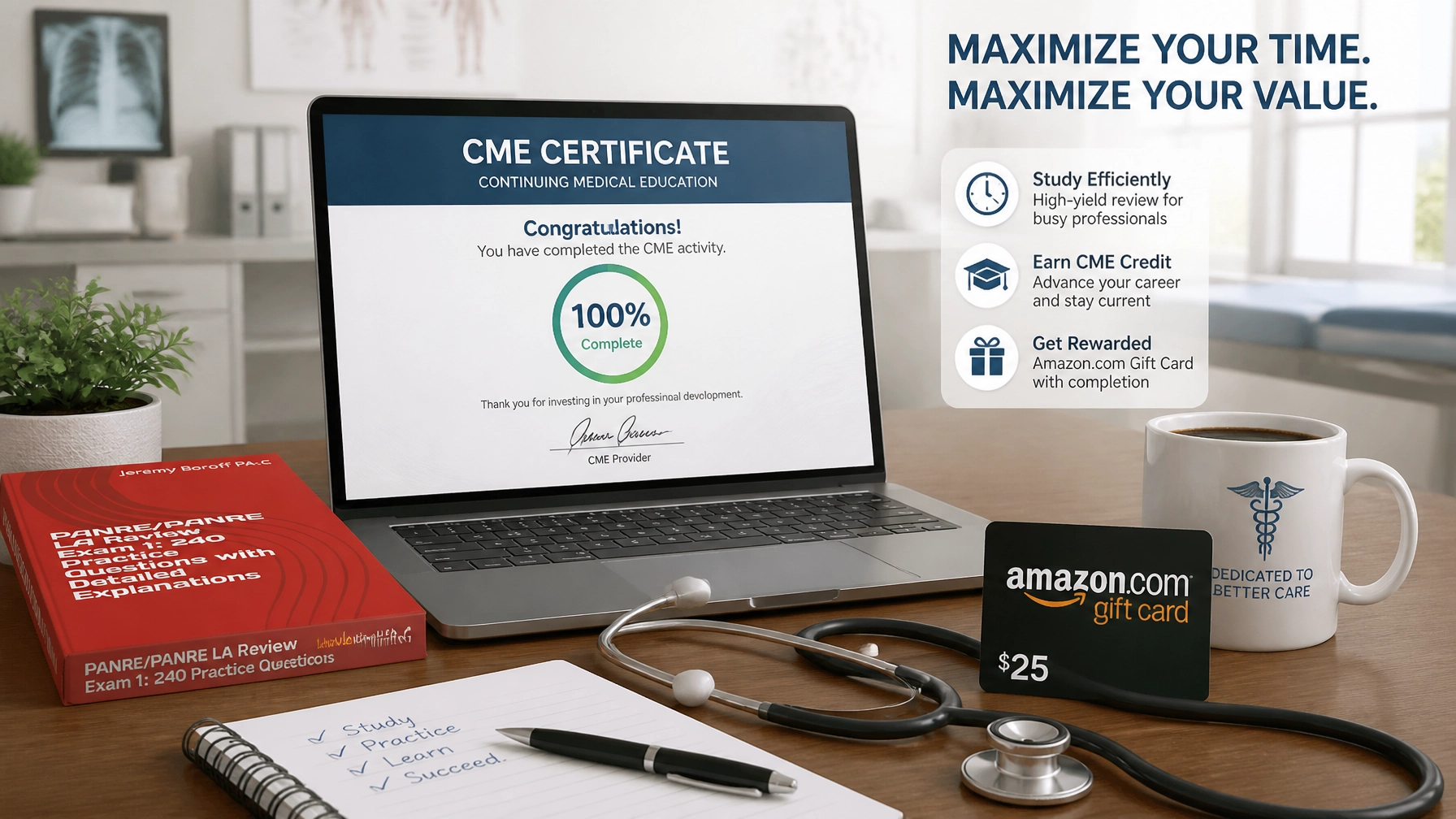
If you are a practicing PA looking for recertification prep, we also recommend exploring the PANRE Review Course, which offers 100 hours of AAPA Category 1 CME credit. We also offer CME packages with Amazon or Apple Gift Card add-ons ranging from $100 to $1500 to help you maximize your professional development fund.

Pharmacology and CME credit concept

Clinical Practice Questions

To demonstrate the clinical depth of the PAtopia app, review the following vignettes.

Question 1

Your patient is a 54-year-old male presenting to the Emergency Department with sudden onset of substernal chest pressure that radiates to his left jaw. He is diaphoretic and nauseated. Vital signs show a blood pressure of 155/92 mmHg, Heart Rate (HR) of 102 bpm, and SaO2 of 96% on room air. An EKG is performed and reveals ST-segment elevation in leads II, III, and aVF. Which coronary artery is most likely occluded?

A. Left Main Coronary Artery
B. Left Anterior Descending Artery
C. Circumflex Artery
D. Right Coronary Artery

Explanation:
D. Right Coronary Artery is the correct answer. The EKG findings of ST-segment elevation in leads II, III, and aVF indicate an acute inferior wall myocardial infarction. The Right Coronary Artery (RCA) supplies the inferior wall of the heart in the majority of patients (right-dominant circulation).

  • Choice A is incorrect as an occlusion of the Left Main Coronary Artery typically results in widespread ST-segment depression with elevation in aVR, and is often catastrophic.
  • Choice B is incorrect as the Left Anterior Descending (LAD) artery supplies the anterior and septal walls (Leads V1-V4).
  • Choice C is incorrect as the Circumflex artery typically supplies the lateral wall of the left ventricle (Leads I, aVL, V5-V6).

Question 2

Your patient is a 28-year-old female G1P0 at 32 weeks gestation presenting with a sudden onset of painless, bright red vaginal bleeding. She denies any trauma or recent sexual activity. Physical exam reveals a non-tender, soft uterus. Fetal heart tones are stable at 145 bpm. Which of the following is the most appropriate next step in management?

A. Transabdominal ultrasound
B. Digital vaginal exam
C. Immediate Cesarean section
D. Administration of oxytocin

Explanation:
A. Transabdominal ultrasound is the correct next step. The clinical presentation of painless bright red bleeding in the third trimester is highly suggestive of placenta previa. Ultrasound is the gold standard for diagnosing the position of the placenta.

  • Choice B is incorrect and potentially dangerous. A digital vaginal exam should never be performed until placenta previa has been ruled out by ultrasound, as it can trigger massive, life-threatening hemorrhage.
  • Choice C is incorrect as the fetal heart tones are stable and the patient is not yet hemodynamically unstable; diagnosis must precede surgical intervention.
  • Choice D is incorrect as oxytocin is used for labor induction/augmentation and is contraindicated in the presence of an undiagnosed cause of third-trimester bleeding or suspected previa.

About the Author

About the Author
Jeremy Boroff, MPAS, PA-C is a practicing Emergency Medicine Physician Assistant with 24 years of clinical experience. He is the author of multiple PA exam review books including Emergency Medicine End Of Rotation (EOR) Exam Review and Test Prep, Ace the Psychiatry & Behavioral Health EOR: The Ultimate Study Guide & Question Bank, and Gynecologic, Sexual, and Reproductive Health End of Rotation (EOR) Exam Review. As an educator and content creator, Jeremy founded CME Review Courses to help PAs pass their certification and recertification exams with high-yield, blueprint-aligned content. He is also the creator of the PAtopia app.

Download PAtopia and Start Your Trial

Efficiency is paramount in medical education. The PAtopia app is designed to provide high-yield, peer-reviewed content with zero friction. Whether you are prepping for your first PACKRAT or your final PANCE, the 3-day trial allows you to verify the value of the content before spending a single dollar.

For further questions regarding our CME packages or the PANRE Review Course, please visit our FAQ page.

Posted on

PAtopia’s Pharmacology Module: Earn AAPA Category 1 Credit While You Prep

Price: $229.99
Access: 27 Months
Deliverables: 11,000+ Board-Style Questions, Comprehensive Study Library, and AAPA Category 1 CME Credit

The burden of maintaining your PA certification involves a constant juggling act between clinical practice, board exam preparation, and meeting state-mandated CME requirements. For many physician assistants, pharmacology represents the most challenging section of the NCCPA Blueprint and the most critical area for clinical safety. CME Review Courses has integrated these requirements into a single, efficient stream via the PAtopia All-Access Pass. By utilizing the pharmacology modules within the PAtopia app, you can simultaneously prepare for the PANCE or PACKRAT while earning AAPA Category 1 CME credit in Pharmacology.

Two Birds, One Stone: Clinical Mastery and CME Compliance

Efficiency is the primary driver behind the PAtopia interface. Instead of spending money on a separate question bank for exam prep and a separate subscription for your 2-year CME cycle, PAtopia provides a dual-value platform. The questions you answer within the pharmacology module are designed to mirror the rigors of the PANCE and PANRE-LA, but they also serve as the basis for your pharmacology CME credits.

This is particularly relevant for PAs in states with specific pharmacology credit mandates for license renewal. By focusing your study time on high-yield drug interactions, mechanism of action (MOA) details, and prescribing guidelines, you are meeting both your professional certification goals and your legal licensing requirements in one workflow.

Pharmacology Study Data

The NCCPA 50% Self-Assessment Bonus

One of the most underutilized advantages in the PA profession is the NCCPA Self-Assessment Bonus. When you complete AAPA Category 1 Self-Assessment CME, the NCCPA awards a 50% bonus on the credits earned.

For example, if you complete a pharmacology module designated for 10 hours of AAPA Category 1 Self-Assessment credit, the NCCPA will count this as 15 hours toward your 100-hour requirement for the 2-year cycle. This weighting is applied automatically by the NCCPA when you log your credits. The PAtopia system is designed to leverage this advantage, allowing you to reach your 100-hour goal significantly faster than traditional Category 1 activities.

PAtopia App Access: iOS and Android

The PAtopia platform is built for the modern PA on the move. Whether you are in the clinic between patients or studying at home, you have full access to over 11,000 board-style questions.

  • iOS Download: Access the full library of pharmacology, internal medicine, and specialty questions on your iPhone or iPad.
  • Android Download: Available for all Android devices via the Google Play Store.
  • Free Trial: We offer a free 25-question sample quiz and a 3-day test drive to ensure the platform meets your educational needs before purchasing.

Maximizing Your CME Budget with Gift Card Add-Ons

We understand that many PAs have a yearly CME allowance from their employer. To help you maximize the value of these funds, we offer CME with Amazon and Apple Gift Card add-ons. This allows you to add a $100 to $1500 gift card to your CME purchase. This is an efficient way to use your remaining CME money to not only secure your board review materials and pharmacology credits but also to purchase the hardware (like an iPad or MacBook) or educational resources (like medical textbooks) you need for your practice.

CME Gift Card Add-Ons


Clinical Pharmacology Practice Questions

To maintain the high standards of our review materials, we have included three pharmacology vignettes below. These are representative of the complexity and style found within the PAtopia All-Access Pass.

Practice Question 1

Your patient is a 64-year-old male with a history of chronic heart failure (HFrEF) and a current ejection fraction of 30%. He presents for a follow-up. He is currently taking Lisinopril, Carvedilol, and Furosemide. His blood pressure is 132/78 mmHg, and his heart rate is 68 bpm. He reports persistent NYHA Class II symptoms. Which of the following medications should be substituted for Lisinopril to further reduce the risk of cardiovascular death and hospitalization?

A. Losartan (Cozaar)
B. Sacubitril/Valsartan (Entresto)
C. Spironolactone (Aldactone)
D. Hydralazine and Isosorbide Dinitrate

Correct Answer: B. Sacubitril/Valsartan (Entresto)

Explanation: In patients with HFrEF (Stage C) who remain symptomatic on standard therapy (ACEi/ARB and Beta-blocker), switching the ACE inhibitor or ARB to an Angiotensin Receptor-Neprilysin Inhibitor (ARNI) like Sacubitril/Valsartan is recommended. Clinical trials, specifically PARADIGM-HF, demonstrated that ARNI therapy is superior to ACE inhibitors in reducing mortality and hospitalizations.

  • Losartan (Choice A) is an ARB and is usually used for patients who cannot tolerate ACE inhibitors, but it does not offer the additional benefit of neprilysin inhibition.
  • Spironolactone (Choice C) is an add-on therapy (MRA), not a substitution for an ACE inhibitor.
  • Hydralazine (Choice D) is generally reserved for patients who cannot tolerate ACEi/ARB or as an add-on specifically for African American patients with persistent symptoms.

Practice Question 2

Your patient is a 45-year-old female with a history of Type 2 Diabetes Mellitus and a BMI of 34 kg/m². Her latest HbA1c is 8.1% despite adherence to Metformin 1000 mg BID. She is interested in a medication that will help with weight loss while improving her glycemic control. She has a history of medullary thyroid carcinoma in her family. Which of the following medications is contraindicated in this patient?

A. Dapagliflozin (Farxiga)
B. Sitagliptin (Januvia)
C. Liraglutide (Victoza)
D. Glipizide (Glucotrol)

Correct Answer: C. Liraglutide (Victoza)

Explanation: Liraglutide, like other GLP-1 receptor agonists, carries a black box warning due to its association with C-cell tumors in rodent studies. It is strictly contraindicated in patients with a personal or family history of Medullary Thyroid Carcinoma (MTC) or Multiple Endocrine Neoplasia syndrome type 2 (MEN 2).

  • Dapagliflozin (Choice A) is an SGLT2 inhibitor and does not carry this contraindication.
  • Sitagliptin (Choice B) is a DPP-4 inhibitor and is safe in terms of MTC.
  • Glipizide (Choice D) is a sulfonylurea and is not associated with thyroid cancer, though it is less desirable here as it often causes weight gain rather than weight loss.

Practice Question 3

Your patient is a 28-year-old male with a history of Generalized Anxiety Disorder (GAD). He was recently started on Paroxetine 20 mg daily. He returns to the clinic reporting new-onset agitation, diaphoresis, and tremors. On physical exam, you note hyperreflexia and spontaneous muscle clonus. His temperature is 101.2°F. He mentions he recently started taking an over-the-counter cough medicine. Which of the following is the most likely diagnosis?

A. Neuroleptic Malignant Syndrome
B. Serotonin Syndrome
C. Anticholinergic Toxicity
D. Malignant Hyperthermia

Correct Answer: B. Serotonin Syndrome

Explanation: The constellation of neuromuscular hyperactivity (clonus, hyperreflexia), autonomic instability (fever, diaphoresis), and mental status changes (agitation) in a patient on an SSRI strongly suggests Serotonin Syndrome. This is often precipitated by the addition of a second serotonergic agent, such as Dextromethorphan found in OTC cough suppressants.

  • Neuroleptic Malignant Syndrome (Choice A) typically presents with "lead-pipe" rigidity rather than hyperreflexia/clonus and is associated with dopamine antagonists.
  • Anticholinergic Toxicity (Choice C) presents with "dry" skin and decreased bowel sounds, unlike the "wet" skin (diaphoresis) seen in Serotonin Syndrome.
  • Malignant Hyperthermia (Choice D) is an acute reaction to volatile anesthetics or succinylcholine, not SSRIs.

Practice Questions UI

Take Control of Your Pharmacology Preparation

Pharmacology isn't just a section on the NCCPA Blueprint; it is the cornerstone of clinical practice. The PAtopia All-Access Pass ensures you are prepared for the 11,000 questions you might face on your boards while securing the AAPA Category 1 CME credits you need for your career.

If you are looking for a comprehensive recertification solution, our PANRE Review Course offers 100 hours of AAPA Category 1 credit. For those needing a focused pharmacology update, the PAtopia pharmacology module is the most efficient choice for your time and your budget.

About the Author

Jeremy Boroff, MPAS, PA-C is a practicing Emergency Medicine Physician Assistant with 24 years of clinical experience. He is the author of multiple PA exam review books including Emergency Medicine End Of Rotation (EOR) Exam Review and Test Prep, Ace the Psychiatry & Behavioral Health EOR: The Ultimate Study Guide & Question Bank, and Gynecologic, Sexual, and Reproductive Health End of Rotation (EOR) Exam Review. As an educator and content creator, Jeremy founded CME Review Courses to help PAs pass their certification and recertification exams with high-yield, blueprint-aligned content. He is also the creator of the PAtopia app.

Explore the PAtopia All-Access Pass Here


Posted on

How PAtopia’s Spaced Repetition System Helps You Retain More for the PANCE

When preparing for the Physician Assistant National Certifying Exam (PANCE), the sheer volume of medical knowledge required is overwhelming. Most students default to passive review, rereading notes, highlighting textbooks, or watching hours of video. While these methods provide a temporary sense of familiarity, they fail to combat the "forgetting curve."

To achieve long-term retention and mastery of the NCCPA Blueprint, you need a system that forces active recall and schedules reviews based on your specific performance. This is why PAtopia was built with a robust Spaced Repetition System (SRS).

PAtopia All-Access Pass Details:


The Science of the Forgetting Curve vs. Spaced Repetition

Cognitive science demonstrates that human memory follows a predictable pattern of decay. Without intervention, you will likely forget up to 50% of what you studied within 24 to 48 hours. This is the "forgetting curve."

Spaced Repetition is the clinical antidote to this decay. Instead of cramming all your cardiology study into one weekend, SRS schedules reviews of that material at increasing intervals. By testing yourself right at the point where you are about to forget the information, you strengthen the neural pathways and move that knowledge from short-term to long-term memory.

Diagram of the Forgetting Curve vs Spaced Repetition

Passive Review vs. Active Recall

Passive review (rereading) is inefficient because it doesn't challenge the brain to retrieve information. Active recall, facilitated by high-quality practice questions, requires your brain to work. PAtopia leverages this by integrating over 11,000 questions across all major PA school milestones, including:

  • Internal Medicine
  • Family Medicine
  • Emergency Medicine
  • Surgery
  • Pediatrics
  • Psychiatry
  • GSR/Women's Health

How PAtopia’s Adaptive Algorithm Works

The PAtopia app doesn't just give you a static list of questions. Its algorithm is designed to adapt to your performance in real-time. When you miss a question or flag a topic as "difficult," the system prioritizes those concepts in your upcoming review sessions.

1. Automated Scheduling of Missed Questions

In a traditional review book, once you finish a chapter, those questions are often forgotten. In PAtopia, missed questions are automatically cycled back into your queue. This ensures that your weakest areas, whether it's acid-base disorders or EKG interpretation, receive the most attention.

2. Reinforcing Weak Areas

The app provides detailed system analytics after every exam. If your score in Cardiovascular is 85% but your Neurology score is 60%, the PAtopia system identifies this delta. By focusing your spaced repetition on Neurology, the app maximizes your study efficiency.

3. Integrated Study Libraries

PAtopia includes an 18-chapter study library for PANCE prep and specific libraries for each of the 7 EOR rotations. These libraries are not meant for passive reading; they serve as a reference point for the active recall questions you face in the mock exams.

Mobile app interface for PAtopia showing mastery levels


Clinical Practice Scenarios

To demonstrate the depth of the PAtopia question bank, review the following clinical vignettes. These represent the style and difficulty of the 11,000+ questions included in the PAtopia All-Access Pass.

Question 1: Cardiology

Your patient is a 68-year-old male with a history of hypertension and tobacco use who presents with sudden onset of substernal chest pain radiating to his left jaw. On physical exam, his BP is 158/92, HR is 98, and SaO2 is 96% on room air. An EKG shows ST-segment elevation in leads II, III, and aVF. Which of the following is the most appropriate next step in management?

A) Administer IV beta-blockers
B) Immediate referral for primary percutaneous coronary intervention (PCI)
C) Order a stat chest X-ray to rule out aortic dissection
D) Start high-dose aspirin and observe for 4 hours

Correct Answer: B) Immediate referral for primary percutaneous coronary intervention (PCI)
Explanation: The patient is presenting with an inferior wall ST-elevation myocardial infarction (STEMI). The standard of care is revascularization via primary PCI within 90 minutes of first medical contact. Choice A is contraindicated in the acute phase of an inferior MI if there is concern for right ventricular involvement or bradycardia. Choice C would delay definitive care for a clear STEMI. Choice D is insufficient for an occlusive MI.

Question 2: Emergency Medicine

Your patient is a 24-year-old female who was brought to the ED after a motor vehicle collision (MVC). She is conscious but confused. Vital signs show HR 122, BP 88/54, and RR 26. On physical exam, you note muffled heart sounds and jugular venous distension (JVD). What is the most likely diagnosis?

A) Tension pneumothorax
B) Cardiac tamponade
C) Hypovolemic shock
D) Pulmonary embolism

Correct Answer: B) Cardiac tamponade
Explanation: This patient is presenting with Beck's Triad: hypotension, JVD, and muffled heart sounds. In the setting of trauma (MVC), this is highly suggestive of cardiac tamponade. While tension pneumothorax (Choice A) also causes hypotension and JVD, it would typically present with decreased breath sounds on the affected side and tracheal deviation. Hypovolemic shock (Choice C) would not typically cause JVD.

Question 3: OB/GYN (GSR)

Your patient is a 29-year-old female, G2P1, at 34 weeks gestation who presents with sudden onset of painful vaginal bleeding. She denies any recent trauma. On exam, her uterus is firm and tender to palpation. Fetal heart tones show a baseline of 140 bpm with occasional late decelerations. What is the most likely diagnosis?

A) Placenta previa
B) Placental abruption
C) Vasa previa
D) Uterine rupture

Correct Answer: B) Placental abruption
Explanation: Painful vaginal bleeding in the third trimester combined with a firm, tender uterus is the classic presentation for placental abruption. Placenta previa (Choice A) is typically painless. Vasa previa (Choice C) involves painless bleeding and rapid fetal distress following the rupture of membranes. Uterine rupture (Choice D) is more common during active labor in patients with prior uterine scars.


Maximize Your CME Allowance

For PAs in clinical practice, using your CME money effectively is critical. While PAtopia is designed primarily for students (PACKRAT, EOR, EOC, PANCE), CME Review Courses also offers dedicated options for practicing clinicians and those preparing for the PANRE.

  • PANRE Review Course: Offers 100 hours of Category 1 AAPA credit. This is the most efficient way to fulfill your five-year CME cycle requirements while preparing for the exam.
  • Pharmacology Review: Our Pharmacology Review CME Question Bank offers Category 1 AAPA Credit specifically in pharmacology. This is an excellent add-on for nurse practitioners and PAs looking to satisfy state-specific pharmacology requirements.
  • CME with Gift Cards: We offer CME packages that include Amazon or Apple Gift Card add-ons ranging from $100 to $1500. This allow you to use your employer-provided CME allowance to purchase the tools you need for your education, such as a new iPad for the PAtopia app.

Note: AAPA Category 1 credit for nurse practitioners varies by state. Physicians can claim Category 2 credit for these courses.

Diverse PA students using PAtopia together


Conclusion: Stop Cramming, Start Retaining

Relying on passive review is a gamble you cannot afford to take with the PANCE or your EOR exams. By utilizing PAtopia’s Spaced Repetition System, you ensure that every hour of study contributes to long-term mastery rather than short-term familiarity.

With 27 months of access to over 11,000 questions, PAtopia is the most comprehensive tool for your entire PA school journey, from your first rotation to your national certification.

About the Author
Jeremy Boroff, MPAS, PA-C is a practicing Emergency Medicine Physician Assistant with 24 years of clinical experience. He is the author of multiple PA exam review books including Emergency Medicine End Of Rotation (EOR) Exam Review and Test Prep, Ace the Psychiatry & Behavioral Health EOR: The Ultimate Study Guide & Question Bank, and Gynecologic, Sexual, and Reproductive Health End of Rotation (EOR) Exam Review. As an educator and content creator, Jeremy founded CME Review Courses to help PAs pass their certification and recertification exams with high-yield, blueprint-aligned content. He is also the creator of the PAtopia app.

Take the next step in your PANCE prep:


Posted on

Inside PAtopia: A Full Tour of the 1,125 PACKRAT Practice Questions

Success on the Physician Assistant Clinical Knowledge Rating and Assessment Tool (PACKRAT) requires more than just textbook reading. It requires repetitive exposure to board-style questions that mimic the actual exam’s logic and structure. PAtopia was developed to provide this high-volume exposure in a streamlined, mobile-first environment.

Course Logistics:

  • Price: $229.99 (PAtopia All-Access Pass)
  • Duration: 27 Months of access
  • Deliverables: 1,125 PACKRAT-specific questions divided into 5 full-length exams
  • Total Content: Access to over 11,000 board-style questions across PANCE, EOC, and all 7 EOR specialties.

The All-In-One PA Student Ecosystem

PAtopia is not a simple question bank; it is an integrated review system designed to follow a student from the first day of didactic year through PANCE certification. The PACKRAT module specifically addresses the comprehensive nature of the self-assessment exam typically administered at the end of the didactic phase and again during the clinical year.

Unlike other platforms that charge monthly recurring fees, PAtopia utilizes a one-time purchase model. Once you secure the PAtopia All-Access Pass, you own the content for 27 months. This ensures you have access for your PACKRAT 1, every End of Rotation (EOR) exam, your End of Curriculum (EOC) exam, and your initial PANCE attempt.

Detailed Specialty Breakdown

The 1,125 questions within the PACKRAT section are weighted to reflect the NCCPA Blueprint categories. By practicing within these specific domains, students can identify clinical weaknesses before they sit for the actual proctored exam.

1. Cardiology (Approx. 13%)

Cardiology remains the highest-yield section of the PACKRAT. Questions focus heavily on the management of hypertension, recognition of acute coronary syndrome (ACS), and distinguishing between different valvular pathologies.

Clinical Scenario:
Your patient is a 68-year-old male with a history of hypertension and tobacco use who presents with sudden onset of severe, tearing chest pain that radiates to his back. His blood pressure is 190/110 mmHg in the right arm and 165/95 mmHg in the left arm. A chest X-ray reveals a widened mediastinum.

Which of the following is the most appropriate next step in management?
A. Intravenous thrombolytics
B. Intravenous beta-blockers (e.g., Esmolol)
C. Emergency cardiac catheterization
D. Oral aspirin and clopidogrel

Explanation:
Choice B is correct. This patient is presenting with a classic clinical picture of an aortic dissection. The immediate goal is to reduce heart rate and blood pressure to decrease shear stress on the aortic wall. Intravenous beta-blockers are the first-line pharmacologic intervention. Choice A and D would exacerbate bleeding in a dissection. Choice C is for myocardial infarction, not dissection.

2. Pulmonology (Approx. 10%)

Pulmonary questions in PAtopia focus on the differentiation of obstructive versus restrictive lung diseases, as well as the acute management of pneumonia and pulmonary embolism.

3. Gastrointestinal and Nutrition (Approx. 9%)

Expect questions covering a broad range of pathologies from GERD and peptic ulcer disease to more complex presentations of inflammatory bowel disease (IBD) and hepatic encephalopathy.

Official PANCE Review Book Cover by Jeremy Boroff PA-C, part of the comprehensive study materials included in the PAtopia ecosystem.

Board-Style Rationales and 5 Full-Length Exams

PAtopia includes 5 full-length PACKRAT mock exams, each consisting of 225 questions. This mimics the actual stamina required for the three-hour examination.

Every question in the PAtopia bank includes:

  • Direct Rationales: We lead with why the correct answer is correct. There is no fluff or unnecessary filler.
  • Distractor Explanations: We provide brief, exclusionary reasons why the other options are incorrect, helping you build clinical logic.
  • References: Content is backed by clinical guidelines and standard medical texts.

Beyond the PACKRAT: The Complete Journey

While the 1,125 PACKRAT questions are a core feature, the PAtopia All-Access Pass also includes:

  • 7 EOR Reviews: Full prep for Emergency Medicine, Family Medicine, Internal Medicine, Pediatrics, Psychiatry, Surgery, and OB/GYN.
  • 15 PANCE Mock Exams: A total of 4,500 questions specifically tailored to the PANCE blueprint.
  • EOC Review: 1,500 questions for the End of Curriculum exam.

For those who have already graduated and are looking for professional certification, CME Review Courses offers a dedicated PANRE Review Course which provides 100 hours of AAPA Category 1 CME credit. This is an efficient way to fulfill your CME requirements while preparing for recertification.

Clinical Management Practice

Practice questions in PAtopia are designed to test not just recognition, but clinical decision-making.

Clinical Scenario:
Your patient is a 24-year-old female who presents with lower abdominal pain and a malodorous vaginal discharge. On physical exam, there is significant cervical motion tenderness. She is febrile (101.4°F) and her HR is 110.

What is the most appropriate first-line outpatient antibiotic regimen?
A. Ceftriaxone 500mg IM + Doxycycline 100mg PO BID for 14 days + Metronidazole 500mg PO BID for 14 days
B. Azithromycin 1g PO single dose
C. Ciprofloxacin 500mg PO BID for 7 days
D. Penicillin G Benzathine 2.4 million units IM

Explanation:
Choice A is correct. The patient is presenting with Pelvic Inflammatory Disease (PID). Current CDC guidelines for outpatient management include a single dose of Ceftriaxone, followed by Doxycycline and Metronidazole to cover polymicrobial infection including anaerobes. Choice B is for uncomplicated Chlamydia. Choice C is not recommended due to resistance patterns. Choice D is for Syphilis.

Why One-Time Purchases Beat Subscriptions

The majority of PA prep platforms utilize a subscription model that penalizes students for taking longer to study. PAtopia offers a 27-month access window for a single price. This covers you from the end of your didactic year through your clinical rotations and your first PANCE attempt.

  • No monthly recurring charges.
  • No "renewal fees" if your schedule shifts.
  • Access on iOS, Android, and Desktop.

Emergency Medicine End Of Rotation Exam Review Book Cover, showing the depth of specialty content available in the PAtopia app.

About the Author

Jeremy Boroff, MPAS, PA-C is a practicing Emergency Medicine Physician Assistant with 24 years of clinical experience. He is the author of multiple PA exam review books including Emergency Medicine End Of Rotation (EOR) Exam Review and Test Prep, Ace the Psychiatry & Behavioral Health EOR: The Ultimate Study Guide & Question Bank, and Gynecologic, Sexual, and Reproductive Health End of Rotation (EOR) Exam Review. As an educator and content creator, Jeremy founded CME Review Courses to help PAs pass their certification and recertification exams with high-yield, blueprint-aligned content. He is also the creator of the PAtopia app.

Start Your 3-Day Free Trial

You do not need to create an account or provide a credit card to see the quality of our content. We offer a 72-hour free trial of the PAtopia app.

  • iOS: Search "PAtopia" in the Apple App Store.
  • Android: Search "PAtopia" in the Google Play Store.
  • Web Preview: Visit the PAtopia New Student Section to take a 25-question sample quiz immediately.

If you are looking for more than just student prep, explore our CME with Gift Card options. We offer CME packages that include Amazon or Apple gift cards (up to $1,500), allowing you to maximize your employer's CME allowance while receiving high-yield clinical education.

Conclusion

The PACKRAT is a significant milestone in your PA education. It serves as the primary indicator of your readiness for clinical rotations and, eventually, the PANCE. By utilizing the 1,125 board-style questions inside PAtopia, you are not just memorizing facts: you are training your brain to recognize patterns and make correct clinical decisions under pressure.

Posted on

PANRE Vs PANRE-LA: Which Is Better For Your Recertification Cycle?

PANRE Review Course Details:

  • Price: $399.99 (optional Amazon or Apple gift card add-on, $100–$1,500)
  • Duration: 30 months of access to all course materials
  • Deliverables: 100 Hours of AAPA Category 1 CME Credit
  • Practice Questions: Five full-length 240-question practice exams (1,200 total), plus the PANRE Study Library

The 10-year recertification cycle is a defining feature of the Physician Assistant profession. As you approach your recertification window, the NCCPA offers two distinct pathways: the traditional Physician Assistant National Recertification Examination (PANRE) and the Physician Assistant National Recertification Examination – Longitudinal Assessment (PANRE-LA). Understanding the logistical and educational differences between these two options is critical for maintaining your certification without unnecessary professional disruption.

The Traditional PANRE: The One-Day Marathon

The traditional PANRE remains the standard for PAs who prefer a consolidated assessment. This exam is a four-hour, 240-question, multiple-choice test administered in a proctored environment at a Pearson VUE testing center.

For the 2026 recertification cohort, the traditional PANRE is the mandatory path for any PA who did not successfully enroll in the PANRE-LA during the application window that closed in 2022. This format requires a high-intensity study period followed by a single day of testing. It is a closed-book examination, meaning you must rely entirely on your internal clinical knowledge and recall of the NCCPA Blueprint.

Comparison of PANRE vs PANRE-LA logistics

The PANRE-LA: A Longitudinal Approach

The PANRE-LA represents a shift toward continuous learning. Instead of a single high-stakes day, the PANRE-LA delivers 25 questions per quarter over a period of up to three years (12 quarters total).

Key Features of PANRE-LA:

  • Open Book: You are permitted to use external medical resources (textbooks, UpToDate, etc.) while answering questions.
  • Flexible Timing: Questions can be answered on any device with an internet connection at your convenience during the quarter.
  • Immediate Feedback: After each question, you receive the correct answer, a clinical rationale, and references for further study.
  • Scoring: Your performance is based on the best 8 out of 12 quarters, allowing for "off" periods or life events without jeopardizing your certification status.

Deciding Between the Two Pathways

The choice between PANRE and PANRE-LA often comes down to your individual learning style and clinical schedule.

If you are a PA who thrives under pressure and prefers to "get it over with," the traditional PANRE is likely your best option. It allows you to dedicate a few weeks to intensive review and move on with your career for another decade.

Conversely, the PANRE-LA is designed for those who prefer to integrate assessment into their daily routine. It reduces "test day anxiety" and uses the "testing effect" to improve long-term retention. However, it requires a long-term commitment. Missing multiple quarters can lead to a failure to meet the passing standard, at which point you would be required to take the traditional PANRE in your 10th year.

Regardless of the pathway you choose, the medical content remains consistent with the NCCPA Blueprint. You must be proficient in Cardiology, Pulmonology, Gastroenterology, Orthopedics, and the other major organ systems.

High-Efficiency Preparation with 100 Hours of AAPA Category 1 Credit

Preparation for either exam requires a structured review of clinical medicine. Our PANRE Review Course is specifically designed to cover the core topics required by the NCCPA.

One of the most significant advantages of our program is that the PANRE Review course provides 100 hours of AAPA Category 1 CME credit. This allows you to complete your entire biennial CME requirement while simultaneously preparing for your recertification exam.

PANRE Review Course Exam Prep Material

Clinical Vignette: Cardiovascular Assessment

To maintain proficiency for the PANRE or PANRE-LA, you must be able to quickly synthesize clinical data and apply the current standard of care. Consider the following scenario:

Your patient is a 64-year-old male presenting to the emergency department with a sudden onset of substernal chest pain that radiates to his left jaw. The pain began 45 minutes ago while he was mowing his lawn. He appears diaphoretic and distressed.

Vital Signs:

  • HR: 112 bpm
  • BP: 158/94 mmHg
  • SaO2: 94% on room air
  • Temp: 98.8°F

An EKG is performed and demonstrates 3mm ST-segment elevation in leads V2, V3, and V4.

What is the most appropriate next step in the management of this patient?

A) Obtain serial troponins and admit to the observation unit.
B) Administer 324mg of chewable aspirin and activate the cardiac catheterization lab.
C) Perform a STAT CT Angiography of the chest to rule out aortic dissection.
D) Administer intramuscular morphine and schedule an outpatient stress test.

Correct Answer: B
Explanation: This patient is presenting with a classic ST-segment elevation myocardial infarction (STEMI) of the anterior wall. In the setting of an acute STEMI, the priority is rapid reperfusion. Administering aspirin and activating the cardiac catheterization lab for percutaneous coronary intervention (PCI) is the gold standard of care. Delaying for serial troponins (Choice A) or CT imaging (Choice C) increases myocardial necrosis and mortality. Outpatient follow-up (Choice D) is contraindicated in the acute phase of an MI.

Maximizing Your CME Budget: Amazon and Apple Gift Cards

We understand that medical education is an investment. To help you further enrich your professional library or clinical tools, we offer CME with Gift Card add-ons.

When you purchase the PANRE Review Course, you have the option to add an Amazon or Apple Gift Card ranging from $100 to $1,500 to your order. This is an efficient way to utilize your employer-provided CME allowance. Many PAs use these gift cards to purchase clinical equipment, medical textbooks, or technology to support their practice.

CME Course with Gift Card Add-on Options

Content Mastery: Specialized Review

Preparation should not be generic. Our course content was written by physician assistants for physician assistants, ensuring the material is relevant to the PANCE/PANRE exams. We offer in-depth modules covering:

  • Cardiovascular System
  • Emergency Medicine
  • Internal Medicine Hospitalist
  • Orthopedics and Dermatology
  • Psychiatry, Neurology, and OB/GYN

While our courses are primarily targeted at PAs, nurse practitioners and physicians also find significant value in these reviews. Note that for physicians, this content counts as Category 2 CME rather than Category 1.

Clinical Vignette: Pulmonary Assessment

Your patient is a 28-year-old female with a history of mild persistent asthma who presents with increased shortness of breath and wheezing over the last 24 hours. She has been using her albuterol inhaler every 2 hours with minimal relief.

Physical Exam Findings:

  • Lungs: Diffuse expiratory wheezing and prolonged expiratory phase.
  • Skin: No cyanosis noted.
  • Speech: Speaking in short sentences.

Vital Signs:

  • HR: 105 bpm
  • RR: 24 breaths/min
  • SaO2: 92% on room air

Following the administration of a nebulized beta-agonist and anticholinergic, which medication should be added to her acute treatment plan to prevent late-phase inflammatory response?

A) Inhaled Fluticasone
B) Oral Prednisone
C) Intravenous Magnesium Sulfate
D) Subcutaneous Epinephrine

Correct Answer: B
Explanation: Oral Prednisone (or another systemic corticosteroid) is indicated in the management of an acute asthma exacerbation that does not respond promptly to SABA. Systemic steroids are essential for reducing airway inflammation and preventing relapse. Inhaled corticosteroids (Choice A) are for long-term maintenance, not acute rescue. Magnesium (Choice C) and Epinephrine (Choice D) are typically reserved for life-threatening exacerbations that fail to respond to standard first-line therapies.

Conclusion

Whether you choose the traditional PANRE or the PANRE-LA, your goal is to demonstrate clinical competency and maintain your certification. The traditional PANRE offers speed and closure, while the PANRE-LA offers flexibility and a lower-stress environment.

By utilizing our PANRE Review Course, you can earn 100 hours of AAPA Category 1 CME credit, prepare for your exam with board-style questions, and even maximize your CME budget with an Amazon or Apple gift card add-on.

Stay focused on the NCCPA Blueprint and use high-quality, clinical-based resources to ensure your success in this recertification cycle.

Posted on

PANRE Review Course vs. PANRE-LA: Which Is Better For Your 10-Year Cycle?

Maintaining your certification as a Physician Assistant requires navigating the NCCPA’s recertification requirements every decade. With the permanent introduction of the PANRE-LA (Longitudinal Assessment), PAs now have two distinct pathways to maintain their credentials. Choosing between the traditional proctored exam and the longitudinal format depends on your clinical schedule, testing preference, and how you manage your CME requirements.

Price: $399.99 (Base Package)
Duration of Access: 30 Months
Deliverables: 100 Hours of AAPA Category 1 Self-Assessment CME Credit
Content: 17 Hours of Video Lecture and 1,672 Board-Style Questions

Understanding the Traditional PANRE

The traditional PANRE remains the standard choice for PAs who prefer a "one and done" approach. This is a high-stakes, proctored exam administered at a Pearson VUE testing center.

  • Format: 240 multiple-choice questions.
  • Environment: Proctored, closed-book, and timed.
  • Timeline: Taken in years 9 or 10 of the certification cycle.
  • Risk Profile: If you do not pass, you must wait for a retake window, which can create significant pressure as your certification expiration date approaches.

For many PAs, the traditional PANRE is the most efficient way to recertify because it requires only a single day of testing. However, the high-stakes nature and the need to travel to a testing center are significant drawbacks for those with busy clinical or personal schedules.

Understanding the PANRE-LA

The PANRE-LA was developed to reduce the stress associated with a single-day exam and to promote continuous learning.

  • Format: 25 questions delivered online each quarter.
  • Environment: Open-book; you can use printed or online references.
  • Timeline: Spans years 7 through 9 of your 10-year cycle.
  • Feedback: Immediate feedback and rationales are provided after each question.

While the PANRE-LA is generally lower stress, it requires a three-year commitment. You must complete 8 out of 12 available quarters. If you fail to meet the passing standard through the PANRE-LA, you are still required to take the traditional PANRE in year 10.

Comparing the Study Requirements

Regardless of the pathway you choose, the medical content is based on the NCCPA Blueprint. You are expected to demonstrate proficiency across all major organ systems, from Cardiology to Psychiatry.

If you choose the PANRE-LA, you will need a reliable reference source to answer questions within the 5-minute time limit per item. If you choose the traditional PANRE, you need a comprehensive review of the entire blueprint to ensure success in a closed-book environment.

Our PANRE Review Course is specifically designed to support both pathways. With 1,672 questions and 17 hours of blueprint-specific video content, it provides the depth needed for the traditional exam and the quick-reference capability needed for the PANRE-LA.

PANRE/PANRE-LA Review Exam 1 Book Cover by Jeremy Boroff PA-C

Maximize Your CME: The 150-Credit Advantage

One of the most significant benefits of choosing our PANRE Review Course is the CME weighting. The course offers 100 hours of AAPA Category 1 Self-Assessment CME credit.

For NCCPA certification maintenance, the NCCPA applies an additional 50% weighting to self-assessment credits. This means when you log our 100-hour course, you are automatically credited with 150 hours toward your requirements. This efficiency allows you to fulfill your entire Category 1 requirement for a cycle in a single course.

Clinical Vignette 1: Cardiology

Your patient is a 64-year-old male presenting with a two-day history of palpitations and mild shortness of breath. His past medical history includes hypertension and a previous myocardial infarction. Physical exam reveals an irregularly irregular pulse at a rate of 122 bpm. Blood pressure is 110/70 mmHg. SaO2 is 96% on room air. An EKG confirms atrial fibrillation. Which of the following is the most appropriate next step in the long-term management of this patient to reduce the risk of stroke?

A. Aspirin 81 mg daily
B. Oral anticoagulation with a DOAC (e.g., Apixaban)
C. Rate control with Metoprolol only
D. Immediate electrical cardioversion

Explanation: B is the correct answer. This patient has a high CHA2DS2-VASc score due to age, hypertension, and prior vascular disease (MI), necessitating long-term anticoagulation. Direct Oral Anticoagulants (DOACs) are preferred over Warfarin or Aspirin for stroke prevention in non-valvular atrial fibrillation. Aspirin (A) is insufficient for high-risk stroke prevention. Rate control (C) manages symptoms but does not address stroke risk. Cardioversion (D) is not indicated as the first step in a hemodynamically stable patient without first addressing the risk of thromboembolism.

Clinical Vignette 2: Dermatology

Your patient is a 24-year-old female complaining of a "herald patch" on her trunk that appeared one week ago, followed by a widespread eruption of smaller, oval, erythematous scaling plaques in a "Christmas tree" distribution. She denies significant pruritus or systemic symptoms. Which of the following is the most likely diagnosis?

A. Guttate psoriasis
B. Pityriasis rosea
C. Tinea corporis
D. Secondary syphilis

Explanation: B is the correct answer. Pityriasis rosea typically begins with a single herald patch followed by a secondary eruption in a classic Christmas tree pattern along skin cleavage lines. Guttate psoriasis (A) usually follows a streptococcal infection and presents with smaller "drop-like" lesions. Tinea corporis (C) presents as annular lesions with central clearing and would not typically follow this widespread distribution. Secondary syphilis (D) can present with a trunk rash but often involves the palms and soles and includes systemic symptoms.

PANRE/PANRE-LA Review Exam 2 Book Cover by Jeremy Boroff PA-C

CME with Amazon and Apple Gift Cards

A unique advantage of our program is the ability to maximize your employer-provided CME stipend. Many PAs find themselves with remaining funds at the end of the year. We offer CME with Gift Card add-ons ranging from $100 to $1500.

By adding an Amazon or Apple gift card to your PANRE Review Course purchase, the total cost is bundled into a single price. This allows you to secure your 100 hours of Category 1 credit and receive a gift card to purchase additional educational materials, such as a new tablet for hospital rounds or medical textbooks.

CME with Amazon and Apple Gift Cards and Stethoscope

Clinical Vignette 3: Gastroenterology

Your patient is a 45-year-old male presenting with severe epigastric pain that radiates to his back. He describes the pain as steady and boring. He has a history of alcohol use disorder. On exam, he is tachycardic and has significant epigastric tenderness. Laboratory results show a lipase level of 1,200 U/L (normal <160 U/L). What is the most important initial step in the management of this patient?

A. Aggressive intravenous fluid resuscitation
B. Urgent ERCP
C. Prophylactic intravenous antibiotics
D. Immediate surgical consultation for debridement

Explanation: A is the correct answer. The patient has acute pancreatitis. Aggressive fluid resuscitation is the cornerstone of initial management to maintain organ perfusion and prevent complications like necrosis. ERCP (B) is only indicated if there is concomitant cholangitis or biliary obstruction. Prophylactic antibiotics (C) are not recommended for routine acute pancreatitis. Surgery (D) is reserved for infected necrosis or specific complications, not the initial phase.

Conclusion: Which Path is Right for You?

If you prefer to maintain your certification through continuous assessment and want to avoid the stress of a single testing day, the PANRE-LA is your best option. However, if you want to complete your requirement quickly and move on, the traditional PANRE remains effective.

In either scenario, preparation is the deciding factor. Our PANRE Review Course provides the comprehensive coverage of the NCCPA Blueprint necessary to succeed. With the added value of 100 Category 1 credits (weighted to 150 by the NCCPA) and the flexibility of CME with Gift Cards, it is the most efficient use of your time and professional development funds.

Posted on

Daily CME Tip: How to Choose the Best PANRE Review Course for Family Medicine (Including Customizable Amazon Gift Card Options)

Choosing a panre review course is a critical decision for your clinical career and certification status. When you work in Family Medicine, your scope is broad, and your review must be equally comprehensive yet focused on the highest-yield topics defined by the NCCPA.

Price: $399.99
Duration: 30 months of access
Deliverables: 100 hours of AAPA Category 1 Self-Assessment CME Credit, 17 hours of expert video content, and 1,672 board-style practice questions.

The PANRE Review Course at CME Review Courses provides a direct path to satisfying your recertification requirements while maximizing your educational budget. One of the unique features of our platform is the ability to customize your purchase with cme gift cards. You can choose to add an Amazon or Apple Gift Card ranging from $100 to $1500 to your order. It is important to note that these are add-ons and not free gifts; the cost of the gift card is added to the total price of the CME package. This allows you to utilize your employer-provided CME allowance efficiently to gain both the necessary 100 hours of AAPA Category 1 credit and additional resources for your professional development.

Maximizing the Value of Your CME Budget

Many PAs find themselves at the end of the year with remaining CME funds. Our pance prep courses and PANRE review options are designed to solve this problem. By selecting a package with a gift card add-on, you ensure that every dollar of your allowance is directed toward your education and the tools you need to succeed. The 100 hours of Category 1 AAPA credit offered in our PANRE Review Course is specifically accredited to meet your recertification needs. While we also offer a Pharmacology Course, please note that the 100-hour credit designation applies exclusively to the PANRE Review course.

Family Medicine EOR Exam Review and Test Prep Book Cover

Why Family Medicine PAs Need a Specialized Approach

Family Medicine constitutes a significant portion of the PANRE exam. You are expected to be proficient in everything from chronic disease management to acute pediatric presentations. However, the sheer volume of information can be overwhelming. An effective panre review course should help you prioritize.

Focus your efforts on the high-weight systems:

  1. Cardiovascular System: Hypertension, heart failure, and arrhythmias.
  2. Pulmonary System: COPD, asthma, and pneumonia.
  3. Gastrointestinal System/Nutrition: GERD, peptic ulcer disease, and hepatitis.
  4. Musculoskeletal System: Osteoarthritis, rheumatoid arthritis, and acute injuries.

Our course materials were written by physician assistants for physician assistants, ensuring that the clinical nuances of your daily practice in Family Medicine are reflected in the prep material. Although our primary audience is PAs, many Nurse Practitioners and Physicians also find value in these packages. For Physicians, it is important to note that this content counts as Category 2 CME, not Category 1.


Clinical Vignette: Family Medicine Assessment

Maintaining your clinical edge requires constant self-assessment. Use the following scenario to test your knowledge of common primary care presentations and board-style questioning.

Clinical illustration of a PA consulting with an elderly patient

Your patient is a 64-year-old male with a history of hypertension and Type 2 Diabetes Mellitus who presents for a routine follow-up. He reports recent onset of "cramping" in his calves when he walks to the end of his driveway to get the mail. The pain is relieved within 5 minutes of sitting down. He denies chest pain or shortness of breath. On physical exam, his lower extremities are notable for thin, shiny skin and diminished pedal pulses bilaterally. His blood pressure is 142/88 mmHg, HR is 72 bpm, and SaO2 is 98% on room air.

Which of the following is the most appropriate initial diagnostic test for this patient?

A. Lower extremity venous duplex ultrasound
B. Ankle-brachial index (ABI)
C. Computed tomography (CT) angiography of the lower extremities
D. D-dimer assay
E. Exercise stress test

Explanation

The correct answer is B: Ankle-brachial index (ABI).

The patient’s presentation is classic for peripheral arterial disease (PAD), specifically intermittent claudication. The symptoms of exercise-induced pain relieved by rest, combined with physical exam findings of thin/shiny skin and diminished pulses, strongly suggest arterial insufficiency. The Ankle-brachial index (ABI) is the most appropriate initial diagnostic test for PAD because it is non-invasive, cost-effective, and provides a highly sensitive and specific measurement of arterial flow. An ABI of ≤ 0.90 is diagnostic for PAD.

  • Choice A (Venous duplex) is incorrect as this patient’s symptoms are consistent with arterial disease, not venous insufficiency or deep vein thrombosis (DVT).
  • Choice C (CT angiography) is incorrect because, while highly accurate, it is not the initial test. It is typically reserved for surgical planning or when non-invasive tests are inconclusive.
  • Choice D (D-dimer) is used in the workup of suspected DVT or pulmonary embolism and has no role in the diagnosis of chronic PAD.
  • Choice E (Exercise stress test) is used to evaluate for coronary artery disease, which often coexists with PAD, but it is not the initial test for claudication itself.

Selecting the Right Course for Your Schedule

When preparing for the PANRE, consistency is more important than cramming. Our course provides 30 months of access, allowing you to integrate your study sessions into your clinical schedule. With 1,672 questions, you can practice daily vignettes to sharpen your diagnostic skills and familiarize yourself with the NCCPA's questioning style.

PANRE/PANRE-LA Review Exam 1 Book Cover

Strategizing Your PANRE Prep

Family Medicine PAs should use their daily patient encounters as "mini-review" sessions. If you see a patient with a new diagnosis of hypothyroidism, take five minutes to review the management guidelines in the PANRE review modules. This contextual learning reinforces the material much more effectively than passive reading.

When choosing your panre review course, consider the following:

  • Quantifiable Deliverables: Does the course provide enough practice questions? We provide over 1,600.
  • Credit Type: Ensure you are receiving Category 1 AAPA credit. Our course provides exactly 100 hours.
  • Financial Flexibility: Can you maximize your CME fund? Our gift card add-ons ($100-$1500) provide a way to utilize your educational budget fully.

Practical Tips for the Family Medicine PA

In the primary care setting, you are the first line of defense. The PANRE reflects this by focusing on initial management and diagnostic steps. Always look for the "next best step" in a vignette. This often means choosing the least invasive or most direct diagnostic tool before jumping to definitive or surgical interventions.

If you are looking for more specific specialty content, we also offer modules covering:

  • Emergency Medicine
  • Internal Medicine Hospitalist
  • Orthopedics
  • Dermatology
  • Psychiatry
  • Neurology
  • Cardiology
  • OB/GYN

Each of these chapters contributes to the comprehensive knowledge required to pass the PANRE and succeed in a Family Medicine environment.

Conclusion

Your time is valuable. Choosing a panre review course that offers 100 hours of Category 1 AAPA credit and customizable cme gift cards is the most efficient way to manage your professional requirements. Start your review early, focus on high-yield Family Medicine topics, and use clinical vignettes to test your readiness.

Posted on

How to Master Family Medicine and Maximize Your CME Gift Cards Add-On Value

Price: $399.99 (Base Package)
Access: 30 Months
Deliverables: 100 Hours of Category 1 AAPA CME Credit
Course Title: PANRE Review Course

Mastering Family Medicine is the cornerstone of passing the Physician Assistant National Recertification Exam (PANRE). Because the NCCPA Blueprint for the PANRE is heavily weighted toward primary care, your success depends on a deep understanding of cardiology, pulmonology, and endocrinology: the "Big Three" of family practice.

Our panre review course is designed specifically to help you navigate these high-yield topics while providing an efficient way to utilize your employer-provided CME funds. By choosing a package that includes cme gift cards, you can maximize the value of your education budget.

Maximizing Your CME Budget with Gift Card Add-Ons

One of the most frequent questions we receive involves the use of CME money for educational enrichment. We offer an efficient solution: Amazon and Apple Gift Card add-ons.

It is important to understand that these are not free gifts. These are professional add-ons that you choose to include with your purchase. You can add between $100 and $1,500 in gift card value to your pance prep courses or PANRE review packages. This allows you to consolidate your educational expenses into a single purchase, providing you with the tools you need: such as medical reference books, hardware for studying, or educational software: to further your professional development.

Whether you are preparing for the traditional PANRE or the PANRE-LA, this system ensures you get the maximum utility from your allotted CME funds.

Family Medicine EOR and PANRE Review Guide

High-Yield Family Medicine Content for the PANRE

To master Family Medicine for your boards, you must focus on the organ systems with the highest percentage weights. According to the NCCPA Blueprint, these areas will make up the bulk of your exam questions.

Cardiology (12% of the Exam)

Cardiology is the highest-weighted section on the PANRE. In a Family Medicine context, you must be proficient in managing chronic conditions.

  • Hypertension: Know the JNC and AHA/ACC guidelines. Understand the nuances of choosing an ACE inhibitor over a calcium channel blocker, especially in patients with co-morbidities like diabetes or chronic kidney disease.
  • Hyperlipidemia: Focus on statin intensity levels. You should be able to calculate an ASCVD risk score and know exactly when to initiate therapy.
  • Heart Failure: Differentiating between HFrEF and HFpEF is critical. Be prepared to answer questions on guideline-directed medical therapy (GDMT), including the use of beta-blockers, ACE/ARBs, and SGLT2 inhibitors.

Pulmonology (10% of the Exam)

In family practice, you are the first line of defense for respiratory issues.

  • Asthma and COPD: You must know the stepwise approach to treatment. For the PANRE, this means knowing when to move from a SABA to an ICS-formoterol or a LAMA.
  • Pneumonia: Be comfortable with outpatient management vs. inpatient admission criteria (CURB-65). Know your first-line antibiotic choices for community-acquired pneumonia (CAP).

Endocrinology (8% of the Exam)

Diabetes management is a daily task in Family Medicine and a frequent topic on the PANRE.

  • Diabetes Mellitus Type 2: Understand the mechanism of action for metformin, GLP-1 agonists, and SGLT2 inhibitors. Know the A1C targets and the "rule of 15" for hypoglycemia.
  • Thyroid Disorders: Be ready to interpret TSH and Free T4 levels rapidly. Know the starting doses of levothyroxine and how to adjust them during pregnancy.

PANRE Review Course Icon

Clinical Vignettes and Practice Questions

Testing your knowledge with practice questions is the most effective way to identify gaps in your understanding. Every panre review course should include clinical scenarios that mirror the actual exam.

Question 1

Patient: 54-year-old male with a history of hypertension and obesity.
Symptoms: Routine follow-up. He feels well but notes occasional "pounding" in his chest.
Vitals: BP 142/88, HR 112 (irregular), SaO2 98% on room air.
EKG: Absent P-waves and irregularly irregular QRS complexes.

What is the most appropriate next step in calculating this patient's stroke risk?
A) CHA2DS2-VASc score
B) HAS-BLED score
C) Framingham Risk Score
D) ASCVD Risk Calculator

Correct Answer: A) CHA2DS2-VASc score
Explanation: The patient’s EKG is diagnostic of Atrial Fibrillation (AFib). The CHA2DS2-VASc score is the standard tool used to determine the necessity of anticoagulation in patients with non-valvular AFib. A HAS-BLED score (Choice B) assesses bleeding risk but does not dictate the need for anticoagulation itself. Choices C and D are used for general cardiovascular risk and lipid management, respectively, but do not address the specific stroke risk associated with AFib.

Question 2

Patient: 68-year-old female with a 40-pack-year smoking history.
Symptoms: Increasing shortness of breath and a chronic productive cough for the last 4 months.
Vitals: BP 130/82, HR 88, SaO2 91% on room air.
Physical Exam: Increased AP diameter of the chest, decreased breath sounds, and prolonged expiratory phase.

Which of the following is required to confirm the diagnosis of COPD in this patient?
A) Post-bronchodilator FEV1/FVC < 0.70
B) Chest X-ray showing hyperinflation
C) Sputum culture for H. influenzae
D) Measurement of Alpha-1 antitrypsin levels

Correct Answer: A) Post-bronchodilator FEV1/FVC < 0.70
Explanation: Spirometry is the gold standard for diagnosing COPD. A post-bronchodilator ratio of FEV1/FVC less than 0.70 confirms the presence of persistent airflow limitation. While a chest X-ray (Choice B) may show hyperinflation or a flattened diaphragm, it is not diagnostic. Sputum cultures (Choice C) are used during acute exacerbations, not for initial diagnosis. Alpha-1 antitrypsin (Choice D) should be checked in younger patients or those with a strong family history, but it is not the primary diagnostic tool for obstructive lung disease.

Question 3

Patient: 32-year-old female.
Symptoms: Fatigue, weight gain, and cold intolerance for 3 months.
Vitals: BP 118/76, HR 58, Temp 97.4°F.
Physical Exam: Sluggish deep tendon reflexes and dry, cool skin.

What is the initial laboratory test of choice for this patient?
A) Serum TSH
B) Free T4
C) Antithyroid peroxidase (TPO) antibodies
D) Radioactive iodine uptake scan

Correct Answer: A) Serum TSH
Explanation: Serum TSH is the most sensitive initial test for screening and diagnosing primary hypothyroidism. If the TSH is elevated, a Free T4 (Choice B) is then ordered to confirm the diagnosis. TPO antibodies (Choice C) are used to confirm Hashimoto’s thyroiditis but are not the first-line screening test. Radioactive iodine uptake (Choice D) is used in the workup of hyperthyroidism, not hypothyroidism.

Why Choose CME Review Courses?

Our content is written by physician assistants for physician assistants. We understand the specific constraints of your clinical schedule and the pressure of recertification. Our Family Medicine CME Package and PANRE Review Course provide 100 hours of AAPA Category 1 CME credit, which is the maximum amount allowed for a single course.

Furthermore, our pance prep courses are highly valued by nurse practitioners and physicians. While physicians typically claim Category 2 credit for our programs, many find the clinical review invaluable for refreshing their knowledge in diverse specialties like Emergency Medicine, Orthopedics, and Psychiatry.

By purchasing the PANRE Review Course with Gift Card Add-On, you ensure that your 100 hours of Category 1 credit are handled efficiently while you gain the added value of an Amazon or Apple Gift Card to support your continued learning.

Key Course Features:

  • 100 AAPA Category 1 CME Credits (Apply specifically to the PANRE Review Course).
  • 30 Months of Full Access: Study at your own pace without the pressure of an expiring subscription.
  • Comprehensive Organ System Coverage: Deep dives into the NCCPA Blueprint content.
  • Gift Card Flexibility: Add $100 to $1,500 in value to your educational purchase.

Mastering Family Medicine is about more than just passing a test; it’s about providing better care for your patients. Let us help you achieve both.

Prefer an app-based study experience? PAtopia offers 11,000+ board-style questions covering the PANCE, PACKRAT, and all 7 EOR rotations — with instant analytics and no subscription required. Explore it at cmereviewcourses.com/patopia-new-student-section/. Download on the App Store or Google Play.

Posted on

CME with Amazon Gift Card: 5 Reasons This is the Smartest Way to Use Your Stipend

As a Physician Assistant, your annual or biannual CME stipend is one of your most valuable professional benefits. However, if you are not strategic about how you spend it, you risk leaving money on the table or spending hours on disjointed, low-yield credits. The most efficient way to maximize this budget is by choosing a comprehensive package that combines high-volume Category 1 credit with practical financial incentives.

At CME Review Courses, we have designed our PANRE Review Course with Gift Card to be the definitive solution for PAs who need to meet strict NCCPA requirements while extracting the most value from their employer-provided funds.

The Logistics: What You Get

  • Price: $399.99 (Base Course)
  • Credits: 100 AAPA Category 1 Self-Assessment CME Credits
  • NCCPA Value: 150 Credits (via the 50% self-assessment weighting)
  • Questions: 1,672 Board-Style Questions with Detailed Explanations
  • Duration: 17 Hours of NCCPA Blueprint Video Content
  • Access: 30 Months of Unlimited Online Access
  • Add-On Options: Amazon or Apple Gift Cards ranging from $100 to $1,500

1. Maximize the Utility of Your Educational Stipend

Most clinical contracts include a dedicated CME allowance. If you don’t use it by the end of the fiscal year, that money is often forfeited. By selecting a package that allows for an Amazon or Apple gift card add-on, you are converting your educational budget into a versatile tool for professional enrichment.

Whether you need a new Littmann stethoscope, the latest medical reference books, or upgraded hardware like a tablet for your clinical rotations, the Amazon gift card add-on provides the liquidity to purchase exactly what you need for your practice. It ensures that every dollar of your stipend is utilized rather than wasted.

Amazon gift card next to a new stethoscope representing professional tool upgrades

2. The NCCPA Self-Assessment Credit Multiplier

Efficiency is the cornerstone of a busy clinician's life. Our PANRE Review Course offers 100 AAPA Category 1 Self-Assessment credits. For NCCPA certification maintenance, these credits are uniquely valuable.

The NCCPA applies an automatic 50% additional weighting to self-assessment credits. This means when you log your 100 hours from our course, the NCCPA system records it as 150 credits. This single purchase can effectively satisfy a massive portion of your 10-year cycle requirements in one efficient block, freeing up your future time for other pursuits.

Graphic showing 100 credits equals 150 NCCPA credits

3. Comprehensive Board Prep That Actually Works

This isn't just about the credits; it's about clinical competence. The course features 17 hours of high-yield video lectures meticulously mapped to the NCCPA Blueprint. We cover every organ system, from Cardiology to Psychiatry.

With 1,672 board-style questions, you aren't just reading: you are applying knowledge. Each question includes a detailed explanation that focuses on why the correct answer is right and why the distractors are wrong. This "active recall" method is the gold standard for long-term retention, whether you are preparing for the traditional PANRE or the PANRE-LA.

4. Extended 30-Month Access for Long-Term Reference

Many CME courses restrict your access to a few months or a single year. We understand that medical knowledge is not static and that exam prep often spans multiple seasons. Our Premium CME Package provides 30 months of access.

This duration is particularly beneficial for PAs who want to use the content as a clinical reference tool long after their credits have been earned. If you encounter a complex case in Psychiatry or Dermatology, you can simply log back in and review the blueprint-specific video or question bank section to refresh your clinical reasoning.

Physician assistant studying on a tablet at a coffee shop

5. Specialized Content for Your Specific Needs

While our main course covers the broad spectrum of the NCCPA Blueprint, we also offer specialized modules that can be added or purchased separately. For example, our Pharmacology Review CME provides 20 hours of Category 1 AAPA credit specifically focused on pharmacological interventions.

For PAs working in specialty clinics, having access to focused packages in Internal Medicine, Emergency Medicine, or Family Medicine ensures that your CME isn't just a "check-the-box" activity, but a targeted improvement of your daily practice skills.


Clinical Practice Assessment

Test your clinical reasoning with these board-style vignettes.

Physician assistant discussing a case with a patient

Question 1

Your patient is a 64-year-old male with a history of hypertension and tobacco use who presents with a sudden onset of "tearing" chest pain that radiates to his back between the scapulae. His blood pressure is 190/110 mmHg in the right arm and 160/95 mmHg in the left arm. His heart rate is 105 bpm. A chest X-ray reveals a widened mediastinum. What is the most appropriate immediate pharmacological management for this patient?

A. Intravenous Nitroprusside
B. Intravenous Esmolol
C. Sublingual Nitroglycerin
D. Oral Amlodipine

Correct Answer: B. Intravenous Esmolol
Explanation: This patient is presenting with a classic clinical picture of an aortic dissection. The immediate goal of management is to reduce "shear stress" on the aortic wall by lowering both the heart rate and the blood pressure. A short-acting beta-blocker like Esmolol is the first-line choice because it reduces the heart rate (negative chronotropy) and the force of contraction (negative inotropy). Nitroprusside (Choice A) is often used as an adjunct but should never be used alone, as it can cause reflex tachycardia, which increases shear stress. Nitroglycerin (Choice C) is less effective for the rapid, titrated control required here, and Amlodipine (Choice D) is an oral medication with too slow an onset for an acute aortic emergency.

Question 2

Your patient is a 28-year-old female who presents with a 3-day history of increased vaginal discharge, pelvic pain, and fever of 101.4°F. On physical examination, you note significant cervical motion tenderness and adnexal tenderness. A pregnancy test is negative. You suspect Pelvic Inflammatory Disease (PID). Which of the following is the most appropriate outpatient antibiotic regimen?

A. Azithromycin 1g orally once
B. Ceftriaxone 500mg IM once plus Doxycycline 100mg BID for 14 days
C. Levofloxacin 500mg daily for 7 days
D. Metronidazole 500mg BID for 7 days

Correct Answer: B. Ceftriaxone 500mg IM once plus Doxycycline 100mg BID for 14 days
Explanation: The CDC-recommended outpatient treatment for PID is a combination of a parenteral cephalosporin (like Ceftriaxone) and an oral tetracycline (like Doxycycline), with or without Metronidazole. This covers the most common pathogens, including Neisseria gonorrhoeae and Chlamydia trachomatis. Azithromycin alone (Choice A) is used for uncomplicated Chlamydia but is insufficient for PID. Levofloxacin (Choice C) is no longer first-line due to increasing resistance patterns. Metronidazole alone (Choice D) does not provide adequate coverage for the primary causative organisms in PID.


Conclusion

Investing your CME stipend wisely is about balance. You need high-quality, blueprint-aligned education to maintain your certification and clinical edge, but you also want to ensure your professional budget is utilized to its full potential. The CME with Amazon Gift Card option provides the best of both worlds: 150 NCCPA-weighted credits and the flexibility to purchase the tools you need for your career.

Don't let your stipend expire or settle for low-yield credits. Maximize your time and money with CME Review Courses today.