





Price: $399.99 (Base Course Fee)
Duration of access: 30 months
Quantifiable deliverables: 100 Hours of Category 1 AAPA CME Credit (PANRE Review Course)
As a Physician Assistant or healthcare provider, your annual Continuing Medical Education (CME) allowance is a vital resource. Maximizing that budget often means looking for packages that offer high-yield content alongside added value. CME Review Courses offers a unique "CME with gift card" model that allows you to purchase a high-quality review course and add an Amazon or Apple gift card to your transaction.
While this is an efficient way to utilize your educational funds, there are technical, financial, and logistical details you must understand before making a purchase.
1. The 100-Hour AAPA Category 1 Credit Rule
The primary value of the PANRE Review Course is its accreditation. This specific course provides 100 hours of AAPA Category 1 CME credit. For PAs approaching their recertification cycle, this single course can satisfy the entire Category 1 requirement for a two-year cycle. Note that while other courses like our Pharmacology review offer Category 1 credit, only the full PANRE Review package is designated for the 100-hour total.
2. Gift Card Add-On Ranges
Our system is designed for flexibility. You are not limited to a static gift card amount. When you select a CME with Gift Card package, you can customize the add-on. You can add an Amazon or Apple gift card ranging from $100 to $1500 to your purchase. This allows you to scale the total price to match your specific employer-provided CME budget.
3. Tax Implications and IRS Reporting
It is a common misconception that gift cards bundled with CME are "tax-free." According to IRS standards and accreditation guidelines, gift cards are considered cash equivalents. This means the value of the gift card is generally treated as taxable income. Clinicians should consult with a tax professional, as you may need to report the value of the incentive on your annual tax filings.

4. Receipt Itemization Options
Transparency is critical when submitting expenses for reimbursement. Some employers require a breakdown of the CME cost versus the gift card value, while others do not. At CME Review Courses, we provide options regarding how your purchase is documented. We offer a CME with gift card "not on receipt" tag for specific administrative needs, though you must ensure this aligns with your organization's compliance policy.
5. Credit Applicability for Nurse Practitioners
While our content is written by PAs, many Nurse Practitioners utilize our packages. However, AAPA Category 1 Credit acceptance for NPs varies significantly by state. Most state boards accept AAPA credit for NP continuing education requirements, but you should verify with your state board or the AANP before purchasing to ensure the 100 hours will count toward your specific licensure.
6. Physician Value: Category 2 Credit
Internal Medicine and Family Medicine physicians are frequent buyers of our packages, particularly the Internal Medicine Hospitalist CME Package. It is important to note that for MDs and DOs, this credit counts as Category 2 CME, not Category 1. Physicians often find high clinical value in the PA-authored content for daily practice, even if the credit category differs from their primary requirements.

7. Content Depth and Breadth
Our review courses are not generic. They are designed to mirror the actual blueprints required for certification. The content covers:
- Cardiology
- Emergency Medicine
- Family Medicine
- Internal Medicine/Hospitalist
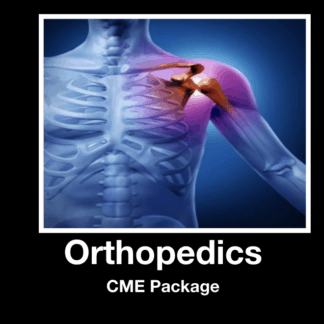
- Orthopedics
- Dermatology
- Psychiatry
- Neurology
- OB/GYN
8. Long-Term Access
Medical knowledge requires constant refreshing. Unlike some providers that limit access to 6 or 12 months, our CME packages provide 30 months of access. This allows you to utilize the material across multiple years of practice or to prepare for the PANRE well in advance of your exam date.
9. Clinical Relevance: By PAs for PAs
The clinical pearls and high-yield facts in our Emergency Medicine CME Package and others are authored by practicing Physician Assistants. This ensures the perspective is practical and focused on the diagnostic and management decisions you face in the clinic or hospital setting.
10. Efficiency of the "Gift Card Add-On"
The gift card add-on serves as a tool for further education. Many clinicians use their $100-$1500 Amazon gift cards to purchase medical textbooks, specialized equipment like stethoscopes, or ergonomic office supplies that improve their clinical environment. It is an efficient way to ensure your CME budget is fully utilized within the fiscal year.

CLINICAL ASSESSMENT AND REVIEW
Practice Question 1
Your patient is a 64-year-old male presenting to the Emergency Department with a sudden onset of "ripping" chest pain that radiates to his back between the scapulae. His medical history is significant for long-standing, poorly controlled hypertension. On physical examination, his BP is 190/110 mmHg in the right arm and 165/95 mmHg in the left arm. His HR is 105 bpm, and SaO2 is 96% on room air. A new grade II/VI diastolic murmur is noted at the right sternal border.
Which of the following is the most appropriate next step in the management of this patient?
A) Immediate administration of intravenous thrombolytics
B) Emergent CT Angiography (CTA) of the chest and abdomen
C) Initiate intravenous beta-blocker therapy to reach a target systolic BP of 100-120 mmHg
D) Bedside transthoracic echocardiogram (TTE)
Explanation:
The correct answer is C) Initiate intravenous beta-blocker therapy to reach a target systolic BP of 100-120 mmHg.
In a patient with a suspected aortic dissection (indicated by the ripping pain, BP discrepancy, and history of hypertension), the immediate priority is heart rate and blood pressure control to reduce "shear stress" on the aortic wall. Esmolol or labetalol are typically first-line agents to lower the HR below 60 bpm and systolic BP to 100-120 mmHg.
A is incorrect because thrombolytics are contraindicated in aortic dissection and would likely lead to fatal hemorrhage. B is incorrect as the initial priority is stabilization (rate/pressure control) before the patient is moved to the CT suite, though CTA is the definitive diagnostic tool. D is incorrect because while TTE might show signs of an intimal flap or aortic insufficiency, it is less sensitive than Transesophageal Echocardiogram (TEE) or CTA and should not delay the initiation of blood pressure control.
Practice Question 2
Your patient is a 28-year-old female presenting with acute pelvic pain and vaginal spotting. Her last menstrual period was 6 weeks ago. Her BP is 90/60 mmHg, HR is 115 bpm, and she appears pale and diaphoretic. Physical exam reveals significant cervical motion tenderness and right adnexal fullness. A bedside urine pregnancy test is positive.
What is the most definitive diagnostic step to confirm the suspected diagnosis while preparing for surgical intervention?
A) Quantitative serum Beta-hCG
B) Transvaginal Ultrasound (TVUS)
C) Comprehensive Metabolic Panel (CMP)
D) Pelvic MRI
Explanation:
The correct answer is B) Transvaginal Ultrasound (TVUS).
The clinical presentation of hypotension, tachycardia, and localized pelvic pain in a pregnant patient is highly suggestive of a ruptured ectopic pregnancy. TVUS is the gold standard for identifying an extrauterine pregnancy or the presence of free fluid (hemoperitoneum) in the Pouch of Douglas.
A is incorrect because while a serum Beta-hCG is helpful in the initial workup of stable patients, this patient is hemodynamically unstable and requires immediate imaging and surgical consultation. C is incorrect because laboratory values will not confirm the location of the pregnancy. D is incorrect as MRI is time-consuming and unnecessary given the efficacy and speed of ultrasound in an emergency setting.
Practice Question 3
Your patient is a 45-year-old male with a history of alcohol use disorder who presents with hematemesis and melena. His vitals are HR 120 bpm, BP 85/50 mmHg, and RR 22. He has visible caput medusae and jaundice. Two large-bore IVs have been placed and fluid resuscitation is underway.
In addition to fluid resuscitation and blood products, which of the following medications should be administered immediately?
A) Intravenous Pantoprazole and Octreotide
B) Oral Propranolol
C) Intravenous Vitamin K
D) Intramuscular Glucagon
Explanation:
The correct answer is A) Intravenous Pantoprazole and Octreotide.
In the setting of suspected esophageal variceal bleeding (indicated by portal hypertension signs like caput medusae), Octreotide is used to reduce portal venous pressure and splanchnic blood flow. Pantoprazole (a Proton Pump Inhibitor) is concurrently administered to manage potential peptic ulcer disease, which often coexists or mimics variceal bleeding.
B is incorrect because beta-blockers are used for primary or secondary prophylaxis of variceal bleeding, not for the management of acute, hemodynamically unstable hemorrhage. C is incorrect because while Vitamin K may be used later to address coagulopathy in cirrhosis, it does not provide acute hemostasis. D is incorrect as glucagon has no role in the management of gastrointestinal hemorrhage.
