


When you are a Physician Assistant or Nurse Practitioner, managing your continuing medical education (CME) budget is a critical part of your professional year. The conversation around cme gift cards has grown because medical professionals are looking for high-efficiency ways to maximize their stipend while gaining high-yield clinical knowledge. At CME Review Courses, we provide the tools you need to stay certified and current without wasting time.
Logistics and Deliverables:
- Price: Starting at $399.99.
- Access Duration: 30 months of comprehensive access.
- CME Credits: Up to 100 Hours of AAPA Category 1 CME for the PANRE Review Course.
- Gift Card Options: Amazon and Apple Gift Card add-ons available from $100 to $1,500.
- Target Audience: PAs, NPs, and Physicians seeking high-yield clinical review.
The Reality of CME Gift Card Add-ons
It is important to clarify how these packages work. The Amazon and Apple Gift Card options are not free gifts. They are educational add-ons that you choose to include with your purchase. This allows you to use your employer-provided CME budget to not only purchase top-tier clinical content but also to acquire the hardware or resources (like a new iPad for clinical use or medical textbooks from Amazon) that further enrich your professional education.
By selecting a CME with gift card package, you are essentially bundling your learning materials with the tools you need to access them. This is an efficient way to use your CME money before it expires at the end of the year.

Mastering the PANRE Review Course (100 Hours)
For PAs, the panre review course is the gold standard for recertification prep. This course offers 100 hours of AAPA Category 1 Credit, which is the maximum amount of self-assessment credit allowed by the NCCPA for a single course.
The content was written by physician assistants for physician assistants. It is designed to mirror the clinical scenarios you actually face in practice and on the exam. While the course is tailored to PAs, nurse practitioners frequently use this content to claim credit in states that accept AAPA Category 1 credits. Physicians also find value in the material, though it generally counts as Category 2 CME for them.
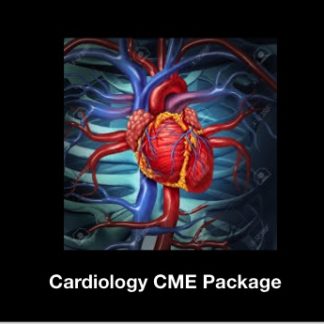
The course covers all major systems, but today we will focus on one of the most heavily weighted categories in the NCCPA Blueprint: Cardiology.
Clinical Focus: Cardiology and Internal Medicine
Cardiology accounts for a significant portion of the primary care and emergency medicine workloads. Whether you are prepping for the PANRE or working in an Internal Medicine Hospitalist role, mastering EKG interpretation and acute coronary syndrome (ACS) management is non-negotiable.
Our Cardiology CME Review Package dives deep into hemodynamic stability, valvular heart disease, and the nuances of pharmacotherapy for hypertension and heart failure.

When evaluating a patient with chest pain, your clinical decision-making must be rapid and evidence-based. Understanding which patients require immediate catheterization versus those who can be managed medically is a core skill tested in our pance prep courses and clinical practice.
Clinical Practice Assessment
Test your knowledge with these clinical vignettes focused on Cardiology.
Question 1
Your patient is a 62-year-old female with a history of hypertension and tobacco use who presents to the Emergency Department with substernal chest pressure that started two hours ago. Her blood pressure is 154/92 mmHg, HR is 98 bpm, and SaO2 is 96% on room air. The initial EKG shows 2mm ST-segment elevation in leads V2, V3, and V4.
Which of the following is the most appropriate next step in management?
A) Order a STAT troponin and wait for results before calling cardiology.
B) Administer 324 mg of aspirin and activate the cardiac catheterization lab.
C) Start a heparin drip and admit to the observation unit.
D) Perform a chest X-ray to rule out aortic dissection.
Explanation:
The correct answer is B) Administer 324 mg of aspirin and activate the cardiac catheterization lab. This patient is presenting with a ST-segment Elevation Myocardial Infarction (STEMI) involving the anterior wall. In the setting of a STEMI, "time is muscle." You should not wait for cardiac biomarkers (Choice A) to confirm the diagnosis if the EKG is diagnostic. Activation of the cath lab for primary percutaneous coronary intervention (PCI) is the priority. While a chest X-ray (Choice D) might be done, it should not delay reperfusion therapy. Heparin (Choice C) is used as an adjunct but does not replace the need for emergency revascularization.

Question 2
Your patient is a 74-year-old male with a history of chronic heart failure with reduced ejection fraction (HFrEF) who presents for a follow-up. He reports increased shortness of breath with minimal exertion and occasional orthopnea. On exam, you note 2+ pitting edema in the lower extremities and jugular venous distention (JVD). His current medications include lisinopril and carvedilol.
Which medication class should be added to his regimen to specifically address his fluid volume overload and improve symptoms?
A) Calcium Channel Blocker
B) Loop Diuretic
C) Alpha-blocker
D) Potassium supplement
Explanation:
The correct answer is B) Loop Diuretic. This patient is experiencing an exacerbation of congestive heart failure with signs of volume overload (edema, JVD, orthopnea). Loop diuretics, such as furosemide or bumetanide, are the first-line treatment for managing fluid volume in symptomatic heart failure patients. Calcium channel blockers (Choice A) are generally avoided in HFrEF, particularly non-dihydropyridines like diltiazem. Alpha-blockers (Choice C) are not indicated for heart failure management. While potassium (Choice D) may be needed as a supplement once the diuretic is started, it does not treat the fluid overload itself.
Why Choose CME Review Courses?
Our mission is to provide an efficient way to earn your credits while genuinely improving your clinical acumen. We offer content over Emergency Medicine, Family Medicine, Internal Medicine Hospitalist, Orthopedics, Dermatology, Psychiatry, Neurology, Cardiology, and OB/GYN.
Whether you are preparing for the NCCPA Blueprint exams or just need to fulfill your 100 hours of AAPA Category 1 credit, our packages offer the most flexible and rewarding way to achieve your goals.

Don't let your CME stipend go to waste. Invest in your education, earn your credits, and equip yourself with the tools you need for a successful year of practice.