Posted on

Daily CME Tips: 5 Facts About AAPA Category 1 Credit That Protect Your License and Your Budget

Course price: $499.99
Access: 30 months
CME: Up to 100 AAPA Category 1 CME credits
Included study material: 2,500+ PANRE practice questions, five 240-question mock exams, 15 organ-system modules, and a complete PANRE Study Library

If you are a PA planning for recertification, the type of CME you earn matters. A course may be clinically useful but still fail to provide the Category 1 credit needed for NCCPA certification maintenance.

The following five facts can help you select valid CME, avoid counting errors, and use your CME budget efficiently.

Fact 1: Category 1 CME is structured professional education that supports patient care

AAPA Category 1 CME consists of clinical and professional educational activities designed to maintain, develop, or increase the knowledge, skills, and professional performance used in patient care.

This is different from simply reading a medical article or attending an informal educational session. Category 1 activities are reviewed against established criteria and formally designated for a specific amount and type of CME credit.

For PAs, Category 1 CME is important because NCCPA certification maintenance requires:

  • 100 CME credits during each two-year cycle
  • At least 50 Category 1 CME credits
  • The remaining credits may be Category 1, Category 2, or a combination
  • A recertification examination every 10 years, such as PANRE or an applicable PANRE-LA pathway

Review the current requirements directly through NCCPA Continuing Medical Education and the AAPA CME FAQs.

The PANRE Review Course with Gift Card is designed to combine exam preparation with CME completion. The course offers up to 100 AAPA Category 1 CME credits when you complete the required content, post-test, and evaluation. Claim only the credit amount supported by your actual participation and completion.
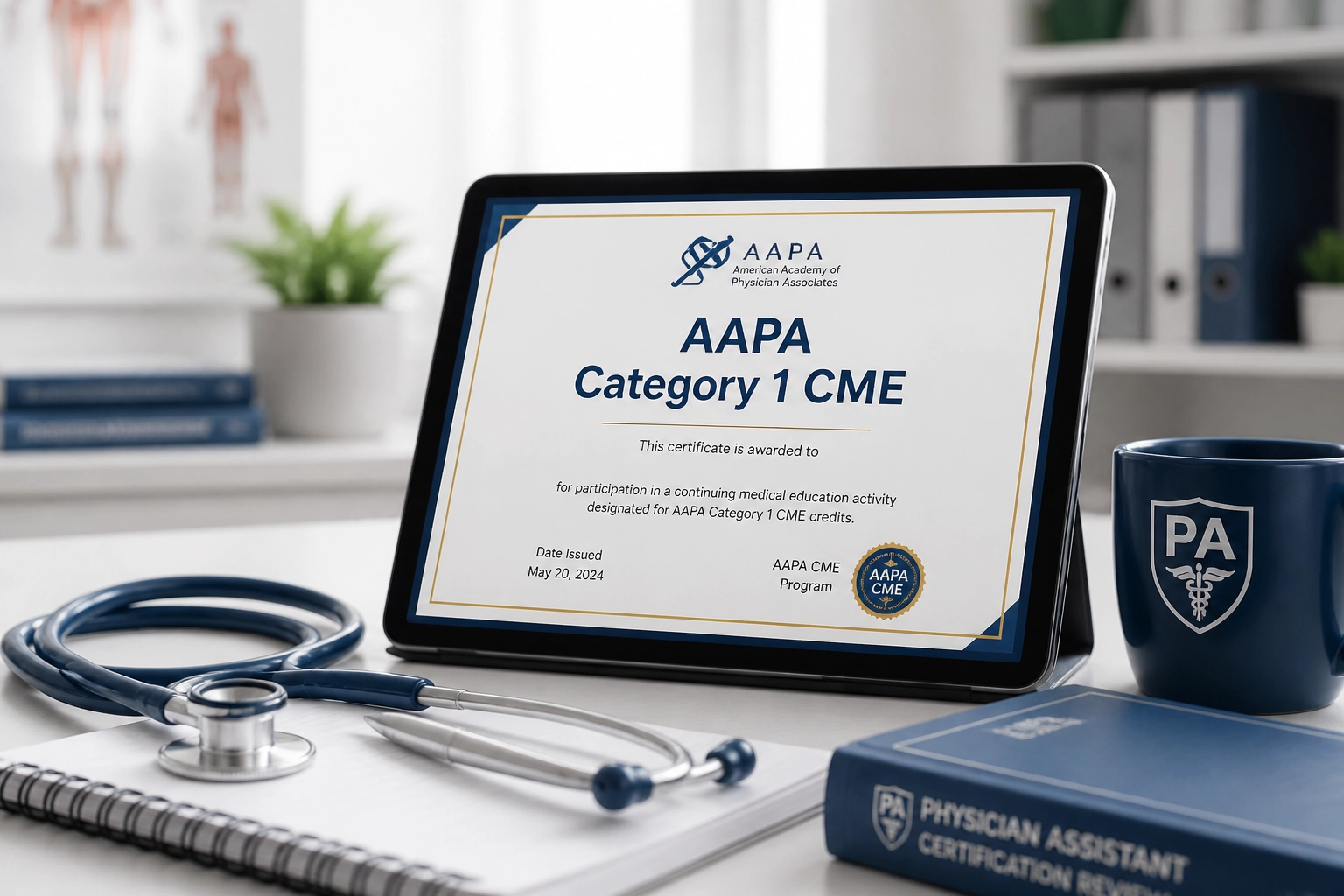
AAPA Category 1 CME designation

Fact 2: AAPA Category 1 credit is accepted by NCCPA for the CME requirement

NCCPA accepts AAPA Category 1 CME toward the 100-credit certification maintenance requirement. This makes AAPA Category 1 credit directly relevant to PAs preparing for PANRE and managing their two-year CME cycle.

The practical distinction is important: PANRE is the recertification examination, while CME is part of the ongoing certification maintenance process. Completing CME does not replace the examination requirement when an exam is due. However, earning appropriate Category 1 CME helps you satisfy the CME component of maintaining national certification.

The PANRE Review Course provides:

  • 100 AAPA Category 1 CME credits
  • More than 2,500 board-style PANRE questions
  • Five full-length mock exams with 240 questions each
  • 1,200 total questions across the five mock exams
  • Questions covering the organ systems and task areas represented in the NCCPA PANRE Blueprint
  • Detailed answer explanations and cited sources
  • Online access for 30 months

A single completed course can provide enough credit to satisfy the total 100-credit requirement for a two-year NCCPA cycle, including the minimum 50 Category 1 credits. You should still review your NCCPA account and current certification cycle before deciding how much CME you need.

Some Category 1 activities are designated specifically as self-assessment or performance improvement CME. NCCPA may apply additional weighting to eligible self-assessment and PI-CME activities. Do not assume that every Category 1 course receives this weighting. Log the credit type and amount exactly as stated by the provider.

Fact 3: Category 1 and Category 2 are not interchangeable

Category 1 CME is formally reviewed and designated by an accepted CME sponsor or accreditor. Examples include:

  • AAPA Category 1 CME
  • AAPA Category 1 Self-Assessment CME
  • AAPA Category 1 Performance Improvement CME
  • AMA PRA Category 1 Credit from an appropriately accredited provider
  • AOA Category 1-A credit
  • Other credit types recognized by NCCPA

Category 2 CME includes educational activities related to medicine, patient care, or the PA profession that have not been designated for Category 1 credit. Examples may include independent reading, certain professional meetings, clinical research, or other eligible self-directed education.

Category 2 can be useful, but it does not replace the minimum Category 1 requirement. If you complete 100 hours of Category 2 education, you may still have a Category 1 deficiency for NCCPA certification maintenance.

This is why the product description, accreditation statement, and final certificate matter. The PANRE Review Course is specifically designated for 100 AAPA Category 1 CME credits. The separate Pharmacology Review Course provides its own stated amount of Category 1 AAPA credit; do not combine or transfer credit between products unless the provider documentation supports it.

Fact 4: You should verify the accreditation statement before purchasing

Do not rely on the words “CME,” “board review,” or “continuing education” alone. Before counting a course as AAPA Category 1 CME, verify the following:

  1. Look for explicit language.
    The course should state the exact credit designation, such as “AAPA Category 1 CME” or “AAPA Category 1 Self-Assessment CME.”

  2. Confirm the number of credits.
    The provider should identify the maximum credit amount and explain whether credit is based on completing specific modules, passing a post-test, or completing an evaluation.

  3. Check the sponsor and reference information.
    The current PANRE Review Course accreditation statement identifies review by the AAPA Review Panel, an approval period of August 26, 2026, through August 26, 2027, and AAPA reference number CME-2016187.

  4. Review the completion requirements.
    For this course, you must review the content, complete the post-test with a score of at least 70%, and complete the evaluation before receiving a certificate.

  5. Confirm the timing.
    CME must fall within your applicable NCCPA earning window. A valid course completed outside the relevant cycle may not satisfy the cycle you are trying to complete.

  6. Keep the provider documentation.
    Your certificate should identify your name, activity title, completion date, credit amount, and credit designation. NCCPA may audit Category 1 submissions.

You can also compare available activities through the AAPA CME Catalog and review NCCPA’s guidance on acceptable CME sponsors and activity types.

Fact 5: A large Category 1 course can protect both your schedule and your budget

Many PAs postpone CME until the end of the cycle and then search for disconnected activities. That approach can create unnecessary administrative work and make it harder to ensure that enough of the completed education qualifies as Category 1.

The PANRE Review Course offers a more consolidated option: exam preparation and up to 100 hours of AAPA Category 1 CME in one activity. You can work through the material over 30 months while preparing for PANRE or PANRE-LA.

The course is also available with paid Amazon or Apple Gift Card add-ons from $100 to $1,500. These are optional paid add-ons, not free gifts or credits included at no cost. The selected gift card amount is added to the purchase price, and the card is delivered by email according to the product terms. Review your employer’s CME spending policy before purchasing.

Explore the PANRE Review Course with Gift Card or visit the CME Review Courses website to review available CME packages.

Clinical Practice: PANRE-Style Questions

Question 1

Your patient is a 64-year-old man with substernal chest pressure for 45 minutes. He is diaphoretic and nauseated. HR is 104/min, BP is 158/92 mm Hg, and SaO₂ is 96% on room air. ECG shows 2-mm ST-segment elevations in leads II, III, and aVF. Which intervention is most appropriate?

A. Administer IV alteplase immediately
B. Obtain outpatient stress testing
C. Activate the cardiac catheterization laboratory
D. Administer a nonsteroidal anti-inflammatory drug
E. Observe for serial troponins only

Correct answer: C. Activate the cardiac catheterization laboratory.

This patient has an acute inferior STEMI requiring immediate reperfusion, preferably primary PCI when promptly available. Fibrinolysis is considered when PCI cannot be delivered within the appropriate timeframe. Outpatient stress testing, NSAIDs, and observation alone delay definitive treatment.

Question 2

Your patient is a 27-year-old woman with polyuria, vomiting, and abdominal pain. HR is 122/min, BP is 96/60 mm Hg, and respirations are 30/min. Serum glucose is 480 mg/dL, bicarbonate is 10 mEq/L, and potassium is 4.8 mEq/L. What is the first step in management?

A. Begin an IV insulin infusion
B. Administer IV isotonic crystalloid
C. Give IV sodium bicarbonate
D. Administer potassium replacement immediately
E. Give subcutaneous long-acting insulin

Correct answer: B. Administer IV isotonic crystalloid.

This patient has DKA with significant volume depletion. Initial treatment is IV isotonic fluid resuscitation, followed by insulin and electrolyte management. Insulin should not be started before assessing potassium, and bicarbonate is reserved for severe acidemia. Potassium replacement depends on the measured serum potassium and total-body deficit.

Question 3

Your patient is a 71-year-old man with new unilateral weakness and aphasia beginning 70 minutes ago. HR is 88/min, BP is 176/98 mm Hg, and glucose is 112 mg/dL. Noncontrast head CT shows no hemorrhage. Which treatment should be considered next?

A. IV thrombolytic therapy after confirming eligibility
B. Immediate anticoagulation with IV heparin
C. Aspirin only because the blood pressure is elevated
D. Lumbar puncture
E. Discharge with outpatient neurology follow-up

Correct answer: A. IV thrombolytic therapy after confirming eligibility.

The presentation is consistent with acute ischemic stroke within the treatment window. After hemorrhage is excluded and contraindications are reviewed, IV thrombolytic therapy should be considered. IV heparin is not routine acute treatment, and aspirin alone is inadequate when the patient is otherwise eligible for reperfusion therapy.

Use Your CME Budget Deliberately

Before purchasing any CME product, confirm the credit type, approval status, completion requirements, access period, and total price. For PAs, the PANRE Review Course with 100 hours of AAPA Category 1 CME can consolidate certification maintenance education with structured PANRE preparation.

If you are a PA student or preparing for the PANCE, explore PAtopia on the web, the PAtopia iOS app, or PAtopia on Android. PAtopia provides PANCE prep courses, EOR review, PACKRAT preparation, and EOC practice in one platform.
PAtopia All-Access Pass for PANCE prep courses

About the Author

Jeremy Boroff, MPAS, PA-C, is a physician assistant with 24 years of Emergency Medicine experience. He is an author and educator who develops clinical review materials for physician assistants, including PANRE preparation, PANCE prep courses, and continuing medical education. His work emphasizes practical clinical reasoning, board-style assessment, and efficient preparation for certification and recertification exams.

Ready to combine PANRE preparation with Category 1 CME? Visit the PANRE Review Course with Gift Card to review the 100-hour AAPA Category 1 CME option and available paid Amazon and Apple gift card add-ons.
Posted on

Daily CME Tips: PANRE-LA vs Traditional PANRE : Which Format Fits Your Practice and Your CME Budget

If you are planning recertification, the first decision is not which review resource to buy. It is identifying which NCCPA pathway fits your certification cycle, clinical schedule, and study habits.

At a Glance: PANRE Review Course Details

  • Price: $499.99 for the PANRE Review Course
  • Access: 30 months from purchase
  • CME: Up to 100 hours of AAPA Category 1 CME through the PANRE Clinical Review Module
  • Practice questions: 2,500+ board-style questions, including five full-length 240-question practice examinations
  • Gift card add-ons: Optional Amazon or Apple Gift Cards from $100 to $1,500
  • Gift card terms: Gift cards are paid add-ons, not free gifts. Their cost is added to the course purchase total. They are emailed within approximately 2–3 business days, and gift card packages are nonrefundable.

Review the PANRE Review Course with Gift Card for current pricing, access, accreditation, and available add-ons.

The course is designed for practicing PAs preparing for either the traditional PANRE or PANRE-LA. The 100 AAPA Category 1 credits apply to the PANRE Clinical Review Module specifically. They do not automatically apply to every other CME or pharmacology product.

PANRE-LA vs Traditional PANRE: The Core Difference

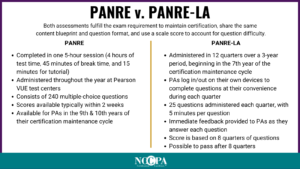
The traditional PANRE is a proctored examination completed during the ninth or tenth year of your certification cycle. PANRE-LA is a longitudinal assessment that distributes questions across multiple quarters and years.

Both pathways use the same general NCCPA content blueprint and question format. The primary difference is how and when you demonstrate competency.

According to NCCPA information on PANRE-LA and PANRE:

  • PANRE-LA: Apply during Year 6 and begin the assessment in Year 7.
  • Traditional PANRE: Take the proctored examination during Year 9 or Year 10.
  • PANRE-LA: Complete 25 questions each quarter, with five minutes available for each question.
  • Traditional PANRE: Complete a single, proctored examination consisting of 240 questions.
  • PANRE-LA: Online and print references may be used while answering questions.
  • Traditional PANRE: Closed-book, proctored testing-center environment.
  • PANRE-LA: Immediate feedback and explanations are provided after questions.
  • Traditional PANRE: Results reflect performance on the examination as a whole.

You must confirm your eligibility and application window through your NCCPA portal. PAs seeking to regain certification after expiration or revocation are generally required to use the traditional PANRE rather than PANRE-LA.

PANRE review course with 100 hours of AAPA Category 1 CME

Who May Prefer PANRE-LA?

PANRE-LA may fit your practice if you perform better with spaced repetition and regular feedback rather than one high-stakes testing date.

The format can be practical for a PA who:

  • Has a demanding clinical schedule
  • Wants to study in smaller sessions
  • Prefers using references to confirm clinical reasoning
  • Benefits from immediate explanations after each question
  • Wants performance feedback over time
  • Is comfortable maintaining a consistent quarterly schedule

The longitudinal model does not eliminate the need for preparation. You still need broad knowledge across cardiovascular, pulmonary, GI, infectious disease, neurologic, psychiatric, reproductive, renal, endocrine, musculoskeletal, dermatologic, hematologic, EENT, genitourinary, and professional practice topics.

A common mistake is treating PANRE-LA as an open-book replacement for studying. References can help you verify a difficult point, but they do not replace pattern recognition, diagnostic prioritization, or familiarity with first-line management.

The PANRE/PANRE-LA Review Exams Bundle can help you practice the same five-answer multiple-choice structure used in the examination environment. It includes three full-length practice examinations and 720 total questions.

Who May Prefer Traditional PANRE?

Traditional PANRE may be a better fit if you prefer to prepare intensively, schedule a defined examination date, and finish the testing requirement in one concentrated period.

This format may fit your practice if you:

  • Prefer a clear deadline
  • Have difficulty maintaining quarterly study habits
  • Perform well during structured examinations
  • Want to complete recertification testing in one sitting
  • Need the traditional PANRE to regain certification
  • Prefer a testing-center environment without access to outside references

The traditional PANRE requires stamina and pacing. A 240-question examination demands more than recognition of isolated facts. You must move efficiently through vignettes, identify the key clinical problem, eliminate distractors, and reserve time for difficult questions.

A useful preparation plan includes:

  1. Complete a baseline practice examination.
  2. Identify weak organ systems and task areas.
  3. Review explanations rather than only recording correct answers.
  4. Repeat missed questions after a delay.
  5. Complete at least one timed, full-length simulation.
  6. Review test-center requirements and NCCPA policies before examination day.

How Your CME Budget Fits Into the Decision

The exam pathway and your CME strategy are related but separate decisions.

The PANRE Review Course costs $499.99 and provides 30 months of access. After completing the module requirements: including the content, post-test, and evaluation: you may claim up to 100 AAPA Category 1 CME credits for the PANRE Clinical Review Module.

For NCCPA certification maintenance, self-assessment CME may receive additional weighting under NCCPA policies. You should log credit according to the instructions provided by NCCPA and claim only the amount commensurate with your participation.

The course includes:

  • 2,500+ interactive PANRE review questions
  • Five 240-question full-length practice exams
  • Explanations and cited sources
  • Review modules covering all major NCCPA content areas
  • A performance dashboard for tracking attempted and correct questions
  • Downloadable review materials
  • 30 months of online access

If your employer provides a CME allowance, you may be able to use that budget for the course. Employer rules differ, so verify that exam preparation materials and optional add-ons are eligible before purchasing.

CME Gift Cards: What the Add-On Actually Means

CME Review Courses offers optional Amazon and Apple gift card add-ons in amounts from $100 to $1,500.

The gift card is not included at no cost. You select the gift card brand and amount at checkout, and that amount is added to the purchase total. For example, selecting a $500 Amazon Gift Card creates a $500 additional charge beyond the base course price.

The practical value is budget flexibility. If you have unused CME funds, the purchase can combine a clinically relevant review course with an optional paid gift card add-on in one transaction, subject to your employer’s CME policy.

Amazon and Apple are not affiliated with or sponsors of CME Review Courses. Gift card packages are nonrefundable after delivery.

Clinical Practice Question

Vignette

Your patient is a 68-year-old man with COPD who presents with fever, productive cough, and dyspnea. He is confused. Vital signs are BP 86/50 mm Hg, HR 118/min, RR 30/min, and SaO₂ 88% on room air. Chest radiography demonstrates a right lower-lobe infiltrate. After receiving 30 mL/kg of IV crystalloid, his BP remains 84/48 mm Hg. Which of the following is the most appropriate next step?

A. Administer IV furosemide
B. Begin a norepinephrine infusion
C. Start oral prednisone and discharge
D. Order an outpatient CT chest
E. Administer IV propranolol for tachycardia

Correct answer: B. Begin a norepinephrine infusion

This patient has presumed septic shock from community-acquired pneumonia with persistent hypotension after an appropriate initial crystalloid bolus. Norepinephrine is the first-line vasopressor when hypotension persists despite fluid resuscitation.

Furosemide may worsen intravascular depletion. Prednisone and discharge are inappropriate in a patient with shock and altered mental status. CT chest delays resuscitation and does not change the immediate management priority. Propranolol can worsen hypotension and is not indicated for compensatory tachycardia.

This is the type of management-focused reasoning tested across PANRE and PANRE-LA content areas. Practice should include both diagnosis and the next best step, with attention to hemodynamics, medication effects, contraindications, and resource utilization.

Where PANCE Prep Courses Fit

PANCE prep courses are primarily designed for PA students, while PANRE review is intended for certified PAs preparing for recertification. However, the underlying clinical reasoning skills overlap.

For PA students, PAtopia All-Access includes 11,325 questions, 60 full-length exams, and review tracks for the PANCE, PACKRAT, all seven EOR exams, and the EOC exam.

PAtopia is available through:

Use PAtopia for PA school examination preparation. Use the PANRE Review Course for recertification preparation and the associated 100 hours of AAPA Category 1 CME.

A Practical Decision Rule

Choose PANRE-LA if you are eligible, prefer distributed assessment, and will consistently complete quarterly questions.

Choose traditional PANRE if you prefer a concentrated testing experience, need to regain certification, or do not want a multiyear assessment schedule.

Regardless of pathway, begin with the same steps:

  1. Check your NCCPA certification cycle and eligibility.
  2. Confirm your PANRE-LA application window, if applicable.
  3. Select a preparation resource aligned with the NCCPA content blueprint.
  4. Use timed practice questions to measure readiness.
  5. Apply your CME budget to a course that supports both clinical review and certification maintenance.
  6. Verify employer rules before selecting any CME gift card add-on.

Prepare With CME Review Courses

The PANRE Review Course combines recertification preparation with up to 100 hours of AAPA Category 1 CME, 2,500+ practice questions, five full-length practice examinations, and 30 months of access.

You can also review the CME Review Courses website for additional PANRE, pharmacology, emergency medicine, internal medicine, cardiology, orthopedics, dermatology, psychiatry, neurology, and family medicine resources.

Author Box : Jeremy Boroff, MPAS, PA-C
Jeremy Boroff is a physician assistant with 24 years of experience in emergency medicine. He holds a Master of Physician Assistant Studies and is the author and faculty member behind CME Review Courses’ PANRE and clinical review content. His materials are written for practicing PAs and emphasize board-style clinical reasoning, efficient management decisions, and practical application across common medical specialties.

Educational content is not a substitute for NCCPA policies, clinical judgment, or individualized medical advice. CME eligibility and acceptance may vary for physicians, nurse practitioners, and other professionals. Nurse practitioners should verify AAPA Category 1 credit acceptance with their state board and certifying organization before purchase.

Posted on

Daily CME Tips: 5 PANRE Review Mistakes to Avoid : Protect Your Time and CME Budget

Price: $499.99 for the PANRE Review Course
Access: 30 months from purchase
Deliverables: 100 hours of AAPA Category 1 CME, 2,500+ board-style questions, five full-length 240-question practice examinations, and a comprehensive PANRE Study Library

Preparing for the PANRE requires more than reviewing the conditions you see every day. The exam evaluates broad clinical knowledge across multiple organ systems and task areas. A focused strategy helps you identify knowledge gaps, practice clinical reasoning, and use your CME budget efficiently.

The PANRE Review Course from CME Review Courses is designed for practicing PAs preparing for the traditional PANRE or PANRE-LA. Completion of the PANRE Clinical Review Module provides up to 100 AAPA Category 1 CME credits, subject to completion requirements and credit claimed commensurate with participation.

The following five mistakes can cost you study time, CME value, or both.

Mistake 1: Studying Only the Specialty You Practice

Your clinical experience is valuable, but it does not replace generalist exam preparation.

If you work primarily in emergency medicine, orthopedics, cardiology, or dermatology, you may be highly efficient in your daily practice area while becoming less familiar with topics outside that setting. The PANRE requires you to move across systems and presentations. Your preparation must do the same.

A common example is a PA who reviews chest pain, fractures, and sepsis extensively but gives minimal attention to reproductive health, psychiatry, dermatology, or endocrine disorders. Those lower-frequency topics can become avoidable missed questions.

Use the NCCPA PANRE/PANRE-LA Content Blueprint as the organizing framework for your review. Then use question performance to determine where additional study is needed.

Practical correction: Start with a broad diagnostic assessment. Do not assume that years of practice automatically identify your weak areas. Let performance data show you where to focus.

PANRE/PANRE-LA Review Exam book cover

Mistake 2: Treating Every Topic as Equally Important

You have limited study time. Spending the same number of hours on every diagnosis is inefficient.

The NCCPA Blueprint assigns different emphasis to clinical content areas. Your study plan should reflect that weighting while still covering the full exam. High-volume areas deserve consistent question practice, but smaller sections should not be ignored entirely.

A better approach is to divide your preparation into three phases:

  1. Initial assessment: Complete mixed questions to establish a baseline.
  2. Targeted review: Study the systems and task areas with the lowest performance.
  3. Exam simulation: Complete timed, mixed practice examinations to evaluate readiness.

Avoid spending an entire week rereading one familiar section because it feels productive. Review should be based on exam relevance and demonstrated weakness, not comfort level.

Practical correction: Track your percentage correct by organ system. Revisit missed questions after a delay rather than immediately memorizing the answer.

Mistake 3: Using Too Many Disconnected Resources

Collecting multiple books, apps, question banks, and short courses can create the appearance of preparation without producing an efficient workflow.

Every new resource requires time to learn its format, organize notes, and determine whether its content overlaps with what you already reviewed. Fragmented preparation also makes it harder to measure progress.

Choose a primary resource that combines:

  • Broad content coverage
  • Board-style questions
  • Explanations and references
  • Full-length practice examinations
  • Performance tracking
  • Sufficient access time to support your schedule

The CME Review Courses PANRE package includes five full-length practice examinations with 240 questions each, or 1,200 examination questions, in addition to system-based question modules and the Study Library. This allows you to use one structured platform for learning, assessment, and review.

This principle also applies when comparing pance prep courses with PANRE resources. PANCE and PANRE preparation overlap in clinical content, but you should select a course that specifically addresses your certification or recertification objective.

Practical correction: Select one primary review course and a limited number of supplemental references. Use additional sources only when a specific question requires clarification.

Mistake 4: Failing to Plan for Your CME Requirement

A review course that does not provide usable CME may leave you with two separate problems: preparing for the exam and completing your Category 1 requirement.

For PAs, the PANRE Review Course provides up to 100 hours of AAPA Category 1 CME through the PANRE Clinical Review Module. This credit applies to the PANRE Review Course. It should not be attributed to the separate Pharmacology Review Course, which has its own Category 1 designation and credit amount.

To earn the PANRE course credit, you must review the activity content, complete the post-test with a passing score, and complete the evaluation. Confirm your individual NCCPA requirements before relying on any activity for certification maintenance.

The course also offers Amazon and Apple gift card add-ons from $100 to $1,500. These are optional, paid add-ons. They are not free gifts, rebates, or additional CME. The selected gift card amount is added to the total purchase price.

For example, a $499.99 PANRE course with a $300 Amazon gift card add-on has a total package price of $799.99. The $300 is the cost of the add-on, while the course provides the educational content and eligible CME.

These cme gift cards may help some PAs use an employer-provided CME allowance for educational technology, books, or other permitted professional resources. Employer policies differ, so verify that your organization allows this type of purchase before ordering.

Amazon and Apple gift card add-ons for CME purchases

Practical correction: Review your CME balance and employer policy early. Decide whether you need the course alone or whether a paid add-on fits your remaining allowance.

Learn more about the PANRE Review Course with Amazon and Apple gift card options.

Mistake 5: Waiting Until the End to Practice Questions

Reading alone does not show whether you can apply information under exam conditions.

PANRE-style questions require you to identify the key clinical finding, prioritize the differential diagnosis, and select the best next step. You should begin question practice early enough to use missed questions as a study guide.

Do not wait until the final week to complete a full-length examination. Timed practice helps identify pacing problems, knowledge gaps, and fatigue-related errors. After each examination, review both incorrect answers and correct answers reached through guessing.

PANRE/EOR-Style Clinical Practice Question

Your patient is a 62-year-old man with hypertension and tobacco use who presents with abrupt, severe chest pain radiating to the back. His BP is 190/110 mm Hg in the right arm and 160/90 mm Hg in the left arm. HR is 108/min, and SaO₂ is 96% on room air. Chest radiography demonstrates a widened mediastinum. Which diagnostic study is most appropriate in a hemodynamically stable patient?

A. Transthoracic echocardiography
B. Exercise stress testing
C. CT angiography of the chest
D. Serum troponin level
E. Coronary artery calcium scoring

Answer: C. CT angiography of the chest

This presentation is concerning for acute aortic dissection. Abrupt tearing chest pain radiating to the back, pulse or BP differential, and widened mediastinum are classic findings. In a hemodynamically stable patient, CT angiography is an appropriate definitive diagnostic study because it rapidly evaluates the aorta and is widely available.

Transthoracic echocardiography may miss portions of the thoracic aorta. Troponin testing can evaluate myocardial injury but does not diagnose dissection. Stress testing and coronary calcium scoring are inappropriate in an unstable acute chest-pain presentation.

A More Efficient PANRE Review Strategy

To protect your time, use a repeatable daily process:

  • Complete a defined number of mixed or system-based questions.
  • Record missed concepts by organ system.
  • Review the explanation and cited source.
  • Reattempt flagged questions after a delay.
  • Schedule regular timed examinations.
  • Adjust your study plan according to performance rather than preference.

The goal is not to complete the largest number of resources. The goal is to use a structured panre review course that combines comprehensive content, practice questions, performance feedback, and eligible CME in one plan.

Additional PA Exam Preparation With PAtopia

If you are also preparing for the PANCE, EOR examinations, PACKRAT, or EOC, PAtopia provides browser-based review resources for PA students. The platform includes exam-specific practice questions, study libraries, and performance analytics.

You can:

Use the platform that matches your current training or certification goal. The PANRE Review Course is intended for recertification preparation and provides the specific 100-hour AAPA Category 1 CME opportunity described above.

Final Daily CME Tip

Avoiding PANRE review mistakes is largely a matter of planning. Cover the full NCCPA Blueprint, use questions to find weak areas, limit resource overload, account for CME requirements, and begin timed practice before the final weeks.

The PANRE Review Course is $499.99 with 30 months of access and up to 100 hours of AAPA Category 1 CME. Optional Amazon and Apple gift card add-ons from $100 to $1,500 are paid additions to the purchase and may help eligible customers use their CME budget more efficiently.

Review the CME Review Courses catalog to compare available options.

About the Author

Jeremy Boroff, MPAS, PA-C, is an emergency medicine physician assistant with 24 years of Emergency Medicine experience. He is an author, educator, CME developer, and founder of CME Review Courses. Jeremy creates PANRE, PANCE, EOR, and specialty review materials for physician assistants and other healthcare professionals.

Posted on

Big News: Every CME Review Courses Package Is Now AAPA Category 1 CME — All 14 Courses

Major announcement: The complete CME Review Courses catalog is now approved for AAPA Category 1 CME. The full program includes 14 clinical and exam-preparation modules, AAPA Category 1 CME credit for every module, and access to focused review content for practicing PAs and NPs.

The program is accredited as a single enduring activity:

Comprehensive Clinical Review for Practicing PAs, 2026–27
AAPA reference number: CME-2016187
Approval period: August 26, 2026, through August 26, 2027

One clarification is important: the accreditation covers the entire 14-module program, not the credit amount for one individual purchase. Each course awards the credits assigned to that specific module.

What changed for PAs

Previously, only selected CME Review Courses products carried AAPA Category 1 credit. The full library has now been reviewed and approved by the American Academy of Physician Associates Review Panel.

That means you can select education based on your certification or clinical needs without automatically limiting yourself to Category 2 content. Choose a focused specialty course, complete the PANRE or PANRE-LA review module, or combine multiple modules across your CME cycle.

Every course includes online enduring material, a post-test, an activity evaluation, and a certificate stating the precise amount of credit earned.

Online clinical CME review course displayed on a tablet with a stethoscope

The 14-course AAPA Category 1 catalog

Specialty CME packages

Each specialty module includes 200 cited, board-style questions and lecture video. Each specialty course is $499.99 with 30 months of access.

These 11 specialty modules total 256.25 AAPA Category 1 CME credits.

Pharmacology CME Review Package

The Pharmacology CME Review Package includes:

  • 12.5 AAPA Category 1 CME credits
  • 120 pharmacology questions
  • Lecture-based review organized around medication classes and clinical application
  • $499.99 price with 30 months of access

Pharmacology is useful as a focused review course or as a supplement to broader PANRE preparation. It addresses the medication knowledge required in nearly every clinical setting, including anticoagulants, antimicrobials, antihypertensives, diabetes medications, psychotropics, analgesics, and adverse-effect recognition.

Pharmacology CME review course materials

PANRE Review Course

The PANRE Review Course with Gift Card is designated for up to 100 AAPA Category 1 CME credits.

Course details:

  • $499.99
  • 30 months of access
  • 1,200 total board-style questions
  • Five practice examinations with 240 questions each
  • Complete PANRE Study Library
  • Content aligned with the NCCPA Blueprint
  • Online, self-paced delivery

This course is designed for PAs preparing for the traditional PANRE while also completing a substantial portion of their CME requirement. It provides structured exam review rather than isolated question repetition.

PANRE-LA Review Course

The PANRE-LA Review Course is also designated for up to 100 AAPA Category 1 CME credits.

It includes the same core question volume: 1,200 total questions across five 240-question exams, along with the Study Library. The material supports PAs who are completing the NCCPA Longitudinal Assessment pathway and need consistent review across the assessment period.

The PANRE and PANRE-LA modules each account for 100 credits within the program. Purchasing one does not award the credits assigned to the other.

Add Amazon or Apple gift cards to any order

CME Review Courses also offers cme gift cards as paid add-ons. You can add an Amazon or Apple gift card from $100 to $1,500 to any eligible course order.

These are paid add-ons, not free gifts. The gift card amount is added to the purchase total. Confirm that your employer or organization permits this type of CME expense before ordering.

Amazon and Apple are the only gift card options currently offered. Best Buy and Lowe’s gift cards are no longer available.

The add-on option can be useful when you have an employer-sponsored CME budget that must be used during a defined benefit period. Select the course that supports your clinical or certification goals, then choose the gift card amount that fits your approved budget.

Gift cards are processed and delivered by email according to the product-page terms. CME completion is separate: you must complete the required educational activity, pass the post-test, and submit the evaluation to earn credit.

How you earn AAPA Category 1 CME

The process is consistent across the accredited modules:

  1. Review the course content.
  2. Complete the module post-test.
  3. Earn a score of 70% or higher.
  4. Complete the activity evaluation.
  5. Download the certificate stating the precise credit earned.

You may retake missed questions as permitted by the course. Claim only the credit that corresponds to your actual participation and successful completion.

PAs should log the credit according to NCCPA requirements and their certification-maintenance schedule. NPs may find the content valuable, but acceptance of AAPA Category 1 CME for NP licensure or certification varies by state, employer, and certifying organization. NPs should verify requirements with their state board of nursing before purchase.

Physicians may also find the clinical content useful. Physicians generally claim this activity as Category 2 CME, not Category 1 CME.

Practice question

Your patient is a 64-year-old man who develops sudden pleuritic chest pain and dyspnea 5 days after total knee arthroplasty. HR is 118/min, BP is 132/78 mm Hg, RR is 26/min, and SaO₂ is 89% on room air. He is alert and has no active bleeding. What is the most appropriate next diagnostic step?

A. D-dimer assay
B. CT pulmonary angiography
C. Screening lower-extremity ultrasound only
D. Electrocardiography
E. Noncontrast chest CT

Answer: B. CT pulmonary angiography

CT pulmonary angiography is the appropriate next diagnostic test because this patient has a high pretest probability for acute PE: recent major orthopedic surgery, abrupt dyspnea, pleuritic chest pain, tachycardia, and hypoxemia.

A D-dimer is not useful when clinical suspicion is high and is frequently elevated after surgery. Lower-extremity ultrasound may identify DVT but does not directly evaluate the pulmonary vasculature. ECG can support the evaluation but cannot exclude PE. A routine noncontrast chest CT is not the appropriate study.

If iodinated contrast is contraindicated or renal function prevents CT angiography, a V/Q scan may be considered. In practice, the diagnostic choice should account for pretest probability, renal function, contrast allergy, radiation exposure, and local availability.

This type of question reflects the purpose of the CME Review Courses catalog: combine practical clinical reasoning, cited explanations, and structured preparation for certification examinations.

Accreditation statement

This activity has been reviewed by the American Academy of Physician Associates Review Panel and is compliant with AAPA CME Criteria. The activity is designated for AAPA Category 1 CME credits across the complete 14-module program.

Approval is valid from 8/26/2026 to 8/26/2027.
AAPA reference number: CME-2016187.

PAs should only claim credit commensurate with the extent of their participation. Each individual course awards the credits assigned to that module.

Target audience: Practicing PAs and NPs
Faculty: Jeremy Boroff, MPAS, PA-C

Choose your next course

If you are preparing for recertification, begin with the PANRE Review Course with Gift Card or the PANRE-LA Review Course.

If you need focused clinical education, select the specialty module that matches your practice or the area where you need the most review. These courses are intended for practicing clinicians; PAs seeking initial certification should review dedicated PANCE prep courses instead.

Read the full accreditation announcement and browse all 14 AAPA Category 1 CME courses →

About the author

Jeremy Boroff, MPAS, PA-C is an emergency medicine physician assistant with 24 years of clinical experience as a PA-C and an additional seven years of experience as a registered respiratory therapist. He is a PA educator, author, and CME developer who created the PANRE, PANCE, EOR, pharmacology, and specialty review courses at CME Review Courses.

Posted on

Daily CME Tips: PANRE-LA vs Traditional PANRE : Choosing Your Path and Making Every CME Dollar Count

Course price: $499.99

Access: 30 months

CME: 100 hours of AAPA Category 1 Self-Assessment CME through the PANRE Review Course

Deliverables: 2,500+ PANRE practice questions, 3 full-length 240-question mock exams, detailed explanations, NCCPA Blueprint-mapped review content, readiness tracking, and downloadable slides

Gift card options: Optional Amazon or Apple Gift Card add-ons from $100 to $1,500. These are paid add-ons added to the purchase price and are not free gifts.

Choosing between PANRE-LA and the traditional PANRE depends on how you prefer to prepare, test, and manage your recertification timeline. Both options assess the same core medical knowledge and both require you to maintain your CME obligations.

The important point is that your exam choice does not eliminate the need for CME. The PANRE Review Course can help you prepare for either path while earning 100 hours of Category 1 AAPA credit through the PANRE course itself.

PANRE Review Course with 100 hours of AAPA Category 1 CME

PANRE-LA vs Traditional PANRE: The Main Differences

FeatureTraditional PANREPANRE-LA
Testing formatProctored exam at a Pearson VUE testing centerOnline longitudinal assessment
TimingAvailable during years 9 or 10Apply in year 6; assessment begins in year 7
Question volume240 questions in one examination25 questions per quarter
Testing scheduleFour 60-question blocksComplete each quarterly set by the deadline
ReferencesClosed bookPrinted and online references permitted
ScoringSingle exam resultFinal score based on the best 8 of 12 quarters
FeedbackResults typically available within two weeksImmediate feedback after each question
CMEDoes not replace regular CME requirementsTwo Category 1 Self-Assessment credits per completed quarter, with NCCPA weighting applied according to current policy

The NCCPA certification maintenance page confirms that both pathways use the same core content and that PAs must continue meeting their CME requirements while participating in PANRE-LA.

Budget note: The Amazon and Apple Gift Card add-ons remain optional paid additions of $100 to $1,500. They are added to the purchase price and are not free gifts, regardless of which exam pathway you choose.

When Traditional PANRE May Fit Better

Traditional PANRE is appropriate if you prefer a defined preparation period followed by one examination. It is administered at a Pearson VUE testing center during the ninth or tenth year of your certification maintenance cycle.

The exam includes:

  • Four blocks of 60 questions
  • 60 minutes for each block
  • A total of 240 questions
  • Approximately five hours for testing, tutorial, and breaks
  • Up to four total attempts, subject to NCCPA rules and timing restrictions

This format rewards concentrated preparation, timed practice, and the ability to sustain attention during a long testing session. The PANRE Review Course includes three full-length 240-question mock exams so you can practice pacing and identify whether your performance declines during the final blocks.

A traditional PANRE study plan should include:

  1. A baseline full-length exam.
  2. Review of missed questions by organ system.
  3. Targeted study of high-weight systems such as cardiovascular, gastrointestinal, and pulmonary medicine.
  4. Additional timed question blocks.
  5. At least two more full-length simulations before test day.

PANCE prep courses may provide useful general medical review, but they are not automatically designed for the needs of an experienced PA preparing for recertification. Your clinical practice may be narrow, while the PANRE evaluates core knowledge across multiple specialties.

Budget note: If you purchase the PANRE Review Course for traditional PANRE preparation, any Amazon or Apple Gift Card amount from $100 to $1,500 is a paid add-on added to the course price: not a free gift.

When PANRE-LA May Fit Better

PANRE-LA is designed for PAs who prefer smaller assessments distributed over time. According to NCCPA, you apply during the sixth year of your certification maintenance cycle and begin the assessment in the seventh year.

Each quarter includes 25 questions, and you have five minutes to answer each question. You may use printed or online references, but you may not consult other people. The assessment provides immediate feedback, including the correct answer, explanation, and references.

The final score is based on your best eight quarters out of 12. You may skip up to four quarters, but you must participate in at least one quarter during years seven and eight. If you do not successfully complete PANRE-LA, NCCPA provides opportunities to take the traditional PANRE during year 10.

PANRE-LA may be a better fit if you:

  • Prefer open-book testing.
  • Learn effectively from immediate feedback.
  • Want to distribute preparation across several years.
  • Prefer studying in shorter sessions.
  • Can maintain consistent engagement with quarterly deadlines.

The main disadvantage is that PANRE-LA requires long-term organization. Delaying every quarter until the deadline creates unnecessary pressure and reduces the educational value of the feedback. Use the assessment as a recurring learning activity rather than treating each quarter as an isolated test.

The PANRE Review Course can function as a searchable reference while you prepare. Its 100 hours of Category 1 AAPA credit apply to the PANRE Review Course, not to a separate pharmacology course.

Budget note: The optional Amazon and Apple Gift Card add-ons are available from $100 to $1,500, but the selected amount is added to the purchase price and is not a free gift.

CME Implications: Both Paths Still Require Planning

NCCPA certification maintenance is divided into five two-year CME cycles within the 10-year certification period. During each two-year cycle, you must earn and log 100 CME credits and meet the applicable Category 1 requirements.

PANRE-LA can produce additional Category 1 Self-Assessment CME for completed quarters. However, PANRE-LA does not replace your regular CME requirements. You must continue completing and logging CME while participating.

The PANRE Review Course is designed to combine exam preparation with CME fulfillment:

  • 100 hours of AAPA Category 1 Self-Assessment CME
  • 2,500+ practice questions
  • Three 240-question mock exams
  • Coverage of all major systems in the current NCCPA PANRE/PANRE-LA Content Blueprint
  • 30 months of access
  • Self-paced online study

NCCPA may apply its 50% weighting policy to eligible Self-Assessment CME when credits are logged for certification maintenance. Confirm current requirements in your NCCPA account and claim only the credit commensurate with your participation.

Budget note: The course is $499.99, while the optional Amazon or Apple Gift Card add-on is separately priced from $100 to $1,500. The add-on is not free and increases the total purchase price.

Maximize Your CME Budget With Paid Gift Card Add-ons

Many PAs receive an annual employer CME allowance. If funds expire at the end of the fiscal year, a course that supports both exam preparation and CME can be a more efficient purchase than buying disconnected resources.

The PANRE Review Course with Gift Card allows you to select an Amazon or Apple Gift Card add-on when you check out. The selected amount is added to the total price and processed as part of the order. Gift cards are generally delivered by email within two to three business days.

Apple Gift Card add-on option

Use these steps before purchasing:

  1. Confirm your employer’s CME reimbursement policy.
  2. Verify whether bundled purchases and gift-card add-ons are permitted.
  3. Select an amount that fits your available CME balance.
  4. Confirm that the course’s CME designation meets your professional requirements.
  5. Track your course completion and CME documentation separately from the gift card.

The add-on can help you use an approved CME allowance for a professional education purchase, but it should not be treated as a discount, rebate, or free promotional item. Amazon and Apple Gift Card add-ons from $100 to $1,500 are paid additions to the course price and are not free gifts.

Common PANRE Review Mistakes

1. Relying only on PANCE prep courses

PANCE prep courses are usually designed for students and new graduates. PANRE preparation should address the broad core knowledge expected of practicing PA-Cs and should be organized around the current NCCPA Blueprint.

2. Studying passively

Reading slides without answering questions does not adequately test clinical reasoning. Use active recall. For each missed question, identify the diagnosis, the management principle, and why the distractors are incorrect.

3. Avoiding full-length simulations

Short quizzes do not test endurance or pacing. Complete full-length 240-question exams under timed conditions before your actual PANRE.

4. Studying every topic equally

Use your baseline performance and the NCCPA content percentages to prioritize. Cardiovascular content represents approximately 12% of the examination, while gastrointestinal and pulmonary content each represent approximately 10%. Weak performance in these areas should receive focused attention.

5. Separating CME from exam preparation

Buying one resource for PANRE preparation and another for Category 1 credit can increase cost and administrative work. The PANRE Review Course provides 100 hours of Category 1 AAPA credit while you review for recertification.

Budget note: Any Amazon or Apple Gift Card add-on selected with the course costs an additional $100 to $1,500, is added to the purchase price, and is not a free gift.

PANRE Practice Question

Your patient is a 72-year-old woman with atrial fibrillation who presents with sudden severe abdominal pain that began two hours ago. The pain appears disproportionate to the mild abdominal tenderness on examination. She is restless and diaphoretic. Vital signs are BP 156/92 mmHg, HR 118/min and irregular, RR 24/min, and SaO2 97% on room air. Serum lactate is elevated.

Which of the following is the most appropriate diagnostic study?

A. Abdominal ultrasound

B. CT angiography of the abdomen and pelvis

C. Colonoscopy

D. Plain abdominal radiography

E. Upper endoscopy

Correct answer: B. CT angiography of the abdomen and pelvis

CT angiography is the preferred initial diagnostic study for suspected acute mesenteric ischemia in a hemodynamically stable patient. This patient has atrial fibrillation, abrupt severe abdominal pain, pain out of proportion to the examination, and an elevated lactate, suggesting an arterial embolic event involving the mesenteric circulation.

Abdominal ultrasound is limited by bowel gas and operator dependence. Colonoscopy and upper endoscopy do not evaluate the full mesenteric arterial circulation and may delay definitive management. Plain radiography has poor sensitivity for early mesenteric ischemia.

Immediate surgical and vascular consultation is also appropriate. Avoid delaying imaging when the patient is stable enough for CT, because bowel infarction carries substantial morbidity and mortality.

Make Your Daily CME Plan More Efficient

Whether you select PANRE-LA or traditional PANRE, use a study system that combines broad medical review, question practice, and CME planning.

The PANRE Review Course provides:

  • $499.99 purchase price
  • 30 months of access
  • 100 hours of Category 1 AAPA Self-Assessment CME
  • 2,500+ practice questions
  • Three full-length mock exams
  • NCCPA Blueprint-mapped content and explanations

Optional cme gift cards from Amazon or Apple are available from $100 to $1,500. They are paid add-ons added to the purchase price, not free gifts. Review your employer’s policy before selecting an add-on.

For additional PA exam preparation, use the PAtopia web version, or download the PAtopia iOS app or PAtopia Android app. PAtopia is designed primarily for PANCE preparation, while the PANRE Review Course is the relevant CME and recertification resource for practicing PA-Cs.

Review the PANRE Review Course with optional CME gift card add-ons

Important: AAPA Category 1 credit acceptance for nurse practitioners varies by state and employer. Physicians may find the clinical content useful, but the activity generally counts as Category 2 CME for physicians. Verify requirements with your licensing board or credentialing organization.

About the Author

Jeremy Boroff, MPAS, PA-C, is a practicing Emergency Medicine physician assistant with 24 years of clinical experience as a PA-C, along with seven years of prior experience as a Registered Respiratory Therapist. He is a PA educator, CME developer, author, and founder of CME Review Courses. Jeremy creates PANRE, PANCE, EOR, pharmacology, and specialty review content focused on clinical reasoning, practical management, and efficient exam preparation.

Posted on

Facts About AAPA Category 1 CME: What PAs Need to Know Before Buying a PANRE Review Course

Course price: $499.99
Access: 30 months
Deliverables: 100 hours of AAPA Category 1 CME through the PANRE Review Course, 2,500+ practice questions, and three 240-question mock exams

If you are a PA approaching an NCCPA certification maintenance deadline, the type of CME you purchase matters. A course may provide clinical education, but that does not automatically mean it qualifies as AAPA Category 1 CME.

The key distinction is whether the activity has been formally reviewed and designated for Category 1 credit by an accepted accrediting organization. For PAs, AAPA Category 1 CME can help satisfy the Category 1 portion of the NCCPA requirement while also providing structured exam preparation.

The PANRE Review Course with Gift Card is designed to combine both objectives: prepare for the PANRE or PANRE-LA and provide 100 hours of AAPA Category 1 CME in one course purchase.

What Is AAPA Category 1 CME?

AAPA Category 1 CME consists of planned educational activities designed to maintain, improve, or expand the clinical knowledge and professional skills used in PA practice.

The activity must meet established educational standards. In practical terms, that generally means the course has:

  • Defined learning objectives
  • Clinically relevant content
  • A structured educational format
  • An evaluation or assessment process
  • Formal accreditation or designation
  • Documentation showing the type and amount of credit awarded

The important point is that Category 1 CME is not simply any medical information you read or review. The activity must be formally designated for that credit type.

The AAPA CME FAQs explain that Category 1 CME includes approved clinical and professional education used to maintain knowledge, skills, and professional performance.

AAPA Category 1 CME accreditation logo

How Category 1 Differs From Category 2 CME

For NCCPA certification maintenance, PAs must earn 100 CME credits every two years, including at least 50 Category 1 CME credits. The remaining 50 credits may be Category 1, Category 2, or a combination of both.

Category 1 CME

Category 1 CME is formally reviewed and designated by an accepted accreditor or sponsor. Examples include:

  • AAPA Category 1 CME
  • AMA PRA Category 1 Credit™ from an eligible provider
  • AOA Category 1-A credit
  • AAFP Prescribed Credit
  • Certain other recognized credit systems accepted by NCCPA

The activity typically involves an organized course, conference, self-assessment, or performance improvement program.

Category 2 CME

Category 2 CME is elective education related to medicine, patient care, or the PA profession that has not been formally designated for Category 1 credit.

Examples may include:

  • Reading medical journals or textbooks
  • Reviewing clinical research
  • Participating in certain professional meetings
  • Precepting students
  • Completing other practice-related educational activities that do not carry Category 1 designation

Category 2 credit can be useful, but it does not replace the minimum Category 1 requirement for NCCPA certification maintenance.

The NCCPA CME requirements provide the current details on Category 1, Category 2, self-assessment, and performance improvement CME.

Who Can Claim AAPA Category 1 Credit?

Physician Assistants

PAs are the primary audience for AAPA Category 1 CME. If you complete an activity designated for AAPA Category 1 credit, you can generally claim the awarded credit toward NCCPA certification maintenance, provided the activity falls within your current CME earning window.

For the PANRE Review Course, participants must complete the course requirements and electronic evaluation before claiming the credit. You should claim only the amount of credit that corresponds to your participation.

Nurse Practitioners

NPs may find the clinical content useful, but acceptance of AAPA Category 1 CME varies by state, employer, and credentialing organization.

Some state boards and employers accept AAPA Category 1 credit for NP continuing education. Others require credit approved through nursing-specific organizations. NPs should verify acceptance with their state board of nursing and credentialing body before purchasing.

Physicians

Physicians may also use the clinical content for professional education. However, this activity is not Category 1 CME for physicians. Physicians should generally claim it as Category 2 CME, subject to their state medical board and employer requirements.

This distinction is important when comparing a course’s educational value with its credit value. The same clinical material may count differently depending on your profession and licensing requirements.

How the PANRE Review Course’s 100 AAPA Category 1 Hours Work

The 100 hours of AAPA Category 1 credit apply specifically to the PANRE Review Course. They do not apply to the Pharmacology Course.

The PANRE course is designated for 100 AAPA Category 1 Self-Assessment CME credits, with AAPA reference number CME-203981. The course covers major clinical areas tested on the current NCCPA Blueprint and is structured around board-style questions, explanations, and review materials.

The course includes:

  • More than 2,500 board-style practice questions
  • Three full-length mock exams
  • 720 mock-exam questions total
  • Interactive quizzes with explanations
  • Organ-system review modules
  • A performance dashboard
  • Unlimited question attempts
  • 30 months of online access

This makes the course useful for both certification maintenance and PANRE preparation. You are not completing a disconnected CME activity solely to collect credit. You are reviewing the clinical content you may need for the recertification exam while working toward the CME requirements attached to your certification cycle.

The NCCPA gives a 50% additional weighting to eligible self-assessment CME when logged for NCCPA certification maintenance. This weighting applies to NCCPA certification maintenance only. It does not change the number of hours awarded on the course documentation, and state licensing boards may require you to report the actual awarded amount without additional weighting.

The PANRE Review Course with Gift Card includes the complete course details, accreditation statement, and available purchase options.

Do Not Confuse the PANRE Course With the Pharmacology Course

CME Review Courses offers a separate Pharmacology CME Review Course.

That course provides 12 hours of AAPA Category 1 Self-Assessment CME in pharmacology. It is intended for clinicians who need focused pharmacology education, including prescribing principles, drug safety, contraindications, and medication management.

It does not provide the 100 Category 1 hours associated with the PANRE Review Course.

If your primary goal is to complete a large portion or all of your NCCPA CME requirement while preparing for recertification, the PANRE course is the relevant product. If you need additional pharmacology-specific education, the Pharmacology Course can be considered separately.

Paid CME Gift Card Add-Ons: What the Purchase Includes

The PANRE Review Course can be purchased with optional Amazon or Apple Gift Card add-ons ranging from $100 to $1,500.

These are paid add-ons, not free gifts. The selected gift card amount is added to the total purchase price. For example, choosing a $500 Amazon Gift Card add-on increases the package total by $500.

The add-on structure may help clinicians use an employer-sponsored CME allowance for a substantial educational purchase while also obtaining funds for additional professional resources. Depending on your employer’s policy, the gift card may be used for items such as:

  • Medical textbooks
  • Clinical reference tools
  • Computer or tablet equipment
  • Educational subscriptions
  • Other approved professional-development expenses

Before purchasing, confirm that your employer permits this type of CME package and add-on structure. Amazon and Apple are independent companies and are not affiliated with or sponsors of CME Review Courses. Gift cards are processed separately and typically delivered by email within two to three business days.

Practice Clinical Vignette

Your patient is a 67-year-old man with hypertension and hyperlipidemia who presents with sudden, severe chest pain radiating to the interscapular region. His BP is 204/112 mmHg in the right arm and 178/96 mmHg in the left arm. HR is 118/min. Chest radiography shows a widened mediastinum.

Which medication should be administered first to reduce aortic wall shear stress?

A. IV nitroprusside
B. IV labetalol
C. Oral amlodipine
D. IV heparin
E. Sublingual nitroglycerin

Correct answer: B. IV labetalol.

In suspected acute aortic dissection, initiate rapid beta-blockade to reduce HR and ventricular contractility before adding a vasodilator. IV labetalol decreases shear stress through beta blockade with additional alpha blockade. Nitroprusside may be added after beta blockade if hypertension persists, but using it first can produce reflex tachycardia. Heparin is inappropriate when dissection is suspected because of hemorrhage risk. Oral therapy is too slow for this hypertensive emergency.

One Course Purchase, 100 Category 1 Hours

For a PA, the value of the PANRE Review Course is the combination of exam preparation and CME fulfillment.

You receive:

  • A course designed for PANRE and PANRE-LA preparation
  • 100 hours of AAPA Category 1 CME from the PANRE Review Course
  • More than 2,500 practice questions
  • Three 240-question mock exams
  • 30 months of access
  • Optional paid Amazon or Apple Gift Card add-ons from $100 to $1,500

Always confirm your personal NCCPA earning window, state licensing requirements, and employer reimbursement rules before enrolling. For most PAs who need both recertification preparation and a substantial amount of Category 1 CME, completing one comprehensive course can be more efficient than assembling credits from multiple unrelated activities.

Continue Studying With PAtopia

If you are still in PA school or preparing for the PANCE, PAtopia’s web version provides PANCE, PACKRAT, EOC, and EOR review resources. PAtopia is an exam-preparation platform and is separate from the AAPA-accredited PANRE CME activity.

You can also study on mobile:

PAtopia includes board-style practice questions and study libraries for clinicians seeking pance prep courses and PA school exam preparation.

About the Author

Jeremy Boroff, PA-C is an emergency medicine physician assistant with more than two decades of clinical experience. He has served as an advanced practice clinician director, written PA board-review materials, and developed PANRE, PANCE, EOR, and specialty CME courses for physician assistants. His educational content focuses on practical clinical reasoning, exam-relevant decision-making, and evidence-based patient care.

Posted on

Daily CME Tips: 5 Facts About AAPA Category 1 Credit and the Value of Gift Card Add-Ons

Course price: $499.99 for the PANRE Review Course
Access: 30 months
CME: 100 hours of AAPA Category 1 Self-Assessment CME through the PANRE Review Course
Deliverables: 2,500+ practice questions, 15 system-based modules, 3 full-length mock exams, high-yield lectures, slides, and performance tracking
Gift card options: Paid Amazon or Apple Gift Card add-ons from $100 to $1,500

The gift card add-ons are added to the purchase price and are not free gifts. Review your employer’s CME reimbursement policy before selecting an add-on.

PANRE Review Course product badge

CME planning is easier when you understand exactly which credits count, how they are weighted, and how your recertification pathway affects your study schedule. The following five facts cover the core AAPA Category 1 rules, followed by practical guidance on PANRE-LA, Traditional PANRE preparation, common review errors, and using your CME budget efficiently.

1. NCCPA requires 100 CME credits every two years

To maintain NCCPA certification, PAs must earn and log 100 CME credits during each two-year cycle. At least 50 credits must be Category 1 CME. The remaining 50 credits may be Category 1, Category 2, or a combination of both.

This requirement is separate from the examination requirement. During the 10-year certification maintenance process, you must also complete the applicable recertification pathway, such as PANRE-LA or the Traditional PANRE.

The NCCPA continuing medical education requirements provide the current rules for credit types, logging, and audits. State licensing requirements may be different, so check your state board before relying on one activity for every professional requirement.

The PANRE Review Course is designed to simplify this process by providing 100 hours of AAPA Category 1 Self-Assessment CME in one comprehensive course. You must complete the activity and claim credit commensurate with your participation.

2. AAPA Category 1 credit must come from an approved educational activity

AAPA Category 1 CME is not simply any medical education activity. It must meet established educational and accreditation criteria and be designated by an accepted CME sponsor.

AAPA describes Category 1 CME as education that maintains, develops, or increases the knowledge, skills, and professional performance used in patient care and professional practice. Examples include accredited courses, approved self-assessment activities, and qualifying performance-improvement activities.

When selecting a course, confirm:

  • The activity clearly states its credit designation.
  • The number of credits is listed.
  • The accrediting organization is identified.
  • The activity falls within your current NCCPA earning window.
  • You receive appropriate completion documentation.

The PANRE Review Course is specifically designated for 100 AAPA Category 1 Self-Assessment CME credits. This designation applies to the PANRE Review Course. It does not mean that every CME Review Courses product provides 100 hours of Category 1 credit.

The AAPA CME FAQs explain the difference between regular Category 1 CME, Category 1 Self-Assessment CME, PI-CME, and Category 2 credit.

3. Self-assessment CME receives additional NCCPA weighting

AAPA Category 1 Self-Assessment CME is different from a standard one-time lecture or reading activity. Self-assessment involves evaluating your knowledge or performance, receiving feedback, and identifying areas for improvement.

For NCCPA certification maintenance, self-assessment CME receives a 50% additional weighting. For example, 20 credits of qualifying self-assessment CME are converted to 30 credits in the NCCPA certification maintenance calculation.

The 100 AAPA Category 1 Self-Assessment credits associated with the PANRE Review Course may therefore receive NCCPA’s additional weighting when properly logged. The weighting applies to NCCPA certification maintenance. It does not automatically change the number of credits accepted by a state licensing board.

That distinction matters. If your state requires 100 hours of CME based on the number printed on your certificate, the state may count the activity as 100 hours rather than applying NCCPA’s additional weighting. Confirm the rule with your state board.

This is one reason a structured course can be useful: you receive clinical review, practice questions, feedback, and a large block of Category 1 CME in the same activity.

4. PANRE-LA and Traditional PANRE affect CME planning differently

Your choice of recertification pathway should influence when and how you study.

PANRE-LA

PANRE-LA is a longitudinal assessment. Participants answer question sets over multiple quarters rather than completing one traditional examination sitting.

For each quarter in which you complete all 25 PANRE-LA questions, you earn 2 Category 1 Self-Assessment CME credits. NCCPA applies its 50% self-assessment weighting to those credits for certification maintenance purposes.

PANRE-LA can support steady review because the assessment is distributed over time. However, it does not eliminate the need to plan for the broader 100-credit CME requirement. The credits earned through PANRE-LA represent only part of the total CME needed during a two-year cycle.

Traditional PANRE

The Traditional PANRE is a conventional, proctored recertification examination. The examination itself does not provide the same quarterly CME award associated with PANRE-LA. You must earn your CME through separate approved activities.

If you select the Traditional PANRE, a comprehensive PANRE Review Course can combine two tasks:

  1. Review the clinical content tested on the exam.
  2. Earn 100 hours of AAPA Category 1 Self-Assessment CME through the course.

PANRE Exam 1 review book cover

The content is organized around the 15 sections of the NCCPA Blueprint, including cardiology, dermatology, EENT, reproductive health, gastrointestinal and nutrition, musculoskeletal, pulmonary, neurology, genitourinary, renal, emergency topics, infectious disease, psychiatry, hematology, and endocrinology.

Before choosing a pathway, review the current information directly from NCCPA and consider your schedule, testing preferences, and ability to study consistently.

5. Gift card add-ons can help you use an expiring CME allowance: but they are paid add-ons

Many employers provide an annual CME or professional development allowance. Those funds may expire if they are not used by the deadline. A CME package with an optional gift card add-on may help you direct that budget toward a substantial educational purchase while receiving additional spending value.

For the PANRE Review Course, the base price is $499.99 for 30 months of access. You may add an Amazon or Apple Gift Card in amounts from $100 to $1,500, depending on the option available at checkout.

The important point is straightforward:

The Amazon and Apple Gift Card add-ons are paid add-ons included in the total purchase price. They are not free gifts, rebates, or no-cost bonuses.

The add-on amount increases the total price of the order by the same amount. Amazon and Apple Gift Cards are generally processed by email within 2–3 business days, subject to the terms listed on the PANRE Review Course product page.

Before purchasing, verify that:

  • Your employer allows the selected type of CME purchase.
  • The total order fits within your available allowance.
  • The gift card add-on is permitted under your organization’s policy.
  • You understand that gift card packages may have separate refund restrictions.

The value is in combining legitimate exam preparation and CME education with a budget option that fits your professional development funds. The gift card itself does not create CME credit. Only the completed, accredited educational activity provides the CME.

Common PANRE review mistakes

Mistake 1: Waiting until the final year

A last-minute review creates unnecessary pressure. Whether you choose PANRE-LA or the Traditional PANRE, start by identifying your certification deadline and building a weekly study schedule.

Mistake 2: Studying without performance feedback

Reading alone does not show whether you can recognize the correct diagnosis or management decision under exam conditions. Use question-based learning and review every missed question.

The PANRE Review Course includes 2,500+ practice questions, explanations, and performance tracking so you can identify weak organ systems instead of studying every topic equally.

Mistake 3: Confusing Category 1 and Category 2 credit

A medical article, promotional program, or nonaccredited educational activity may qualify as Category 2 rather than Category 1. Confirm the designation before spending study time on it.

Mistake 4: Treating all PANCE and PANRE prep courses as interchangeable

Many pance prep courses are designed for initial certification candidates and may not provide the same recertification-focused CME structure. PANCE candidates should confirm the course’s exam alignment and question volume. Certified PAs should also confirm whether the course offers AAPA Category 1 credit that can be used for NCCPA maintenance.

Clinical practice question

Your patient is a 67-year-old man with sudden-onset substernal chest pain radiating to the back. He has a history of hypertension. His BP is 182/98 mmHg in the right arm and 148/86 mmHg in the left arm. HR is 96 bpm, and SaO₂ is 98% on room air. You hear a new diastolic decrescendo murmur along the left sternal border. He is alert and hemodynamically stable.

Which diagnostic study is most appropriate to confirm the suspected diagnosis?

A. Portable chest radiograph
B. CTA of the chest with IV contrast
C. Exercise stress test
D. Noncontrast CT of the chest

Answer and explanation

Correct answer: B. CTA of the chest with IV contrast

CTA of the chest with IV contrast is the preferred initial imaging study for suspected acute aortic dissection in a hemodynamically stable patient. It rapidly evaluates the aorta and can identify an intimal flap and involvement of the true and false lumens.

A portable chest radiograph may show mediastinal widening but cannot reliably exclude dissection. An exercise stress test is inappropriate in a patient with a high-risk acute aortic syndrome presentation. A noncontrast CT does not provide the vascular detail required for definitive evaluation. If the patient becomes unstable, transesophageal echocardiography may be preferred because it can be performed rapidly at the bedside.

Plan your next CME step

If you are preparing for the Traditional PANRE, the PANRE Review Course provides exam-focused review and 100 hours of AAPA Category 1 Self-Assessment CME with 30 months of access.

If you are preparing for the PANCE or looking for additional pance prep courses, PAtopia provides web and mobile review resources for PA students:

About the author

Jeremy Boroff, MPAS, PA-C, is an emergency medicine physician assistant, PA educator, author, and CME developer. He has more than two decades of clinical experience as a PA-C and created the PANRE, PANCE, EOR, specialty review, and pharmacology education products offered through CME Review Courses. Learn more about Jeremy Boroff and CME Review Courses.

Ready to organize your recertification plan? Review the PANRE Review Course with 100 hours of AAPA Category 1 CME, and verify your CME and gift card reimbursement rules before checkout.

Posted on

PANRE-LA vs. Traditional PANRE: How to Choose Your Best Review Strategy

If you are approaching recertification, choosing between PANRE-LA and the traditional PANRE should be based on your schedule, testing preferences, and ability to maintain a consistent study routine. The clinical content is closely aligned, but the testing experience is different.

Course Details at a Glance

  • Price: $499.99 for the full PANRE Review Course
  • Access: 30 months
  • Deliverables: More than 2,500 practice questions, 15 body-system modules, three full-length mock exams, answer explanations, lectures, slides, and a readiness dashboard
  • CME: 100 hours of AAPA Category 1 Self-Assessment CME through the PANRE Review Course

The PANRE Review Course is designed for practicing PAs who want structured review and a substantial amount of CME in the same purchase. The course addresses the NCCPA PANRE/PANRE-LA content areas and can support preparation for either assessment format.

You may also add an Amazon or Apple Gift Card in amounts from $100 to $1,500. These are paid add-ons, not free gifts. The selected amount is added to the purchase price. Check your employer’s CME policy before selecting an add-on, and choose an amount that fits your available CME budget.

PANRE Review Course with AAPA Category 1 CME

PANRE-LA vs. Traditional PANRE: What Is Different?

The NCCPA describes PANRE-LA as an alternative, longitudinal assessment. The traditional PANRE remains a single, proctored examination at a testing center. Review the current NCCPA PANRE-LA information and official policies before making your final decision.

FeatureTraditional PANREPANRE-LA
FormatOne proctored examination at a Pearson VUE testing centerOnline, longitudinal assessment completed through the NCCPA portal
Question volume240 multiple-choice questions in four 60-question blocks25 questions per quarter
TimingFour 60-minute blocksFive minutes per question
ReferencesClosed-bookOpen-book; printed or online references may be used
ScheduleGenerally taken during years 9–10 of the certification cycleApplication begins in year 6; questions are delivered during years 7–9
ParticipationOne scheduled testing eventTwelve quarters are available; at least eight quarters must be completed
Testing environmentPearson VUE test centerHome or work using a compatible device
ScoringScaled score; the current passing standard should be confirmed with NCCPACumulative scoring based on the best eight quarters; confirm the current passing standard with NCCPA

Both pathways assess core medical knowledge using the applicable NCCPA PANRE/PANRE-LA content information. The difference is how and when you demonstrate that knowledge.

Who May Prefer PANRE-LA?

PANRE-LA may be a better fit if you:

  • Prefer repeated, lower-stakes assessments over one high-stakes test day
  • Can maintain a quarterly schedule for several years
  • Like using clinical references to verify uncertain answers
  • Want immediate feedback and rationales after answering questions
  • Have an unpredictable clinical schedule but can protect short study periods throughout the quarter

The open-book format does not eliminate the need for preparation. Five minutes per question is limited when you must interpret a clinical vignette, identify the key issue, search a reference, and select the best answer. You need enough baseline knowledge to recognize what matters before opening a reference.

A practical PANRE-LA strategy is to divide the 25 quarterly questions into two or three planned sessions. Do not wait until the final days of the quarter. Complete questions early enough to review rationales and address knowledge gaps before the next assessment.

Who May Prefer the Traditional PANRE?

The traditional PANRE may be more appropriate if you:

  • Want to complete recertification assessment in one planned event
  • Prefer closed-book testing
  • Perform well under timed conditions
  • Do not want a multiyear quarterly commitment
  • Can schedule a focused eight- to twelve-week study period

The traditional PANRE requires pacing and endurance. Your review must include timed blocks that approximate the actual testing structure. It is not enough to answer isolated questions while checking references. You must practice making decisions quickly without outside materials.

PANRE review book for traditional PANRE and PANRE-LA preparation

How a Focused PANRE Review Course Supports Both Options

A focused panre review course can support either exam because the underlying clinical domains overlap. The preparation emphasis changes, but the content review remains relevant.

The CME Review Courses program includes:

  • More than 2,500 board-style questions with detailed explanations
  • 15 body-system modules, including cardiology, pulmonary, GI, neurology, dermatology, infectious disease, psychiatry, and emergency topics
  • Three full-length mock exams with 240 questions each
  • A performance dashboard showing attempted questions, correct responses, topic performance, and flagged items
  • Downloadable slides and organized review material
  • 30 months of access for flexible preparation

Use the course differently depending on your selected pathway. For PANRE-LA, work through short question sets and use the explanations to build a longitudinal knowledge log. For the traditional PANRE, use the modules to identify weaknesses, then complete timed mixed blocks without references.

Although pance prep courses are intended primarily for initial certification preparation, the same habits: content mapping, question-based learning, timed practice, and error analysis: are useful for PANRE preparation. A dedicated PANRE course remains more appropriate when the goal is recertification.

The Value of 100 AAPA Category 1 CME Credits

The PANRE Review Course is designated for 100 hours of AAPA Category 1 Self-Assessment CME. These credits apply specifically to the PANRE Review Course, not automatically to every CME Review Courses product.

You should claim credit only for the extent of your participation and complete the required course evaluation. NCCPA may apply its own certification-maintenance rules to self-assessment CME, so review the current NCCPA certification-maintenance requirements before logging credit.

For physicians, this activity may be claimed as Category 2 CME rather than Category 1. Nurse practitioner acceptance of AAPA Category 1 credit varies by state board and employer. NPs should verify requirements with their state board of nursing before purchase.

The course can also help you use an employer CME allowance efficiently. Optional cme gift cards from Amazon or Apple may be added in paid amounts from $100 to $1,500. They are not complimentary items or free gifts; they increase the total purchase price. Confirm that your organization permits this type of CME expenditure.

Apple Gift Card add-on available with CME purchases

Common PANRE Review Mistakes

1. Treating PANRE-LA as an open-book shortcut

References are useful only when you can locate information quickly. Build familiarity with one primary clinical reference and practice searching it under the five-minute limit.

2. Waiting until the final year

Delayed preparation creates avoidable pressure. For PANRE-LA, late preparation can interfere with quarterly participation. For the traditional PANRE, it leaves insufficient time to complete enough practice questions and full-length simulations.

3. Reviewing only comfortable topics

A strong cardiology score does not compensate for repeated errors in infectious disease, renal medicine, psychiatry, or dermatology. Use performance data to direct study time toward weak systems.

4. Reading without answering questions

Passive review can create a false sense of competence. Questions reveal whether you can apply knowledge to diagnosis, management, contraindications, and next-best-step decisions.

5. Ignoring pacing

Traditional PANRE preparation requires timed 60-question blocks. PANRE-LA preparation requires five-minute decision-making. Practice the timing of the assessment you plan to take.

6. Confusing CME completion with exam readiness

Earning 100 CME credits is valuable, but completing CME does not guarantee PANRE or PANRE-LA success. Track both goals: the credit requirements and your clinical question performance.

A Practical Study Plan

  1. Confirm your timeline. Determine your certification-cycle year and whether you are eligible for PANRE-LA application.
  2. Choose your assessment format. Base the decision on schedule reliability, testing preference, and comfort with open- or closed-book conditions.
  3. Complete a baseline mixed question set. Record performance by organ system rather than relying only on an overall percentage.
  4. Create an error log. Label each missed question as a knowledge gap, misread stem, incorrect prioritization, or pacing problem.
  5. Review by system, then mix topics. Start with focused modules and transition to mixed blocks as the exam approaches.
  6. Simulate the actual format. Use open references and five-minute limits for PANRE-LA. Use closed-book 60-question blocks for traditional PANRE.
  7. Schedule CME work separately. Complete the PANRE Review Course evaluation and claim the 100 AAPA Category 1 Self-Assessment credits according to the course instructions.
  8. Verify administrative requirements. Confirm current NCCPA policies, testing deadlines, CME rules, and your employer’s policy for paid gift-card add-ons.

The best review strategy is the one you can execute consistently. PANRE-LA rewards steady quarterly participation. Traditional PANRE rewards structured preparation, rapid recall, and timed practice. In either case, a focused panre review course can provide the organized content review, question volume, and CME value needed to make your preparation more efficient.

About the Author

Jeremy Boroff, PA-C, is an emergency medicine physician assistant with 24 years of clinical emergency medicine experience and an additional seven years of experience as a registered respiratory therapist. He is a PA educator, CME developer, and author of PANRE, PANCE, EOR, and specialty review courses at CME Review Courses.

Educational content only. Always confirm current examination policies and certification requirements directly with NCCPA.

Posted on

5 PANRE Review Mistakes That Waste Your CME Budget

Course price: $499.99
Access: 30 months
CME: 100 hours of Category 1 AAPA credit through the PANRE Review Course
Included: 2,500+ practice questions, 3 full-length mock exams, teaching explanations, review content, and downloadable slides

Preparing for the PANRE is easier when your study strategy and CME strategy work together. Many physician assistants spend their CME allowance on several disconnected products: one resource for exam preparation, another for Category 1 credit, and additional materials for practice questions.

That approach can waste both money and study time.

The PANRE Review Course from CME Review Courses combines PANRE preparation with 100 hours of Category 1 AAPA credit. Optional Amazon and Apple Gift Card add-ons from $100 to $1,500 are available with the purchase. These are paid add-ons: not free gifts or discounts: and the selected amount is added to the total package price.

Mistake 1: Using PANCE Prep Courses as Your Main PANRE Strategy

PANCE prep courses are not automatically appropriate for PANRE preparation.

The PANCE and PANRE evaluate broad medical knowledge, but they serve different points in a PA’s career. PANCE preparation is generally designed for students and new graduates entering practice. PANRE preparation is intended for practicing PAs who are maintaining certification and may have developed a narrower clinical focus.

Your daily work may center on emergency medicine, orthopedics, dermatology, psychiatry, or hospital medicine. The PANRE still requires broad knowledge across multiple organ systems and clinical tasks.

A focused PANRE strategy should be organized around the current NCCPA PANRE/PANRE-LA Content Blueprint. Use your baseline performance to identify gaps in areas outside your usual practice setting, including:

  • Cardiology
  • Pulmonary medicine
  • Endocrinology
  • Infectious disease
  • Neurology
  • Renal and genitourinary medicine
  • Psychiatry
  • Reproductive health

Buying a PANCE-focused product and hoping it will cover your recertification needs may force you to purchase another resource later. That can result in duplicate spending without adding meaningful value.

Mistake 2: Relying on Passive Review

Reading and watching alone do not demonstrate exam readiness.

Reviewing slides, highlighting notes, and watching lectures can improve familiarity with a topic. However, the PANRE requires active retrieval, interpretation of clinical information, and selection of the best next step under time constraints.

Use questions throughout your preparation rather than waiting until the final week. A practical approach is:

  1. Answer a question before reviewing the explanation.
  2. Identify the specific knowledge gap behind each incorrect answer.
  3. Record missed topics by organ system.
  4. Revisit those topics after a delay.
  5. Explain why the distractors are incorrect.

A question bank is most useful when the explanations teach you how to recognize the diagnosis and apply the management principle. The PANRE Review Course includes 2,500+ board-style practice questions with detailed explanations, allowing you to make active recall the center of your study plan.

PANRE exam review book cover by Jeremy Boroff, PA-C

Passive review also creates a budget problem. If you buy a lecture-only product and later need a separate question bank, your CME allowance is supporting multiple incomplete solutions. A comprehensive course may be more efficient when it combines review content, practice questions, and CME credit in one package.

Mistake 3: Skipping Full-Length Practice Exams

Short question blocks do not fully test pacing, concentration, or decision-making under exam conditions.

A long examination can expose problems that do not appear during 10- or 20-question quizzes. You may know the content but spend too long on unfamiliar questions, change correct answers, or lose concentration during the final portion of the exam.

Schedule full-length practice exams before your test date. Use the results to evaluate:

  • Average time per question
  • Performance during the final third of the exam
  • Organ systems producing repeated errors
  • Questions that required excessive reconsideration
  • Whether you are finishing with adequate time

The PANRE Review Course includes 3 full-length mock exams, each containing 240 questions. Complete the first exam early enough to change your study plan. Use the remaining exams to measure whether targeted review is improving your performance.

If you want a separate question-focused resource, the PANRE/PANRE-LA Review Exams include three 240-question practice exams. This is separate from the full PANRE Review Course that provides 100 hours of Category 1 AAPA credit.

Mistake 4: Studying Every Topic Equally

Your study time should reflect both exam emphasis and your individual weaknesses.

Reviewing every subject for the same amount of time may feel thorough, but it is not an efficient use of a limited schedule. Start with the NCCPA Content Blueprint and then compare it with your diagnostic performance.

For example, if your cardiovascular and pulmonary scores are weak, those areas deserve more attention than a topic in which you are consistently performing well. You should still review lower-performing categories, but your schedule should prioritize the content most likely to improve your overall result.

Use this process:

  1. Complete an initial diagnostic question block.
  2. Sort missed questions by system.
  3. Compare your errors with the NCCPA Content Blueprint.
  4. Prioritize high-weight areas with low performance.
  5. Reassess after one to two weeks.

This prevents a common error: spending most of your preparation time on familiar topics because they are easier or more interesting to review.

A PANRE-specific course can help organize this process by separating content into system-based modules. That structure allows you to study broadly while still returning to the areas where you need the most improvement.

Mistake 5: Purchasing Exam Preparation and CME Separately

The most expensive mistake may be treating PANRE preparation and CME fulfillment as unrelated purchases.

NCCPA certification maintenance requires 100 CME credits during each two-year cycle, including at least 50 Category 1 credits. Review the current NCCPA certification maintenance requirements and confirm your personal cycle requirements before enrolling.

The PANRE Review Course provides 100 hours of Category 1 AAPA credit while you prepare for recertification. That can consolidate a significant portion of your CME planning into one exam-relevant activity instead of requiring a separate purchase for generic CME.

The course includes:

  • 100 hours of Category 1 AAPA credit
  • 2,500+ PANRE practice questions
  • 3 full-length mock exams
  • Content covering the major NCCPA PANRE systems
  • Teaching explanations and downloadable slides
  • 30 months of access
  • Online, self-paced study

You can also select an optional paid add-on through the CME with Gift Card package:

  • Amazon Gift Card options from $100 to $1,500
  • Apple Gift Card options from $100 to $1,500
  • The gift card amount is added to the course price
  • The add-on is not free and is not automatically included
  • Gift cards are sent by email after processing

Before using employer-provided CME funds, review your organization’s reimbursement rules. Some employers may have restrictions regarding gift cards or bundled educational purchases. The add-on should be selected only when it complies with your approved CME policy.

Apple Gift Card add-on option

PANRE Practice Question

Your patient is a 68-year-old man with COPD and hypertension who presents with fever, productive cough, and progressive dyspnea. He is confused and appears acutely ill. Vital signs are T 39.2°C, HR 124/min, RR 30/min, BP 84/50 mmHg, and SaO2 88% on room air. Chest radiograph shows a right lower-lobe infiltrate. Blood cultures are obtained, broad-spectrum antibiotics are administered, and 30 mL/kg of IV crystalloid is given. His MAP remains 58 mmHg.

Which of the following is the most appropriate next step?

A. Administer IV furosemide
B. Begin norepinephrine infusion
C. Administer IV sodium bicarbonate
D. Start dopamine as first-line vasopressor therapy
E. Order CT angiography of the chest before further treatment

Correct answer: B. Begin norepinephrine infusion

Norepinephrine is the first-line vasopressor for septic shock with persistent hypotension after initial fluid resuscitation. This patient has presumed pneumonia-associated septic shock, altered mental status, and an inadequate MAP despite appropriate crystalloid administration.

Furosemide may worsen intravascular depletion. Sodium bicarbonate is not routine treatment for lactic acidosis in septic shock. Dopamine is associated with more arrhythmias and is not preferred when norepinephrine is available. CT angiography would delay treatment and is not indicated based on the current presentation.

The practical sequence is to obtain cultures when this does not delay therapy, administer appropriate antibiotics, provide initial crystalloid, and start norepinephrine when hypotension persists.

A More Efficient Way to Use Your CME Budget

Avoiding these five mistakes can make your PANRE preparation more focused:

  • Choose PANRE-specific preparation instead of relying only on PANCE prep courses.
  • Use active recall and question-based review.
  • Complete full-length practice exams.
  • Prioritize high-weight content and weak organ systems.
  • Select a course that supports both exam preparation and CME requirements.

The PANRE Review Course offers 100 hours of Category 1 AAPA credit, 30 months of access, more than 2,500 practice questions, and three full-length mock exams for $499.99.

Optional cme gift cards from Amazon or Apple can be added in amounts from $100 to $1,500. These are paid add-ons, not free gifts. Check your employer’s CME policy before purchase and select an amount that fits your approved budget.

For additional planning information, review the CME Review Courses FAQ and the company’s PANRE recertification resources.

About the Author

Jeremy Boroff, MPAS, PA-C, is a practicing Emergency Medicine physician assistant with 24 years of clinical experience. He also has seven years of experience as a Registered Respiratory Therapist. Jeremy is an author, PA educator, CME developer, and founder of CME Review Courses. He creates PANRE, PANCE, EOR, and specialty review content focused on practical clinical reasoning and efficient exam preparation.

Posted on

Maximize Your CME Budget With Gift Card Add-Ons (and Still Earn 100 AAPA Credits)

Course Logistics at a Glance

  • Base price: $499.99
  • Access: 30 months
  • CME: Up to 100 hours of AAPA Category 1 Self-Assessment CME through the PANRE Review Course
  • Practice questions: 2,500+ PANRE questions
  • Mock exams: Three full-length 240-question exams, or 720 additional practice questions
  • Gift card add-ons: Amazon and Apple options from $100 to $1,500
  • Format: Online, self-paced, and mobile-friendly

Your CME budget is designed to support professional education. If you are approaching PANRE or PANRE-LA preparation, the most efficient use of that budget may be a course that combines exam preparation with a substantial amount of Category 1 CME.

The PANRE Review Course with Gift Card provides 100 hours of AAPA Category 1 Self-Assessment CME, extensive question-based review, and optional Amazon or Apple Gift Card add-ons. The gift cards are paid add-ons, not free gifts. Their value is added to the total purchase price.

Amazon gift card add-on option for CME purchases

How CME Gift Cards Work

The process is straightforward:

  1. Select the PANRE Review Course.
  2. Choose whether to add an Amazon or Apple Gift Card.
  3. Select the gift card amount, from $100 to $1,500.
  4. Complete the course purchase using your available CME funds, if permitted by your employer.
  5. Complete the CME activity and claim the applicable AAPA Category 1 credit.

For example, the base course price is $499.99. Adding a $500 Amazon Gift Card creates a total purchase of $999.99. Adding a $1,500 Apple or Amazon Gift Card creates a total of $1,999.99.

This structure can help you use more of an annual CME allowance in one transaction instead of allowing unused funds to expire. However, your employer or institution may have specific requirements for CME purchases and gift card add-ons. Confirm eligibility before ordering, particularly if your CME benefit is administered through a hospital, group practice, or credentialing department.

Amazon Gift Cards are processed by email within approximately 2–3 business days. Apple Gift Cards follow the same general delivery process. Gift card packages are nonrefundable, so select the retailer and amount carefully.

Why the PANRE Review Course Is a High-Value CME Purchase

Many physician assistants approach recertification with two separate tasks:

  • Completing required CME
  • Preparing for a high-stakes recertification examination

A comprehensive panre review course combines those tasks. The course includes broad content coverage, interactive questions, detailed explanations, and full-length testing. It is designed for PAs who need both structured review and a way to complete a large portion of their CME requirements.

The course includes:

  • More than 2,500 board-style multiple-choice questions
  • Fifteen body-system question modules
  • Detailed answer explanations
  • Three full-length PANRE mock exams
  • 720 questions across the mock exams
  • A readiness dashboard with performance tracking
  • Question flagging and unlimited retakes
  • Downloadable lecture slides
  • 30 months of access

The course is aligned with the NCCPA Blueprint content areas, allowing you to organize preparation by system rather than relying on random question selection. This is important when your weaker areas are not obvious from general reading.

The separate PANRE/PANRE-LA Review Exams with Gift Card Add-On is also available for clinicians who specifically want three full-length exams with 720 questions.

PANRE and PANRE-LA full-length review exams

The Value of 100 AAPA Category 1 Credits

The 100 hours of AAPA Category 1 Self-Assessment CME apply specifically to the PANRE Review Course. They do not automatically apply to every CME product offered by CME Review Courses.

This distinction matters when comparing different courses. Specialty packages and other educational products may provide different credit amounts or accreditation categories. Review the specific course accreditation statement before purchasing.

The PANRE Review Course activity has been reviewed by the AAPA Review Panel and is designated for 100 AAPA Category 1 Self-Assessment CME credits. For NCCPA certification maintenance, additional weighting may apply to self-assessment CME according to NCCPA policies. You should log credit based on the course instructions and current NCCPA requirements.

Physicians may find the clinical content useful, but this activity meets Category 2 CME requirements for physicians rather than Category 1. Nurse practitioners should verify whether their state board or employer accepts AAPA Category 1 credit for renewal or certification maintenance. Acceptance varies by state.

How to Choose the Right Gift Card Amount

Use a simple three-step process.

1. Confirm your remaining CME allowance

Check your employer’s current CME balance and any submission deadline. Do not assume that all professional development funds can be applied to gift card add-ons.

2. Calculate the total purchase

The total equals:

Base course price + selected gift card add-on = total purchase

Examples:

  • $499.99 course + $100 gift card = $599.99
  • $499.99 course + $500 gift card = $999.99
  • $499.99 course + $1,000 gift card = $1,499.99
  • $499.99 course + $1,500 gift card = $1,999.99

3. Select the retailer that supports your professional needs

Amazon may be useful for clinical reference books, office supplies, diagnostic equipment, or other eligible professional items. Apple may be useful for technology that supports mobile study, clinical organization, or continuing education.

The add-on does not increase the number of AAPA credits. The PANRE Review Course provides the 100 AAPA Category 1 credits. The gift card simply increases the total purchase amount and provides a flexible benefit when allowed by your CME policy.

PANRE-Style Practice Questions

Question 1: Cardiology

Your patient is a 68-year-old man with hypertension and a history of HFrEF who presents with worsening dyspnea, orthopnea, and bilateral lower-extremity edema. Vital signs are BP 154/88 mmHg, HR 104/min, RR 24/min, and SaO2 91% on room air. Exam demonstrates bibasilar crackles and elevated JVP. Which medication provides the most immediate symptomatic benefit?

A. Carvedilol
B. Furosemide
C. Lisinopril
D. Spironolactone
E. Ivabradine

Correct answer: B) Furosemide. Loop diuresis rapidly reduces pulmonary and systemic congestion in acute decompensated heart failure. Carvedilol, lisinopril, and spironolactone provide long-term mortality or remodeling benefits but are not the immediate treatment for volume overload. Ivabradine is not indicated for acute symptom control.

Question 2: Infectious Disease

Your patient is a 24-year-old woman with fever, lower abdominal pain, dyspareunia, and purulent cervical discharge. Vital signs are temperature 38.4°C, HR 108/min, and BP 112/70 mmHg. She has cervical motion tenderness and bilateral adnexal tenderness. Pregnancy testing is negative. Which is the most appropriate outpatient treatment?

A. Oral azithromycin alone
B. Oral metronidazole alone
C. Ceftriaxone plus doxycycline and metronidazole
D. Ciprofloxacin for 7 days
E. Immediate diagnostic laparoscopy

Correct answer: C) Ceftriaxone plus doxycycline and metronidazole. The presentation is consistent with pelvic inflammatory disease. Outpatient treatment requires coverage for gonorrhea, chlamydia, and anaerobic organisms. Azithromycin or metronidazole alone is incomplete therapy. Ciprofloxacin is not preferred because of resistance, and laparoscopy is not the initial step in a stable patient without an acute surgical abdomen.

Question 3: Emergency Medicine

Your patient is a 32-year-old man who develops sudden pleuritic chest pain and dyspnea after a long flight. HR is 122/min, BP is 118/74 mmHg, RR is 26/min, and SaO2 is 89% on room air. He has no focal lung findings. His Wells score places him in a high-risk category. Which diagnostic study is most appropriate?

A. D-dimer assay
B. CT pulmonary angiography
C. Chest radiograph only
D. Sputum culture
E. Transthoracic echocardiography as the first test

Correct answer: B) CT pulmonary angiography. In a patient with high clinical suspicion for pulmonary embolism, CT pulmonary angiography is the preferred diagnostic study when there is no contraindication to iodinated contrast. D-dimer is most useful in low- or intermediate-risk patients. A chest radiograph may identify alternative diagnoses but does not exclude PE. Echocardiography is useful when the patient is unstable or CT is not feasible.

Why This Approach Makes Sense

A strong CME purchase should address more than one administrative need. The PANRE Review Course gives you a structured study plan, broad clinical coverage, and 100 AAPA Category 1 Self-Assessment credits. The optional Amazon or Apple add-on allows you to use more of your available CME budget when permitted by your employer.

This is different from purchasing a gift card separately. The add-on is selected as part of the educational purchase, and its cost is added to the total. Review your organization’s policy, select an appropriate amount, and retain the course information needed for your professional records.

If you are comparing pance prep courses or PANRE review resources, prioritize:

  • Alignment with the current NCCPA Blueprint
  • Realistic five-answer practice questions
  • Detailed explanations
  • Full-length mock exams
  • Mobile access
  • Long-term availability
  • Clearly stated CME accreditation
  • Transparent gift card pricing

You can review current options in the CME with Gift Card category or go directly to the PANRE Review Course with Gift Card.

The practical goal is simple: use your CME allowance for education that supports recertification, earn the credits you need, and select a gift card add-on that fits your approved budget.