Posted on

Deliver Success on Your OB/GYN EOR: High-Yield Hacks for PAs

Course: PANRE Review Course
Price: $599.00 – $1,999.00
Access: 1 Year
Deliverables: 100 Hours of AAPA Category 1 CME Credit, 1,000+ Practice Questions

Course: Category 1 AAPA Credit Pharmacology Course
Price: $149.00 – $1,549.00
Access: 1 Year
Deliverables: 20 Hours of AAPA Category 1 CME Credit

Successfully navigating the Gynecologic, Sexual, and Reproductive Health (GSR) End of Rotation exam requires more than a casual review of patient charts. It demands a systematic mastery of the 2025 PAEA topic list and blueprint. The volume of information: spanning from prenatal genetics to complex pelvic floor pathology: often overwhelms students. Efficient preparation hinges on identifying high-yield clinical pearls and understanding the diagnostic hierarchies that the NCCPA and PAEA prioritize.

The newly released ebook, Master the Gynecologic, Sexual, and Reproductive Health End of Rotation exam, is designed specifically for this purpose. This resource provides a clinically focused roadmap, distilling complex guidelines into actionable exam knowledge. It features high-yield comparison tables for PALM-COEIN and the "4 Ts" of postpartum hemorrhage, alongside a 120-question practice exam with detailed rationales.

Purchase Master the Gynecologic, Sexual, and Reproductive Health End of Rotation exam on Amazon

OB/GYN EOR Book Cover

Clinical Scenarios and Practice Questions

Application of knowledge is the final step in exam readiness. Review the following clinical vignettes to assess your current understanding of high-yield OB/GYN concepts.

Question 1

Your patient is a 24-year-old G1P0 at 32 weeks gestation who presents to the triage unit complaining of a sudden onset of severe headache and "spots" in her vision. Her BP is 162/114 mmHg. Her baseline BP in the first trimester was 110/70 mmHg. Urinalysis reveals 3+ protein. The fetal heart rate (FHR) is 145 bpm with moderate variability and no decelerations. What is the most appropriate next step in the management of this patient?

A. Immediate Cesarean section
B. Administration of IV Magnesium Sulfate and Hydralazine
C. Repeat BP in 4 hours to confirm diagnosis
D. Discharge with instructions for bed rest and outpatient follow-up
E. Administration of Betamethasone and discharge

Correct Answer: B. Administration of IV Magnesium Sulfate and Hydralazine
This patient meets the criteria for preeclampsia with severe features (BP ≥160/110 mmHg and visual disturbances). Immediate management requires seizure prophylaxis with Magnesium Sulfate and blood pressure control with rapid-acting antihypertensives like Hydralazine or Labetalol. Immediate delivery is indicated if there is evidence of maternal or fetal distress, but initial stabilization is paramount. Choice C is incorrect because the diagnosis is already established by the presence of severe features. Choice D and E are inappropriate given the acute risk of eclampsia and stroke.

Question 2

Your patient is a 19-year-old female presenting with lower abdominal pain, fever (101.4°F), and a foul-smelling vaginal discharge. On physical exam, there is significant cervical motion tenderness (chandelier sign) and bilateral adnexal tenderness. Her pregnancy test is negative. What is the most likely diagnosis?

A. Ectopic pregnancy
B. Appendicitis
C. Pelvic Inflammatory Disease (PID)
D. Ovarian torsion
E. Urinary tract infection

Correct Answer: C. Pelvic Inflammatory Disease (PID)
The clinical triad of pelvic pain, fever, and cervical motion tenderness in a young, sexually active female is highly suggestive of PID. Ectopic pregnancy is excluded by the negative pregnancy test. Appendicitis typically presents with localized RLQ pain (McBurney’s point) and lacks cervical motion tenderness. Ovarian torsion presents with sudden, severe, unilateral pain, often associated with nausea/vomiting, and is less likely to cause a high fever and discharge.

Anatomical Illustration

High-Yield Content Areas

Prenatal Care and Pregnancy Complications

Obstetrics constitutes approximately 45% of the GSR exam. You must master the timing of prenatal screenings, including the first-trimester nuchal translucency scan and the second-trimester anatomy survey. Understanding the Rho(D) immune globulin administration schedule (at 28 weeks and within 72 hours of delivery for Rh-negative mothers) is a frequent exam target.

Complications such as Gestational Diabetes (GDM) require knowledge of the two-step screening process (1-hour GTT followed by a 3-hour GTT). You must also differentiate between placenta previa (painless bleeding) and placental abruption (painful bleeding, firm uterus), as these carry vastly different management protocols.

Menstruation and Abnormal Uterine Bleeding (AUB)

The PALM-COEIN acronym is essential for classifying the etiology of AUB.

  • Polyp
  • Adenomyosis
  • Leiomyoma
  • Malignancy/Hyperplasia
  • Coagulopathy
  • Ovulatory dysfunction
  • Endometrial
  • Iatrogenic
  • Not yet classified

Exam questions often require you to differentiate between Leiomyoma (fibroids), which present as an irregularly enlarged, firm uterus, and Adenomyosis, which typically presents as a symmetrically enlarged, "boggy," and tender uterus.

Infections and Vulvovaginal Disorders

Vaginitis remains a high-frequency topic. You must be able to distinguish between Bacterial Vaginosis (Clue cells, Whiff test positive), Candidiasis (pseudohyphae, cottage cheese discharge), and Trichomoniasis (strawberry cervix, motile trichomonads). Treatment for Trichomoniasis always involves treating the partner, whereas BV does not.

Fetal Ultrasound

Maximizing Your CME Dollars

While the GSR EOR book provides the foundation for rotation success, long-term professional growth and certification maintenance require high-quality Category 1 CME. CME Review Courses offers an efficient way to fulfill your requirements while adding tangible value to your professional life.

Our PANRE Review Course provides 100 hours of AAPA Category 1 CME credit. This is the most efficient way to prepare for recertification while satisfying your state and national credit requirements. Furthermore, our Pharmacology Course provides Category 1 AAPA credit, which is highly valued by nurse practitioners in many states and counts as Category 2 credit for physicians.

We understand that PAs often have dedicated CME budgets. To help you maximize this resource, we offer CME with Amazon and Apple Gift Card add-ons. You can add a gift card ranging from $100 to $1500 to your purchase. This allows you to invest in your education while obtaining the tools you need: like new medical equipment, books, or technology: to further your clinical practice.

Explore CME Packages with Gift Card Add-ons

CME Gift Cards

Red-Flag Recognition

The ability to identify surgical emergencies is a hallmark of a competent clinician.

  1. Ectopic Pregnancy: Any female of childbearing age with abdominal pain and a positive hCG is an ectopic pregnancy until proven otherwise. Transvaginal ultrasound (TVUS) is the diagnostic tool of choice.
  2. Ovarian Torsion: Sudden, sharp unilateral pain. Doppler ultrasound will show decreased or absent blood flow to the ovary. This is a surgical emergency.
  3. Postpartum Hemorrhage (PPH): Remember the 4 Ts: Tone (Atony – most common), Tissue (Retained products), Trauma (Lacerations), and Thrombin (Coagulopathy). Initial management focuses on fundal massage and oxytocin.

Conclusion

Preparation for the OB/GYN EOR exam should not be left to chance. By utilizing blueprint-aligned resources like the Master the Gynecologic, Sexual, and Reproductive Health End of Rotation exam ebook, you ensure that your study time is spent on high-yield topics that translate directly to exam success. Combine this targeted study with the long-term benefits of our PANRE Review Course and Pharmacology Course to stay ahead in your career.

Get your copy of the OB/GYN EOR Review Book on Amazon today

Posted on

Don’t Doom-Scroll the DSM-5: Master Your Psychiatry EOR with This Ultimate Guide

Price: $9.99
Format: Kindle / Paperback
Deliverables: 81-Page Study Guide, 120-Question Practice Exam
Access: Instant via Amazon

The Psychiatry and Behavioral Health End of Rotation (EOR) exam requires a precise understanding of diagnostic criteria and pharmacological management. Navigating the DSM-5 without a structured roadmap is an inefficient use of study time. Success on this exam depends on recognizing the subtle clinical distinctions between similar psychiatric conditions and understanding the specific weight of the PAEA psychiatry blueprint.

Ace the Psychiatry & Behavioral Health EOR: The Ultimate Study Guide & Question Bank is designed to provide Physician Assistant students with a high-yield, streamlined resource. This guide is fully updated for the July 2026 standards, ensuring you are studying the most current clinical guidelines and exam weightings.

Comprehensive PAEA blueprint Alignment

Efficiency in test preparation requires focusing on the content areas with the highest impact. This guide is built directly around the PAEA psychiatry blueprint and topic list. By prioritizing the heavy hitters, you maximize your score potential.

  • Depressive and Bipolar Disorders (17%): Master the nuances between Major Depressive Disorder (MDD), Bipolar I, Bipolar II, and Cyclothymic disorder.
  • Substance-Related Disorders (15%): Understand the diagnostic criteria for intoxication and withdrawal for alcohol, opioids, and stimulants.
  • Trauma and Stress-Related Disorders (13%): Differentiate between PTSD, Acute Stress Disorder, and Adjustment Disorder.

The guide also provides exhaustive coverage of Schizophrenia Spectrum disorders, Personality Disorders, and Feeding/Eating Disorders.

BookMockup

High-Yield Clinical Pearls

Facts alone are insufficient for clinical vignettes. This resource provides the "must-know" distinctions that often appear on the EOR.

  1. Mood Disorders: Differentiating the duration and severity of symptoms in Bipolar I vs. II and Persistent Depressive Disorder (Dysthymia).
  2. Anxiety and Somatic Symptoms: Identifying the hallmark signs of Generalized Anxiety Disorder (GAD) versus Panic Disorder, and the external incentives in Malingering versus Factitious Disorder.
  3. Neurodevelopmental and Sleep-Wake Disorders: Rapid review of ADHD diagnostic criteria, Autism Spectrum milestones, and Insomnia management.

Practice Makes Proficient: 120-Question Exam

At the conclusion of the guide, you will find a 120-question practice exam. This full-length, multiple-choice question bank is designed to simulate the real exam environment. Testing your stamina and application of knowledge is critical before sitting for the actual EOR.

ClinicianPatient


Clinical Assessment: Practice Questions

The following clinical scenarios represent the format and depth of knowledge required for the Psychiatry EOR.

Case Scenario 1

Your patient is a 24-year-old male brought to the emergency department by his roommate. The roommate reports that for the past 6 days, the patient has been "overflowing with energy," sleeping only 2 hours a night, and has spent his entire savings account on a new business venture he described as "revolutionary." On examination, the patient is speaking rapidly, jumping from one topic to another, and claims he has discovered a way to "code the human soul." He has no prior psychiatric history.

What is the most likely diagnosis?

A) Bipolar II Disorder
B) Cyclothymic Disorder
C) Bipolar I Disorder
D) Schizoaffective Disorder

Correct Answer: C) Bipolar I Disorder

Explanation: The patient is experiencing a manic episode, characterized by a distinct period of abnormally elevated or irritable mood and increased activity lasting at least one week (or any duration if hospitalization is required). The presence of grandiosity, decreased need for sleep, pressured speech, and flight of ideas are hallmark symptoms. Bipolar I Disorder requires only one manic episode for diagnosis. Bipolar II requires at least one hypomanic episode (shorter duration, no marked impairment) and one major depressive episode. Cyclothymic disorder involves at least two years of fluctuating hypomanic and depressive symptoms that do not meet full criteria for either. Schizoaffective disorder would require a period of at least two weeks of delusions or hallucinations in the absence of a major mood episode.

Case Scenario 2

Your patient is a 32-year-old female who presents with a 2-month history of intense fear of having another "attack." She describes previous episodes of sudden onset heart palpitations, sweating, trembling, and a feeling of impending doom that peak within 10 minutes. Her medical workup, including an EKG and thyroid-stimulating hormone (TSH) level, is within normal limits.

What is the first-line pharmacological treatment for long-term management?

A) Alprazolam
B) Selective Serotonin Reuptake Inhibitors (SSRIs)
C) Propropanol
D) Buspirone

Correct Answer: B) Selective Serotonin Reuptake Inhibitors (SSRIs)

Explanation: The patient's presentation is consistent with Panic Disorder. Selective Serotonin Reuptake Inhibitors (SSRIs), such as fluoxetine or sertraline, are considered first-line for long-term management due to their efficacy and safety profile. Alprazolam is a benzodiazepine that may be used for acute symptoms but carries a risk of dependence and is not first-line for maintenance. Propranolol is often used for performance-related social anxiety but is not effective for panic disorder. Buspirone is used for Generalized Anxiety Disorder (GAD) but has not shown significant efficacy in treating panic disorder.

StudyDesk


Transitioning to Professional Practice: PANRE and CME

Preparing for EOR exams is the foundation for your future career as a PA-C. Once you enter professional practice, maintaining your certification and staying current on clinical guidelines remains a priority. CME Review Courses offers comprehensive resources for every stage of your career.

PANRE Review Course

For practicing PAs, our PANRE Review Course provides 100 hours of AAPA Category 1 CME credit. This course is designed to be the most efficient way to prepare for the NCCPA Blueprint while simultaneously satisfying your credit requirements. The content is written by PAs, for PAs, covering essential systems including Cardiology, Pulmonology, and Orthopedics.

Pharmacology Review

In addition to broad review courses, we offer a specialized Pharmacology Review CME. This course is eligible for Category 1 AAPA credit and focuses on the high-yield pharmacological principles necessary for safe and effective prescribing.

Maximize Your CME Budget

We understand the logistical side of professional development. We offer an efficient way to utilize your employer-provided CME funds. Our packages allow you to add on Amazon or Apple Gift Cards (ranging from $100 to $1500) to your CME purchase. This allows you to acquire the necessary technology, medical equipment, or educational materials to further enrich your practice.

Whether you are securing the "P" on your Psychiatry EOR or preparing for your ten-year recertification, our clinical review materials provide the authoritative information you need to succeed.

Purchase Ace the Psychiatry & Behavioral Health EOR on Amazon today.

Posted on

Master the EM EOR with Confidence: The Ultimate PA Student Study Guide

Product: Emergency Medicine EOR Exam Prep Guide
Format: Digital and Print Study Guide
Deliverables: 120-Question Practice Exam, High-Yield Fact Sheets, Comparison Tables
Alignment: PAEA Emergency Medicine Blueprint

Preparing for the Emergency Medicine End of Rotation (EOR) exam requires a strategic approach. The volume of information in the EM rotation is vast, ranging from life-threatening cardiovascular emergencies to acute orthopedic injuries. For the Physician Assistant student, time is the most valuable resource. Dense textbooks often contain "fluff" that distracts from the core concepts tested on the exam.

The Emergency Medicine EOR Exam Prep guide is designed to provide a concise, high-yield review that mirrors the exact distribution of the PAEA blueprint. This ensures that your study hours are focused on the 20% of the exam dedicated to Cardiovascular topics and the 15% dedicated to Orthopedics and Rheumatology. You can view it here: Emergency Medicine EOR Exam Prep Guide on Amazon.

Blueprint-Driven Content Distribution

To succeed on the EM EOR, you must prioritize your study based on the weight of each category. This guide follows the PAEA distribution:

  • Cardiovascular (20%): ACS, STEMI vs. NSTEMI, dysrhythmias, and heart failure.
  • Orthopedics/Rheumatology (15%): Fracture management, compartment syndrome, and joint dislocations.
  • Pulmonology (10%): PE, tension pneumothorax, asthma, and COPD.
  • Gastrointestinal (10%): Acute abdominal pain, GI bleeds, and bowel obstructions.
  • Neurology (8%): Stroke management, meningitis, and GBS.

High-Yield Cardiovascular Mastery

Cardiovascular medicine represents one-fifth of your total score. You must be able to rapidly identify ECG changes and initiate the appropriate ACLS protocols.

Cardiovascular High Yield

When a patient presents with chest pain, your clinical priority is ruling out Acute Coronary Syndrome (ACS). You must differentiate between a STEMI, where immediate reperfusion is mandatory, and an NSTEMI or unstable angina. The guide provides simplified tables to distinguish between these based on cardiac biomarkers and ECG findings.

Orthopedic and Rheumatologic Emergencies

With 15% of the exam focused here, you cannot afford to miss "can't-miss" diagnoses like compartment syndrome or neurovascular compromise secondary to a dislocation.

Orthopedic Fractures

A common point of confusion for students is differentiating wrist fractures.

  • Colles Fracture: Distal radius fracture with dorsal displacement (dinner fork deformity). Usually results from a fall on an outstretched hand (FOOSH).
  • Smith Fracture: Distal radius fracture with ventral/palmar displacement (garden spade deformity). Usually results from a fall onto a flexed wrist.

Practice Assessment: Clinical Vignettes

Question 1
Your patient is a 64-year-old male presenting to the emergency department with sudden onset of substernal chest pain radiating to the left jaw. He is diaphoretic and nauseated. Vital signs show HR 110, BP 145/95, and SaO2 94% on room air. The initial ECG reveals ST-segment elevation in leads II, III, and aVF. Which of the following is the most appropriate next step in management?

A) Administer a beta-blocker immediately
B) Obtain an urgent chest X-ray
C) Activate the cardiac catheterization lab for primary PCI
D) Order a STAT CT of the chest with IV contrast

Explanation: C is the correct answer.
Activation of the cardiac catheterization lab is the priority for a patient with an inferior STEMI (ST-elevation in II, III, aVF). The goal for primary percutaneous coronary intervention (PCI) is a door-to-balloon time of less than 90 minutes. A chest X-ray should not delay reperfusion therapy. Beta-blockers (Choice A) should be used with caution in the acute phase of an inferior MI if there is bradycardia or heart block. A CT of the chest (Choice D) is used to evaluate for aortic dissection but is not the primary intervention for a STEMI.

Question 2
Your patient is a 24-year-old female who was brought in by EMS after a high-speed motor vehicle collision (MVC). She is complaining of severe right lower leg pain. On exam, the leg is swollen and tense. Pain is elicited with passive stretch of the toes. Distal pulses are 2+ and sensation is intact. What is the most appropriate next step?

A) Apply a fiberglass splint and discharge with orthopedic follow-up
B) Measure intracompartmental pressures
C) Obtain an MRI of the lower extremity
D) Administer IV antibiotics

Explanation: B is the correct answer.
Measuring intracompartmental pressures is necessary to confirm the diagnosis of compartment syndrome, which is suggested by the "wood-like" feeling of the limb and pain with passive stretch. While pulses are present (pulselessness is a late finding), the clinical suspicion remains high. A fasciotomy is indicated if the pressure is within 30 mmHg of the diastolic blood pressure (delta pressure). Discharging the patient (Choice A) would lead to permanent nerve damage and muscle necrosis. MRI (Choice C) is too slow for an acute surgical emergency.

Efficient Exam Preparation: 120-Question Practice Test

The best way to test your mastery of the NCCPA Blueprint and PAEA topics is through active recall. This guide includes a full-length, 120-question practice exam scaled exactly to the blueprint percentages.

Practice Exam

Each question includes a detailed explanation that covers the correct answer and why the distractors are incorrect. This method ensures you are not just memorizing answers but understanding the clinical reasoning required for the exam.


Transitioning from Student to Professional: The PANRE Review Course

As you transition from your EOR exams to the PANCE and eventually your recertification cycles, your CME needs will evolve. Our company offers specialized courses designed for the working Physician Assistant.

PANRE Review Course Details:

  • Price: Starting at $499 (Standard) to $1,899 (With $1,500 Gift Card)
  • CME Credits: 100 Hours of AAPA Category 1 Credit
  • Access: 12 Months of Online Access
  • Gift Card Options: Amazon or Apple Gift Cards available as add-ons ($100 to $1500)

PANRE Review and Gift Cards

The PANRE Review Course is the most efficient way to use your employer-provided CME money. By purchasing a package with an Amazon or Apple gift card add-on, you can further enrich your education by purchasing medical equipment, reference books, or updated technology.

Our content was written by physician assistants for physician assistants. While our primary focus is the PANRE, we also offer a Pharmacology Review CME course that provides Category 1 AAPA credit. Whether you are in Family Medicine, Emergency Medicine, or Orthopedics, our courses provide the clinical depth needed to maintain your certification and stay current in your practice.

Summary of Key Benefits:

  • High-Yield content over Emergency Medicine, Internal Medicine, Cardiology, and more.
  • 100 hours of AAPA Category 1 credit for the PANRE Review course.
  • Flexible documentation to ensure you can claim your credits easily.
  • Strategic gift card bundles to maximize your professional development budget.

Don’t leave your rotation grade or your recertification to chance. Secure your copy of the Emergency Medicine EOR Exam Prep guide today and explore our CME packages to see how we can support your career from student to seasoned clinician.

Posted on

7 Mistakes You’re Making with the NCCPA Blueprint (and How to Fix Them with CME Gift Cards)

Let’s be honest: the NCCPA Blueprint is a beast. Whether you are a fresh graduate staring down the PANCE or a seasoned veteran prepping for the PANRE, that list of diseases and task areas can feel like a map where every road leads to a different cliff. You might think you know how to study, but there are nuanced traps within the NCCPA Blueprint that lead to wasted hours and, worse, a failing score.

At CME Review Courses, we see PAs make the same tactical errors every cycle. We’re going to break down the seven most common mistakes and show you how to streamline your preparation using a high-yield panre review course that clears the path for your 100 Category 1 AAPA credits.

Course Logistics:

  • Price: $599 – $2,099 (Based on gift card selection)
  • Access: 1 Year
  • Deliverables: 100 Category 1 AAPA Credits
  • Features: Comprehensive Blueprint coverage, Practice Questions, and optional cme gift cards.

1. Ignoring the Percentages (Weighting Matters)

The most common mistake is treating every topic on the NCCPA Blueprint as if it carries the same weight. If you spend three days mastering the intricacies of rare hematological disorders (3%) while only spending three hours on Cardiovascular System (13%), you are mathematically setting yourself up for failure.

The NCCPA is transparent about what they value. For the PANCE/PANRE, Cardiovascular, Pulmonary (10%), and GI (9%) make up the lion's share of the exam. Your study schedule must reflect this. A high-quality panre review course will force you to spend more time on high-yield topics like Cardiovascular health and less on the "zebras."

2. Focusing Only on "Diagnosis" and Missing the Task Areas

Many PAs study by looking at a disease and memorizing the "classic" presentation. However, the NCCPA Blueprint isn't just a list of diseases; it's a matrix of Task Areas.

The exam tests you on:

  • History Taking & Physical Examination (16%)
  • Using Diagnostic & Laboratory Studies (14%)
  • Formulating Most Likely Diagnosis (18%)
  • Health Maintenance (10%)
  • Clinical Intervention (14%)
  • Pharmaceutical Therapeutics (18%)
  • Applying Basic Science Concepts (10%)

If you only focus on "Most Likely Diagnosis," you are ignoring 82% of the exam criteria. You need to know which lab to order first and which medication is contraindicated in specific patient populations.

Physician Assistant reviewing NCCPA task areas and medical diagnostics on a digital display.

3. Studying "Rare" Instead of "Routine"

The NCCPA Blueprint includes many conditions, but the exam focuses on what a PA should know for safe, entry-level, or general practice. PAs often get bogged down in tertiary care nuances that are rarely tested.

For example, in Infectious Disease, you are much more likely to be tested on the management of Community-Acquired Pneumonia or a UTI than you are on the specific staging of a rare parasitic infection. Stick to the routine presentations and first-line treatments outlined in your pance prep courses.

4. Relying on Outdated Guidelines

Medical guidelines change faster than the NCCPA updates their question bank, but only slightly. If you are using a textbook from 2020, you’re likely getting the hypertension (JNC 8 vs. ACC/AHA) or asthma guidelines (GINA) wrong.

Our panre review course is updated to ensure you are looking at the current evidence-based standards that the NCCPA expects. When you earn your 100 Category 1 AAPA credits with us, you’re getting the most recent clinical data available.

5. Neglecting the "Health Maintenance" Category

This is 10% of your exam. It covers immunizations, screening recommendations (USPSTF), and primary prevention. This is often the easiest 10% to get right, yet it’s the most neglected. Mistaking when to start colonoscopy screening or the schedule for the shingles vaccine can be the difference between a pass and a fail.

6. Wasting the CME Budget on "Just" a Course

Many employers provide a CME allowance that is "use it or lose it." A major mistake is simply buying a basic course and leaving money on the table.

At CME Review Courses, we allow you to maximize your budget. You can choose to add an Amazon or Apple Gift Card add-on ranging from $100 to $1500 to your purchase. Please note: these gift cards are NOT free gifts. They are added to the total cost of your course package, allowing you to utilize your professional development funds effectively while receiving your 100 hours of Category 1 AAPA credit. This is a smart way to get your cme gift cards while fulfilling your certification requirements.

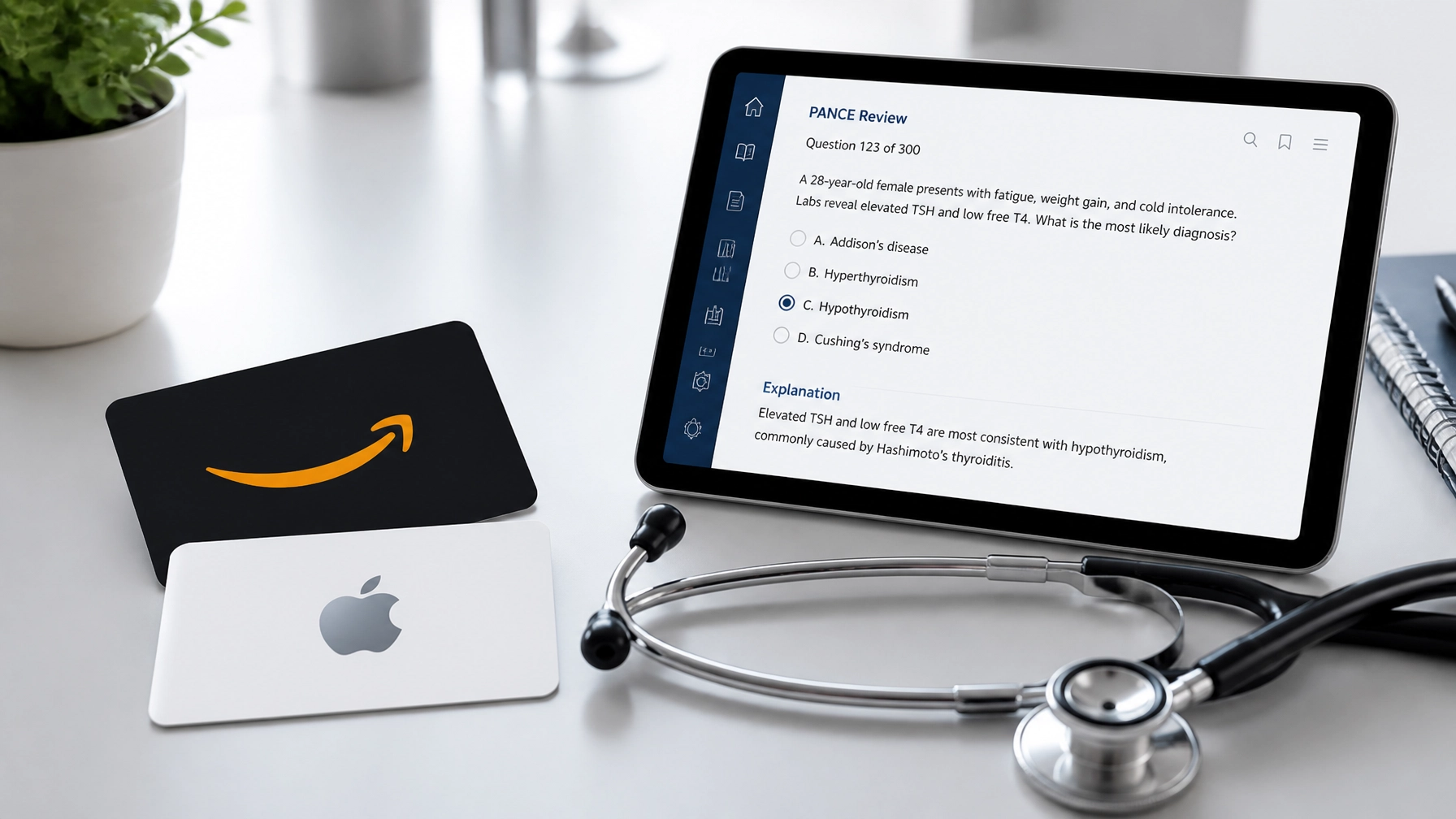
Stethoscope and digital tablet next to CME gift cards for PANCE and PANRE review.

7. Poor Practice Question Strategy

Reading through a review book or watching videos is passive learning. The mistake is not doing enough practice questions early in the process. You need to train your brain to recognize the "buzzwords" and the "distractors" that the NCCPA Blueprint utilizes.


Clinical Assessment: Internal Medicine & Cardiology

Let's put your knowledge to the test with high-yield clinical vignettes similar to what you’ll find in our pance prep courses.

Question 1
Your patient is a 68-year-old male with a history of hypertension and DM2 who presents to the clinic for a routine follow-up. He reports recent onset of "fluttering" in his chest and occasional lightheadedness. His HR is 114 bpm, BP is 132/84 mmHg, and SaO2 is 98% on room air. An ECG is performed, showing an irregularly irregular rhythm without discernible P waves. What is the most appropriate next step in the management of this patient's stroke risk?

A) Start Aspirin 81 mg daily
B) Calculate CHADS2-VASc score
C) Immediate cardioversion
D) Start Clopidogrel

Answer: B. Calculate CHADS2-VASc score.
Explanation: The patient is in Atrial Fibrillation. The first step in managing stroke risk in non-valvular A-fib is to risk-stratify the patient using the CHADS2-VASc score. Aspirin (Choice A) is no longer recommended as monotherapy for stroke prevention in A-fib. Immediate cardioversion (Choice C) is reserved for unstable patients (e.g., hypotension, acute heart failure). Clopidogrel (Choice D) is not the standard of care for stroke prevention in A-fib.

Question 2
Your patient is a 45-year-old female presenting with a 2-day history of sharp chest pain that is worse when lying flat and relieved by leaning forward. On physical exam, a high-pitched, scratching sound is heard at the left lower sternal border. Which of the following is the first-line pharmaceutical therapeutic intervention?

A) Prednisone
B) Colchicine and Ibuprofen
C) Nitroglycerin
D) Heparin

Answer: B. Colchicine and Ibuprofen.
Explanation: The presentation is classic for acute pericarditis (pleuritic chest pain, relief when leaning forward, and a pericardial friction rub). First-line treatment involves NSAIDs (like Ibuprofen or Indomethacin) plus Colchicine to reduce recurrence. Prednisone (Choice A) is a second-line treatment reserved for those who fail or have contraindications to NSAIDs. Nitroglycerin (Choice C) is for ischemic pain, and Heparin (Choice D) is contraindicated as it may lead to hemorrhagic pericardial effusion.

Anatomical heart and lung medical model for cardiology and pulmonary PANRE review.

Clinical Assessment: Pulmonary & Emergency Medicine

Question 3
Your patient is a 24-year-old male who was involved in a motor vehicle collision (MVC). He is complaining of severe shortness of breath and right-sided chest pain. On exam, you note decreased breath sounds on the right side and tracheal deviation to the left. His BP is 88/56 mmHg and HR is 130 bpm. What is the most immediate intervention required?

A) Chest X-ray
B) Needle thoracostomy
C) Tube thoracostomy (Chest tube)
D) Endotracheal intubation

Answer: B. Needle thoracostomy.
Explanation: This patient has clinical signs of a tension pneumothorax (hypotension, tachycardia, tracheal deviation, and decreased breath sounds). This is a clinical diagnosis that requires immediate decompression with a needle thoracostomy (usually in the 2nd intercostal space, midclavicular line or 4th/5th intercostal space, anterior axillary line) before obtaining a chest X-ray (Choice A). A tube thoracostomy (Choice C) follows the needle decompression. Intubation (Choice D) will not fix the underlying obstructive shock.

Why Choose CME Review Courses for Your NCCPA Prep?

Studying the NCCPA Blueprint doesn't have to be a guessing game. When you choose our PA-CME packages, you aren't just getting a study guide. You are getting a system designed to help you pass while maximizing your professional benefits.

  • 100 Category 1 AAPA Credits: Our panre review course provides the full 100 hours required for your cycle in one comprehensive package.
  • Flexible Study: Access your materials anywhere, anytime. We focus on the high-yield Pulmonary and GI blueprints that make up the bulk of your exam.
  • CME Gift Cards: Use your employer's CME allowance to its full potential. By adding an Amazon or Apple gift card add-on ($100-$1500) to your purchase, you can upgrade your tech or gear while you study. Remember, these are not free gifts: they are a paid component of your specialized CME package.

Successful Physician Assistant celebrating NCCPA Blueprint certification and career success.

Don't let the 7 mistakes ruin your study cycle. Focus on the weighting, master the task areas, and use the resources that give you the best return on your time and money. Whether you need a PANCE prep course or a PANRE-LA supplement, we have the clinical expertise to guide you.

Start your review today and secure your 100 Category 1 AAPA credits.

Posted on

Mastering the NCCPA Blueprint: EM, Cardiology, and the Gift Card Perk You Deserve

Preparing for the PANRE or PANRE-LA requires a strategic approach that mirrors the clinical realities of modern practice. The NCCPA Blueprint is the definitive guide for exam preparation, emphasizing organ systems and clinical task areas that Physician Assistants encounter daily. Our PANRE Review Course is designed to provide maximum efficiency for your study time and your professional development budget.

Course Logistics:

  • Price: $399.99
  • Duration of Access: 30 Months
  • CME Credits: 100 Hours of AAPA Category 1 Credit
  • Deliverables: 1,672 board-style review questions and 17 hours of high-yield video content.

Alignment with the NCCPA Blueprint

The NCCPA Blueprint dictates the weight of each medical category on your exam. For instance, the Cardiovascular System remains a cornerstone of the assessment, typically accounting for 13% of the exam content. Our course ensures that your preparation time is proportional to these weightings. We provide intensive coverage of Cardiology, Emergency Medicine, and Internal Medicine, ensuring you are prepared for both the breadth of general practice and the depth of acute care scenarios.

Proper documentation is not just a clinical requirement; it is a clinical task area tested by the NCCPA. Understanding how to document history, physical exam findings, and management plans accurately is essential for both your certification and your liability protection. Our review materials integrate these practical elements into every module.

Cardiology: The 13% Content Powerhouse

Cardiology

Cardiovascular disease is the most heavily weighted organ system on the PANRE. Our curriculum breaks down complex electrophysiology, valvular disorders, and heart failure management into digestible, exam-focused pearls. We prioritize the recognition of classic ECG patterns and the implementation of current ACC/AHA guidelines for hypertension and lipid management.

Emergency Medicine and Internal Medicine

Emergency Medicine

Whether you practice in a rural ER or a busy metropolitan hospitalist service, the PANRE tests your ability to stabilize acute patients and manage chronic comorbidities. Our Emergency Medicine CME Package and Internal Medicine content focus on high-acuity presentations like sepsis, acute respiratory failure, and metabolic derangements. We emphasize the "must-not-miss" diagnoses that are frequent flyers on the NCCPA Blueprint.

The Gift Card Perk: Enriching Your Professional Education

Gift Card Perk

We understand that PAs often have CME funds that must be used within a specific fiscal window. To help you further your education, we offer CME with Amazon and Apple Gift Card add-ons. You can add a gift card ranging from $100 to $1,500 to your purchase.

This allows you to acquire the hardware, such as an iPad for mobile charting, or the reference texts you need to stay current in your specialty. It is an efficient way to utilize your employer-provided CME allowance while securing 100 hours of AAPA Category 1 credit.


Clinical Assessment: Practice Scenarios

Use the following vignettes to test your knowledge of the NCCPA Blueprint categories in Cardiology, Emergency Medicine, and Internal Medicine.

Scenario 1: Cardiology

Your patient is a 64-year-old male with a history of hypertension and tobacco use who presents to the clinic for a routine follow-up. He reports recent episodes of "chest tightness" that occur when he is mowing his lawn and resolve after five minutes of rest. He denies syncope, orthopnea, or lower extremity edema. His vital signs are: BP 148/92, HR 78, RR 16, SaO2 98% on room air. Physical exam reveals a normal S1 and S2 with no murmurs or gallops.

Which of the following is the most appropriate next step in the diagnostic workup for this patient?

A) Coronary Angiography
B) Exercise Stress Echocardiogram
C) 24-hour Holter Monitor
D) Troponin I and CK-MB levels

Scenario 2: Emergency Medicine

Internal Medicine

Your patient is a 28-year-old female brought to the Emergency Department by EMS after being found unresponsive in a park. On arrival, she is lethargic but arousable to painful stimuli. Her vital signs are: BP 102/64, HR 52, RR 6, SaO2 88% on room air. Physical exam reveals pinpoint pupils and track marks on her bilateral antecubital fossae.

After securing the airway, which of the following is the most immediate pharmacological intervention?

A) Flumazenil
B) Naloxone
C) Dextrose 50%
D) Atropine

Scenario 3: Internal Medicine

Your patient is a 72-year-old female hospitalized for a hip fracture repair. On postoperative day three, she develops sudden onset shortness of breath and pleuritic chest pain. Her vital signs are: BP 110/70, HR 112, RR 24, SaO2 91% on 2L nasal cannula. Her surgical site is clean, but her right calf is erythematous and tender to palpation.

Which of the following is the gold standard for confirming the suspected diagnosis?

A) D-dimer assay
B) Ventilation-Perfusion (V/Q) scan
C) CT Pulmonary Angiography (CTPA)
D) Venous Duplex Ultrasound


Explanations and Rationales

Scenario 1: Cardiology

Correct Answer: B) Exercise Stress Echocardiogram

The patient’s presentation is classic for stable angina, characterized by predictable chest discomfort with exertion that is relieved by rest. In a patient with an intermediate pre-test probability of coronary artery disease (CAD) who is able to exercise and has a baseline ECG that is likely interpretable, an exercise stress echocardiogram is an appropriate initial non-invasive test to evaluate for inducible ischemia.

  • Coronary Angiography (A) is an invasive "gold standard" typically reserved for patients with high-risk features on non-invasive testing or unstable presentations.
  • Holter Monitor (C) is used for evaluating palpitations or suspected arrhythmias, not exertional ischemia.
  • Troponins (D) are markers of acute myocardial necrosis; they are not indicated in a stable outpatient setting where the symptoms have resolved.

Scenario 2: Emergency Medicine

Correct Answer: B) Naloxone

The clinical triad of coma, respiratory depression (RR 6), and miosis (pinpoint pupils) is pathognomonic for opioid overdose. Naloxone is a competitive opioid antagonist that should be administered immediately to reverse respiratory depression.

  • Flumazenil (A) is used for benzodiazepine overdose but carries a high risk of inducing seizures in chronic users or mixed ingestions.
  • Dextrose (C) is indicated for hypoglycemia; while it may be part of a "coma cocktail," the respiratory rate and pupils point specifically to opioids.
  • Atropine (D) is used for symptomatic bradycardia, but the bradycardia in this patient is secondary to respiratory failure and hypoxia caused by the opioid.

Scenario 3: Internal Medicine

Correct Answer: C) CT Pulmonary Angiography (CTPA)

The patient presents with signs and symptoms of a Pulmonary Embolism (PE) following major orthopedic surgery, which is a significant risk factor. CT Pulmonary Angiography (CTPA) is currently the preferred diagnostic "gold standard" (more accurately, the first-line definitive imaging) for PE due to its high sensitivity and specificity.

  • D-dimer (A) has a high negative predictive value but is non-specific, especially in a postoperative patient where it will likely be elevated regardless of a clot.
  • V/Q scan (B) is an alternative when CTPA is contraindicated (e.g., renal failure or contrast allergy).
  • Venous Duplex (D) can confirm a DVT but does not confirm the presence of a PE.

Maximize Your CME Investment

Earning your 100 hours of AAPA Category 1 credit doesn't have to be a chore. By choosing a course that aligns specifically with the NCCPA Blueprint, you ensure that every hour spent studying is an hour spent moving closer to recertification. Our PANRE Review Course provides the content you need with the financial flexibility you want. Use your CME funds to secure your future and get the gift card add-on you deserve.

Posted on

Apple or Amazon? Picking the Perfect Perk for Your PANRE Review

Price: $399.99 – $1,899.99
Access Duration: 30 Months
Deliverables: 100 AAPA Category 1 CME Credits, High-Yield Question Bank, and Integrated Gift Card

The utilization of your annual CME allowance requires a strategic approach that balances educational requirements with professional infrastructure. When preparing for the PANRE, you are not simply fulfilling a certification mandate; you are investing in the maintenance of your clinical knowledge base. CME Review Courses provides a mechanism to maximize this investment by offering CME with Amazon and Apple Gift Card add-ons.

By selecting a package that includes a $100 to $1,500 gift card, you secure the necessary documentation for your employer while gaining the capital needed to upgrade your clinical tools. The choice between Amazon and Apple depends on your specific professional needs.

The Amazon Path: Clinical Resources and Infrastructure

Selecting an Amazon gift card add-on is the preferred choice for the clinician focused on expanding their physical or digital library. The NCCPA Blueprint covers a vast array of medical specialties, and having the right reference materials is essential for mastery.

Amazon Resources

Professional Benefits of Amazon Credit:

  • Medical Textbooks: Purchase the latest editions of Harrison's Principles of Internal Medicine or specialty-specific texts for Cardiology and Emergency Medicine.
  • Clinical Equipment: Upgrade your diagnostic tools, such as high-quality stethoscopes or otoscopes, which are often out-of-pocket expenses.
  • Office Ergonomics: Enhance your study environment with standing desks, high-lumen task lighting, or noise-canceling headphones to facilitate focused review sessions.

The Amazon option offers maximum flexibility. Whether you need to replenish clinical supplies or acquire supplemental study guides that align with our PANRE Review Course, the credit is immediately applicable to thousands of professional products.

The Apple Path: Mobile Clinical Tools and Hardware

For the PA who prioritizes mobility and point-of-care technology, the Apple gift card is the superior choice. Modern clinical practice increasingly relies on high-performance hardware to run electronic health records (EHR) and clinical decision support tools.

Apple Tech

Professional Benefits of Apple Credit:

  • iPad Pro/Air: An iPad is arguably the most efficient tool for reviewing our high-yield medical content. Its portability allows for study during clinical breaks or commutes.
  • Apple Watch: Useful for tracking vitals, setting clinical timers, and receiving urgent patient notifications in a hospital setting.
  • MacBook Upgrades: A reliable laptop is a prerequisite for completing the 100 hours of AAPA Category 1 credit required for the PANRE Review.

Integrating top-tier hardware into your workflow improves efficiency. Utilizing your CME budget to acquire an iPad ensures that your CME Review Courses content is always accessible, whether you are on the floor or at home.

Targeted Content: Cardiology and Emergency Medicine

Our content is developed by physician assistants for physician assistants, ensuring that every lecture and question is relevant to the NCCPA Blueprint. While our packages are utilized by NPs and physicians: who find value in the content for Category 2 credit: our primary focus remains PAs seeking the most efficient path to recertification.

PA Collaboration

We offer specialized content across major medical disciplines, including:

  • Cardiology: Mastery of ECG interpretation and heart failure management.
  • Emergency Medicine: Critical care pathways and acute trauma management.
  • Internal Medicine: Comprehensive review of chronic disease states.
  • Orthopedics and Dermatology: High-yield visual diagnosis and treatment protocols.

The PANRE Review Course provides the 100 hours of Category 1 AAPA credit necessary to maintain your "C" status. The following clinical vignettes represent the caliber of assessment you will encounter in our program.


Clinical Application: Practice Questions

Question 1: Cardiovascular Medicine

Patient Presentation: Your patient is a 64-year-old male presenting to the emergency department with a 2-hour history of crushing substernal chest pain that radiates to his left jaw. He is diaphoretic and nauseated.
Vitals: BP 105/62 mmHg, HR 110 bpm, RR 22 bpm, SaO2 94% on room air.
Diagnostics: The initial ECG reveals 3mm ST-segment elevation in leads II, III, and aVF.

What is the most appropriate next step in the management of this patient?

A. Administer 325 mg of aspirin and arrange for emergent percutaneous coronary intervention (PCI).
B. Obtain a STAT portable chest X-ray to rule out aortic dissection.
C. Administer sublingual nitroglycerin and wait for initial troponin results.
D. Perform a 12-lead ECG every 30 minutes to monitor for evolution.

Correct Answer: A. Administer 325 mg of aspirin and arrange for emergent percutaneous coronary intervention (PCI).

Explanation: The patient is presenting with a classic ST-elevation myocardial infarction (STEMI) of the inferior wall. According to standard clinical guidelines, "time is muscle." Immediate reperfusion therapy via PCI is the gold standard for management when available within 90 minutes of medical contact. Aspirin should be administered immediately for its antiplatelet effects. Nitroglycerin (Option C) must be used with extreme caution in inferior MIs due to the risk of severe hypotension if right ventricular involvement is present. Waiting for troponin results (Option C) or repeat ECGs (Option D) unnecessarily delays definitive treatment and increases myocardial necrosis.

Question 2: Pulmonary / Emergency Medicine

Patient Presentation: Your patient is a 24-year-old female with a history of asthma who presents with acute shortness of breath and wheezing. She has been using her rescue inhaler every 20 minutes for the past two hours without significant relief.
Vitals: HR 118 bpm, RR 28 bpm, SaO2 91% on room air.
Physical Exam: You note the use of accessory muscles of respiration and loud expiratory wheezing throughout all lung fields.

Which of the following pharmacological interventions is indicated first?

A. Intravenous magnesium sulfate.
B. Inhaled short-acting beta-agonist (SABA) via nebulizer and oral or IV corticosteroids.
C. Prophylactic intubation and mechanical ventilation.
D. Subcutaneous epinephrine.

Correct Answer: B. Inhaled short-acting beta-agonist (SABA) via nebulizer and oral or IV corticosteroids.

Explanation: In an acute asthma exacerbation, the primary goal is to reverse airway obstruction and reduce inflammation. Inhaled SABAs provide rapid bronchodilation. Corticosteroids are essential for reducing the underlying airway inflammation and preventing relapse; their systemic administration (oral or IV) is indicated in patients who do not respond completely to initial SABA treatment. Magnesium sulfate (Option A) is typically reserved for severe cases that are refractory to initial treatment. Intubation (Option C) is a last resort for impending respiratory failure. Epinephrine (Option D) is generally reserved for anaphylaxis or cases where inhaled therapies are not feasible.


Maximizing Your CME Resources

Selecting the right CME provider involves more than just counting credits. It requires finding a partner that understands the clinical and logistical demands of being a Physician Assistant. By choosing CME Review Courses, you gain access to 100 hours of AAPA Category 1 credit through our PANRE Review, while simultaneously equipping yourself with the professional tools necessary for modern medicine.

Whether you prefer the tech-forward Apple ecosystem or the broad resource availability of Amazon, our gift card add-ons ensure your CME money works as hard as you do. Secure your documentation and your recertification today.

Explore our CME Packages with Gift Cards here.

Posted on

How to Maximize Your CME Budget: $1500 Amazon Gift Cards & Top-Tier PANRE Review

A clean, professional high-quality photo of a stethoscope resting on a white laptop next to an Amazon and Apple gift card. The background is a bright, modern clinic office.

Price: $399.99
Access: 30 Months
Deliverables: 100 Hours of AAPA Category 1 CME Credit, 1,672 Board-Style Review Questions

Maximizing your employer-provided continuing medical education (CME) budget requires a strategic approach that balances high-quality clinical preparation with personal professional enrichment. As a Physician Assistant, your time is a finite resource. Utilizing a comprehensive PANRE Review Course that aligns strictly with the NCCPA Blueprint ensures you are not only meeting your certification requirements but also optimizing your financial benefits.

Strategic Allocation of CME Funds

Most healthcare organizations provide an annual CME allowance ranging from $1,500 to $3,000. If this budget is not utilized within the fiscal year, the funds are typically lost. By selecting a CME package that includes a gift card add-on, you are able to convert your educational allowance into tangible tools for your practice.

At CME Review Courses, we offer CME with Gift Card options where you can add an Amazon or Apple gift card valued between $100 and $1,500 to your purchase. This allows you to acquire the 100 hours of AAPA Category 1 Credit necessary for the PANRE while also securing funds for a new iPad, medical reference books, or clinical equipment.

Close up of a $1500 Amazon gift card and a modern tablet displaying medical certification exam questions.

Our documentation process is streamlined for professional reimbursement. We provide the necessary documentation that clearly outlines the educational value of the course and the associated CME credits. This ensures that your employer recognizes the purchase as a legitimate professional development expense. The PANRE Review content is written by PAs for PAs, ensuring the clinical vignettes and practice questions reflect the real-world scenarios and exam-style challenges you face.

High-Yield Clinical Content

The 100 hours of AAPA Category 1 credit included in the PANRE Review is specifically designed to cover the breadth of the NCCPA Blueprint. This includes essential updates in:

  • Cardiology
  • Pulmonary Medicine
  • Gastrointestinal Systems
  • Musculoskeletal Health
  • Neurology
  • Dermatology

By focusing on these core areas, you ensure that your study time is efficient. The 1,672 practice questions included in the 30-month access period allow for repeated self-assessment to identify and bridge knowledge gaps.


Clinical Assessment and Practice Questions

Scenario 1: Dermatology

Your patient is a 34-year-old male presenting with a chronic, recurring skin condition. He complains of silver-colored, scaling plaques on his bilateral elbows and knees. He notes that the lesions occasionally bleed when the scales are removed (Auspitz sign). He has no systemic symptoms and no history of recent infections. Physical examination reveals well-demarcated erythematous plaques with overlying silvery scale.

A clinical photograph of an erythematous, scaling plaque on a patient's elbow, typical of plaque psoriasis.

What is the most likely diagnosis?
A) Atopic Dermatitis
B) Tinea Corporis
C) Plaque Psoriasis
D) Nummular Eczema

Explanation:
The correct answer is C) Plaque Psoriasis. The presentation of well-demarcated erythematous plaques with silvery scales located on extensor surfaces (elbows and knees) is hallmark for plaque psoriasis. The Auspitz sign (pinpoint bleeding after scale removal) further supports this diagnosis. Atopic dermatitis typically presents on flexural surfaces and is associated with pruritus and lichenification. Tinea corporis would demonstrate central clearing and a positive KOH prep. Nummular eczema presents as coin-shaped, crusty lesions without the characteristic silvery scale.

Scenario 2: Cardiology

Your patient is a 62-year-old male with a history of hypertension and tobacco use who presents to the emergency department with acute onset substernal chest pain. The pain is described as heavy and radiates to his left jaw. His vital signs are: BP 155/92 mmHg, HR 102 bpm, RR 20 bpm, and SaO2 96% on room air. An EKG is performed immediately.

A 12-lead EKG showing ST-segment elevation in leads II, III, and aVF.

The EKG reveals 2mm ST-segment elevation in leads II, III, and aVF. Which coronary artery is most likely occluded?
A) Left Anterior Descending (LAD)
B) Left Circumflex (LCx)
C) Right Coronary Artery (RCA)
D) Left Main Coronary Artery

Explanation:
The correct answer is C) Right Coronary Artery (RCA). ST-segment elevation in leads II, III, and aVF signifies an inferior wall myocardial infarction (STEMI). The RCA provides the primary blood supply to the inferior wall of the heart in approximately 80% of the population. Occlusion of the LAD (Choice A) typically results in anterior or septal wall MIs (leads V1-V4). LCx occlusion (Choice B) leads to lateral wall MIs (leads I, aVL, V5, V6). Left Main occlusion (Choice D) usually results in widespread ST changes and carries a very high mortality rate.

Scenario 3: Pulmonology

Your patient is a 28-year-old female with a history of asthma who presents with increased shortness of breath and wheezing. She has been using her albuterol inhaler four times daily for the past three days without significant relief. On examination, she is in mild respiratory distress, speaking in short sentences. Her SaO2 is 93% on room air. Diffuse expiratory wheezing is heard throughout all lung fields.

What is the initial pharmacological intervention of choice in the acute management of this patient?
A) Inhaled SABA via nebulizer and oral corticosteroids
B) Long-acting beta-agonist (LABA)
C) Inhaled corticosteroids alone
D) Antibiotic therapy

Explanation:
The correct answer is A) Inhaled SABA via nebulizer and oral corticosteroids. For an acute asthma exacerbation not responding to home rescue inhalers, the standard of care is intensified short-acting beta-agonists (SABA) to provide immediate bronchodilation and systemic corticosteroids to reduce airway inflammation. LABAs (Choice B) are not indicated for acute rescue therapy. Inhaled corticosteroids (Choice C) are for maintenance and do not provide immediate relief. Antibiotics (Choice D) are only indicated if there is evidence of a secondary bacterial infection, such as pneumonia.


Maximize Efficiency with NCCPA-Aligned Review

When preparing for the PANRE, you cannot afford to waste time on content that will not be tested. Our PANRE Review Course is structured to mirror the NCCPA Blueprint. This focus ensures that every hour of study contributes directly to your exam performance.

By combining this high-yield educational content with the Amazon or Apple gift card add-ons, you create a customized CME experience that serves both your professional requirements and your personal needs.

A confident physician assistant in a white coat studying medical blueprints on a monitor in a hospital setting.

Logistics and Deliverables Summary

  • Course: Comprehensive PANRE Review
  • Credit: 100 Hours of AAPA Category 1 Credit
  • Content: Written by PAs for PAs, encompassing 1,672 questions
  • Access: Full 30-month online access
  • Budgeting: Gift card add-ons ($100-$1500) available for Amazon or Apple
  • Cost: $399.99 base price

Invest in a review course that understands the professional demands of a Physician Assistant. Secure your 100 hours of Category 1 credit and maximize your employer's CME budget today by visiting our CME with Gift Card selection page.

Our content is designed to be efficient, direct, and effective. Whether you are in Family Medicine, Emergency Medicine, or Orthopedics, the foundational knowledge provided in this review is essential for maintaining your certification and providing high-quality patient care. Ensure you have the proper documentation for your reimbursement and the best preparation for your exam.

Posted on

Looking For CME Gift Cards? Here Are 10 Things You Should Know About Add-Ons

Navigating the world of Continuing Medical Education (CME) can be complex, especially when you are trying to balance clinical hours, board preparation, and maximizing your annual employer-provided CME allowance. One of the most popular ways to streamline this process is by utilizing cme gift cards as part of your educational purchase. At CME Review Courses, we provide comprehensive solutions that allow you to master clinical content while utilizing your professional development funds effectively.

If you are a Physician Assistant (PA) preparing for the PANRE or a Nurse Practitioner looking for high-yield review, understanding how gift card add-ons work is essential. Here are 10 things you need to know about CME gift card add-ons.

1. Gift Cards Are Add-Ons, Not "Free Gifts"

It is a common misconception in the industry that gift cards are "free" bonuses. At CME Review Courses, we maintain transparency: Amazon and Apple Gift Card add-ons ($100-$1500) are options that can be added to your purchase. They are not free gifts but are integrated into the total cost of the educational package. This allows you to utilize your CME budget for both high-quality educational materials and a gift card that can be used for clinical tools, technology, or other professional needs.

2. You Can Earn 100 Category 1 AAPA Credits

When you choose our panre review course, you aren't just getting study materials; you are earning 100 hours of Category 1 AAPA credit. This is a significant portion of your certification maintenance requirements. By bundling these credits with a gift card add-on, you ensure that you are meeting your professional obligations while also getting the most value out of your allotted funds.

3. Multiple Gift Card Retailers Are Available

Flexibility is key for busy clinicians. We offer options for both cme with amazon gift card and cme with apple gift card. Whether you need to stock up on medical reference books and clinical gear through Amazon or upgrade your diagnostic tablet or phone via Apple, these add-ons provide the flexibility to choose what best supports your practice.

4. Tailored for Major Specialties

Our courses are designed to be relevant across various clinical settings. Whether you are searching for emergency medicine cme or family medicine cme, the content is high-yield and evidence-based. The add-on gift cards remain available regardless of the specialty focus you choose for your review.

Modern clinical workspace with a digital tablet and stethoscope for PANCE prep courses and PANRE review.

5. High-Yield PANCE and PANRE Preparation

If you are currently in your recertification cycle, our pance prep courses and PANRE review options focus on the NCCPA Blueprint. The goal is to provide a "one-and-done" study experience. By utilizing the panre review course, you can focus your energy on the most heavily weighted topics, such as Cardiology, Pulmonology, and GI, while securing your credits and gift card add-on in a single transaction.

6. Maximizing Your Annual CME Allowance

Most healthcare institutions provide a yearly CME budget that expires if not used. Many PAs and NPs find themselves with remaining funds at the end of the fiscal year. Adding an Apple or Amazon gift card to your CME purchase is a strategic way to ensure that your full allowance is utilized toward professional growth and necessary clinical resources.

7. Gift Card Values Range from $100 to $1,500

We offer a wide range of add-on values to fit different budget levels. Depending on your available funds, you can select an add-on ranging from $100 up to $1,500. This tier-based system ensures that whether you have a modest allowance or a more substantial one, there is a package that fits your needs.

8. Streamlined Digital Delivery

In the modern clinical environment, speed is essential. Once your purchase of a course like our internal medicine cme is complete, the gift card add-ons are typically delivered electronically. This allows you to start using your credits and your gift card balance almost immediately.

09. Content Access and Duration

When you invest in a review course, you need time to digest the information. Our courses generally offer one year of access, allowing you to review the clinical vignettes and practice questions at your own pace. This is particularly useful for those working in high-volume environments like Emergency Medicine who may only have small pockets of time to study.

10. Educational Excellence is the Priority

While the gift card add-on is a convenient feature, the core value of our program is the education. Our courses are built to help you pass your boards and improve clinical outcomes. The integration of cme gift cards is simply a way to make the administrative side of your education as rewarding as the clinical side.


Course Logistics and Deliverables

Price: Variable based on gift card add-on selection ($100 – $1,500 add-ons available).
Credits: 100 Hours of Category 1 AAPA Credit (specifically for the PANRE Review Course).
Access: 12 Months of online access.
Format: High-yield clinical modules and practice question banks.
Deliverables: Instant access to course materials and electronic delivery of selected gift card add-ons.


Clinical Case Study: Emergency Medicine Focus

To demonstrate the type of high-yield content found in our panre review course, consider the following clinical scenario often encountered in the Emergency Department or Urgent Care setting.

Scenario:
Your patient is a 58-year-old male with a history of hypertension and tobacco use (30 pack-years) who presents to the Emergency Department complaining of sudden-onset, severe chest pain that radiates to his back. He describes the pain as "tearing" in nature. On physical exam, his heart rate (HR) is 105 bpm, and his blood pressure (BP) is 185/110 mmHg in the right arm and 160/95 mmHg in the left arm. A new Grade II/VI diastolic murmur is noted at the right sternal border.

Question:
Which of the following is the most appropriate next step in the diagnostic workup for this patient?

A) Emergent Transthoracic Echocardiogram (TTE)
B) Computed Tomography Angiography (CTA) of the chest and abdomen
C) D-dimer and Chest X-ray
D) Troponin and 12-lead EKG

Correct Answer:
B) Computed Tomography Angiography (CTA) of the chest and abdomen

Explanation:
The patient’s presentation: sudden "tearing" chest pain radiating to the back, hypertension, and a blood pressure discrepancy between arms: is highly suggestive of an Aortic Dissection. A new diastolic murmur suggests aortic regurgitation, which can occur if the dissection involves the aortic valve. CTA of the chest and abdomen is the gold standard for diagnosis in stable patients because it is highly sensitive and specific, and it helps define the extent of the dissection (Stanford Type A vs. Type B).

  • A) TTE is often insufficient to visualize the descending aorta; a Transesophageal Echocardiogram (TEE) would be more appropriate if the patient were hemodynamically unstable.
  • C) D-dimer is non-specific and should not delay definitive imaging when clinical suspicion is high. Chest X-ray may show a widened mediastinum but is not diagnostic.
  • D) Troponin and EKG should be performed to rule out myocardial infarction (which can coexist if the dissection involves the coronary ostia), but they are not the definitive diagnostic steps for a suspected dissection.

Anatomical view of the aorta and cardiovascular system for emergency medicine CME clinical case study review.


Clinical Case Study: Family Medicine Focus

Scenario:
Your patient is a 32-year-old female who presents to your Family Medicine clinic for a routine follow-up. She complains of increased fatigue, cold intolerance, and unintentional weight gain over the last four months. On physical exam, you note a palpable, non-tender thyroid enlargement (goiter) and delayed relaxation of the deep tendon reflexes. Laboratory results reveal an elevated Thyroid Stimulating Hormone (TSH) of 14.5 mIU/L and a low Free T4.

Question:
What is the most likely underlying etiology for this patient's condition?

A) Graves' Disease
B) Hashimoto’s Thyroiditis
C) Subacute Thyroiditis (de Quervain's)
D) Pituitary Adenoma

Correct Answer:
B) Hashimoto’s Thyroiditis

Explanation:
The patient presents with classic signs of hypothyroidism (fatigue, cold intolerance, weight gain, delayed reflexes). The laboratory findings of an elevated TSH and low Free T4 confirm primary hypothyroidism. In iodine-sufficient regions like the United States, Hashimoto’s Thyroiditis (chronic lymphocytic thyroiditis) is the most common cause of primary hypothyroidism. It is an autoimmune condition characterized by the destruction of the thyroid gland.

  • A) Graves' Disease typically presents with hyperthyroidism (low TSH, high Free T4) and symptoms like heat intolerance and weight loss.
  • C) Subacute Thyroiditis usually presents with a painful, tender thyroid gland, often following a viral infection, and typically has a triphasic course (hyperthyroidism, then hypothyroidism, then recovery).
  • D) Pituitary Adenoma would result in secondary hypothyroidism, characterized by a low Free T4 and a low or inappropriately normal TSH.

Why Choose CME Review Courses?

Choosing the right provider for your pance prep courses or pa-cme is about more than just checking a box. It is about ensuring you have the clinical knowledge to provide excellent patient care while navigating the requirements of the NCCPA.

Our CME Review Courses are designed by clinicians for clinicians. We understand that your time is valuable. That is why our PANRE Review course offers the full 100 hours of Category 1 AAPA credit in a format that is accessible and efficient.

When you add an Amazon or Apple gift card to your purchase, you are making a smart financial decision that aligns with your professional development goals. You get the credits you need, the knowledge you want, and the gift card add-on that helps you equip your practice for success.

Whether you are looking for internal medicine cme with gift card or family medicine cme with gift card, we have the options to help you succeed. Don't let your CME allowance go to waste: invest in a course that gives you back more than just a certificate.

Posted on

The Updated NCCPA Blueprint Matters: Why You Should Prioritize Endocrine and Infectious Disease in 2026

The Updated NCCPA Blueprint Matters: Why You Should Prioritize Endocrine and Infectious Disease in 2026

Price: $400 – $1,900
Access: 12 months
Deliverables: 100 Hours of AAPA Category 1 CME Credit, Extensive Question Bank, Pharmacology Specialty Credit

The 2026 landscape for Physician Assistant certification and recertification continues to demand high-level proficiency in core clinical disciplines. As the NCCPA content blueprint guides the structure of the PANCE and PANRE, clinicians must adapt their study strategies to reflect current weightings. While many candidates focus heavily on Cardiology and Pulmonology, the strategic importance of Endocrine System and Infectious Diseases cannot be overstated. These two categories represent a combined significant percentage of the exam content and often contain the most complex pharmacological management scenarios.

For PAs preparing for the PANRE, our PANRE Review Course provides a comprehensive solution. This course offers 100 hours of AAPA Category 1 CME credit, ensuring you meet your certification requirements while mastering the blueprint. Additionally, we offer CME with Amazon and Apple Gift Card add-ons, allowing you to maximize your educational budget by adding $100 to $1,500 in gift cards to your purchase.


The Strategic Importance of the Endocrine System

The Endocrine System consistently remains a pillar of the NCCPA blueprint. For 2026, the focus remains on high-prevalence chronic conditions such as Diabetes Mellitus and Thyroid disorders, alongside more complex adrenal and pituitary pathologies.

Mastery of Endocrine topics is essential because these conditions often overlap with every other organ system. A patient presenting with "cardiovascular" symptoms may actually be suffering from hyperthyroidism; a patient with "gastrointestinal" complaints might have undiagnosed Addison’s disease.

Endocrine System Concepts
(Image prompt: A detailed medical illustration showing the major endocrine glands of the human body including the pituitary, thyroid, and adrenals, with arrows indicating hormonal feedback loops, in a professional clinical style.)

In the 2026 blueprint, clinicians should prioritize:

  • Diabetes Mellitus: Management of Type 1 and Type 2, including the latest SGLT2 inhibitors and GLP-1 agonists.
  • Thyroid Disorders: Differentiating between Graves’ disease, Hashimoto’s thyroiditis, and toxic multinodular goiter.
  • Adrenal Insufficiency: Recognizing the clinical signs of an adrenal crisis, a high-yield emergency medicine topic.

Our content is written by physician assistants for physician assistants, ensuring the clinical pearls provided are directly applicable to the exam and daily practice. While primarily designed for PAs, nurse practitioners and physicians also find significant value in our Internal Medicine CME content, though physicians should note these credits count as Category 2 for their specific licensing requirements.

Navigating Infectious Disease Complexity

Infectious Disease (ID) is another high-yield category that requires diligent study. The blueprint focuses heavily on the identification of pathogens and the appropriate selection of antimicrobial therapy. In the current clinical environment, understanding antibiotic stewardship and the management of emerging viral pathogens is critical.

Infectious Disease questions on the PANRE often test your ability to match a clinical presentation (e.g., "rust-colored sputum") with the most likely causative organism (Streptococcus pneumoniae) and the first-line treatment.

Infectious Disease Microbiology
(Image prompt: A scientific visualization of various bacteria and viruses under a microscope, including spherical cocci and rod-shaped bacilli, with a laboratory background, representing the study of infectious diseases.)

Key areas for 2026 include:

  • Sepsis and Septic Shock: Early recognition and aggressive fluid resuscitation protocols.
  • HIV/AIDS: Opportunistic infections and basic understanding of antiretroviral therapy (ART).
  • Travel Medicine: Prophylaxis and treatment for malaria and other tropical diseases.
  • Fungal Infections: Management of candidiasis and cryptococcosis in immunocompromised patients.

Our Pharmacology Course is an excellent supplement for the ID section of the blueprint, as it provides focused AAPA Category 1 credit in pharmacology, helping you master antibiotic classes, mechanisms of action, and side effect profiles.

Maximizing Your CME Budget

Efficient use of CME funds is a priority for many PAs and NPs. Our packages are designed to be the most efficient way to use your employer-provided CME money. By choosing a package with an Amazon or Apple Gift Card add-on, you can invest in your education while obtaining tools that further enrich your learning environment, such as new tablets, books, or medical equipment.

CME Gift Card Benefits
(Image prompt: A professional display of a digital tablet showing a medical education portal, next to an Amazon and an Apple gift card, symbolizing the CME gift card add-on program for physician assistants.)

Whether you are looking for Family Medicine CME or specialized Emergency Medicine content, our courses provide the flexibility and depth required to maintain your certification and stay current with medical advancements.


Clinical Assessment: Endocrine and Infectious Disease

Test your knowledge with the following clinical vignettes designed to mirror the style of the NCCPA exam.

Question 1

Your patient is a 42-year-old female who presents to the clinic complaining of persistent fatigue, weight gain despite no change in diet, and "feeling cold all the time." On physical examination, her HR is 58 bpm, her skin is dry, and you note a delayed relaxation phase of the deep tendon reflexes. Laboratory results show an elevated Thyroid Stimulating Hormone (TSH) and a low Free T4 level.

What is the most likely diagnosis?

A. Graves’ Disease
B. Hashimoto’s Thyroiditis
C. Subacute Thyroiditis
D. Pituitary Adenoma

Explanation:
Hashimoto’s Thyroiditis is the correct answer. This patient presents with classic signs of hypothyroidism: bradycardia, cold intolerance, weight gain, and delayed reflex relaxation. An elevated TSH with a low Free T4 confirms primary hypothyroidism, and Hashimoto’s is the most common cause in iodine-sufficient regions. Graves’ disease presents with hyperthyroidism (low TSH, high T4). Subacute thyroiditis typically presents with a painful thyroid gland and transient hyperthyroidism. A pituitary adenoma causing secondary hypothyroidism would show a low TSH and a low Free T4.

Question 2

Your patient is a 28-year-old male presenting with a sudden onset of high fever, headache, and a stiff neck. On examination, he has a positive Kernig’s sign and a petechial rash on his lower extremities. A lumbar puncture is performed, showing a high opening pressure, elevated protein, low glucose, and a high white blood cell count with a predominance of neutrophils. Gram stain reveals gram-negative diplococci.

Which organism is the most likely cause?

A. Streptococcus pneumoniae
B. Neisseria meningitidis
C. Haemophilus influenzae
D. Listeria monocytogenes

Explanation:
Neisseria meningitidis is the correct answer. The presence of gram-negative diplococci on a Gram stain of cerebrospinal fluid (CSF) is diagnostic for N. meningitidis. The clinical triad of fever, neck stiffness, and headache, combined with a petechial rash, is highly suggestive of meningococcal meningitis. Streptococcus pneumoniae appears as gram-positive diplococci. Haemophilus influenzae is a gram-negative coccobacillus. Listeria monocytogenes is a gram-positive rod, usually seen in neonates or immunocompromised patients.


Conclusion

Success on the 2026 PANRE and in clinical practice requires a targeted approach to the NCCPA blueprint. By prioritizing high-yield areas like the Endocrine System and Infectious Disease, you ensure that you are prepared for a significant portion of the exam content.

Medical Professional Studying
(Image prompt: A physician assistant in a white coat sitting in a modern clinical office, focused on a laptop screen reviewing medical data, with a stethoscope around their neck, representing professional development and certification prep.)

Invest in your career today with our PANRE Review Course. Benefit from 100 hours of AAPA Category 1 credit, written by PAs who understand the rigors of the profession. Don’t forget to explore our CME with gift card options to maximize your educational benefits.

Posted on

Looking For CME with Amazon Gift Card? Here Are 5 Things You Should Know About Documentation

Price: $599.00 – $2,849.00
Access: 1 year of unlimited access
Deliverables: 100 Hours of AAPA Category 1 CME Credit (PANRE Review), Pharmacology Course (AAPA Category 1 Credit), and choice of $100–$1,500 Amazon or Apple Gift Card.

Maximizing the utility of your annual CME allowance is a strategic professional decision for any Physician Assistant. When selecting a program that includes an Amazon or Apple gift card add-on, the primary focus often lands on the dollar amount of the incentive. However, the integrity of your professional record depends on understanding the nuances of documentation. At CME Review Courses, we provide the educational tools and the additional value of gift cards to help you further your professional library or clinical equipment.

Navigating the intersection of educational requirements and employer reimbursement requires a clear understanding of how these transactions are recorded and reported. Here are five essential things you should know about documentation when purchasing CME with an Amazon gift card.

1. Documentation Reflects Educational Value

The primary purpose of your documentation is to prove the purchase of a valid educational product. When you purchase our PANRE Review Course, the documentation reflects the clinical content and the credit hours earned. Because these courses provide 100 hours of AAPA Category 1 credit, your documentation must clearly state the nature of the credit and the accrediting body. For PAs, this is vital for NCCPA maintenance. Your documentation serves as the official record of your investment in professional competence, ensuring that your employer or the IRS sees a professional development expense rather than a simple retail transaction.

2. Gift Cards are Cash Equivalents for Tax Purposes

According to IRS guidelines, gift cards are considered cash equivalents. This means that if your employer reimburses the full amount of a CME package that includes a $1,500 Amazon gift card, that portion may be considered taxable income. When you review your documentation, be aware that you are responsible for how this is reported on your personal taxes. While the course itself is a professional expense, the add-on incentive is often viewed differently than the educational content. It is your responsibility to understand if your documentation needs to be itemized or if your employer’s policy handles gift cards as de minimis benefits or taxable fringe benefits.

3. Employer Policy Dictates Documentation Requirements

Every healthcare organization has its own internal rules regarding CME reimbursement. Some hospital systems require documentation that separates the cost of the course from the cost of any added incentives, while others allow the total package price to be submitted as a single educational expense. Before finalizing your purchase of a CME with Gift Card package, check your HR handbook. You need to know if they require a specific breakdown in the documentation to process your reimbursement. We provide documentation that satisfies standard professional requirements, but local corporate compliance is the final authority on what will be approved.

4. Documentation for NCCPA and State Audits

While your employer needs documentation for reimbursement, the NCCPA and state boards need it for audit protection. If you are audited, you must produce documentation showing you completed the 100 hours of AAPA Category 1 CME. The gift card component is irrelevant to the NCCPA; they care only about the certificate of completion. Ensure that your documentation includes your name, the date of completion, the title of the course (such as Internal Medicine, Emergency Medicine, or Dermatology), and the number of credits awarded. Keeping these records organized and separate from the financial documentation is a clinical best practice.

5. Using Gift Cards to Enrich Further Education

The documentation for your gift card add-on represents a pre-payment for future educational resources. Many PAs use their Amazon or Apple gift cards to purchase clinical tools like stethoscopes, medical reference books, or tablets for EHR access. In this context, the documentation of the initial CME purchase is the first step in a larger educational lifecycle. By utilizing a high-value gift card add-on, you are effectively extending your CME budget. The documentation ensures that the funds used were appropriately sourced from a professional development allowance, allowing you to upgrade your clinical gear throughout the year.


Clinical Content and Practice Questions

The following clinical scenarios are designed to test your knowledge across multiple specialties including Cardiology, Emergency Medicine, and Orthopedics. This content reflects the level of rigor found in our PANRE Review.

Question 1

Your patient is a 64-year-old male presenting with a 2-hour history of substernal chest pain. He describes the pain as "tearing" and radiating to the back between his scapulae. Vital signs show a blood pressure of 185/110 mmHg in the right arm and 160/95 mmHg in the left arm. HR is 105 bpm. A chest X-ray reveals a widened mediastinum. What is the most appropriate initial diagnostic study to confirm the diagnosis?

A. Transthoracic echocardiogram (TTE)
B. CT Angiogram of the chest and abdomen
C. Cardiac catheterization
D. Exercise stress test

Correct Answer: B. CT Angiogram of the chest and abdomen.
CT Angiogram is the gold standard for diagnosing aortic dissection in a stable patient because it provides rapid, highly sensitive, and specific visualization of the intimal flap and the extent of the dissection. A widened mediastinum on X-ray and asymmetric blood pressures are classic indicators of aortic dissection. TTE (Choice A) often lacks the sensitivity to visualize the descending aorta. Cardiac catheterization (Choice C) is invasive and time-consuming in an emergent situation. Exercise stress test (Choice D) is contraindicated in acute chest pain and could be fatal in the setting of a dissection.

Question 2

Your patient is a 28-year-old female who presents with a painful, swollen left knee after an injury during a soccer game. She reports a "popping" sensation and immediate swelling. On examination, there is a positive Lachman test and a positive anterior drawer sign. What is the most likely diagnosis?

A. Medial collateral ligament (MCL) tear
B. Meniscal tear
C. Anterior cruciate ligament (ACL) tear
D. Patellar tendon rupture

Correct Answer: C. Anterior cruciate ligament (ACL) tear.
A positive Lachman test is the most sensitive clinical indicator for an ACL tear. The "popping" sound and rapid onset of hemarthrosis are classic for this injury. MCL tears (Choice A) typically present with pain over the medial joint line and laxity with valgus stress. Meniscal tears (Choice B) present with joint line tenderness and locking or clicking, but not significant instability on the Lachman test. Patellar tendon rupture (Choice D) would present with a high-riding patella (patella alta) and an inability to perform a straight leg raise.

Question 3

Your patient is a 45-year-old female presenting with a pruritic rash on her wrists. Physical exam reveals flat-topped, purple, polygonal papules with fine white lines (Wickham striae) on the surface. She also notes some painful white lacy lesions in her mouth. What is the most likely diagnosis?

A. Psoriasis
B. Lichen Planus
C. Eczema
D. Tinea Corporis

Correct Answer: B. Lichen Planus.
Lichen planus is characterized by the "6 Ps": planar, purple, polygonal, pruritic, papules, and plaques. The presence of Wickham striae (the white lacy lines) is a pathognomonic feature. Psoriasis (Choice A) presents with silvery scales and well-demarcated erythematous plaques. Eczema (Choice C) typically presents with ill-defined erythematous patches and excoriations. Tinea Corporis (Choice D) presents as an annular lesion with central clearing and a scaly border.

Question 4

Your patient is a 72-year-old male with a history of hypertension and atrial fibrillation. He presents with sudden onset of severe abdominal pain that is out of proportion to the physical exam. He has had two episodes of vomiting. His vital signs are HR 112 bpm (irregular), BP 130/85 mmHg, and RR 20. Abdominal exam is soft with no rebound or guarding. What is the most likely diagnosis?

A. Acute cholecystitis
B. Small bowel obstruction
C. Acute mesenteric ischemia
D. Perforated peptic ulcer

Correct Answer: C. Acute mesenteric ischemia.
Pain out of proportion to the exam in an elderly patient with atrial fibrillation is acute mesenteric ischemia until proven otherwise. The irregular heart rate suggests an embolic event originating from the heart. Acute cholecystitis (Choice A) would show RUQ tenderness and a positive Murphy's sign. Small bowel obstruction (Choice B) would present with abdominal distention and high-pitched bowel sounds. A perforated peptic ulcer (Choice D) would present with a rigid, board-like abdomen and signs of peritonitis.


Our courses are written by physician assistants for physician assistants. Whether you are preparing for your NCCPA Blueprint exam or simply looking for the most efficient way to use your CME funds, our packages offer the highest value in the industry.

Click here to view our CME with Gift Card packages and secure your 100 hours of AAPA Category 1 credit today.