
Price: $499.99
Duration: Lifetime Access
Deliverables: 100 Hours of AAPA Category 1 CME Credit, Comprehensive PANRE-LA Question Bank, High-Yield Video Content
The shift from the high-stakes, single-day PANRE to the longitudinal assessment (PANRE-LA) has changed the recertification landscape for physician assistants. While the 12-quarter format is designed to reduce the "one-and-done" exam anxiety, it introduces a new challenge: maintaining a consistent level of clinical readiness over a three-year period. For the busy PA balancing a full patient load, administrative duties, and personal life, the PANRE-LA can easily become another source of background stress.
The goal is not just to pass, but to do so efficiently without allowing the assessment to consume your limited free time. This requires a strategy that leverages high-yield review materials and maximizes the utility of your CME budget.
Strategy 1: Understanding the 12-Quarter Architecture
The NCCPA allows you to participate in up to 12 quarters, but your score is calculated based on your best 8 quarters. You must complete at least one quarter in the first year and one in the second. Each quarter consists of 25 multiple-choice questions with a five-minute time limit per question.
Efficiency is key. Many PAs make the mistake of over-studying for every individual quarter. Instead, focus on the PANRE Review Course, which provides 100 hours of AAPA Category 1 credit. This course is specifically aligned with the NCCPA Blueprint and covers the organ systems that dominate the assessment. By utilizing a structured review early in your year 7 cycle, you build a foundation that makes the quarterly questions a simple verification of knowledge rather than a frantic search for answers.
There is also a practical deadline issue. If you still have CME funds available, June 30 is the key date for spending your CME budget and securing credit before many annual allowance cycles close out. In the context of PANRE-LA preparation, that matters because delaying your purchase pushes both your study plan and your credit acquisition later into the cycle. Using the June 30 deadline to lock in your PANRE review materials now is a straightforward way to move PANRE-LA prep and CME completion forward at the same time.
Strategy 2: The Open-Book Myth
The PANRE-LA is technically open-book, but the five-minute timer is a significant constraint. If you are searching for the diagnostic criteria for Endocarditis or the first-line treatment for a Thyroid Storm while the clock is ticking, you are already behind.
Treat the "open-book" nature as a safety net, not a primary strategy. You should have your references organized and searchable. Our review materials, including the PANRE/PANRE-LA Review Exam books, are designed to be concise and high-yield, allowing you to quickly verify a fact without getting lost in a 2,000-page textbook.

Strategy 3: Maximize Your CME Budget
The most efficient way to handle recertification is to combine your clinical education with your professional allowance. CME Review Courses offers a unique way to utilize your CME stipend. You can add an Amazon or Apple Gift Card ($100 to $1500) to your purchase of the PANRE Review or Pharmacology Course.
For many clinicians, June 30 is the real deadline that drives action. If your employer-sponsored CME money expires at the end of the fiscal or allowance period, waiting until July can mean losing available funds and delaying both your CME credit acquisition and your PANRE-LA prep. If you know you need a structured review course, it is more efficient to use that budget before June 30 and turn the purchase into immediate progress on recertification prep.
This allows you to secure the high-quality review content needed to pass the PANRE-LA while also obtaining a gift card to purchase additional medical equipment, reference tablets, or other educational tools. Our Pharmacology Course also offers Category 1 AAPA credit, which is useful for clinicians managing annual CME requirements while preparing for the longitudinal assessment. The PANRE Review Course remains the course that provides 100 hours of AAPA Category 1 credit, making it a strong option if your goal is to address the June 30 CME deadline and PANRE-LA preparation in one purchase.
Strategy 4: Focused Clinical System Review
The PANRE-LA weights different organ systems according to the NCCPA Blueprint. Prioritize Cardiology, Pulmonology, GI, and Musculoskeletal systems.
- Cardiology: Focus on EKG interpretation, HTN guidelines, and ACS management.
- Pulmonology: Master the differences between Asthma/COPD and the management of Community-Acquired Pneumonia.
- Internal Medicine: Our content is written by PAs for PAs, ensuring that the level of detail is appropriate for the clinical scenarios you will face in the PANRE-LA.

Strategy 5: Clinical Vignette Practice
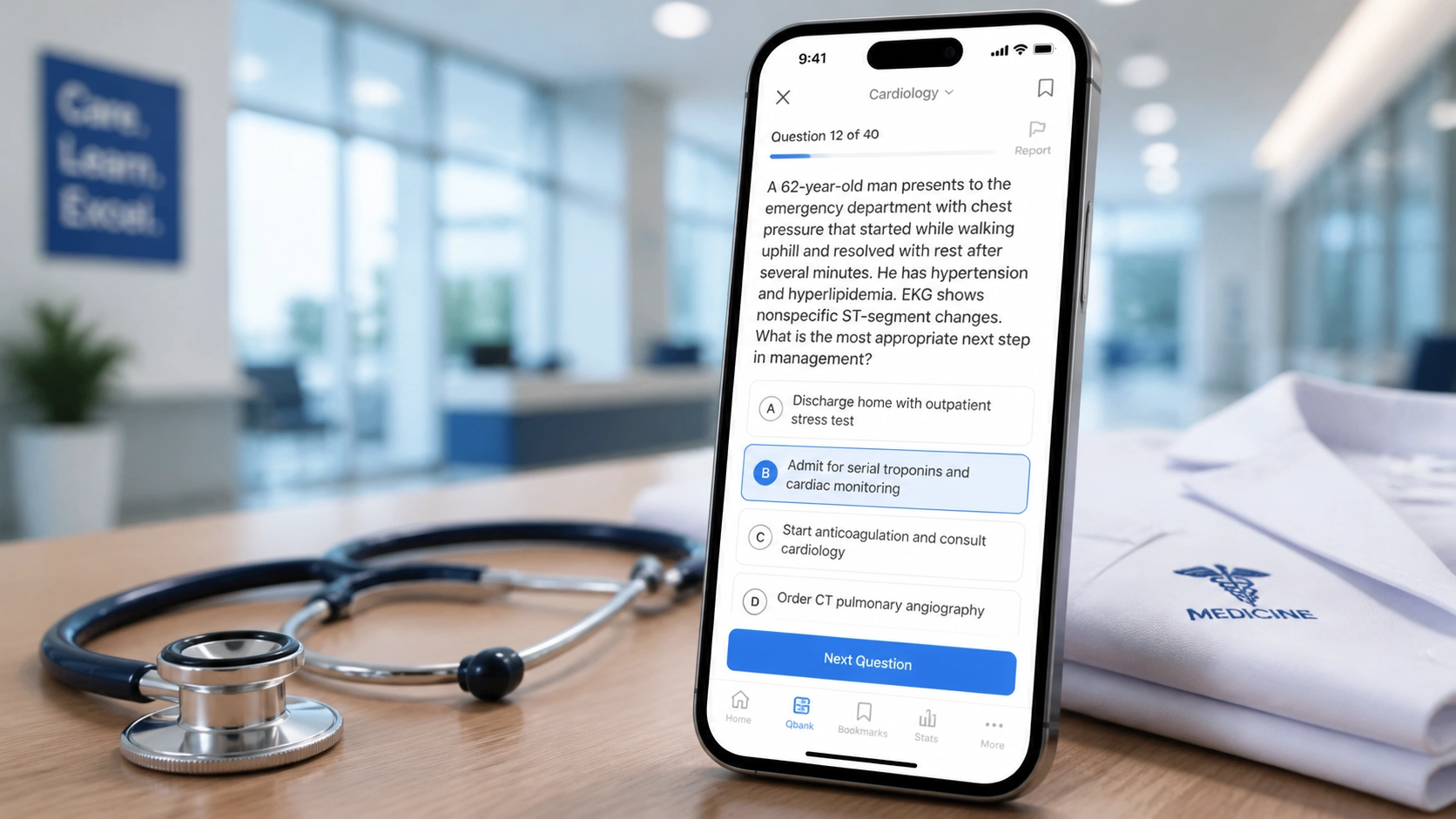
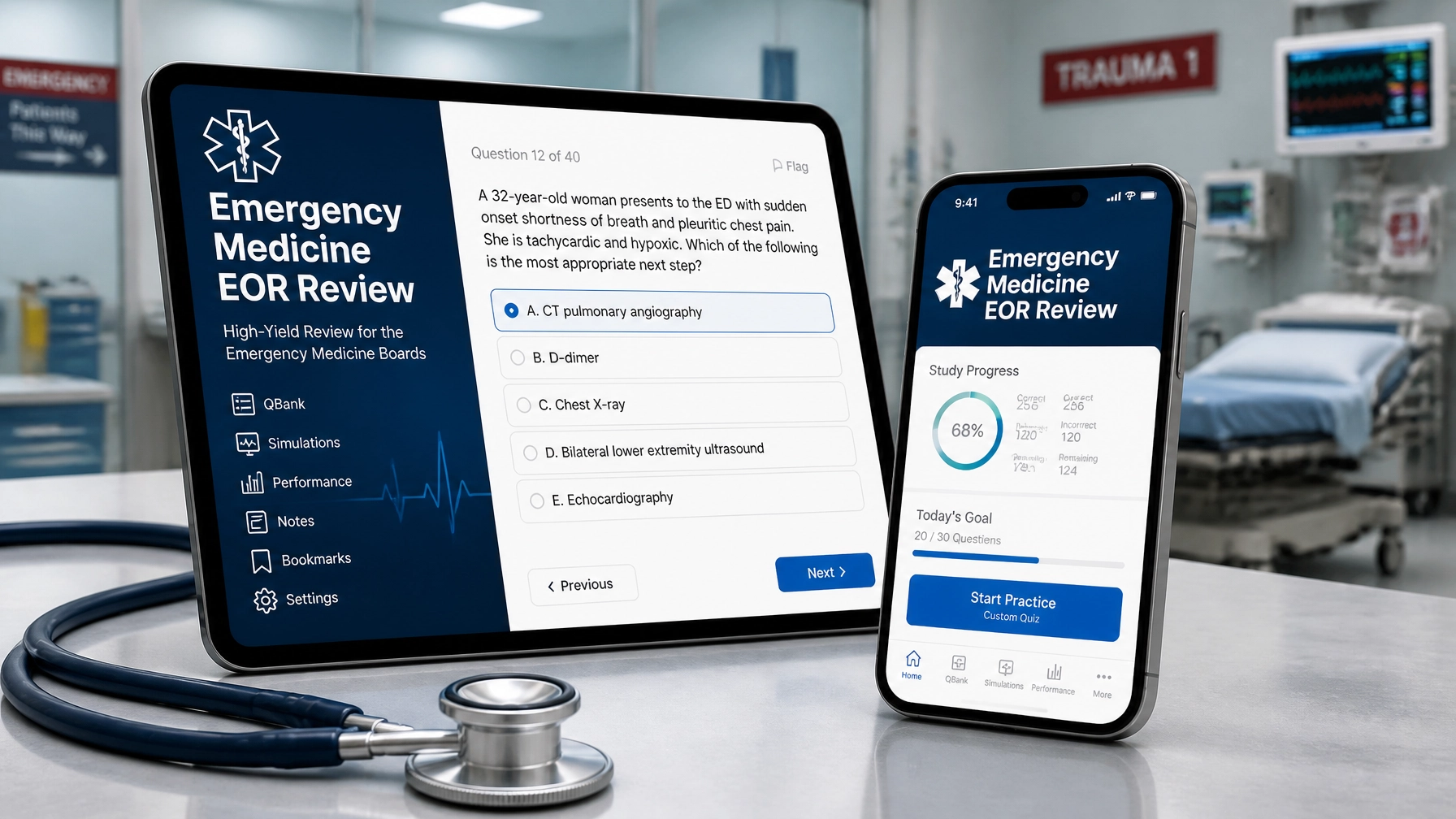
The best way to prepare for a 25-question quarter is to practice with clinical vignettes that mirror the exam format. You should practice under timed conditions to get used to the 5-minute limit.
Clinical Practice Scenario 1: Cardiology
Your patient is a 64-year-old male presenting with a two-hour history of substernal chest pain that radiates to his left jaw. He appears diaphoretic. His vitals are HR 110, BP 145/92, SaO2 96% on room air. An EKG is performed and shows 3mm ST-segment elevation in leads V2, V3, and V4.
What is the most appropriate next step in the management of this patient?
A) Obtain a Stat Chest X-ray
B) Administer 325mg of Aspirin and activate the Cardiac Cath Lab
C) Order Cardiac Enzymes and wait for results before treatment
D) Start an IV Heparin drip and admit to the ICU
Explanation:
The correct answer is B) Administer 325mg of Aspirin and activate the Cardiac Cath Lab. The patient is presenting with a clear ST-Elevation Myocardial Infarction (STEMI) involving the anterior wall. Time is myocardium. Aspirin should be given immediately to inhibit further platelet aggregation, and the patient needs emergent reperfusion therapy (PCI). Waiting for cardiac enzymes (C) is contraindicated in the presence of clear EKG changes. A chest X-ray (A) may be part of the workup but should not delay the trip to the cath lab. Heparin (D) is an adjunct but not the definitive next step for reperfusion.
Clinical Practice Scenario 2: Orthopedics
Your patient is a 22-year-old female athlete who felt a "pop" in her right knee after a sudden change of direction during a soccer match. She experienced immediate swelling and a sensation of the knee "giving out." On examination, she has a positive Lachman test.
Which of the following is the most likely diagnosis?
A) Medial Meniscus Tear
B) Medial Collateral Ligament (MCL) Sprain
C) Anterior Cruciate Ligament (ACL) Rupture
D) Patellar Tendon Rupture
Explanation:
The correct answer is C) Anterior Cruciate Ligament (ACL) Rupture. The mechanism of injury (non-contact deceleration or change in direction), the audible "pop," immediate swelling (hemarthrosis), and the positive Lachman test: which is the most sensitive physical exam maneuver for ACL stability: all point to an ACL tear. Meniscal tears (A) typically have a more delayed swelling and present with locking or catching. MCL injuries (B) result from a valgus stress. Patellar tendon ruptures (D) present with an inability to extend the knee and a high-riding patella.
Clinical Practice Scenario 3: Dermatology
Your patient is a 45-year-old male with a history of obesity who presents with a warm, erythematous, and poorly demarcated area of skin on his right lower leg. The area is tender to palpation. He has a low-grade fever of 100.2°F. There is no evidence of fluctuance or purulent drainage.
What is the most appropriate pharmacological treatment for this patient?
A) Oral Cephalexin
B) Topical Mupirocin
C) Incision and Drainage (I&D)
D) Intravenous Vancomycin
Explanation:
The correct answer is A) Oral Cephalexin. The presentation is classic for non-purulent cellulitis, most commonly caused by Streptococcus pyogenes or Staphylococcus aureus. First-generation cephalosporins like Cephalexin are appropriate first-line oral treatments. Topical Mupirocin (B) is used for impetigo, not spreading cellulitis. I&D (C) is the treatment of choice for an abscess (purulent, fluctuant mass), which is not present here. IV Vancomycin (D) is reserved for severe infections, MRSA suspicion, or failed outpatient therapy; this patient is stable enough for oral treatment.
Conclusion: Reducing the PANRE-LA Friction
Mastering the PANRE-LA without stress comes down to preparation and resource management. By securing 100 hours of AAPA Category 1 credit through a comprehensive PANRE Review Course, you ensure that your knowledge base is current. By utilizing the Amazon or Apple Gift Card add-ons, you make your CME budget work harder for you.
If you still have CME money available, June 30 should be treated as a hard planning deadline. It is an opportunity to secure credit, use available funds efficiently, and put a structured PANRE-LA study system in place before you fall behind.
Don't wait until the last quarter to realize you are behind on your scoring. Don't wait until after June 30 to find out your CME budget window closed. Start with a solid foundation, use clinical vignettes to sharpen your diagnostic skills, and treat each 25-question quarter as a routine clinical task rather than a major exam.