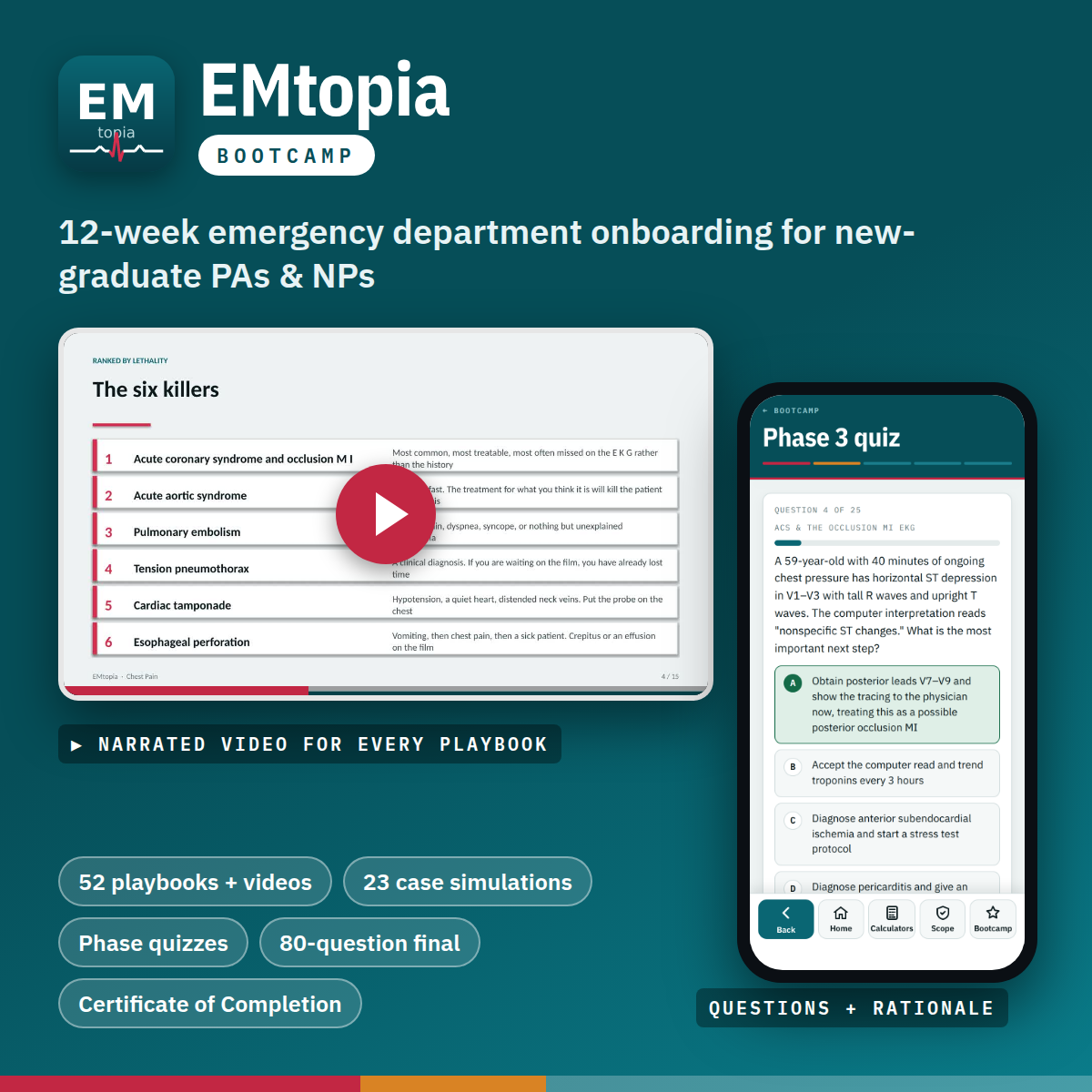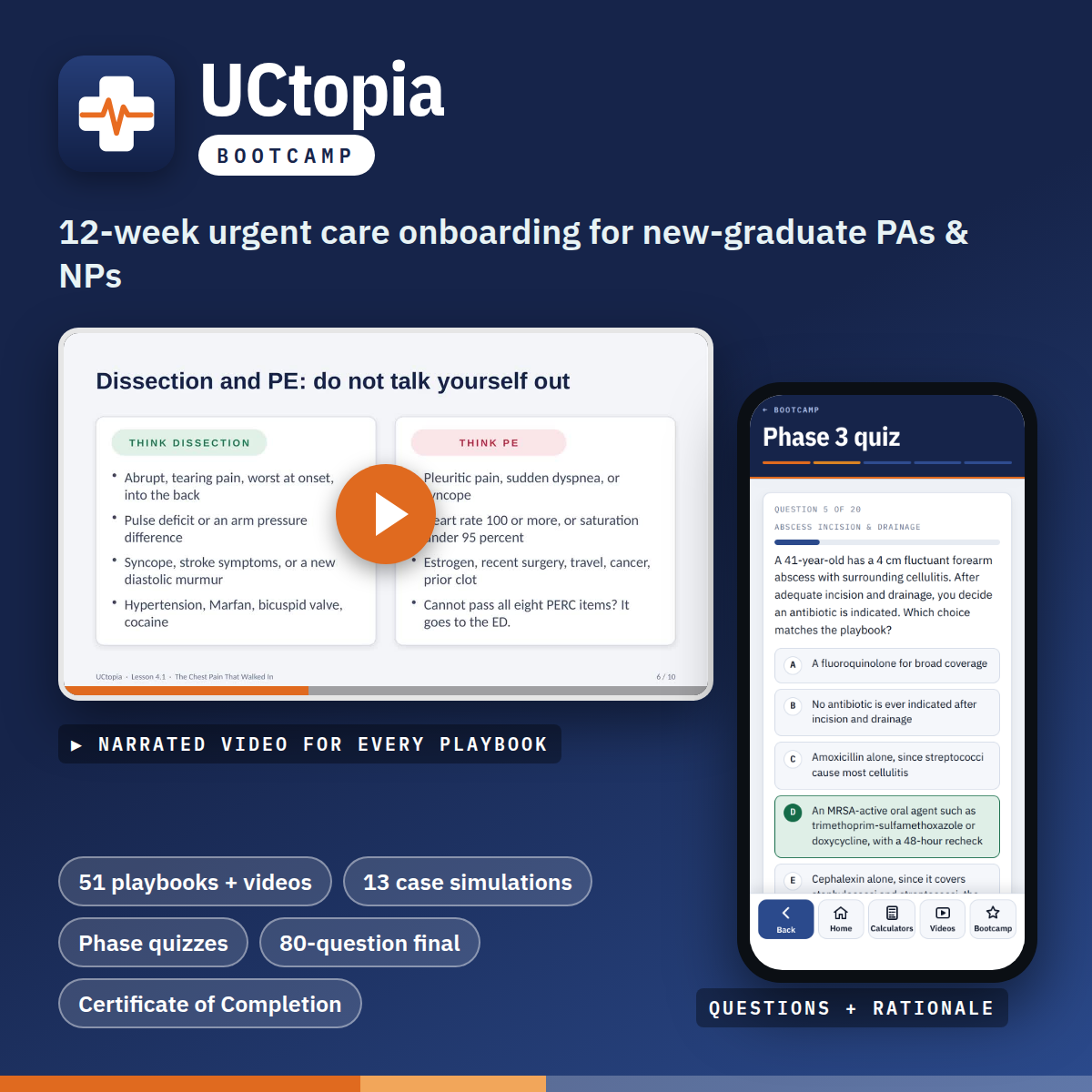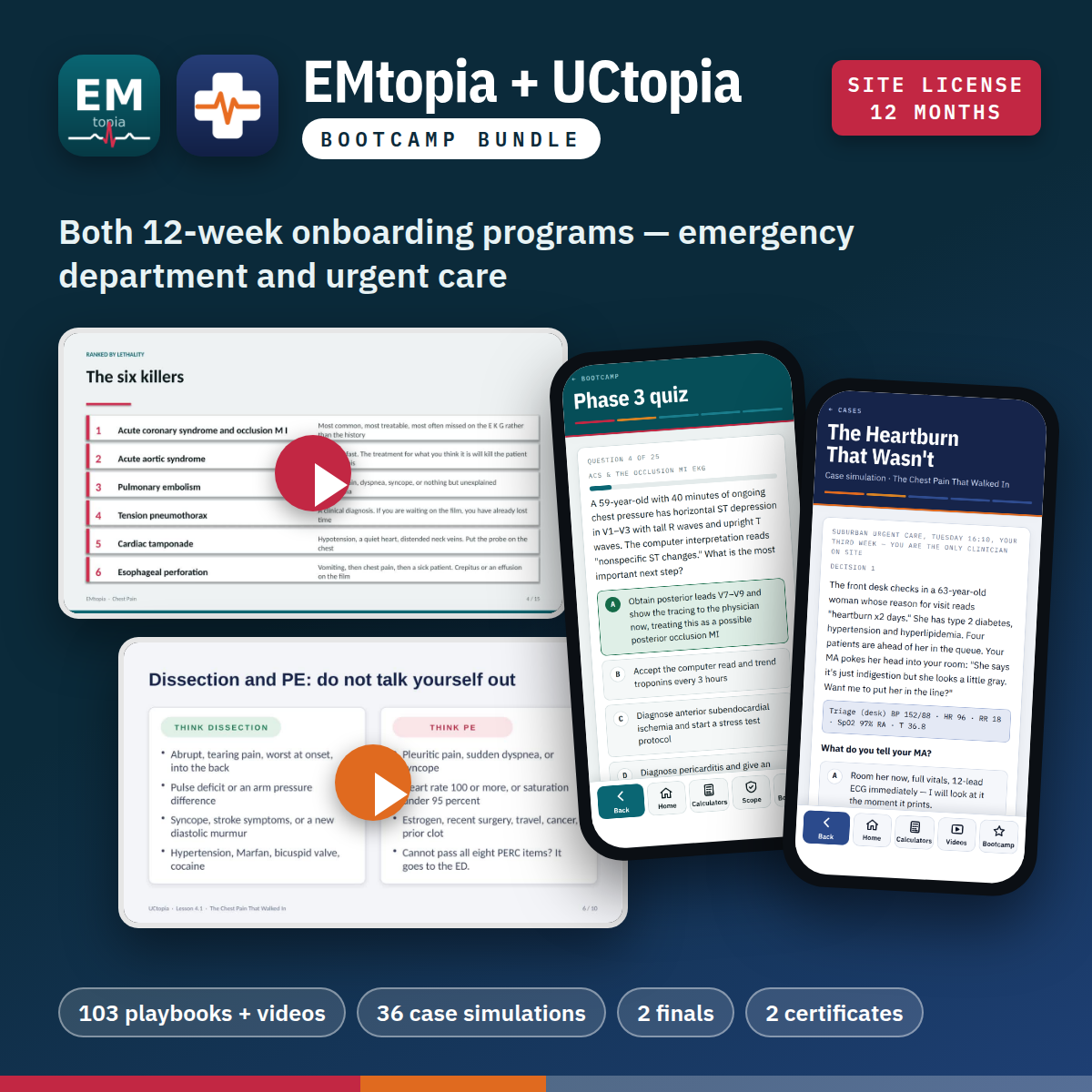


Ask a new PA or NP what they worry about most in their first months, and many will say the workup. Ask an experienced director what gets new clinicians into trouble, and you will often hear something different: the chart and the discharge. A sound clinical decision that is poorly documented looks like a bad decision later. A good workup followed by vague discharge instructions leaves the patient without a plan when things change at home. Both are fixable, and both are built into every EMtopia and UCtopia playbook.
What a defensible note shows
A defensible note tells the story of your thinking, not just your findings. The charting pearls in each playbook focus on a few elements that matter most.
Pertinent negatives that match the danger. For headache, that means documenting the absence of thunderclap onset, fever, neck stiffness, and focal deficits. For chest pain, it means the features that argue against dissection and PE. The negatives you record should map to the can’t-miss list.
A visible differential. Name the serious diagnoses you considered and briefly state why you moved past them. “Considered PE; low pretest probability and PERC negative” is worth far more than a list of normal findings.
Reassessment. If the patient improved, say so, with the time and what changed. If the pain persisted, say what you did about it.
Decision tools and conversations. Record the rule you used and its result, any shared decision-making with the patient, and any discussion with the physician or a consultant, including who it was and what was decided.
Documentation practices also vary by site. Some departments, for example, expect APCs to document that an EKG or image was reviewed while the formal interpretation comes from the attending or radiology. The local block in each playbook is where your director can record rules like that so new clinicians get them right from the first shift.
Discharge is a clinical procedure
A discharge is the last intervention a patient receives from you, and it deserves the same care as the first. Every playbook includes a discharge checklist and a plain-language script. The checklist makes sure the patient is safe to leave. The script makes sure the patient understands what happens next.
Good return precautions are specific. “Come back if you get worse” gives a patient nothing to act on. “Come back right away if the pain moves to your lower right belly, you start vomiting and cannot keep fluids down, or you develop a fever” does. Good follow-up instructions include a timeframe and a clear reason: who to see, how soon, and what they will check.
Model notes in Bootcamp
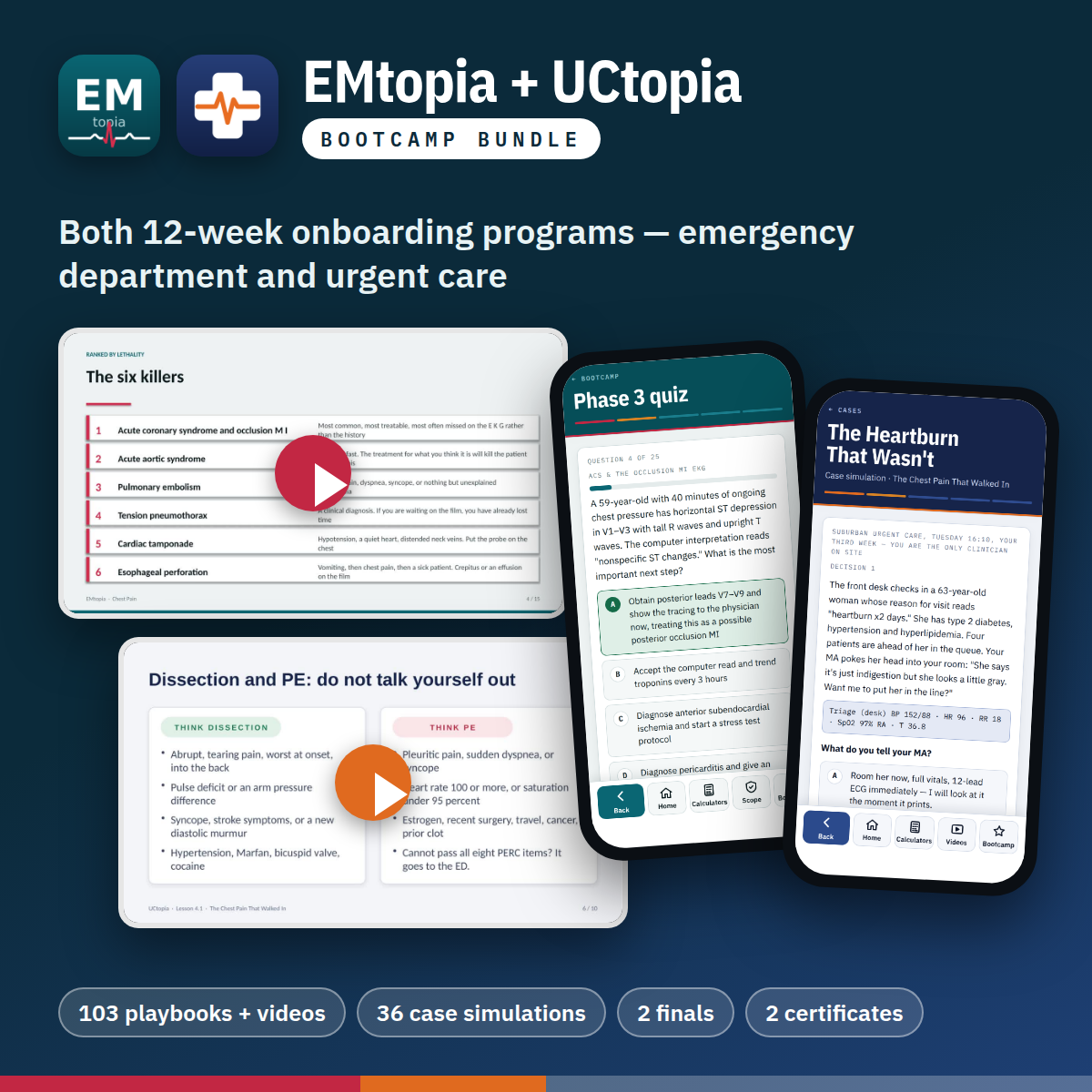
The Bootcamp tier adds model documentation notes for the common chief complaints, showing what a complete, defensible chart looks like from HPI through disposition. New clinicians can compare their own notes against them during orientation, and preceptors can use them as a shared reference instead of rewriting the same feedback for every new hire.
You can see the charting pearls and discharge scripts in the sample playbooks included in the free test drive.