
Posted on

How to Make Every Dollar of Your CME Stipend Count: PANRE Review + Gift Card Add-Ons

Logistics:

  • Price: $399.99 (Base Course) + Customizable Gift Card Add-On
  • Duration of Access: No expiration; you own the files upon purchase
  • Quantifiable Deliverables: 100 Hours of AAPA Category 1 Credit, 720 PANRE Practice Questions (3 Full-Length Exams), Detailed Answer Explanations

For the practicing Physician Assistant, the annual Continuing Medical Education (CME) stipend is a critical component of your professional compensation. However, many PAs find themselves at the end of the fiscal year with remaining funds that risk being forfeited if not utilized. The goal of any educational purchase should be to maximize both the clinical value and the utility of those allocated dollars.

Our PANRE Review Course is designed specifically for this purpose. By combining high-yield clinical review with flexible gift card add-ons, we offer an efficient way to fulfill your NCCPA requirements while enriching your broader educational environment.

The 100-Hour AAPA Category 1 Credit Solution

Recertification is a high-stakes process. Whether you are preparing for the traditional PANRE or participating in the PANRE-LA, you need a high-volume, high-quality question bank that mirrors the actual exam environment. The panre review course offered here provides 100 hours of AAPA Category 1 Credit, specifically attributed to the PANRE Review package.

Unlike many pance prep courses that rely on outdated 4-answer multiple-choice formats, our curriculum uses the 5-answer format utilized by the NCCPA. This ensures that your practice sessions are as close to the real thing as possible.

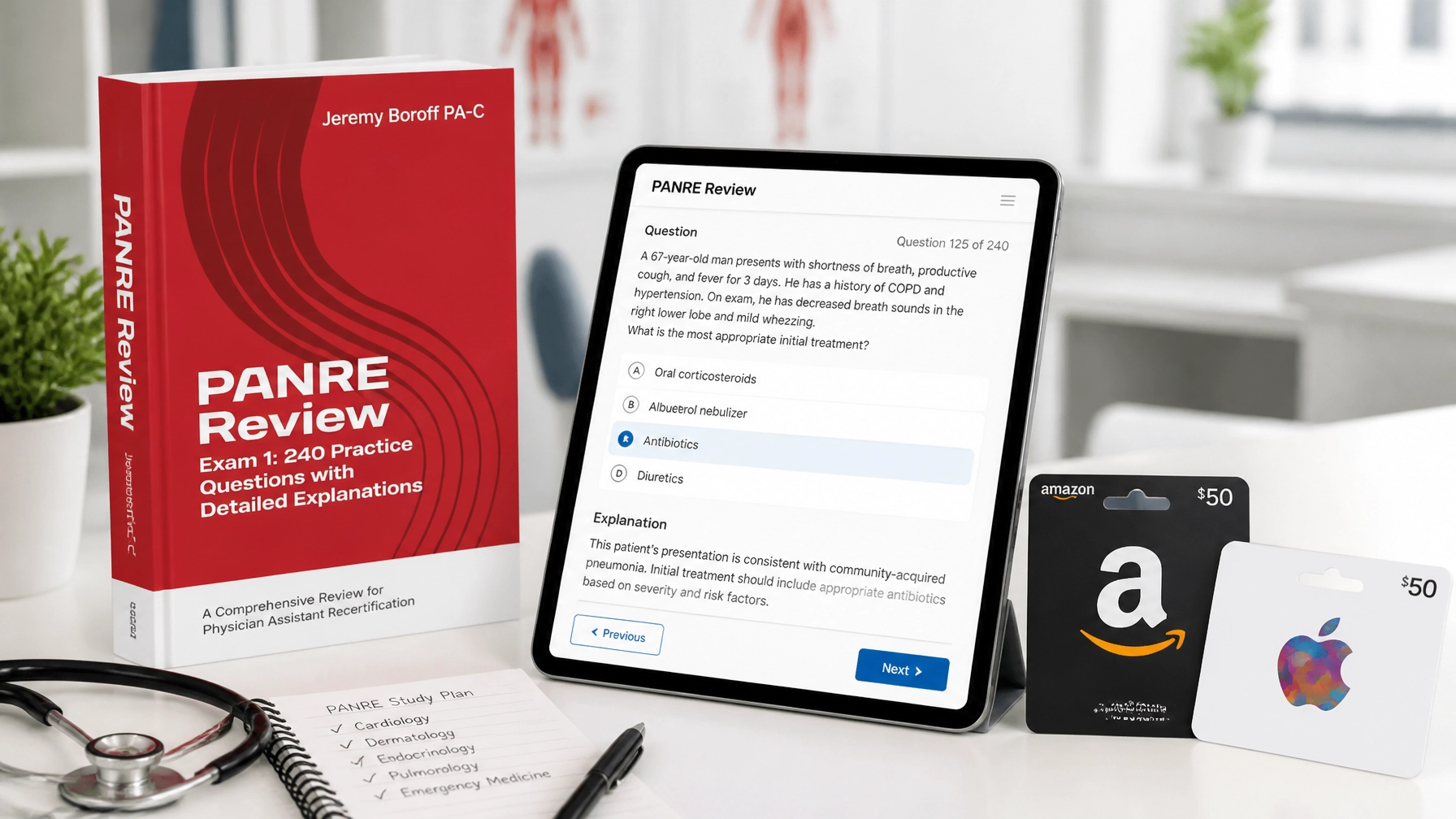
Official PANRE/PANRE-LA Review Exam 1 Book Cover

Maximizing Your Stipend with Gift Card Add-Ons

One of the most efficient ways to use your CME money is through our gift card add-on system. We allow purchasers to add between $100 and $1,500 in Amazon or Apple Gift Cards to their CME purchase.

It is important to clarify that these cme gift cards are not "free gifts." They are purchased add-ons that increase the total value of your educational package. This structure allows you to use your employer’s CME stipend to fund not only the core review course but also the tools you need to study effectively.

Many PAs use these add-ons to purchase:

  • Medical textbooks and reference guides
  • New hardware, such as an iPad or laptop, for viewing educational materials
  • Clinical tools like high-quality stethoscopes or diagnostic sets
  • Subscription services to medical journals or clinical databases

By including these as a purchased add-on to your course, you ensure that every dollar of your stipend is invested back into your professional development rather than left on the table at the end of the year.

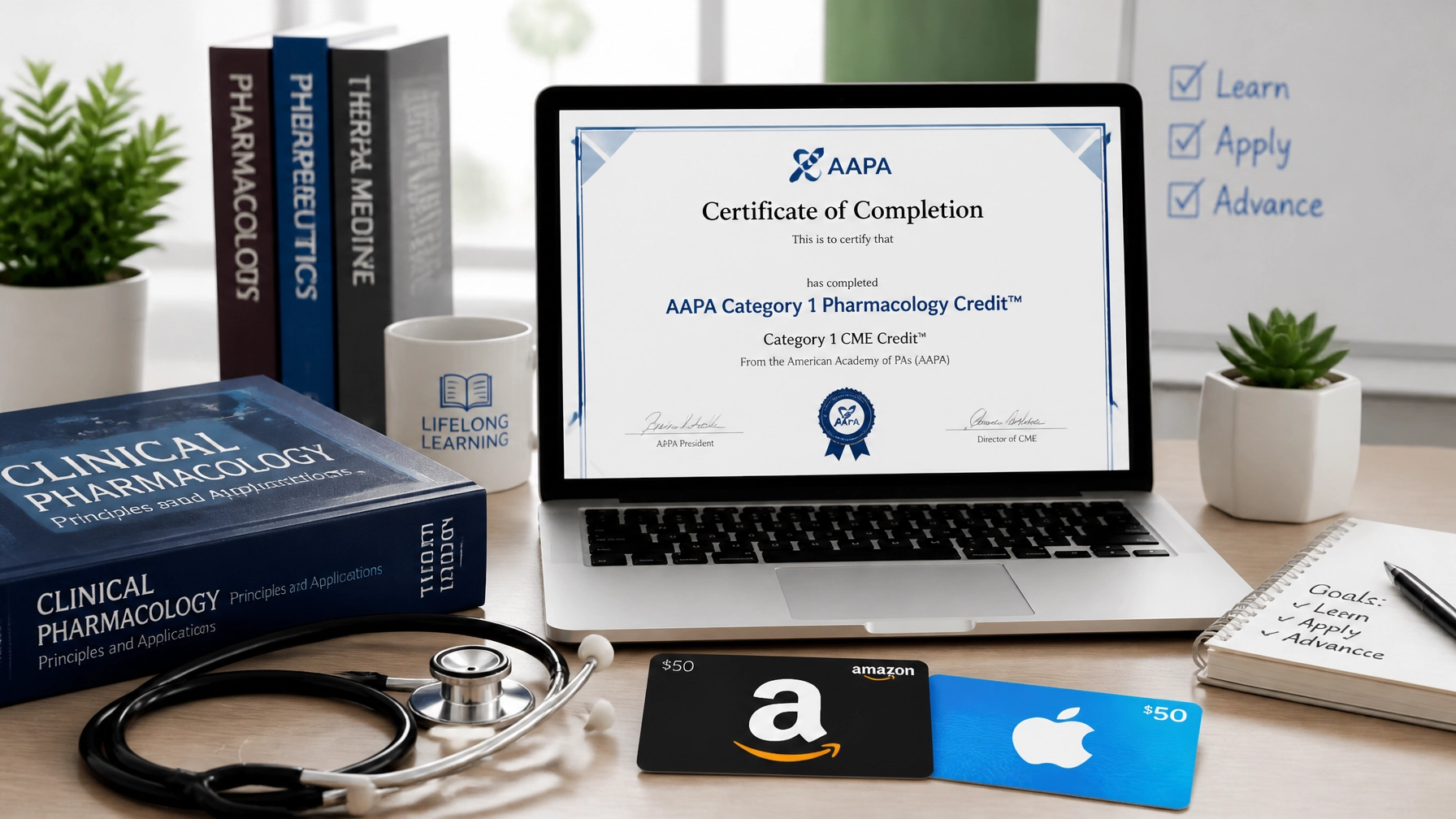
Amazon and Apple Gift Cards with a medical textbook and stethoscope

Professional Clinical Assessment: Practice Question

To demonstrate the depth of our review materials, consider the following clinical scenario.

Clinical Vignette

Your patient is a 64-year-old male presenting to the emergency department with a sudden onset of severe, "tearing" chest pain that radiates to his back between the scapulae. His past medical history is significant for long-standing, poorly controlled hypertension. On physical examination, his blood pressure is 190/110 mmHg in the right arm and 165/95 mmHg in the left arm. A grade II/VI diastolic murmur is noted at the right sternal border. His HR is 105 bpm, and SaO2 is 96% on room air.

Which of the following is the most appropriate next step in the diagnostic workup for this patient?

A. Transesophageal echocardiography (TEE)
B. Contrast-enhanced CT angiography (CTA) of the chest and abdomen
C. 12-lead Electrocardiogram (ECG)
D. Cardiac catheterization
E. D-dimer assay

Explanation

Correct Answer: B. Contrast-enhanced CT angiography (CTA) of the chest and abdomen

In a hemodynamically stable patient with a high clinical suspicion of aortic dissection (sudden tearing pain, hypertension, asymmetric blood pressures), Contrast-enhanced CT angiography (CTA) is the preferred initial diagnostic test. It is highly sensitive and specific, widely available, and allows for the visualization of the extent of the dissection flap.

  • A (TEE) is highly accurate but is typically reserved for hemodynamically unstable patients or those with contraindications to CT contrast/radiation, as it requires sedation and is more invasive.
  • C (ECG) should be performed to rule out myocardial infarction, but it is not the definitive diagnostic tool for aortic dissection.
  • D (Cardiac catheterization) is an invasive procedure that can delay diagnosis and is not the first-line imaging modality for suspected dissection.
  • E (D-dimer) is non-specific and should not be used to rule out a high-risk condition like aortic dissection in a patient with classic symptoms.

Official PANRE/PANRE-LA Review Exam 2 Book Cover

Content Written by PAs for PAs

The transition from clinical practice to board review requires a specific type of focus. General medical resources often contain "filler" information that isn't relevant to the NCCPA Blueprint. Our content is written by physician assistants who have successfully navigated these exams themselves.

We offer comprehensive content covering:

  • Emergency Medicine
  • Family Medicine
  • Internal Medicine / Hospitalist
  • Orthopedics
  • Dermatology
  • Psychiatry
  • Neurology
  • Cardiology
  • OB/GYN

While the core target for our panre review course is physician assistants, we also see significant value for other clinicians. Internal Medicine Physicians often purchase our programs for Category 2 CME credit. Nurse Practitioners may also claim Category 1 AAPA credit, though they should verify the specific requirements of their state board.

Why CME Review Courses is the Best Use of Your Stipend

Efficiency is the hallmark of a good review program. Our practice exams are delivered in Google Slides and Microsoft Word formats. This means:

  1. No platform login: You don't have to remember another password or deal with a clunky web interface.
  2. No subscription: Once you buy the course, it is yours. There is no expiration date on your access to the files.
  3. Flexible study: You can import the slides to your own Google Drive and study from your phone, tablet, or workstation during downtime in the clinic.

Comprehensive Guide to EKGs Book Cover

If you are looking for a pharmacology cme review, we offer specialized packages for that as well, including the same gift card add-on options. However, remember that the 100 hours of Category 1 AAPA credit is specifically tied to our comprehensive PANRE Review exams.

Conclusion

Maximizing your CME stipend is about more than just checking a box for your employer. it is about ensuring you have the highest quality resources to maintain your clinical excellence and pass your recertification exams. By choosing a course that offers high-yield content, matched to the NCCPA Blueprint, along with the ability to add on cme gift cards for educational enrichment, you are making a smart investment in your career.

Don't let your professional development funds go to waste. Use them to get the credits you need and the tools you want.

Explore our PANRE Review Packages and Gift Card Add-Ons here.

Posted on

The Ultimate Guide to PANRE-LA: Everything You Need to Succeed with the “Best 8 of 12” Rule

The transition from the traditional high-stakes PANRE to the longitudinal assessment (PANRE-LA) has changed the recertification strategy for physician assistants. Understanding the scoring mechanics and leveraging the right resources is essential for a stress-free maintenance of certification.

Price: Starting at $399.99
Duration of Access: 30 months
Deliverables: 1,672 board-style multiple-choice questions
CME Credit: 100 hours of AAPA Category 1 Self-Assessment Credit

The "Best 8 of 12" Rule Explained

The NCCPA PANRE-LA is designed to be a three-year process consisting of 12 possible quarters. Each quarter, you are presented with 25 questions. The "Best 8 of 12" rule is the core mechanism of this assessment. Your final performance is calculated using only your eight highest-scoring quarters.

This structure provides two distinct advantages. First, you can skip up to four quarters if your schedule becomes unmanageable or if you reach the passing standard early. Second, if you have a poor performance in one quarter: perhaps due to a heavy clinical load or lack of familiarity with a specific organ system: that quarter can be entirely discarded once you complete more successful quarters.

If your cumulative scaled score meets the passing standard after eight quarters, you have successfully completed your recertification requirements and are not required to participate in the remaining quarters.

Strategic Implementation of Repeated Topics

Within the PANRE-LA framework, the NCCPA includes repeated topics. Starting in your second quarter, you will encounter approximately five topics that were previously presented. If you missed a question on a specific pathology in a prior quarter, the system may provide a similar or identical question later.

Crucially, only your best performance on that specific topic is utilized for scoring. This "second chance" mechanic reinforces the importance of immediate remediation. When you finish a quarter and receive your feedback, identifying the correct management or diagnostic criteria for missed questions pays immediate dividends in subsequent quarters.

Clinical Vignette: Cardiovascular Medicine

Your patient is a 68-year-old male with a history of hypertension and hyperlipidemia who presents to the clinic with complaints of progressive exertional dyspnea and occasional lightheadedness over the last four months. On physical examination, you note a harsh systolic crescendo-decrescendo murmur heard best at the second right intercostal space, radiating to the carotids. The S2 is diminished.

What is the most appropriate next step in the diagnostic evaluation?

A) Transesophageal echocardiography (TEE)
B) Transthoracic echocardiography (TTE)
C) Exercise stress testing
D) Cardiac catheterization

Answer: B) Transthoracic echocardiography (TTE)

Explanation: The clinical presentation is classic for aortic stenosis (systolic murmur radiating to the carotids with exertional symptoms). TTE is the initial diagnostic test of choice to assess the severity of the stenosis, valve area, and left ventricular function. Exercise stress testing is generally contraindicated in symptomatic patients with suspected severe aortic stenosis. TEE is more invasive and typically reserved for when TTE images are suboptimal or for pre-surgical planning. Cardiac catheterization is used to assess coronary anatomy prior to valve replacement but is not the initial diagnostic step.

PANRE/PANRE-LA Review Exam Book Cover

Clinical Vignette: Dermatology

Your patient is a 32-year-old female who presents with a pruritic rash on her elbows and knees. She reports the rash has been present for several years but has recently flared. On examination, you observe well-demarcated erythematous plaques with thick, silvery scales. Auspitz sign is positive when a scale is removed.

Which of the following is the first-line topical treatment for this patient?

A) Topical ketoconazole
B) Topical mupirocin
C) Topical corticosteroids
D) Oral terbinafine

Answer: C) Topical corticosteroids

Explanation: The patient has plaque psoriasis, characterized by silvery scales and the Auspitz sign (pinpoint bleeding after scale removal). High-potency topical corticosteroids are the mainstay of first-line treatment for localized plaque psoriasis. Ketoconazole is an antifungal used for seborrheic dermatitis. Mupirocin is an antibiotic for bacterial infections like impetigo. Oral terbinafine is used for onychomycosis or tinea infections.

Preparing for the PANRE-LA with CME Review Courses

The longitudinal format requires a consistent, long-term commitment to knowledge retention rather than a one-time "cramming" session. Our PANRE Review Course is specifically engineered to support this three-year window.

The course provides 100 hours of AAPA Category 1 Self-Assessment CME credit, which is a significant portion of the 100-hour requirement for each two-year cycle. By utilizing our 1,672 multiple-choice questions, you are exposed to the same clinical scenarios and blueprint topics that appear in the quarterly assessments.

With 30 months of access, the course stays active through the majority of your PANRE-LA window, allowing you to review specific organ systems: such as Cardiology, Orthopedics, or Internal Medicine: immediately before starting a new quarter.

CME with Amazon and Apple Gift Card Add-Ons

Many PAs utilize their annual employer-provided CME allowance to purchase review materials. To maximize the utility of these funds, we offer CME packages with gift card add-ons. These allow you to purchase the necessary educational credits and receive an Amazon or Apple gift card ranging from $100 to $1,500.

This allows you to enrich your educational environment: whether by purchasing additional medical texts, upgrading your tablet for mobile study, or acquiring clinical tools: while simultaneously securing your 100 hours of Category 1 credit. The total price of the package includes the gift card value, providing a streamlined way to use your professional development budget.

PANRE/PANRE-LA Review Exam 2 Book Cover

Summary of the PANRE-LA Strategy

Success in the PANRE-LA format is achieved by:

  1. Completing the first eight quarters to establish a baseline score.
  2. Remediating missed topics immediately to take advantage of the better-score-kept rule on repeated questions.
  3. Utilizing the full 12-quarter window if necessary to "drop" lower-performing scores.
  4. Integrating a comprehensive question bank like our PANRE Review Course to maintain clinical proficiency across all blueprint areas.

The "Best 8 of 12" rule is a safety net, but clinical preparedness is what ensures you can finish the assessment early and return your focus entirely to patient care.

Posted on

How to Study for the 2026 PAEA EOR Blueprint Changes: A Rotation-by-Rotation Study Plan with PAtopia

The landscape of Physician Assistant education is shifting. On July 27, 2026, PAEA will launch updated versions of six End of Rotation (EOR) exams. These updates are not minor; they represent a fundamental change in how students are assessed, emphasizing "Professional Practice" and "Diagnostic Studies" while de-emphasizing raw pathophysiology.

For students caught in the transition between legacy blueprints and the 2026 standards, the primary challenge is alignment. Your study resources must match the weightings of the exam you are actually sitting. PAtopia was designed to bridge this gap, offering over 11,000 board-style questions that are continuously updated to reflect the NCCPA and PAEA blueprint shifts.

Quick Stats for PAtopia:

  • Total Questions: 11,000+ board-style questions with cited explanations.
  • Access Duration: 27 months (covers clinical year and PANCE prep).
  • Trial: Free 3-day full access (no account or credit card required).
  • Platform: Web and App (iOS/Android).

Get Started with PAtopia Exam Prep →


The 2026 Rotation-by-Rotation Study Plan

The first step in your EOR study plan is to verify which blueprint your program is using. While the new exams launch in July 2026, legacy exams remain available through July 2027. Once you know your target, use the following rotation-specific guides to focus your efforts.

1. Emergency Medicine (EM)

Key Change: Diagnostic Studies has jumped from 10% to 15%. Diagnosis remains steady at 25%: the only exam to do so. A new "Infectious Disease" content area (4%) now stands alone, pulling topics like sepsis and meningitis into a dedicated category.

  • PAtopia Focus: Use the EM module to drill Cardiovascular (18%) and Orthopedics (12%).
  • Study Tip: Don't just name the disease; focus on the next best test. If a patient has a suspected PE, know when to order a D-dimer vs. a CTA.

Emergency Medicine End Of Rotation Exam Review Book Cover

2. Family Medicine (FM)

Key Change: EENOT (Eyes, Ears, Nose, Oropharynx, Throat) is now a massive 10% of the exam, making it the second-largest content area after Cardiovascular. Health Maintenance has also risen to 12%.

  • PAtopia Focus: Utilize the "Health Maintenance" filter within the FM bank to practice screening guidelines and immunizations.
  • Study Tip: Urgent care topics have been redistributed. Treat every minor illness in PAtopia as a potential FM exam question.

Family Medicine End Of Rotation Exam Review and Test Prep

3. Internal Medicine (IM)

Key Change: Critical Care has been redistributed into organ systems. Endocrine, Neurology, and Renal have all jumped to 10% each. Psychiatry is now a required content area at 5%.

  • PAtopia Focus: Pivot your focus away from Musculoskeletal (which dropped to 8%) and toward the "Big Three" 10% areas (Endocrine/Neuro/Renal).
  • Study Tip: Because Psychiatry is now on the IM exam, ensure you are comfortable with the medical management of psychiatric patients (e.g., lithium toxicity, serotonin syndrome).

4. Pediatrics

Key Change: The single biggest change across all exams is the addition of Growth and Development as a 10% content area. History & Physical has also surged to 18%.

  • PAtopia Focus: Drill the milestones and well-child check questions. These are now "free points" if you memorize the charts.
  • Study Tip: The exam has moved away from Therapeutics (down 5%). Focus on "Normal vs. Abnormal" development rather than just drug dosing.

5. Psychiatric & Behavioral Health

Key Change: Health Maintenance is gone. Clinical Intervention has doubled from 10% to 20%. Sleep-wake disorders is a new content area at 7%.

  • PAtopia Focus: The Psych EOR is no longer just about DSM-5 criteria. It’s about what you do. Practice questions on therapy selection and crisis management.
  • Study Tip: Use PAtopia to master the 7% weight of Sleep-wake disorders early in the rotation.

Psychiatry & Behavioral Health End Of Rotation Exam Review

6. Gynecologic, Sexual, and Reproductive Health (GSR)

Key Change: Formerly "Women's Health," this exam is completely restructured around anatomy (Uterine/Cervix, Breast, etc.) rather than the OB/GYN split. Fertility management (10%) and Sexual Health (10%) are new high-yield areas.

  • PAtopia Focus: Focus on the new 26% of the exam covering Fertility, Sexual Health, and Psych.
  • Study Tip: Traditional resources organized by "Prenatal vs. Gynecology" will leave gaps. PAtopia’s GSR module is built on the anatomical structure.

GSR End of Rotation Review Book Cover

7. Surgery

Key Change: The Surgery EOR was updated in 2024 and serves as the model for the other 2026 changes. It already includes the Professional Practice task area.

  • PAtopia Focus: Focus on Perioperative Care and Postoperative Complications.
  • Study Tip: Surgery remains a "task-heavy" exam. Understand the process of surgical management, not just the diagnosis.

Surgery End Of Rotation Exam Review Book Cover


Clinical Practice Vignettes

To prepare for the increased focus on Diagnostic Studies and Professional Practice, test yourself with these vignettes.

Vignette 1: Emergency Medicine

Your patient is a 64-year-old male presenting with sudden onset tearing chest pain radiating to the back. HR is 112, BP is 180/100 in the right arm and 155/90 in the left arm.
Question: Which of the following is the most appropriate initial diagnostic study to confirm the suspected diagnosis?
A) Chest X-ray
B) Transesophageal echocardiogram (TEE)
C) CT Angiography (CTA) of the chest and abdomen
D) Electrocardiogram (EKG)

Answer: C) CT Angiography (CTA) of the chest and abdomen.
Explanation: CTA is the gold standard for diagnosing aortic dissection in hemodynamically stable patients due to its high sensitivity and specificity. While a Chest X-ray (A) may show a widened mediastinum, it is not confirmatory. TEE (B) is useful in unstable patients but CTA is generally preferred for mapping the extent of the dissection. An EKG (D) is necessary to rule out MI but does not confirm dissection.

Vignette 2: Family Medicine

Your patient is a 50-year-old female with a history of hypertension who presents for a routine wellness exam. She has no specific complaints.
Question: According to current USPSTF guidelines, which of the following screening tests should be ordered at this visit?
A) DXA scan for osteoporosis
B) Colonoscopy for colorectal cancer screening
C) Low-dose CT for lung cancer screening
D) Annual EKG

Answer: B) Colonoscopy for colorectal cancer screening.
Explanation: The USPSTF recommends colorectal cancer screening for all adults aged 45 to 75. DXA scans (A) typically begin at age 65 for women unless specific risk factors are present. Low-dose CT (C) is reserved for those with a significant smoking history. Annual EKGs (D) are not recommended for asymptomatic screening.

Vignette 3: Professional Practice (Universal)

Your patient is a 17-year-old female seeking contraception. She requests that her parents not be informed.
Question: Which of the following best describes the legal and ethical requirement in this scenario?
A) Parental consent is required for all minors.
B) The provider must notify the parents after the prescription is written.
C) In most states, minors can consent to reproductive health services without parental notification.
D) The provider should refuse care until the patient reaches age 18.

Answer: C) In most states, minors can consent to reproductive health services without parental notification.
Explanation: Most jurisdictions allow "mature minors" to consent to services related to sexual health, including contraception and STI treatment, to encourage access to care and maintain confidentiality.


Mastering the Exam with PAtopia Features

Studying for the End of Rotation Exam Review, PACKRAT Review, or PANCE Review requires more than just reading; it requires active recall.

  • Spaced Repetition: PAtopia uses algorithms to re-present questions you missed at optimal intervals, ensuring long-term retention of difficult concepts like Pediatric milestones or GSR anatomical changes.
  • Performance Analytics: The app tracks your performance by blueprint category. If you are hitting 80% in Cardiovascular but 40% in Professional Practice, you know exactly where to spend your next study hour.
  • AAPA Category 1 CME: For those who have already graduated, our PANRE Review courses offer up to 100 hours of AAPA Category 1 Credit, often with Amazon or Apple gift card add-ons to maximize your CME budget.

About the Author: Jeremy Boroff, MPAS, PA-C

Jeremy Boroff is a practicing Emergency Medicine Physician Assistant with 24 years of clinical experience. He is the founder of CME Review Courses and the creator of PAtopia. Having authored the definitive review books for the EM, Psych, and GSR EOR exams, Jeremy developed PAtopia to provide PA students with a high-fidelity, evidence-based study tool that reflects the actual rigor of the NCCPA and PAEA exams.

Start Your Free 3-Day PAtopia Trial Now →

Posted on

7 Mistakes You’re Making with Your PANRE Review Course (And How to Add a Gift Card for Value)

Preparing for the PANRE or PANRE-LA is a significant milestone in your career as a Physician Assistant. However, many PAs approach their study plan with outdated strategies or inefficient resources, leading to unnecessary stress and sub-optimal performance. Success on the NCCPA exam requires more than just clinical experience; it requires a targeted, systematic approach to the NCCPA Blueprint.

If you are currently studying, you may be falling into common traps that hinder your progress and leave valuable CME money on the table.

PANRE Review Course Quick Facts

  • Price: $399.99
  • Access: 30 months
  • Deliverables: 100 Category 1 AAPA Credit hours, 1,672 Board-Style Review Questions
  • NCCPA Bonus: 1.5x weighting (100 credits = 150 logged hours)
  • Add-ons: Amazon or Apple Gift Cards ($100 – $1,500)

1. Relying Exclusively on Passive Review

Many PAs spend hours reading through textbooks or listening to lectures without testing their knowledge. Passive review feels productive but often fails to translate into exam-day performance. The PANRE requires active recall.

Your patient is a 54-year-old male presenting with a 2-hour history of crushing substernal chest pain radiating to the left jaw. He is diaphoretic and nauseated. Vitals: HR 110, BP 145/90, SaO2 96% on room air. An EKG reveals 3mm ST-segment elevation in leads V1-V4.

What is the most appropriate next step in management?
A. Emergent coronary angiography and reperfusion
B. Administration of oral beta-blockers
C. Observation and repeat EKG in 4 hours
D. Immediate administration of high-dose NSAIDs

Correct Answer: A. Emergent coronary angiography and reperfusion. This patient is presenting with an acute ST-segment elevation myocardial infarction (STEMI) in the anterior wall. The standard of care is immediate reperfusion via primary percutaneous coronary intervention (PCI). Oral beta-blockers (B) are generally avoided in the acute phase if there are signs of heart failure or cardiogenic shock risk. Observation (C) is inappropriate for a STEMI. NSAIDs (D) are contraindicated in acute MI as they increase the risk of myocardial rupture and mortality.

2. Studying All Organ Systems Equally

A major mistake is failing to prioritize your study time based on the NCCPA Blueprint. Not every system carries the same weight. For example, Cardiology and Pulmonology often represent a larger percentage of the exam than Hematology or Psychiatry.

Our PANRE Review Course provides a deep dive into the high-yield sections of the NCCPA Blueprint to ensure you are focusing on the topics most likely to appear on your exam.

PANRE Review Exam Book Cover

3. Ignoring the Self-Assessment Bonus Weighting

One of the most efficient ways to use your CME time is by choosing a course designated for Self-Assessment credit. For NCCPA certification maintenance, these 100 hours of PANRE review course credits are automatically weighted at 150 hours by the NCCPA. If you choose a standard lecture-only course without this designation, you are essentially doing 50% more work for the same credit log.

4. Failing to Practice Clinical Vignettes

The PANRE is not just about rote memorization; it is about clinical application. You must be comfortable with the "most likely diagnosis" and "next step in management" style questions.

Your patient is a 28-year-old female complaining of a "racing heart" and heat intolerance. She has lost 10 pounds in the last month despite an increased appetite. Vitals: HR 118 (irregularly irregular), BP 138/82, Temp 99.1°F. Physical exam reveals a smooth, non-tender goiter and mild exophthalmos.

Which of the following laboratory findings is most likely?
A. Elevated TSH, Low Free T4
B. Low TSH, Elevated Free T4
C. Normal TSH, Elevated T3
D. Low TSH, Low Free T4

Correct Answer: B. Low TSH, Elevated Free T4. These findings are classic for hyperthyroidism, specifically Graves' disease, as suggested by the exophthalmos and goiter. Elevated TSH (A) would suggest primary hypothyroidism or a TSH-secreting pituitary adenoma. Normal TSH with elevated T3 (C) is rare and doesn't fit this clinical picture. Low TSH and Low T4 (D) suggest secondary hypothyroidism.

5. Starting the Review Too Late

Cramming is the enemy of retention. Because our pance prep courses and PANRE review options offer 30 months of access, there is no reason to wait until the month of your exam. Starting early allows you to integrate the 1,672 practice questions into your daily routine, making the material second nature.

PANRE Exam 2 Book Cover

6. Not Utilizing Your Employer CME Budget Efficiently

Many PAs have an annual CME allowance that they must "use or lose." A common mistake is buying several small courses that don't provide a comprehensive review.

By choosing a CME gift card package, you can fulfill your 100-hour requirement in one place and add value to your purchase. We offer Amazon and Apple Gift Card add-ons ranging from $100 to $1,500. These are not free gifts; they are add-ons that are included in the total purchase price, allowing you to maximize your professional development budget for additional educational resources like tablets, medical books, or office equipment.

7. Neglecting Multi-System Comorbidities in Practice

Real patients rarely present with a single, isolated problem. Your review should reflect the complexities of Internal Medicine and Family Medicine.

Your patient is a 68-year-old male with a history of COPD and Hypertension who presents with increased shortness of breath and a productive cough. He has a 50-pack-year smoking history. Vitals: HR 92, SaO2 88% on room air, RR 24. On exam, you note barrel chest and diffuse wheezing.

Which of the following is the most appropriate long-term management to decrease mortality in this patient?
A. Chronic systemic corticosteroids
B. Long-acting beta-agonists (LABA)
C. Continuous oxygen therapy
D. Daily nebulized albuterol

Correct Answer: C. Continuous oxygen therapy. In patients with COPD and chronic hypoxemia (typically SaO2 ≤ 88% or PaO2 ≤ 55 mmHg), long-term oxygen therapy is the only intervention shown to improve survival. Systemic steroids (A) are used for acute exacerbations but not for long-term mortality reduction due to side effects. LABAs (B) and albuterol (D) improve symptoms and lung function but do not significantly decrease mortality compared to oxygen.

Comprehensive Guide to EKGs Book Cover

Maximize Your PANRE Prep with CME Review Courses

Avoiding these seven mistakes will streamline your study process and increase your confidence. Our panre review course is designed by PAs for PAs, ensuring that the content is relevant to your practice and the NCCPA Blueprint.

With 100 hours of Category 1 AAPA credit and a massive question bank, you are getting the most comprehensive tool available. Don't forget that you can customize your package with cme gift cards from Amazon or Apple to further enrich your learning environment.

The process is simple:

  1. Select the PANRE Review Course.
  2. Choose a Gift Card add-on ($100-$1500) if desired.
  3. Complete the 1,672 board-style questions and evaluation.
  4. Log your 100 hours (which becomes 150 hours) with the NCCPA.

Family Medicine Review Book Cover

Whether you are in Family Medicine, Emergency Medicine, or Internal Medicine, these high-yield scenarios and credits will serve you throughout your recertification cycle. And for PA students and early-career clinicians, PAtopia delivers 11,000+ board-style questions covering the PANCE, PACKRAT, and all 7 EOR rotations — all in one app. Visit cmereviewcourses.com/patopia-new-student-section/ to explore.

Posted on

Looking for AAPA Category 1 Pharmacology Credit? 5 Things Every PA Should Know

Maintaining your PA-C certification and state licensure requires a strategic approach to Continuing Medical Education (CME). While the NCCPA does not mandate a specific number of pharmacology hours for national certification, your state medical board likely does. For PAs with prescriptive authority, staying current on pharmacotherapeutics is not just a regulatory hurdle: it is a clinical necessity.

At CME Review Courses, we provide an efficient, PA-focused solution to meet these requirements. Our Pharmacology CME Review Course is specifically designed to maximize your time and your employer-provided CME budget.

Here are five things every Physician Assistant should know when looking for AAPA Category 1 Pharmacology credit.

1. State Requirements Drive the Need for Pharmacology CME

While the NCCPA requires 100 CME credits every two years (with at least 50 being Category 1), they do not specify the subject matter. However, state licensing boards are different. Many states require a minimum number of pharmacology hours for license renewal or to maintain prescriptive authority.

For example, Maryland requires at least 8 hours of pharmacology, while Massachusetts requires at least 4 hours for PAs with prescriptive authority. Ohio requires 12 hours of pharmacology from an accredited institution. Our Pharmacology CME Review Package offers 12 AAPA Category 1 Self-Assessment CME credits, ensuring you meet or exceed these state-specific thresholds in a single, comprehensive course.

2. The Self-Assessment Bonus Multiplier

Not all Category 1 credit is created equal. The NCCPA provides a significant incentive for completing Self-Assessment CME. When you log AAPA Category 1 Self-Assessment CME credits, the NCCPA applies a 50% bonus multiplier.

Because our pharmacology course is designated as Self-Assessment (AAPA Reference Number: CME-209464), the 12 credits you earn are recognized as 18 credits by the NCCPA. This is one of the most efficient ways to reach your 100-hour biennial goal while simultaneously satisfying state pharmacology mandates.

Two hands holding a smartphone displaying an Amazon gift card and an Apple gift card, representing the CME gift card add-on options for PAs

3. Maximizing Your CME Budget with Gift Card Add-Ons

Many PAs are provided with a dedicated annual CME allowance that is "use it or lose it." We offer a unique way to ensure you get the most value from these professional development funds. Our CME with Gift Card packages allow you to add an Amazon or Apple Gift Card ranging from $100 to $1500 to your purchase.

This allows you to acquire the necessary pharmacology or PANRE review materials while also obtaining a gift card that can be used for further educational tools, medical equipment, or technology to enhance your clinical practice.

4. Content Written by PAs for PAs

Generic pharmacology courses often fail to address the specific clinical scenarios PAs face daily. Our content is developed by physician assistants who understand the rigors of the profession. The course covers high-yield topics across multiple specialties, including:

  • Cardiology and Neurology
  • Emergency Medicine and Internal Medicine
  • Orthopedics and Dermatology
  • Psychiatry, OB/GYN, and Family Medicine

This ensures that the pharmacological principles you review are immediately applicable to your patient population, whether you work in a high-acuity ER or a busy primary care clinic.

5. Value for the Entire Healthcare Team

While our primary focus is the Physician Assistant, our pharmacology and PANRE review courses provide value across the clinical spectrum. Nurse Practitioners (NPs) can claim credit for AAPA Category 1 credits in many states. Physicians can also find value in our packages; while it counts as Category 2 CME for MDs/DOs, the clinical vignettes and drug reviews remain an excellent resource for board prep or general knowledge refreshers.


Pharmacology CME Review Course Details

  • Price: $399.99 (Base Package)
  • Credits: 12 AAPA Category 1 Self-Assessment CME Credits (Counts as 18 NCCPA credits)
  • Access: 30 Months of online access
  • Deliverables: Comprehensive online review and a 120+ Question Bank
  • Gift Card Options: Available as an add-on from $100–$1500

Clinical Pharmacology Assessment

Practice Question 1

Your patient is a 64-year-old male with a history of chronic heart failure (HFrEF, EF 30%) and atrial fibrillation. He presents to the clinic for a routine follow-up. His current medications include lisinopril, carvedilol, and warfarin. During the exam, his HR is 88 bpm (irregular) and BP is 132/78 mmHg. He mentions he has started taking a new herbal supplement, St. John’s Wort, for mild depressive symptoms.

Which of the following describes the most likely pharmacological interaction in this patient?

A. Decreased efficacy of carvedilol due to CYP2D6 inhibition.
B. Increased risk of bleeding due to warfarin displacement from albumin.
C. Decreased therapeutic effect of warfarin due to CYP3A4 induction.
D. Potentiation of lisinopril-induced hyperkalemia.

Correct Answer: C. Decreased therapeutic effect of warfarin due to CYP3A4 induction.
St. John’s Wort is a potent inducer of several cytochrome P450 enzymes, most notably CYP3A4. Warfarin is a substrate for CYP3A4 (and 2C9). Induction of these enzymes increases the metabolism of warfarin, leading to lower serum levels and a subtherapeutic INR, which increases the patient's risk of thromboembolic events.

  • A is incorrect because while carvedilol is a CYP2D6 substrate, St. John’s Wort's primary effect on warfarin is through induction, not inhibition.
  • B is incorrect as St. John’s Wort induces metabolism rather than affecting protein binding to a clinically significant degree for warfarin.
  • D is incorrect because St. John’s Wort does not have a known synergistic effect on potassium levels or the renin-angiotensin-aldosterone system.

A Physician Assistant in a clinical office setting, using a laptop to review medical literature, appearing focused and professional

Practice Question 2

Your patient is a 28-year-old female with a history of generalized anxiety disorder (GAD) currently managed with sertraline 50mg daily. She presents to the urgent care with a three-day history of "racing heart" and "shakiness." She was recently started on a medication for a "sinus infection" by another provider. Her vital signs are: HR 112 bpm, BP 145/92 mmHg, Temp 99.1°F, and SaO2 98% on room air. Physical exam reveals mild tremor and hyperreflexia.

Which of the following medications, if recently prescribed, most likely contributed to her current presentation?

A. Amoxicillin-Clavulanate
B. Tramadol
C. Azithromycin
D. Fluticasone nasal spray

Correct Answer: B. Tramadol
The patient’s symptoms (tachycardia, tremor, hyperreflexia) are suggestive of Serotonin Syndrome. Sertraline is an SSRI. Tramadol has dual mechanisms of action: it is an opioid agonist and also inhibits the reuptake of serotonin and norepinephrine. When combined with an SSRI, it significantly increases the risk of serotonin toxicity.

  • A is incorrect as amoxicillin-clavulanate does not interact with the serotonergic system.
  • C is incorrect because while azithromycin can prolong the QT interval, it does not typically cause serotonin syndrome.
  • D is incorrect as intranasal fluticasone has minimal systemic absorption and no serotonergic activity.

Practice Question 3

Your patient is a 52-year-old male with a history of Type 2 Diabetes Mellitus and HTN. He is currently taking metformin 1000mg BID and chlorthalidone 25mg daily. His A1c is 8.4%. You decide to initiate an SGLT2 inhibitor.

Which of the following is a critical education point regarding the potential side effects of this medication class?

A. Risk of euglycemic diabetic ketoacidosis (DKA).
B. High risk of severe hypoglycemia when used with metformin.
C. Potential for significant weight gain.
D. Increased risk of peripheral edema.

Correct Answer: A. Risk of euglycemic diabetic ketoacidosis (DKA).
SGLT2 inhibitors (e.g., empagliflozin, dapagliflozin) can cause euglycemic DKA, where the patient exhibits metabolic acidosis and ketosis despite having relatively normal blood glucose levels (<250 mg/dL). This is a critical safety point because patients may not realize they are in DKA if they only monitor their glucose.

  • B is incorrect because SGLT2 inhibitors have a low risk of hypoglycemia when used as monotherapy or with metformin; the risk increases when combined with insulin or sulfonylureas.
  • C is incorrect as SGLT2 inhibitors typically lead to weight loss due to caloric loss via glycosuria.
  • D is incorrect as these medications are mild diuretics and generally reduce edema rather than cause it.

Whether you are preparing for the PANRE Review or simply need to fulfill your 12 hours of pharmacology CME, our courses provide the clinical depth and logistical efficiency you need. By choosing a self-assessment course, you earn 1.5x the credit with the NCCPA and stay current on the latest pharmacological guidelines.

Posted on

5 Key Facts About AAPA Category 1 CME Credit Every PA Should Know

Price: $399.99
Duration: 30 Months Access
Deliverables: 100 Hours of AAPA Category 1 CME Credit (PANRE Review Course), 720 PANRE Practice Questions

Maintaining National Commission on Certification of Physician Assistants (NCCPA) certification requires a strategic approach to Continuing Medical Education (CME). For Physician Assistants (PAs), the distinction between Category 1 and Category 2 credit is fundamental to licensure and recertification. The NCCPA requires 100 total CME credits every two-year cycle, with at least 50 of those being Category 1.

The following five facts clarify the requirements and opportunities surrounding AAPA Category 1 CME credits, specifically for those utilizing a panre review course or pance prep courses to meet their professional obligations.

1. Category 1 CME Must Be "Provider-Planned"

Unlike Category 2 credit, which includes any practice-related educational activity (such as reading a journal or precepting students), AAPA Category 1 CME must be formally planned and approved by a recognized accrediting body. The American Academy of Physician Associates (AAPA) reviews these activities against strict criteria to ensure clinical relevance, clear learning objectives, and a lack of commercial bias. When you enroll in our panre review course, you are participating in a provider-planned activity that has been vetted for quality and educational rigor.

2. You Can Earn Your Entire 2-Year Requirement at Once

Many PAs struggle to piece together individual credits throughout their cycle. However, a comprehensive panre review course can offer enough credits to satisfy the entire Category 1 requirement in a single purchase. Our PANRE Review Course is designated for 100 hours of AAPA Category 1 credit. This fulfills the minimum 50-hour Category 1 requirement and also covers the remaining 50 hours of the total 100-hour biennial requirement. This efficiency allows PAs to focus on clinical practice rather than tracking down fragmented credits.

PANRE Review Exam Book Cover

3. Self-Assessment Credits Provide a 50% Bonus

The NCCPA currently incentivizes Self-Assessment Category 1 CME by applying a 50% weighting bonus. For every credit earned in a self-assessment format, the NCCPA logs it as 1.5 credits toward your 100-hour total. This is a high-yield strategy for PAs nearing their cycle deadline. Our courses, including the Pharmacology Review, utilize self-assessment formats to ensure that the time you spend studying is maximized within the NCCPA logging system.

4. CME Gift Card Add-Ons Are Practical Educational Tools

Many employers provide a specific annual CME allowance. To help PAs further enrich their education, we offer cme gift cards as optional add-ons. It is important to note that these are not free gifts; they are a $100 to $1500 add-on to your CME purchase. This allows you to use your CME budget to acquire the panre review course while also obtaining an Amazon or Apple gift card to purchase medical textbooks, clinical tools, or hardware like an iPad for bedside reference. This is an efficient way to utilize your total CME money before it expires at the end of the fiscal year.

5. Credit Acceptance Varies for NPs and Physicians

While our content is written by physician assistants for physician assistants, other clinicians find significant value in our pance prep courses.

  • Nurse Practitioners: The AANP often accepts AAPA Category 1 credits for NP license renewal, but acceptance varies by state. NPs should verify with their individual state board of nursing.
  • Physicians: Physicians can claim these activities for Category 2 CME credit. While it does not count as Category 1 for MDs/DOs, the clinical depth: especially in our specialty modules like Cardiology and Orthopedics: remains highly relevant.

EKG Guide Book Cover

The PANRE/PANRE-LA Review Exam Bundle

Our most comprehensive package is the PANRE/PANRE-LA Review Exams with Gift Card Add-On. This bundle is designed to eliminate the guesswork involved in recertification. It includes 720 practice questions across three full-length exams that mirror the NCCPA content blueprint percentages.

Product Details:

  • Total Questions: 720 (Three 240-question simulations).
  • Format: 5-answer multiple-choice (matches official NCCPA format).
  • Credit: 100 hours of AAPA Category 1 Credit.
  • Delivery: Instant access via downloadable Google Slides and Word documents.
  • No Expiration: You own the files indefinitely.

Practice Clinical Vignettes

Vignette 1
Your patient is a 64-year-old male with a history of hypertension and tobacco use who presents to the emergency department with sudden onset of severe, "tearing" chest pain that radiates to his back. His blood pressure is 190/110 mmHg in the right arm and 165/95 mmHg in the left arm. A chest X-ray reveals a widened mediastinum. What is the most appropriate initial pharmacological management to reduce shear stress?

A. Intravenous Nitroprusside
B. Intravenous Labetalol
C. Oral Amlodipine
D. Intravenous Heparin
E. Oral Aspirin

Explanation:
The correct answer is B. Intravenous Labetalol. In cases of suspected aortic dissection, the primary goal is to reduce both the heart rate (to <60 bpm) and the systolic blood pressure (to 100-120 mmHg) to minimize the aortic wall shear stress (dP/dt). Labetalol provides both alpha- and beta-blocking properties, making it an ideal first-line agent. Nitroprusside (Choice A) can cause reflex tachycardia, which increases shear stress; it should only be used after beta-blockade is established. Oral medications (Choice C) are too slow-acting for this hypertensive emergency. Heparin (Choice D) and Aspirin (Choice E) are contraindicated if dissection is confirmed, as they could exacerbate hemorrhage.

Vignette 2
Your patient is a 28-year-old female who presents with a 3-day history of increased vaginal discharge, pelvic pain, and dyspareunia. On physical exam, she has a temperature of 101.2°F and significant cervical motion tenderness. She is currently hemodynamically stable. Which of the following is the recommended outpatient treatment regimen for Pelvic Inflammatory Disease (PID)?

A. Azithromycin 1g orally as a single dose
B. Ceftriaxone 500mg IM + Doxycycline 100mg BID for 14 days + Metronidazole 500mg BID for 14 days
C. Ciprofloxacin 500mg BID for 7 days
D. Penicillin G 2.4 million units IM
E. Vancomycin 1g IV every 12 hours

Explanation:
The correct answer is B. Ceftriaxone 500mg IM + Doxycycline 100mg BID for 14 days + Metronidazole 500mg BID for 14 days. This regimen provides broad-spectrum coverage for the most common pathogens, including Neisseria gonorrhoeae, Chlamydia trachomatis, and anaerobes. Azithromycin (Choice A) alone is insufficient for PID. Ciprofloxacin (Choice B) is no longer recommended due to high resistance rates in N. gonorrhoeae. Penicillin G (Choice D) is for syphilis, not PID. Vancomycin (Choice E) is used for MRSA and is not a primary treatment for the polymicrobial nature of PID.

Vignette 3
Your patient is a 45-year-old male with a history of type 2 diabetes mellitus who presents for a routine follow-up. His recent labs show a serum creatinine of 1.4 mg/dL and a spot urine albumin-to-creatinine ratio (UACR) of 150 mg/g. His blood pressure today is 138/88 mmHg. Which class of medication should be initiated to provide renal protection?

A. Loop diuretics
B. Calcium channel blockers
C. ACE inhibitors
D. Beta-blockers
E. Thiazide diuretics

Explanation:
The correct answer is C. ACE inhibitors. In patients with diabetes and albuminuria (UACR 30-299 mg/g), ACE inhibitors or ARBs are the first-line antihypertensive agents because they reduce intraglomerular pressure and provide renoprotective effects beyond blood pressure control. While other antihypertensives (Choices B, D, and E) may lower blood pressure, they do not offer the same degree of protection against the progression of diabetic nephropathy. Loop diuretics (Choice A) are typically used for volume overload rather than primary renal protection in stable diabetes.

Psychiatry EOR Book Cover

Conclusion

Navigating AAPA Category 1 CME credit requirements is a critical component of professional PA practice. By choosing a high-yield panre review course, PAs can efficiently meet their 100-hour requirement while gaining the clinical knowledge necessary for recertification. Integrating cme gift cards into these purchases allows for a more comprehensive educational investment, ensuring that your CME allowance is used to its fullest potential.

Posted on

Why Everyone Is Talking About Internal Medicine CME: Get 100 Category 1 Credits Plus a Customizable Gift Card Add-on

Internal medicine remains the cornerstone of clinical practice for physician assistants, whether you are working in a specialty clinic, the hospital, or preparing for your next recertification cycle. Navigating the requirements for the NCCPA 2-year CME cycle often leads PAs to look for the most efficient way to maximize their time and educational budget.

At CME Review Courses, we provide a streamlined solution designed by PAs for PAs. Our flagship PANRE Review Course is specifically built to address the broad spectrum of internal medicine topics while providing the maximum credit amount allowed.

Course Deliverables:

  • Total Credits: 100 hours of AAPA Category 1 CME Credit.
  • Price: $399.99.
  • Access Duration: 30 Months of unlimited access.
  • Question Bank: Over 1,000 board-style practice questions.
  • Study Materials: Digital and physical review books available.

You can customize your experience by choosing our cme gift cards add-on options. We offer the ability to add an Amazon or Apple Gift Card ranging from $100 to $1,500 to your purchase. It is important to note that these gift cards are an add-on purchase designed to help you further enrich your educational library and are not a free gift.

Maximizing Your CME Efficiency

The panre review course is more than just a test-prep tool; it is a comprehensive clinical update. For those in Internal Medicine, the depth of cardiology, pulmonology, and endocrinology covered in this program serves as an essential refresher for daily practice. While physicians can find value in our packages for Category 2 credit, PAs and certain Nurse Practitioners can claim these high-value Category 1 AAPA credits to meet their state and national licensing requirements.

Gold seal representing 100 Category 1 AAPA CME Credits on a professional background.

Clinical Application: Internal Medicine Vignettes

To understand the quality of our pance prep courses and PANRE review content, consider the following clinical scenarios. This is the direct, evidence-based approach we use throughout our curriculum.

Scenario 1: Cardiovascular Management

Your patient is a 64-year-old male with a history of HTN and Type 2 DM who presents for a routine follow-up. He reports recent onset of dyspnea on exertion. His vitals are stable, but physical exam reveals a 2/6 holosystolic murmur at the apex radiating to the axilla and trace peripheral edema. An echocardiogram shows an EF of 45% and moderate mitral regurgitation.

What is the most appropriate next step in the pharmacologic management of this patient’s heart failure?

A) Start Amlodipine
B) Initiate Lisinopril
C) Start Metoprolol Tartrate
D) Initiate Verapamil

The correct answer is B) Initiate Lisinopril. ACE inhibitors (or ARBs/ARNIs) are first-line therapy for patients with symptomatic heart failure and reduced ejection fraction (HFrEF) to reduce afterload and prevent cardiac remodeling. Amlodipine and Verapamil are calcium channel blockers that do not provide the same mortality benefit in HFrEF, and Verapamil is specifically contraindicated in patients with significant LV dysfunction due to its negative inotropic effects. Metoprolol Succinate is the preferred beta-blocker for heart failure, not the immediate-release Tartrate formulation.

Scenario 2: Endocrine Assessment

Your patient is a 52-year-old female with a BMI of 34 who presents with complaints of polyuria and fatigue. Her fasting plasma glucose is 138 mg/dL on two separate occasions. You diagnose her with Type 2 Diabetes Mellitus. Her current HbA1c is 7.4%.

Which of the following is the recommended initial monotherapy for this patient?

A) Glyburide
B) Metformin
C) Pioglitazone
D) Sitagliptin

The correct answer is B) Metformin. Metformin is the first-line medication for the treatment of T2DM due to its efficacy in lowering HbA1c, low risk of hypoglycemia, and weight-neutral or weight-loss benefits. Glyburide (a sulfonylurea) carries a higher risk of hypoglycemia and weight gain. Pioglitazone is associated with fluid retention and is not first-line. Sitagliptin (a DPP-4 inhibitor) is generally used as a second-line or add-on therapy when Metformin is insufficient or contraindicated.

Amazon and Apple gift card logos alongside a medical stethoscope, representing the CME add-on options.

Why PAs Choose Internal Medicine Focused CME

Choosing an internal medicine specialty focus for your panre review course allows you to stay current on the most common conditions seen in primary and acute care. Our courses cover Emergency Medicine, Family Medicine, Orthopedics, Dermatology, Psychiatry, Neurology, Cardiology, and OB/GYN, ensuring that your 100 hours of AAPA Category 1 credit are well-spent.

Scenario 3: Pulmonary Diagnostic

Your patient is a 68-year-old male smoker who presents with a chronic cough and progressive shortness of breath. You suspect Chronic Obstructive Pulmonary Disease (COPD). PFTs are performed.

Which of the following PFT findings is diagnostic of a persistent airflow limitation?

A) FEV1/FVC ratio > 0.70
B) FEV1/FVC ratio < 0.70 post-bronchodilator
C) Increased Total Lung Capacity (TLC)
D) Decreased Residual Volume (RV)

The correct answer is B) FEV1/FVC ratio < 0.70 post-bronchodilator. This specific ratio is the GOLD criteria standard for diagnosing COPD. While TLC may be increased in emphysema (hyperinflation), it is not the diagnostic metric for airflow limitation. Decreased RV is more typical of restrictive lung disease, not obstructive disease like COPD.

Strategic Use of CME Funds

Many employers provide an annual CME allowance. Utilizing this for the PANRE Review Course allows you to secure your required 100 Category 1 AAPA credits in one efficient program. By selecting the Amazon or Apple gift card add-on, you can further invest in your clinical tools, such as purchasing the latest medical texts or upgrading your tablet for patient education.

PANRE/PANRE-LA Review Exam 1 Book Cover by Jeremy Boroff PA-C

Final Clinical Thought: Dermatology in Internal Medicine

Your patient is a 45-year-old female presenting with a malar rash that spares the nasolabial folds. she also reports joint pain and sensitivity to sunlight.

Which laboratory test is most sensitive for the suspected diagnosis?

A) Anti-double-stranded DNA (anti-dsDNA)
B) Anti-Smith (anti-Sm)
C) Antinuclear antibody (ANA)
D) Rheumatoid Factor (RF)

The correct answer is C) Antinuclear antibody (ANA). In the context of suspected Systemic Lupus Erythematosus (SLE), the ANA is the most sensitive screening test, with over 95% of patients testing positive. Anti-dsDNA and Anti-Sm are more specific for SLE but lack the high sensitivity of the ANA. RF is more associated with Rheumatoid Arthritis, though it can be positive in various autoimmune conditions.

Conclusion

Investing in your education shouldn't be a bureaucratic hurdle. By choosing an Internal Medicine CME with Gift Card package, you are choosing a program that respects your time and your professional requirements. Whether you are preparing for the PANCE or the PANRE, or simply need to complete your bi-annual credits, our pance prep courses and review materials offer the most comprehensive path to success.

Explore our full range of products and the customizable cme gift cards add-ons at CME Review Courses.

And for PA students and new graduates preparing for the PANCE and EOR exams, PAtopia is your all-in-one app with 11,000+ board-style questions spanning every rotation — plus a 3-day free trial. Check it out at cmereviewcourses.com/patopia-new-student-section/.

Posted on

Why Everyone Is Talking About CME with Amazon Gift Card Add-Ons (And How They Work)

For many Physician Assistants, the end of the fiscal year or the approach of a certification cycle brings a familiar challenge: an unused CME budget. You have the funds allocated by your employer, but finding a high-quality PANRE review course that maximizes that investment can be difficult.

This is exactly why the conversation around CME with gift card add-ons has intensified. It isn't just about the credit; it’s about efficiency. Our programs allow you to fulfill your educational requirements while adding value to your purchase that extends beyond the classroom.

The Logistics of the PANRE Review Course

When selecting a board review, you need the facts upfront. Here is the breakdown for our primary offering:

  • Course Title: PANRE Review Course CME Package
  • Price: $399.99 (Base Price)
  • Access Duration: 30 Months
  • Deliverables: 100 AAPA Category 1 Self-Assessment CME Credits
  • Content: 1,672 Board-Style Practice Questions
  • Gift Card Options: $100 to $1,500 Amazon or Apple Gift Card Add-Ons

How the Gift Card Add-Ons Work

There is often confusion regarding how these incentives are structured. It is important to clarify that these are not free gifts. Instead, they are optional add-ons that allow you to maximize your specific CME allowance.

PANRE Review Exam Book Cover

When you choose a CME with gift card package, you select the value of the card you wish to include at checkout. For example, if you have a $1,500 CME stipend and the base course is roughly $400, you can add an $1,100 Amazon or Apple gift card. The total price is bundled into one single purchase. This allows you to use your employer-provided education funds for both top-tier board preparation and a gift card that you can use for further educational resources, books, or technology.

Important Note: These gift cards are non-refundable once processed and are usually delivered via email within 2-3 business days.

The Power of 100 AAPA Category 1 Credits

The PANRE Review Course is designated for 100 AAPA Category 1 Self-Assessment CME credits. This is a significant volume of credit for a single activity, but the benefit goes further for those maintaining NCCPA certification.

Infographic showing 100 to 150 credit weighting

The NCCPA currently applies an additional 50 percent weighting to self-assessment credits. When you log these 100 credits on your NCCPA dashboard, they automatically count as 150 credits toward your certification maintenance requirements. This efficiency is why our pance prep courses and PANRE reviews are the preferred choice for busy clinicians.

Please note that while our Pharmacology course also offers Category 1 credit, the specific 100-hour block and the associated 1.5x NCCPA weighting apply specifically to the PANRE Review Course.

Clinical Focus: Internal Medicine and Cardiology

A significant portion of the NCCPA Blueprint focuses on the Cardiovascular system. Whether you are in Internal Medicine, Family Medicine, or Emergency Medicine, mastering these concepts is essential for both the PANRE and daily clinical practice.

Physician Assistant reviewing clinical cases on a tablet

Our course content is written by physician assistants for physician assistants. It covers everything from essential hypertension to complex valvular diseases. To give you a taste of the 1,600+ questions included in the package, review the clinical vignettes below.

Clinical Scenario 1: The Palpitating Patient

Your patient is a 64-year-old female with a history of hypertension and obesity who presents to the clinic complaining of "fluttering" in her chest that started two days ago. She denies chest pain, syncope, or shortness of breath. On physical exam, her heart rate is 112 bpm and her pulse is irregularly irregular. An ECG is performed.

Which of the following is the most appropriate initial management step for this patient?

A. Immediate synchronized cardioversion
B. Initiation of rate control with a beta-blocker or calcium channel blocker
C. Administration of IV adenosine
D. Emergent cardiac catheterization

Answer: B. Initiation of rate control with a beta-blocker or calcium channel blocker.

Explanation: The patient’s clinical presentation and irregularly irregular pulse are classic for Atrial Fibrillation (AFib). Since she is hemodynamically stable (no hypotension, altered mental status, or acute heart failure), immediate cardioversion is not indicated. The initial goal in stable AFib is heart rate control. Beta-blockers (like Metoprolol) or Non-dihydropyridine Calcium Channel Blockers (like Diltiazem) are first-line agents. Adenosine (Choice C) is used for stable narrow-complex SVT, not AFib. Cardiac catheterization (Choice D) is indicated for acute coronary syndromes, which is not the primary suspicion here.


Clinical Scenario 2: Exertional Chest Pain

Your patient is a 58-year-old male with a history of Type 2 Diabetes and tobacco use who presents with a complaint of retrosternal chest heaviness. He states the pain occurs when he is walking his dog and resolves within 5 minutes of sitting down. His resting ECG in the office is normal.

Which diagnostic test is the most appropriate next step in the evaluation of this patient?

A. Coronary Artery Calcium (CAC) score
B. Exercise Stress Test
C. Troponin I serial measurements
D. Transesophageal Echocardiogram (TEE)

Answer: B. Exercise Stress Test.

Explanation: This patient is presenting with symptoms highly suggestive of Stable Angina. Because he has a normal resting ECG and is capable of exercise, an Exercise Stress Test is the standard initial non-invasive choice to provoke and identify ischemia. A CAC score (Choice A) is more useful for risk stratification in asymptomatic patients. Serial troponins (Choice C) are used in the acute setting to rule out myocardial infarction, but this patient's pain is currently resolved and stable. A TEE (Choice D) is typically used for visualizing valvular structures or thrombi, not for initial ischemia workups.


EKG Guide Book Cover

Why Choose CME Review Courses?

We understand that PAs have unique needs. Our content is designed to be accessible and high-yield. With 30 months of access, you can start your review early in your cycle and return to the material as your exam date approaches.

Beyond the PANRE review course, we offer specialty packages in:

  • Emergency Medicine
  • Family Medicine
  • Internal Medicine Hospitalist
  • Orthopedics
  • Dermatology
  • Psychiatry

While these specialty packages are excellent for NPs and Physicians (who can claim Category 2 credit), the 100-hour Category 1 AAPA credit remains the gold standard for PAs looking to satisfy their primary requirements efficiently.

The Benefit for NPs and Physicians

While our primary target is the Physician Assistant, many Nurse Practitioners and Physicians find immense value in our Internal Medicine CME and other specialty modules.

  • Nurse Practitioners: The AANP often accepts AAPA Category 1 credits, though acceptance varies by state. Always check with your state board of nursing.
  • Physicians: These courses qualify for Category 2 CME. While not Category 1 for MDs/DOs, the clinical depth and gift card add-ons make them a popular choice for hospitalists and primary care doctors managing their own CME budgets.

Conclusion

Choosing a cme gift cards package is about more than just the "perk." It's about taking control of your professional development funds and ensuring you have the best possible tools to pass your exams. With 1,672 questions, 100 AAPA Category 1 credits, and the flexibility of Amazon or Apple add-ons, our course is designed to work for you.

Ready to maximize your credits? Explore the PANRE Review Course with Gift Card options here.

And for those looking for a dedicated app-based study experience, PAtopia offers 11,000+ board-style questions covering the PANCE, PACKRAT, and all 7 EOR rotations — all in one place, with a 3-day free trial. Check it out at cmereviewcourses.com/patopia-new-student-section/.

Posted on

3 PANRE Review Mistakes That Could Derail Your Recertification : And How to Avoid Them

Preparing for the Physician Assistant National Recertification Exam (PANRE) is a significant undertaking that requires a strategic approach to both clinical knowledge and time management. Many PAs approach recertification with the same study habits they used for the PANCE, but the PANRE demands a more refined focus on generalist medicine and primary care. Avoiding common pitfalls can mean the difference between a seamless recertification and a stressful retake.

Course Details:

  • Course Title: PANRE Review Course
  • Price: Varies by package and gift card add-on selection
  • Credit: 100 Hours of AAPA Category 1 CME Credit
  • Access: 365 Days
  • Deliverables: Comprehensive Review, Practice Questions, and optional Gift Card Add-ons

Mistake 1: Ignoring the NCCPA Blueprint Weighting

A frequent error in pance prep courses and PANRE review is treating every organ system as having equal importance. PAs often spend an excessive amount of time on niche topics like hematology or dermatology while under-studying the heavy hitters.

The NCCPA Blueprint specifically weights certain organ systems more heavily because they represent the core of primary care and generalist medicine. For instance, Cardiovascular, Pulmonary, and Gastrointestinal systems typically account for a much larger percentage of the exam than Psychiatry or Hematology. If you spend 20% of your time studying a system that only makes up 5% of the exam, you are effectively derailing your own efficiency.

The Solution:
Our PANRE Review Course is designed specifically around the NCCPA Blueprint. We prioritize the high-yield topics in Cardiology, Pulmonary, GI, and Orthopedics to ensure you are focusing on what will actually appear on your exam. By following our structured curriculum, you align your study hours with the actual probability of the content appearing on your test day.

PANRE Review Exam Book Cover

Mistake 2: Utilizing Fragmented Resources

Many PAs fall into the trap of "resource overload." They jump between multiple review books, various Q-banks, and old lecture notes. This leads to fragmented learning and cognitive fatigue. When your resources don't speak the same clinical language or prioritize the same "one best answer" logic required by the boards, you risk confusion during the actual exam.

Furthermore, many PAs forget that their review time should also serve their professional requirements. Studying from a random textbook or a free podcast often provides zero documented CME credit, forcing you to find extra time elsewhere to meet your state and NCCPA requirements.

The Solution:
Simplify your prep with one comprehensive source. The PANRE Review Course provides 100 hours of Category 1 AAPA credit. This allows you to knock out your entire 100-hour CME cycle requirement while simultaneously preparing for your exam. Our content is written by physician assistants for physician assistants, covering Emergency Medicine, Internal Medicine, Dermatology, and more in a unified clinical voice.

Mistake 3: Financial Inefficiency and Underutilizing CME Funds

Most PAs have a dedicated CME allowance from their employer. A common mistake is spending that money on a basic course and then later spending personal money on educational tools, books, or technology like a new iPad or laptop for studying.

If you aren't maximizing the value of your CME purchase, you are leaving your benefits on the table. In today’s clinical environment, efficient use of your educational budget is just as important as efficient studying.

The Solution:
We offer cme gift cards as add-ons to our packages. When you purchase our PANRE or Pharmacology courses, you can choose to add an Amazon or Apple Gift Card ranging from $100 to $1500 to your order. It is important to note that these are NOT free gifts; they are add-ons that allow you to use your CME fund to its fullest extent, providing you with the resources you need to further enrich your clinical education.

CME Gift Card Add-on Options


Clinical Practice Case

Patient Presentation:
Your patient is a 64-year-old male with a history of hypertension and tobacco use who presents to the emergency department with sudden onset, severe chest pain that radiates to his back. He describes the pain as "tearing" in nature.

Vital Signs:

  • HR: 112 bpm
  • BP: 188/104 mmHg (Right Arm), 154/92 mmHg (Left Arm)
  • SaO2: 96% on room air
  • Temp: 98.6°F

Physical Exam:
The patient appears diaphoretic and in acute distress. You note a new grade II/VI diastolic murmur at the right sternal border.

Question:
Which of the following is the most appropriate next step in the management of this patient?

A) Immediate administration of 324mg Aspirin and Heparin bolus
B) Emergent CT Angiography of the chest and abdomen
C) Thrombolytic therapy with Alteplase
D) Emergent bedside Transthoracic Echocardiogram (TTE)


Explanation and Answer

Correct Answer: B) Emergent CT Angiography of the chest and abdomen

In a patient presenting with "tearing" chest pain radiating to the back and a significant blood pressure differential between arms, Aortic Dissection must be your primary concern. CT Angiography is the gold standard for rapid and definitive diagnosis in a hemodynamically stable (or relatively stable) patient.

  • Choice A (Aspirin/Heparin) is contraindicated if dissection is suspected, as it could worsen bleeding in a dissection or complicate surgery.
  • Choice C (Alteplase) is used for STEMI, which may be a differential, but the blood pressure differential and "tearing" pain make dissection the priority to rule out first. Thrombolytics in a dissection are often fatal.
  • Choice D (TTE) has limited sensitivity for the descending aorta; while a Transesophageal Echo (TEE) is highly sensitive, a CTA is generally more accessible and faster in most ED settings.

Clinical Cardiology Review

Summary for the Physician Assistant

The PANRE doesn't have to be a source of burnout. By focusing on the NCCPA Blueprint, consolidating your study into a high-yield panre review course that offers 100 hours of Category 1 AAPA credit, and using your CME funds wisely with cme gift cards, you can streamline your recertification process.

Our courses offer content across Orthopedics, Neurology, Cardiology, and OB/GYN, ensuring that whether you work in a specialty or primary care, you are prepared for the generalist nature of the exam. Nurse practitioners and physicians also find immense value in our CME packages for their own continuing education needs.

Explore our PANRE Review Course and Gift Card Add-ons here.

Posted on

Boost Your NCCPA Credit Total Instantly with the 50% Self-Assessment Bonus

Maintaining certification requires a strategic approach to Continuing Medical Education (CME). For Physician Assistants, the NCCPA provides a significant advantage for those who utilize self-assessment activities. Understanding how to leverage the 50% bonus credit is essential for clinical professionals aiming to meet the 100-hour requirement efficiently.

Price: $399.99
Duration of Access: 30 Months
Deliverables: 100 Hours of Category 1 AAPA CME Credit, thousands of practice questions, and specific specialty modules.

The Mechanics of the NCCPA 50% Bonus

The National Commission on Certification of Physician Assistants (NCCPA) recognizes the high educational value of self-assessment CME. Unlike standard Category 1 credits, self-assessment activities are weighted more heavily. Specifically, the NCCPA awards 50% additional credit for all activities designated for self-assessment Category 1 CME.

When you earn 20 credits through a self-assessment course, the NCCPA counts those as 30 credits toward your certification maintenance. This bonus is applied automatically within the NCCPA logging system. You must log the exact number of credits awarded by the provider (e.g., CME Review Courses); the portal then calculates the additional 50% on the back end. There is currently no stated cap for this bonus within a single cycle, unlike PI-CME which is limited to the first 20 credits.

Graphic showing the calculation of the NCCPA 50% bonus, turning 20 credits into 30 total credits.

Strategic CME Planning

For PAs in a two-year cycle, the requirement is 100 total CME credits, with a minimum of 50 being Category 1. By selecting a 100-hour self-assessment course like our PANRE Review Course, you are not just meeting the baseline requirement. With the 50% bonus, those 100 hours of Category 1 AAPA credit are recognized as 150 hours by the NCCPA. This provides a substantial buffer for your reporting cycle and allows you to focus more on clinical practice and less on tracking disparate credits.

Clinical Assessment: Test Your Knowledge

To demonstrate the depth of our educational content, evaluate the following clinical vignettes. These scenarios reflect the type of content found in our comprehensive review modules.

Case Study 1: Cardiovascular Medicine

Your patient is a 64-year-old male presenting with a 3-month history of exertional chest pain. He describes the pain as a "pressure" that radiates to his left jaw and subsides with rest. History includes hypertension and hyperlipidemia. Vital signs show HR 78 bpm, BP 142/88 mmHg, and SaO2 98% on room air. An EKG reveals no acute ST-segment changes but shows left ventricular hypertrophy. A stress test is ordered.

Which of the following is the most appropriate initial diagnostic step if the patient is unable to perform adequate exercise on a treadmill?

A) Dobutamine stress echocardiography
B) Exercise stress EKG
C) Coronary angiography
D) Pharmacologic nuclear stress test with regadenoson

Correct Answer: D) Pharmacologic nuclear stress test with regadenoson
A pharmacologic nuclear stress test is the preferred choice for patients who cannot achieve 85% of their predicted maximum heart rate through physical exercise. Regadenoson acts as a vasodilator, allowing for the assessment of myocardial perfusion without physical exertion. Dobutamine stress echocardiography is a valid alternative but is generally reserved for patients with contraindications to vasodilators, such as severe asthma or advanced heart block. Coronary angiography is an invasive procedure typically reserved for patients with positive non-invasive tests or acute coronary syndromes.

Case Study 2: Internal Medicine / Pulmonary

Your patient is a 24-year-old female with a known history of asthma presenting with increased wheezing and cough over the last week. She has been using her albuterol inhaler four times daily. Peak flow is 65% of her personal best. Physical exam shows bilateral expiratory wheezing and a respiratory rate of 20 breaths per minute.

According to the current guidelines, what is the most appropriate addition to her current regimen?

A) Long-acting beta-agonist (LABA) monotherapy
B) Low-dose inhaled corticosteroid (ICS)
C) Oral prednisone for 5 days
D) Increased frequency of SABA use only

Correct Answer: B) Low-dose inhaled corticosteroid (ICS)
The patient’s asthma is currently categorized as persistent. Inhaled corticosteroids are the primary maintenance therapy for reducing airway inflammation and preventing further exacerbations. LABA monotherapy is contraindicated in asthma due to increased risk of mortality; it must always be paired with an ICS. While oral steroids may be used for acute flares, the introduction of a daily ICS is the standard for long-term management in patients needing frequent SABA use.

Maximizing Your CME Budget with Gift Card Add-Ons

CME Review Courses offers a unique way to utilize your employer-provided CME allowance. When purchasing the PANRE Review Course or any of our specialty packages, you can include an Amazon or Apple gift card ranging from $100 to $1500. This allows you to secure your required credits while obtaining tools like medical tablets or updated clinical references that further your professional development.

Our packages include content across various specialties:

  • Emergency Medicine
  • Family Medicine
  • Internal Medicine Hospitalist
  • Orthopedics
  • Cardiology
  • Dermatology

PANRE Review Exam 1 Book Cover

Why Physician Assistants Choose Our Courses

The content at CME Review Courses is designed by physician assistants for physician assistants. While the 100 hours of Category 1 AAPA credit applies directly to the PANRE Review Course, nurse practitioners and physicians also find value in our clinical modules. For physicians, these credits typically count as Category 2.

Our Pharmacology Course specifically provides AAPA Category 1 CME in Pharmacology, which is vital for state licensing requirements for many mid-level providers.

Case Study 3: Gastroenterology

Your patient is a 45-year-old female presenting with epigastric pain and dyspepsia. She reports that the pain is often relieved by eating. She has been taking OTC antacids with minimal relief. A urea breath test is positive for H. pylori.

Which of the following represents the current first-line quadruple therapy for this patient?

A) Omeprazole, Clarithromycin, Amoxicillin, and Tinidazole
B) Bismuth subsalicylate, Metronidazole, Tetracycline, and a Proton Pump Inhibitor (PPI)
C) Omeprazole and Amoxicillin dual therapy
D) Ranitidine, Tetracycline, and Metronidazole

Correct Answer: B) Bismuth subsalicylate, Metronidazole, Tetracycline, and a Proton Pump Inhibitor (PPI)
Due to rising resistance to clarithromycin, bismuth-based quadruple therapy is now recommended as a first-line treatment for H. pylori infection. This regimen is typically administered for 10 to 14 days. Dual therapy is insufficient for eradication, and H2 blockers like ranitidine are less effective than PPIs in promoting ulcer healing during treatment.

Finalizing Your CME Logistics

When you purchase a course, you receive immediate access for 30 months. This extended duration ensures you can complete the self-assessment modules at your own pace while remaining current with NCCPA cycles. Each course includes comprehensive question banks and evidence-based clinical reviews to ensure you are prepared for both the PANRE-LA and traditional PANRE formats.

PANRE/PANRE-LA Review Exam 2 Book Cover

The ability to boost your credit total by 50% via self-assessment is one of the most efficient tools in professional certification maintenance. By choosing a high-yield, comprehensive course, you streamline your administrative requirements while enhancing your clinical competency.