The June 30th deadline for many employer-sponsored professional development stipends is rapidly approaching. If you have remaining CME funds for the 2026 fiscal year, you must utilize them now or lose that benefit entirely. For Physician Assistants, maximizing your Category 1 credits while simultaneously fulfilling pharmacology requirements for state licensure or prescriptive authority is the most efficient use of your remaining budget.
CME Review Courses offers a streamlined solution to secure your credits and enhance your clinical practice without the need for travel or time away from the clinic. Our courses are designed by physician assistants for physician assistants, ensuring the content is clinically relevant and high-yield for both the PANRE and daily patient management.
The Pharmacology CME Review Package
Our Pharmacology CME Review Package is specifically engineered for clinicians who need to satisfy prescriptive authority requirements while earning highly-weighted Category 1 credits.
Price: $499.99
Access Duration: 30 Months
Deliverables: 12 AAPA Category 1 Self-Assessment CME Credits
Question Bank: 120 Pharmacology-specific questions with detailed rationales

The 12.0 AAPA Category 1 Self-Assessment CME credits provided in this course are approved by the AAPA Review Panel. For PAs maintaining NCCPA certification, these credits are eligible for a 50% weighting bonus when logged with the NCCPA, effectively providing 18 contact hours toward your 100-hour requirement. This package is an essential tool for PAs in states with specific pharmacology credit mandates for license renewal.
The 100-Hour PANRE Review Course
If you require a more comprehensive credit haul to finish your cycle, the PANRE Review Course provides the maximum available credit in a single package.
Price: $499.99
Access Duration: 30 Months
Deliverables: 100 AAPA Category 1 Self-Assessment CME Credits
This course is tailored to the NCCPA Blueprint and covers all essential organ systems, including Cardiology, Pulmonology, GI, and Musculoskeletal medicine. By completing this self-assessment activity, you earn 150 total hours toward your NCCPA requirements due to the 50% self-assessment bonus. This is the most efficient way to clear your entire two-year CME requirement in one window.
Enrich Your Education with Gift Card Add-Ons
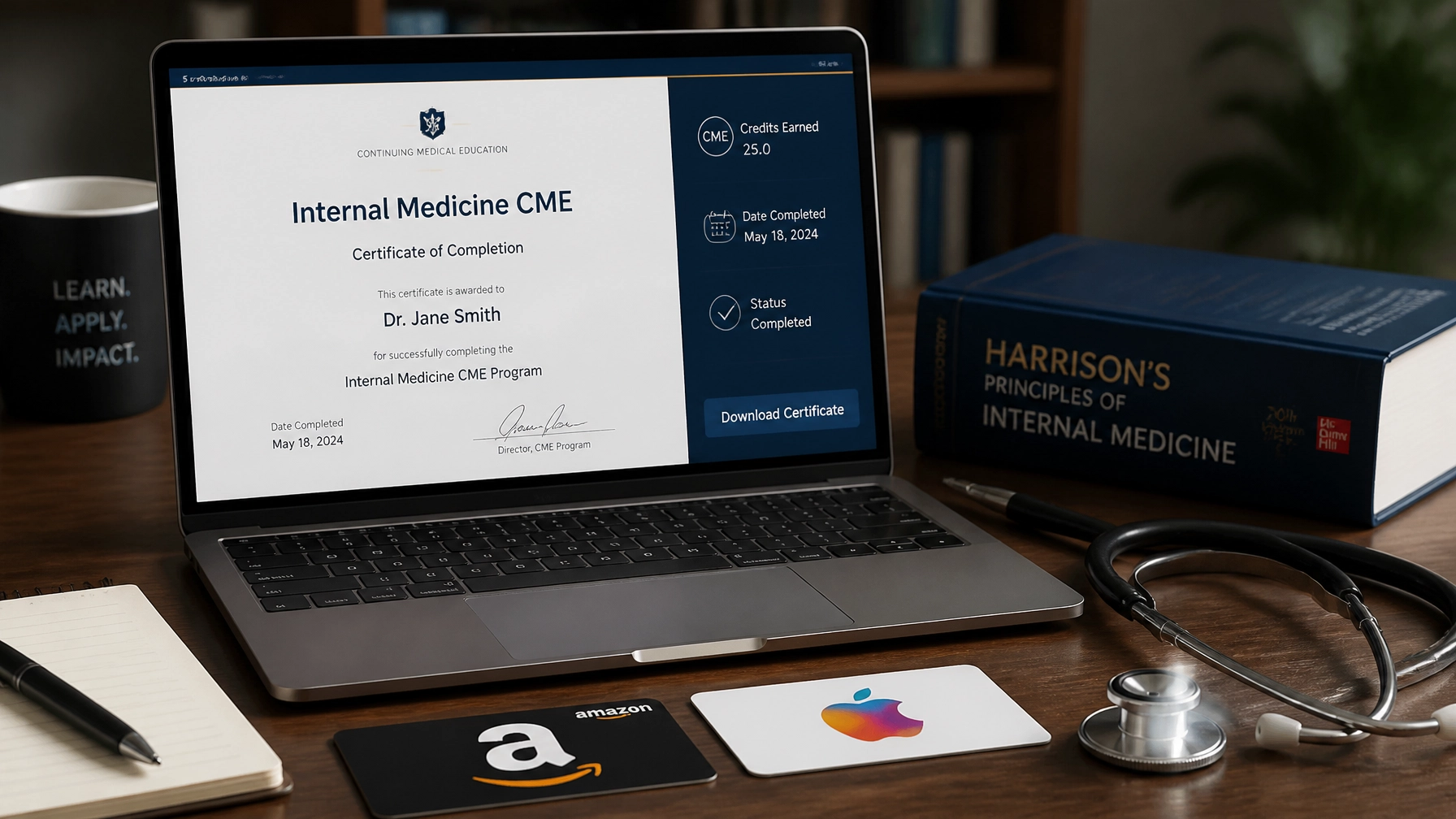
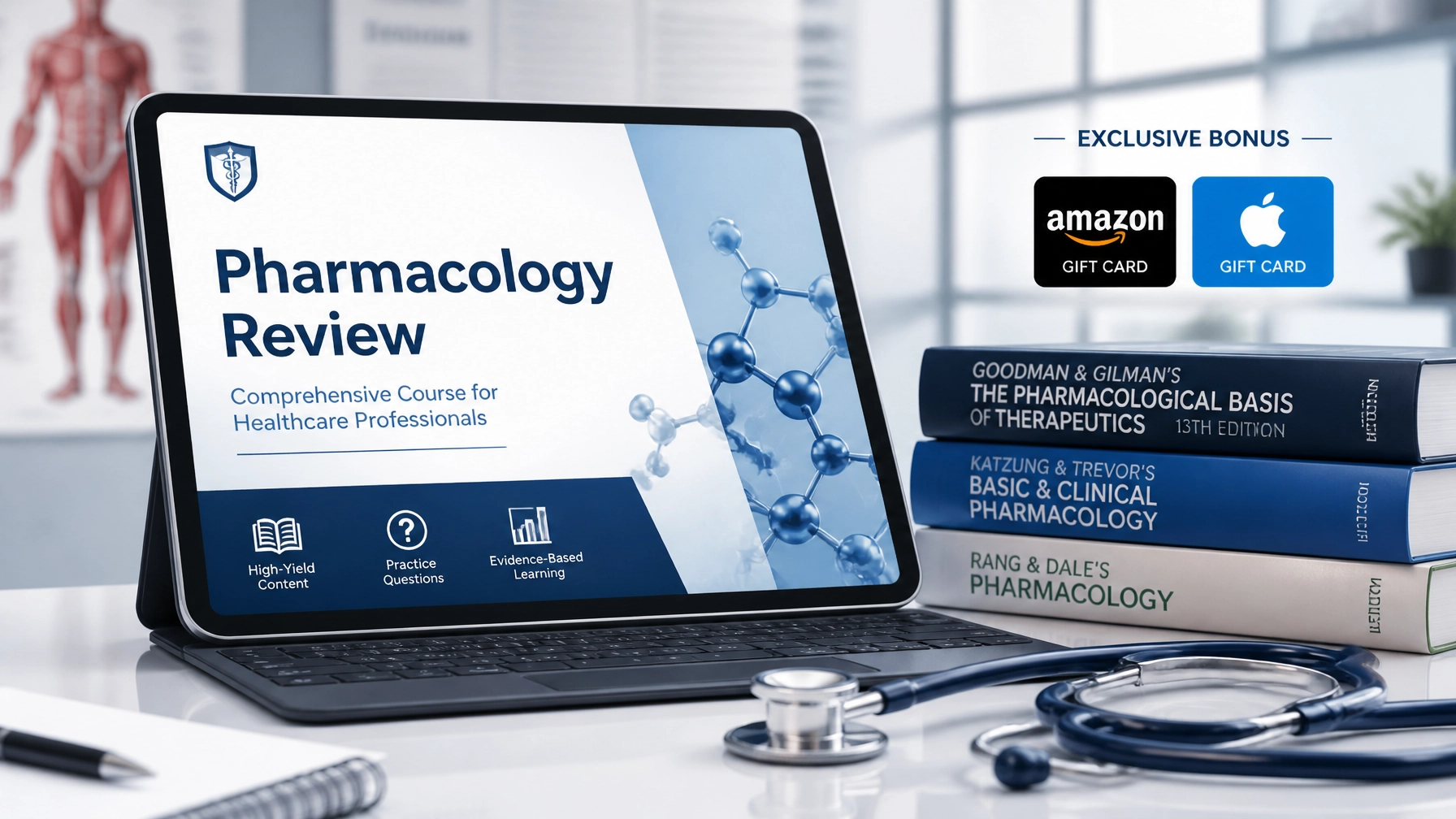
We offer an industry-exclusive way to utilize your CME stipend for educational tools. When purchasing the Pharmacology Review or PANRE Review, you can select a Gift Card Add-On ranging from $100 to $1,500.

These add-ons allow you to purchase the technology or texts you need for your practice: such as a new iPad for patient education, a MacBook for charting, or reference books via Amazon: using your employer’s CME allowance. The gift card value is bundled into your total course price, providing a single professional development transaction. We offer gift cards for Amazon, Apple, and.
Clinical Assessment: Pharmacology and PANRE Review
Test your clinical knowledge with these pharmacology-focused vignettes. These questions mirror the rigor found in our 120-question pharmacology bank and our 100-hour PANRE review course.

Clinical Scenario 1: Cardiovascular Management
Your patient is a 64-year-old male with a history of HTN and HFrEF (EF 35%). He presents for a routine follow-up. His current medications include Lisinopril 20mg daily and Carvedilol 12.5mg BID. His BP is 138/84 mmHg, HR is 68 bpm, and his BMP shows a K+ of 4.2 mEq/L and a Cr of 1.1 mg/dL. You decide to initiate an Aldosterone antagonist.
Which of the following is the most appropriate next step in pharmacological management?
A) Start Spironolactone 25mg daily
B) Increase Lisinopril to 40mg daily
C) Start Eplerenone 50mg daily
D) Discontinue Lisinopril and start Losartan 50mg daily
Correct Answer: A) Start Spironolactone 25mg daily
Explanation: Spironolactone is indicated in patients with HFrEF (EF ≤35%) who are already on optimal doses of ACE inhibitors and beta-blockers to reduce morbidity and mortality. His potassium and creatinine levels are within the safe range for initiation (K+ <5.0 and Cr <2.5). While Eplerenone is also an aldosterone antagonist, it is typically started at 25mg, and Spironolactone is often the first choice due to cost-effectiveness. Increasing the ACE inhibitor or switching to an ARB does not provide the same mortality benefit as adding the mineralocorticoid receptor antagonist in this specific clinical context.
Clinical Scenario 2: Infectious Disease
Your patient is a 28-year-old female who presents with dysuria, urgency, and suprapubic pain for 48 hours. She denies fever, chills, or flank pain. She has no significant past medical history and no known drug allergies. A point-of-care UA is positive for nitrites and leukocyte esterase.
What is the first-line pharmacological treatment for this patient’s uncomplicated cystitis?
A) Nitrofurantoin 100mg BID for 5 days
B) Ciprofloxacin 250mg BID for 3 days
C) Cephalexin 500mg BID for 7 days
D) Doxycycline 100mg BID for 7 days
Correct Answer: A) Nitrofurantoin 100mg BID for 5 days
Explanation: Nitrofurantoin (Macrobid) is a first-line agent for uncomplicated urinary tract infections due to its high efficacy against E. coli and minimal systemic absorption, which preserves the vaginal and GI flora. Trimethoprim-sulfamethoxazole (if local resistance <20%) and Fosfomycin are also first-line. Fluoroquinolones like Ciprofloxacin should be reserved for complicated cases or when first-line agents cannot be used due to the risk of significant side effects (tendon rupture, C. diff). Cephalexin is a second-line option, and Doxycycline is not effective for typical cystitis pathogens.
Clinical Scenario 3: Endocrine/Internal Medicine
Your patient is a 52-year-old female with Type 2 Diabetes Mellitus, currently managed with Metformin 1000mg BID. Her A1c at today’s visit is 8.2%. She has a documented history of ASCVD (post-stent 2 years ago). Her BMI is 32 kg/m².
According to the current standards of care, which class of medication should be added next to her regimen?
A) GLP-1 Receptor Agonist
B) Sulfonylurea
C) DPP-4 Inhibitor
D) Basal Insulin
Correct Answer: A) GLP-1 Receptor Agonist
Explanation: For patients with Type 2 Diabetes and established ASCVD, a GLP-1 Receptor Agonist (like Liraglutide or Semaglutide) or an SGLT2 inhibitor with proven cardiovascular benefit is recommended regardless of the baseline A1c. These agents provide significant reduction in major adverse cardiovascular events (MACE). Additionally, GLP-1 agonists assist with weight loss, which is beneficial given her BMI of 32. Sulfonylureas and DPP-4 inhibitors do not offer the same cardiovascular protection, and basal insulin is typically reserved for patients with much higher A1c levels or symptomatic hyperglycemia.
Secure Your Credits Today
Do not let your 2026 CME funds expire. Whether you need the 12 hours of Pharmacology Category 1 credit to maintain your prescriptive authority or the 100 hours of PANRE Review credit to satisfy your NCCPA cycle, our courses provide the most efficient path to completion.
Visit CME Review Courses to select your package and add your $100-$1500 Amazon or Apple gift card before the June 30th deadline.