Preparing for the Physician Assistant National Recertification Exam (PANRE) is a significant undertaking that requires a strategic approach to both clinical knowledge and time management. Many PAs approach recertification with the same study habits they used for the PANCE, but the PANRE demands a more refined focus on generalist medicine and primary care. Avoiding common pitfalls can mean the difference between a seamless recertification and a stressful retake.
Course Details:
- Course Title: PANRE Review Course
- Price: Varies by package and gift card add-on selection
- Credit: 100 Hours of AAPA Category 1 CME Credit
- Access: 365 Days
- Deliverables: Comprehensive Review, Practice Questions, and optional Gift Card Add-ons
Mistake 1: Ignoring the NCCPA Blueprint Weighting
A frequent error in pance prep courses and PANRE review is treating every organ system as having equal importance. PAs often spend an excessive amount of time on niche topics like hematology or dermatology while under-studying the heavy hitters.
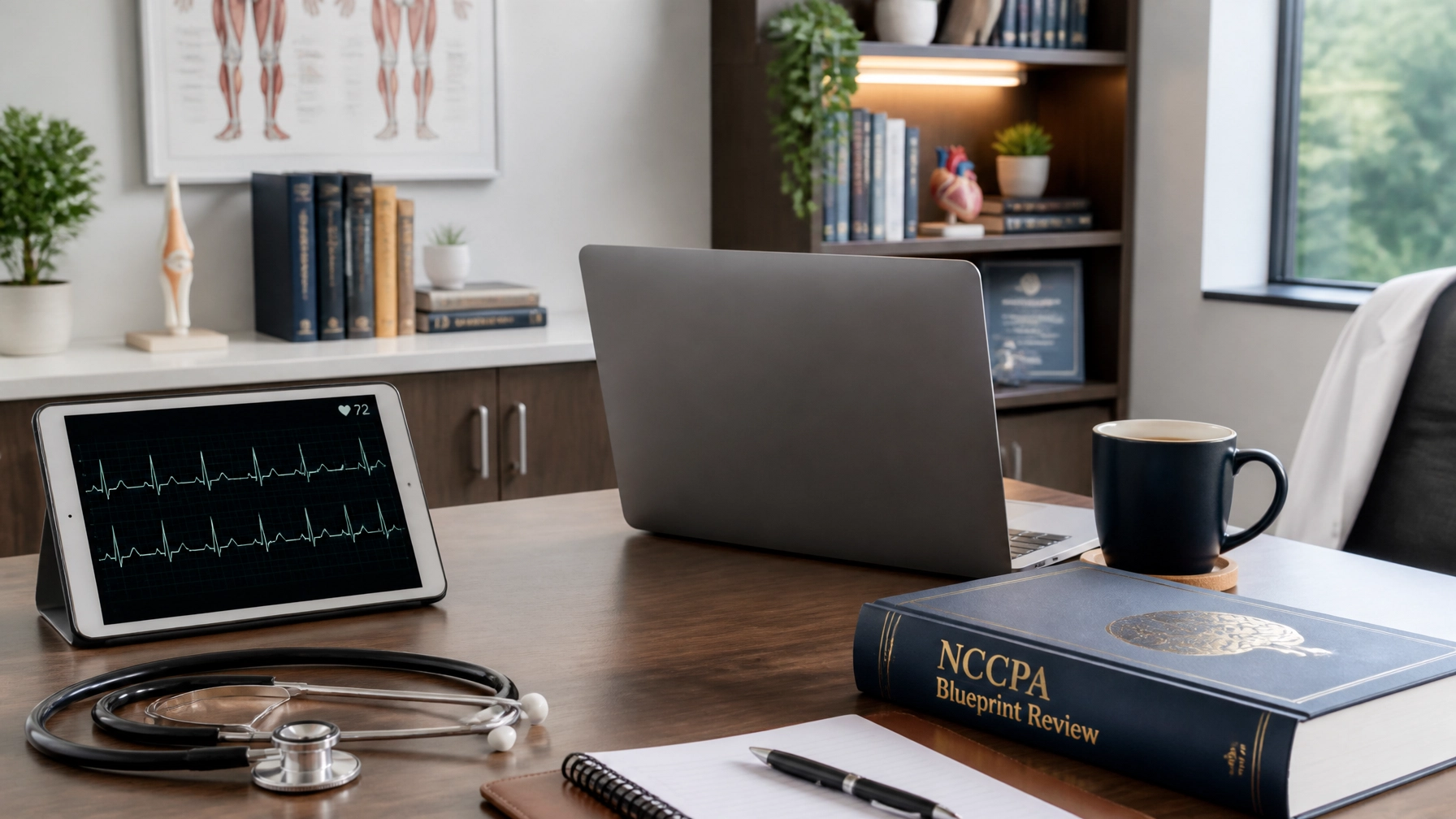
The NCCPA Blueprint specifically weights certain organ systems more heavily because they represent the core of primary care and generalist medicine. For instance, Cardiovascular, Pulmonary, and Gastrointestinal systems typically account for a much larger percentage of the exam than Psychiatry or Hematology. If you spend 20% of your time studying a system that only makes up 5% of the exam, you are effectively derailing your own efficiency.
The Solution:
Our PANRE Review Course is designed specifically around the NCCPA Blueprint. We prioritize the high-yield topics in Cardiology, Pulmonary, GI, and Orthopedics to ensure you are focusing on what will actually appear on your exam. By following our structured curriculum, you align your study hours with the actual probability of the content appearing on your test day.

Mistake 2: Utilizing Fragmented Resources
Many PAs fall into the trap of "resource overload." They jump between multiple review books, various Q-banks, and old lecture notes. This leads to fragmented learning and cognitive fatigue. When your resources don't speak the same clinical language or prioritize the same "one best answer" logic required by the boards, you risk confusion during the actual exam.
Furthermore, many PAs forget that their review time should also serve their professional requirements. Studying from a random textbook or a free podcast often provides zero documented CME credit, forcing you to find extra time elsewhere to meet your state and NCCPA requirements.
The Solution:
Simplify your prep with one comprehensive source. The PANRE Review Course provides 100 hours of Category 1 AAPA credit. This allows you to knock out your entire 100-hour CME cycle requirement while simultaneously preparing for your exam. Our content is written by physician assistants for physician assistants, covering Emergency Medicine, Internal Medicine, Dermatology, and more in a unified clinical voice.
Mistake 3: Financial Inefficiency and Underutilizing CME Funds
Most PAs have a dedicated CME allowance from their employer. A common mistake is spending that money on a basic course and then later spending personal money on educational tools, books, or technology like a new iPad or laptop for studying.
If you aren't maximizing the value of your CME purchase, you are leaving your benefits on the table. In today’s clinical environment, efficient use of your educational budget is just as important as efficient studying.
The Solution:
We offer cme gift cards as add-ons to our packages. When you purchase our PANRE or Pharmacology courses, you can choose to add an Amazon or Apple Gift Card ranging from $100 to $1500 to your order. It is important to note that these are NOT free gifts; they are add-ons that allow you to use your CME fund to its fullest extent, providing you with the resources you need to further enrich your clinical education.

Clinical Practice Case
Patient Presentation:
Your patient is a 64-year-old male with a history of hypertension and tobacco use who presents to the emergency department with sudden onset, severe chest pain that radiates to his back. He describes the pain as "tearing" in nature.
Vital Signs:
- HR: 112 bpm
- BP: 188/104 mmHg (Right Arm), 154/92 mmHg (Left Arm)
- SaO2: 96% on room air
- Temp: 98.6°F
Physical Exam:
The patient appears diaphoretic and in acute distress. You note a new grade II/VI diastolic murmur at the right sternal border.
Question:
Which of the following is the most appropriate next step in the management of this patient?
A) Immediate administration of 324mg Aspirin and Heparin bolus
B) Emergent CT Angiography of the chest and abdomen
C) Thrombolytic therapy with Alteplase
D) Emergent bedside Transthoracic Echocardiogram (TTE)
Explanation and Answer
Correct Answer: B) Emergent CT Angiography of the chest and abdomen
In a patient presenting with "tearing" chest pain radiating to the back and a significant blood pressure differential between arms, Aortic Dissection must be your primary concern. CT Angiography is the gold standard for rapid and definitive diagnosis in a hemodynamically stable (or relatively stable) patient.
- Choice A (Aspirin/Heparin) is contraindicated if dissection is suspected, as it could worsen bleeding in a dissection or complicate surgery.
- Choice C (Alteplase) is used for STEMI, which may be a differential, but the blood pressure differential and "tearing" pain make dissection the priority to rule out first. Thrombolytics in a dissection are often fatal.
- Choice D (TTE) has limited sensitivity for the descending aorta; while a Transesophageal Echo (TEE) is highly sensitive, a CTA is generally more accessible and faster in most ED settings.

Summary for the Physician Assistant
The PANRE doesn't have to be a source of burnout. By focusing on the NCCPA Blueprint, consolidating your study into a high-yield panre review course that offers 100 hours of Category 1 AAPA credit, and using your CME funds wisely with cme gift cards, you can streamline your recertification process.
Our courses offer content across Orthopedics, Neurology, Cardiology, and OB/GYN, ensuring that whether you work in a specialty or primary care, you are prepared for the generalist nature of the exam. Nurse practitioners and physicians also find immense value in our CME packages for their own continuing education needs.