
Quick Facts: PANRE Review Course Package
- Price: $399.99 (Base)
- Access Duration: 30 months
- Deliverables: 1,672 Board-Style Review Questions
- CME Credits: 100 Hours of Category 1 AAPA Self-Assessment Credit
- Bonus Benefit: 150 hours total applied by NCCPA (50% weighting bonus)
- Add-On Options: $100–$1500 Amazon or Apple Gift Cards (Added to total package price)
Navigation the Landscape of Emergency Medicine CME
When you are working in a high-stakes environment like the Emergency Department, your time is your most valuable asset. Choosing the right panre review course or pance prep courses involves more than just picking a name off a list; it requires finding a program that maximizes your educational output while respecting your professional schedule.
For Physician Assistants (PAs), the priority is often securing the required 100 hours of AAPA Category 1 CME. However, a growing trend in the industry is the "CME with Gift Card" model. It is important to understand that these cme gift cards are not free gifts; they are integrated add-ons that allow you to utilize your employer-provided CME budget to its fullest extent.
By adding a gift card (ranging from $100 to $1500) to your purchase, you can purchase the educational tools you need: like new medical reference books, electronics, or even clinical equipment: directly through a single CME transaction.
Key Factors in Selecting Your EM CME Provider
1. Accreditation and Credit Weighting
Always verify the type of credit being offered. For PAs, AAPA Category 1 Self-Assessment CME is the gold standard. Our panre review course provides 100 of these hours. A unique advantage of self-assessment credits is the NCCPA's additional weighting; when you log 100 hours of this specific credit type, the NCCPA automatically applies a 50% bonus, totaling 150 hours toward your maintenance requirements.
2. Clinical Relevance and Specialty Depth
Emergency Medicine covers every organ system. Your CME should reflect that. A comprehensive package should include deep dives into:
- Cardiology: Advanced EKG interpretation, ACS management, and arrhythmia protocols.
- Pulmonology: Ventilator management and acute respiratory failure.
- Trauma/Orthopedics: Fracture management and compartment syndrome.
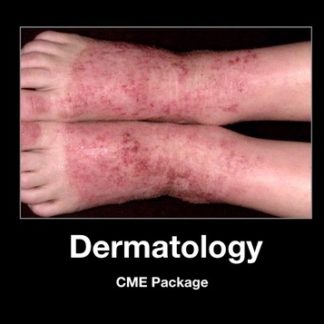
- Dermatology: Recognizing life-threatening rashes like SJS/TEN.
3. Practicality of the Add-On Options
When selecting cme gift cards, look for flexibility. Many providers only offer a single brand. Our platform allows you to choose between Amazon and Apple gift cards in increments of $100 up to $1500. This ensures that the add-on is actually useful for your specific educational needs. Remember, these amounts are added to the package price, allowing for a consolidated invoice for your reimbursement department.

Why Our Emergency Medicine Focused Content Stands Out
Our content was written by physician assistants for physician assistants. While Internal Medicine Physicians find significant value in our question banks (counting as Category 2 CME for them), the structure is optimized for the PA or NP working in acute care.
The program includes over 17 hours of clinical video lectures that mirror the NCCPA Blueprint, alongside 1,672 board-style questions. This volume of practice ensures that you are not just memorizing facts but applying them to the clinical vignettes you will face on the exam and at the bedside.
Clinical Assessment and Management Review
The following vignettes represent the level of detail and clinical application found within our Emergency Medicine content and the panre review course.
Case 1: The Acute Chest Pain Scenario
Your patient is a 62-year-old male presenting with sudden onset substernal chest pain that radiated to his left jaw. He is diaphoretic and appears distressed.
- Vitals: HR 105, BP 145/90, SaO2 94% on room air.
- Initial EKG: Shows 2mm ST-segment elevation in leads V2, V3, and V4.
Question: What is the most appropriate next step in the immediate management of this patient?
A) Obtain a Stat Chest X-ray
B) Administer 324mg of Aspirin
C) Order a Troponin I and wait for results
D) Perform a repeat EKG in 30 minutes
Correct Answer: B) Administer 324mg of Aspirin
Explanation: In the setting of an ST-elevation myocardial infarction (STEMI), time to reperfusion and antiplatelet therapy is critical. Administering 324mg of Aspirin (chewed) is a Grade 1A recommendation that should be performed immediately upon suspicion of ACS. While a Troponin (C) and CXR (A) will be part of the workup, they should not delay life-saving interventions or the activation of the cardiac catheterization lab. A repeat EKG (D) is unnecessary when the diagnosis is already clearly established on the initial tracing.
Case 2: The Pediatric Respiratory Emergency
Your patient is a 3-year-old female brought in by her parents for a "barking" cough and difficulty breathing that started tonight.
- Vitals: HR 120, RR 28, Temp 101.2°F, SaO2 97%.
- Physical Exam: Inspiratory stridor is heard only when the child is agitated. No drooling is noted.
Question: What is the first-line pharmacologic treatment for this patient?
A) Oral Dexamethasone
B) Nebulized Albuterol
C) Intravenous Ampicillin
D) Nebulized Racemic Epinephrine
Correct Answer: A) Oral Dexamethasone
Explanation: This patient presents with mild-to-moderate Croup (Laryngotracheobronchitis). Oral Dexamethasone is the mainstay of treatment for Croup, as it reduces airway edema. Nebulized Racemic Epinephrine (D) is reserved for patients with stridor at rest or significant distress. Albuterol (B) is not effective for upper airway obstruction, and antibiotics (C) are not indicated for this viral etiology.

Case 3: The Neurologic Deficit
Your patient is a 74-year-old female with a history of atrial fibrillation who presents with sudden onset right-sided weakness and aphasia that began 90 minutes ago.
- Vitals: BP 188/105, HR 92 (irregularly irregular).
- CT Head: No evidence of hemorrhage.
Question: Assuming no other contraindications, what is the most appropriate treatment?
A) High-dose Aspirin
B) Intravenous Heparin bolus
C) Intravenous Alteplase (tPA)
D) Aggressive BP reduction to <140/90
Correct Answer: C) Intravenous Alteplase (tPA)
Explanation: The patient is within the 3-to-4.5-hour window for Intravenous Alteplase (tPA) following an ischemic stroke. Her BP is currently under the 185/110 threshold for administration. Heparin (B) is not indicated in the acute management of ischemic stroke. Aggressive BP reduction (D) is contraindicated as it may reduce cerebral perfusion pressure to the ischemic penumbra. Aspirin (A) should be delayed for 24 hours post-tPA.
Case 4: The Orthopedic Injury
Your patient is a 22-year-old male who sustained a crush injury to his lower leg during a motor vehicle collision (MVC). He complains of severe pain that is out of proportion to his clinical findings.
- Physical Exam: Tense, "wood-like" feeling of the calf muscles. Passive stretch of the toes elicits excruciating pain. Pulses are still palpable.
Question: What is the most definitive diagnostic step for the suspected condition?
A) Venous Doppler of the lower extremity
B) Measurement of compartment pressures
C) MRI of the lower leg
D) X-ray of the Tibia/Fibula
Correct Answer: B) Measurement of compartment pressures
Explanation: This clinical presentation is highly suggestive of Compartment Syndrome. The most definitive diagnostic step is the measurement of compartment pressures using a Stryker needle or similar device. A pressure >30 mmHg or a delta pressure <30 mmHg indicates the need for emergent fasciotomy. While X-rays (D) may be performed to rule out fractures, they do not diagnose compartment syndrome. Doppler (A) and MRI (C) cause unnecessary delays in a limb-threatening emergency.

Final Thoughts on EM CME
Earning your 100 Category 1 credits should not be a chore. By selecting a panre review course that offers high-quality clinical vignettes and the ability to customize your purchase with cme gift cards, you turn a certification requirement into a strategic professional investment. Our program ensures you have the knowledge to excel in the ED and the resources to continue your education long after the course is complete.
