Posted on

The 10 Drug Classes PAs Miss Most — and How to Lock Them Down

Certain drug classes show up again and again on the list of things PAs wish they knew cold. They’re high-stakes, detail-dense, and constantly evolving — which is exactly why they’re easy to miss under exam pressure and easy to get rusty on in practice. A quick tour of the usual suspects:

  • Anticoagulants & antiplatelets — DOAC dosing, reversal agents, and bridging still cause the most hesitation.
  • Antibiotics — spectrum, resistance patterns, and the allergy cross-reactivity questions everyone second-guesses.
  • Insulins & antidiabetics — onset/peak profiles and the newer GLP-1 and SGLT2 agents.
  • Antihypertensives — first-line choices by comorbidity and the contraindication traps.
  • Psychotropics — SSRIs/SNRIs, serotonin syndrome, and monitoring.
  • Anticonvulsants — interactions and level monitoring.
  • Steroids & immunosuppressants — tapering and adverse-effect profiles.
  • Opioids & pain management — equivalence and safe prescribing.
  • Anticholinergics — the cumulative-burden questions, especially in older adults.
  • Cardiac agents — digoxin, antiarrhythmics, and their narrow margins.

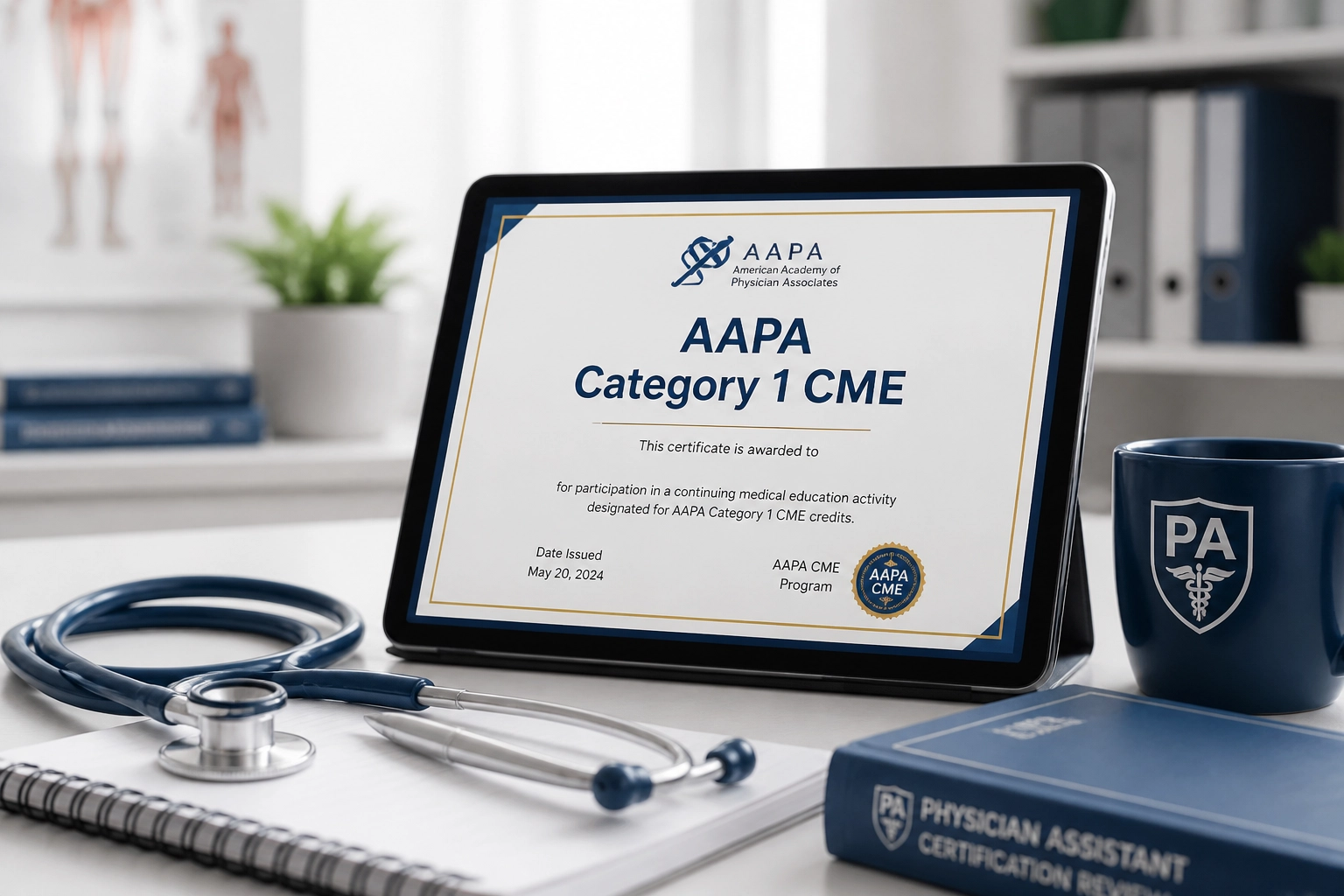
The fix isn’t cramming — it’s a structured pass that puts these classes side by side so the distinctions stick. The Pharmacology Review Course is organized exactly that way: 12 hours of AAPA Category 1 CME, built class-by-class around the material most likely to be tested and prescribed. You reinforce the whole map, drill the classes you know are soft, and earn documented credit while you do it. It’s $499.99 for 30 months, with the same optional $100–$1,500 Amazon or Apple gift-card add-on.

Sharpen these classes with the Pharmacology Review Course →

Posted on

Don’t Let Your Employer CME Allowance Expire: The Gift-Card Add-On, Explained

Most employed PAs have a CME or continuing-education allowance — often a few thousand dollars a year that a group, hospital, or department will reimburse. And most of those allowances share one frustrating feature: use it or lose it. When December arrives and the balance is still sitting there, it doesn’t roll over. It just disappears.

The gift-card add-on on our CME packages exists to solve exactly that. When you buy the PANRE Review Course — 100 hours of AAPA Category 1 CME, 2,500+ questions, and 3 mock exams for $499.99 with 30 months of access — you can add an Amazon or Apple gift card to the same order, anywhere from $100 to $1,500. The purchase is a legitimate CME expense your allowance covers, and the gift card comes back to you as spendable value you keep.

Think about the mechanics. If you have an allowance that expires, every dollar you don’t spend is simply gone. Routing those dollars through a genuine CME purchase — one that also satisfies a big chunk of your recertification requirement — turns money you were about to forfeit into board prep and a gift card. It’s the difference between losing the benefit and getting real use out of it.

A few practical notes: check your employer’s reimbursement policy so you submit the receipt correctly, keep documentation of the CME activity (the course provides it), and choose the gift-card amount that fits your available balance. If your allowance renews annually, this is worth doing every cycle. The credit counts, the prep is real, and the value doesn’t evaporate at year-end.

Add the PANRE Review Course to your CME budget →

Posted on

The Pharmacology Review Every PA Wishes They’d Done Sooner (Now With a Gift-Card Add-On)

Ask any PA which section quietly costs them the most points — on a board exam or in daily practice — and pharmacology is near the top of the list. Drug classes evolve, interactions multiply, and the details (mechanisms, contraindications, monitoring, black-box warnings) are exactly the kind of thing that fades between the exam that tested it and the patient in front of you today. The Pharmacology Review Course from CME Review Courses is a deliberate, high-yield reset on all of it.

Focused, certifiable, and current

This course is an AAPA Category 1 Self-Assessment CME activity worth 12 hours of credit, built around the medications and drug classes you’re most likely to be tested on and most likely to prescribe. It’s organized by system and class, so you can reinforce the whole picture or drill the areas you know are soft — and the credit posts as documented Category 1 CME you can log toward certification. It pairs naturally with recertification prep: if you’re already working through board review, a dedicated pharmacology pass is the single highest-leverage way to lift a weak content area, and here it does double duty as CME.

The same gift-card add-on applies

Like our other CME packages, the Pharmacology Review Course lets you add an Amazon or Apple gift card to your order — $100 to $1,500. If you have an employer CME allowance that resets every year, this is a clean way to spend money you’d otherwise forfeit and get part of it back as a gift card you actually keep. The course is $499.99 with 30 months of access, and the gift-card add-on is yours to size.

Pharmacology rewards the people who review it before the stakes are high. Whether you’re prepping for the PANRE, closing out a CME cycle, or just want to feel current the next time you weigh an anticoagulant or an antibiotic, twelve focused hours here pays off well beyond the credit.

See the Pharmacology Review Course →

Posted on

PANRE Coming Up? Earn 100 Hours of AAPA Category 1 CME — and Keep a Gift Card for Yourself

If your ten-year cycle is closing in, you’re facing two obligations at once: you have to pass the PANRE, and you have to have logged your CME to stay certified. Most PAs treat those as two separate chores — grind through a question bank for the exam, then scramble to find enough Category 1 credit before the deadline. The PANRE Review Course from CME Review Courses was designed to collapse both into one.

One course, 100 hours of Category 1 credit

The PANRE Review Course is an AAPA Category 1 Self-Assessment CME activity worth 100 hours of credit — enough to cover the large majority of a recertification cycle’s CME requirement on its own. As you work through it, you’re not just rehearsing for exam day; you’re earning documented, certifiable credit. Prep and compliance become the same task. Inside you’ll find 2,500+ board-style questions mapped to the PANRE blueprint with teaching explanations, 3 full-length mock exams so exam day feels familiar, expert-led video on the highest-yield material, and 30 months of access.

The gift-card add-on: put your CME dollars to work

Here’s the part PAs appreciate most. Many of you have an employer CME or education allowance — a set amount your group or hospital reimburses each year that simply expires if you don’t spend it. The PANRE Review Course lets you add an Amazon or Apple gift card to your order, anywhere from $100 to $1,500. You buy the course with funds you were going to lose anyway, and a chunk of that budget comes back to you as a gift card you keep. It’s a completely above-board way to make sure your hard-earned CME benefit doesn’t evaporate at year-end. The course itself is $499.99 for 30 months of access, with the gift-card add-on stacked on top at the amount you choose.

This is built for the practicing PA-C who wants to walk into the PANRE confident, knock out the bulk of their Category 1 CME in the same motion, and get real value back from a benefit they’re entitled to.

See the PANRE Review Course →

Posted on

5 Key Facts About AAPA Category 1 CME Credit Every PA Should Know

Price: $499.99
Duration: 30 Months Access
Deliverables: 100 Hours of AAPA Category 1 CME Credit (PANRE Review Course), 720 PANRE Practice Questions

Maintaining National Commission on Certification of Physician Assistants (NCCPA) certification requires a strategic approach to Continuing Medical Education (CME). For Physician Assistants (PAs), the distinction between Category 1 and Category 2 credit is fundamental to licensure and recertification. The NCCPA requires 100 total CME credits every two-year cycle, with at least 50 of those being Category 1.

The following five facts clarify the requirements and opportunities surrounding AAPA Category 1 CME credits, specifically for those utilizing a panre review course or pance prep courses to meet their professional obligations.

1. Category 1 CME Must Be "Provider-Planned"

Unlike Category 2 credit, which includes any practice-related educational activity (such as reading a journal or precepting students), AAPA Category 1 CME must be formally planned and approved by a recognized accrediting body. The American Academy of Physician Associates (AAPA) reviews these activities against strict criteria to ensure clinical relevance, clear learning objectives, and a lack of commercial bias. When you enroll in our panre review course, you are participating in a provider-planned activity that has been vetted for quality and educational rigor.

2. You Can Earn Your Entire 2-Year Requirement at Once

Many PAs struggle to piece together individual credits throughout their cycle. However, a comprehensive panre review course can offer enough credits to satisfy the entire Category 1 requirement in a single purchase. Our PANRE Review Course is designated for 100 hours of AAPA Category 1 credit. This fulfills the minimum 50-hour Category 1 requirement and also covers the remaining 50 hours of the total 100-hour biennial requirement. This efficiency allows PAs to focus on clinical practice rather than tracking down fragmented credits.

PANRE Review Exam Book Cover

3. Enduring Material Lets You Earn Credit on Your Own Schedule

AAPA Category 1 CME does not have to come from a live conference. Enduring material, such as an online review course with a post-test, counts toward the Category 1 portion of your NCCPA requirement and can be completed whenever your schedule allows. You claim credit commensurate with your participation, complete the evaluation, and log the certificate with NCCPA. Every course we offer, including the Pharmacology Review, is approved as AAPA Category 1 enduring material.

4. CME Gift Card Add-Ons Are Practical Educational Tools

Many employers provide a specific annual CME allowance. To help PAs further enrich their education, we offer cme gift cards as optional add-ons. It is important to note that these are not free gifts; they are a $100 to $1500 add-on to your CME purchase. This allows you to use your CME budget to acquire the panre review course while also obtaining an Amazon or Apple gift card to purchase medical textbooks, clinical tools, or hardware like an iPad for bedside reference. This is an efficient way to utilize your total CME money before it expires at the end of the fiscal year.

5. Credit Acceptance Varies for NPs and Physicians

While our content is written by physician assistants for physician assistants, other clinicians find significant value in our pance prep courses.

  • Nurse Practitioners: The AANP often accepts AAPA Category 1 credits for NP license renewal, but acceptance varies by state. NPs should verify with their individual state board of nursing.
  • Physicians: Physicians can claim these activities for Category 2 CME credit. While it does not count as Category 1 for MDs/DOs, the clinical depth: especially in our specialty modules like Cardiology and Orthopedics: remains highly relevant.

EKG Guide Book Cover

The PANRE/PANRE-LA Review Exam Bundle

Our most comprehensive package is the PANRE/PANRE-LA Review Exams with Gift Card Add-On. This bundle is designed to eliminate the guesswork involved in recertification. It includes 720 practice questions across three full-length exams that mirror the NCCPA content blueprint percentages.

Product Details:

  • Total Questions: 720 (Three 240-question simulations).
  • Format: 5-answer multiple-choice (matches official NCCPA format).
  • Credit: 100 hours of AAPA Category 1 Credit.
  • Delivery: Instant access via downloadable Google Slides and Word documents.
  • No Expiration: You own the files indefinitely.

Practice Clinical Vignettes

Vignette 1
Your patient is a 64-year-old male with a history of hypertension and tobacco use who presents to the emergency department with sudden onset of severe, "tearing" chest pain that radiates to his back. His blood pressure is 190/110 mmHg in the right arm and 165/95 mmHg in the left arm. A chest X-ray reveals a widened mediastinum. What is the most appropriate initial pharmacological management to reduce shear stress?

A. Intravenous Nitroprusside
B. Intravenous Labetalol
C. Oral Amlodipine
D. Intravenous Heparin
E. Oral Aspirin

Explanation:
The correct answer is B. Intravenous Labetalol. In cases of suspected aortic dissection, the primary goal is to reduce both the heart rate (to <60 bpm) and the systolic blood pressure (to 100-120 mmHg) to minimize the aortic wall shear stress (dP/dt). Labetalol provides both alpha- and beta-blocking properties, making it an ideal first-line agent. Nitroprusside (Choice A) can cause reflex tachycardia, which increases shear stress; it should only be used after beta-blockade is established. Oral medications (Choice C) are too slow-acting for this hypertensive emergency. Heparin (Choice D) and Aspirin (Choice E) are contraindicated if dissection is confirmed, as they could exacerbate hemorrhage.

Vignette 2
Your patient is a 28-year-old female who presents with a 3-day history of increased vaginal discharge, pelvic pain, and dyspareunia. On physical exam, she has a temperature of 101.2°F and significant cervical motion tenderness. She is currently hemodynamically stable. Which of the following is the recommended outpatient treatment regimen for Pelvic Inflammatory Disease (PID)?

A. Azithromycin 1g orally as a single dose
B. Ceftriaxone 500mg IM + Doxycycline 100mg BID for 14 days + Metronidazole 500mg BID for 14 days
C. Ciprofloxacin 500mg BID for 7 days
D. Penicillin G 2.4 million units IM
E. Vancomycin 1g IV every 12 hours

Explanation:
The correct answer is B. Ceftriaxone 500mg IM + Doxycycline 100mg BID for 14 days + Metronidazole 500mg BID for 14 days. This regimen provides broad-spectrum coverage for the most common pathogens, including Neisseria gonorrhoeae, Chlamydia trachomatis, and anaerobes. Azithromycin (Choice A) alone is insufficient for PID. Ciprofloxacin (Choice B) is no longer recommended due to high resistance rates in N. gonorrhoeae. Penicillin G (Choice D) is for syphilis, not PID. Vancomycin (Choice E) is used for MRSA and is not a primary treatment for the polymicrobial nature of PID.

Vignette 3
Your patient is a 45-year-old male with a history of type 2 diabetes mellitus who presents for a routine follow-up. His recent labs show a serum creatinine of 1.4 mg/dL and a spot urine albumin-to-creatinine ratio (UACR) of 150 mg/g. His blood pressure today is 138/88 mmHg. Which class of medication should be initiated to provide renal protection?

A. Loop diuretics
B. Calcium channel blockers
C. ACE inhibitors
D. Beta-blockers
E. Thiazide diuretics

Explanation:
The correct answer is C. ACE inhibitors. In patients with diabetes and albuminuria (UACR 30-299 mg/g), ACE inhibitors or ARBs are the first-line antihypertensive agents because they reduce intraglomerular pressure and provide renoprotective effects beyond blood pressure control. While other antihypertensives (Choices B, D, and E) may lower blood pressure, they do not offer the same degree of protection against the progression of diabetic nephropathy. Loop diuretics (Choice A) are typically used for volume overload rather than primary renal protection in stable diabetes.

Psychiatry EOR Book Cover

Conclusion

Navigating AAPA Category 1 CME credit requirements is a critical component of professional PA practice. By choosing a high-yield panre review course, PAs can efficiently meet their 100-hour requirement while gaining the clinical knowledge necessary for recertification. Integrating cme gift cards into these purchases allows for a more comprehensive educational investment, ensuring that your CME allowance is used to its fullest potential.

Posted on

PANRE-LA vs Traditional PANRE: Which Path Saves You More CME Money?

Choosing between the PANRE-LA and the traditional PANRE is one of the most significant decisions you will make during your ten-year recertification cycle. While both paths lead to the same goal: maintaining your PA-C credentials: the financial and logistical implications differ substantially. Understanding how to navigate these options while maximizing your employer-provided CME budget is essential for every practicing physician assistant.

Price: $499.99
Duration: 30 Months Access
Deliverables: 100 Category 1 AAPA CME Credits, Comprehensive PANRE Review

The Financial Landscape of Recertification

The NCCPA has set the base price for both the traditional PANRE and the PANRE-LA at $350. On the surface, the costs appear identical. However, the true cost of recertification involves much more than the registration fee. It includes the cost of preparation materials, the time spent away from clinical practice, and the strategic use of your CME allowance.

When you invest in a panre review course, you are not just buying test preparation; you are acquiring the necessary credits to fulfill your biennial requirements. Our PANRE Review Course provides 100 hours of Category 1 AAPA credit, which effectively covers your entire 50-hour Category 1 requirement for two full cycles. By bundling your education with your exam prep, you eliminate the need to purchase separate, fragmented CME activities throughout the year.

PANRE-LA: The Longitudinal Approach

The PANRE-LA (Longitudinal Assessment) is an "open-book" format spread over three years (quarters 7 through 12 of your cycle). You answer 25 questions per quarter.

Pros:

  • Lower Stress: You can answer questions at your own pace within each quarter.
  • Open Resource: You can use clinical references during the exam.
  • Immediate Feedback: You receive the correct answers and rationales immediately after submitting your response.

Cons:

  • Long-Term Commitment: You must remain engaged for up to 12 quarters.
  • Delayed Results: You may not know if you passed until the end of the third year of the process.
  • No Retakes: If you fail the PANRE-LA, you are forced to take the traditional PANRE at an additional cost.

Traditional PANRE: The Single-Day Event

The traditional PANRE remains a four-hour, 240-question proctored exam taken at a Pearson VUE testing center during years 9 or 10 of your cycle.

Pros:

  • One and Done: You finish your requirement in a single afternoon.
  • Flexibility in Timing: You choose the day and time that fits your schedule in the final two years.
  • Familiar Format: It mirrors the PANCE format that most PAs are comfortable with.

Cons:

  • High Pressure: One bad day can impact your certification.
  • Closed Book: Requires significant rote memorization of the NCCPA Blueprint.
  • Logistics: Requires travel to a testing center and time off from work.

Maximizing Value with CME Gift Cards

Regardless of the path you choose, you should be utilizing your employer’s CME money to its fullest extent. A common challenge for PAs is spending their entire CME allowance before the end of the fiscal year. To solve this, we offer cme gift cards as add-ons to our packages.

Amazon and Apple gift cards on a desk with medical equipment

When you purchase our panre review course, you have the option to add an Amazon or Apple Gift Card ranging from $100 to $1500 to your order. It is important to note that these are NOT free gifts. They are educational add-ons that allow you to use your CME funds to purchase additional medical equipment, textbooks, or technology (like an iPad for patient education) that further enriches your clinical practice. This turns a simple course purchase into a comprehensive professional development investment.

Integrating the 100-Hour Course into Your Study Plan

For those choosing the PANRE-LA, our course serves as a real-time reference. Because the PANRE-LA is open-book, having a searchable, comprehensive review written by physician assistants for physician assistants is invaluable. For those opting for the traditional PANRE, the course provides the structure needed to master the vast amount of information required for a high-stakes exam.

PANRE Review Exam 1 Book Cover

Our content covers the breadth of clinical practice, including:

  • Cardiology
  • Emergency Medicine
  • Internal Medicine/Hospitalist
  • Orthopedics
  • Dermatology
  • Psychiatry
  • Neurology
  • OB/GYN

While our primary audience is physician assistants, many nurse practitioners and physicians find value in our materials. For Nurse Practitioners, AAPA Category 1 Credit acceptance varies by state board, so verification is recommended. For physicians, our courses typically count as Category 2 CME.

PANRE Review Exam 2 Book Cover

Clinical Application and Practice

Success on either the PANRE or PANRE-LA requires more than just reading; it requires applying knowledge to clinical scenarios. High-quality pance prep courses focus on the "most likely diagnosis" and "initial management" questions that dominate the NCCPA Blueprint.


Clinical Vignette: Cardiovascular Management

EKG monitor in a clinical setting

Your patient is a 64-year-old male with a history of hypertension and tobacco use who presents to the Emergency Department with a 2-hour history of substernal chest pressure that radiates to his left jaw. He is diaphoretic and appears uncomfortable. His vital signs are: BP 110/70 mmHg, HR 98 bpm, RR 20 bpm, and SaO2 96% on room air. An EKG is performed and demonstrates 3mm ST-segment elevation in leads II, III, and aVF.

What is the most appropriate next step in the management of this patient?

A) Administer 324mg of Aspirin and activate the cardiac catheterization lab
B) Obtain a STAT chest X-ray to rule out aortic dissection
C) Administer 0.4mg of sublingual Nitroglycerin and monitor for symptom relief
D) Draw serial Troponin levels and admit to the observation unit

Explanation:
The correct answer is A: Administer 324mg of Aspirin and activate the cardiac catheterization lab.
The patient is presenting with an acute ST-segment elevation myocardial infarction (STEMI) involving the inferior wall (leads II, III, aVF). Immediate reperfusion therapy is the gold standard of care. Aspirin should be administered immediately to inhibit further platelet aggregation. Activation of the catheterization lab for primary percutaneous coronary intervention (PCI) is the definitive treatment to restore blood flow.

  • Choice B is incorrect because while aortic dissection can cause chest pain, it typically presents with a tearing sensation and unequal blood pressures in the arms; delaying STEMI treatment for a chest X-ray increases myocardial necrosis.
  • Choice C is incorrect as Nitroglycerin should be used with extreme caution in inferior wall MIs due to the high risk of profound hypotension if there is right ventricular involvement. It is not the priority over reperfusion.
  • Choice D is incorrect because serial Troponins are used for NSTEMI or unstable angina; a STEMI diagnosis is made via EKG, and treatment must not be delayed for laboratory confirmation.

Efficiency in CME Spending

Whether you are five years out from your exam or in the middle of your PANRE-LA quarters, efficiency is key. By selecting a course that offers 100 hours of Category 1 AAPA credit, you solve your CME requirement and your exam preparation in one step. Adding a cme gift card add-on ensures that your clinical tools are as up-to-date as your medical knowledge.

The transition to the 10-year cycle and the introduction of the PANRE-LA has given PAs more choices than ever. Make the choice that protects your time, your credentials, and your wallet.

Posted on

3 Common PANRE Review Mistakes That Cost You Time, Money, and Credit

Price: $499.99
Duration: 30 Months Access
Deliverables: Up to 100 AAPA Category 1 CME Credits, 2,500+ Board-Style Practice Questions, Five Full-Length Practice Exams, and 10+ Hours of Video Lecture.

Preparing for the Physician Assistant National Recertification Exam (PANRE) or the PANRE-LA (Longitudinal Assessment) is a significant undertaking that requires more than just clinical experience. Many Physician Assistants approach their recertification with strategies that worked for them a decade ago or, worse, with no strategy at all. This inefficiency often leads to wasted study hours, out-of-pocket expenses, and missed opportunities to satisfy CME requirements.

Our PANRE Review Course is specifically designed to address these pitfalls while providing a massive boost to your professional requirements. By avoiding the following three common mistakes, you can streamline your preparation and maximize the value of your CME budget.

Mistake #1: Relying Solely on Clinical Experience

The most common error PAs make is assuming that daily clinical practice in a specialty: such as Orthopedics or Cardiology: is sufficient to pass a generalist exam. The PANRE is based on the NCCPA Blueprint, which covers the entire spectrum of medicine. If you spend your days treating fractures, your knowledge of OB/GYN or Psychiatry may have naturally regressed.

Board questions are written to test standardized diagnostic criteria and "gold standard" treatments, which may differ from the "real world" shortcuts or specific protocols used in your local hospital. Studying without a structured review of the NCCPA Blueprint leaves you vulnerable to gaps in high-yield areas like Internal Medicine and Family Medicine. Our course ensures you hit every required topic area, ensuring no domain is neglected.

PANRE Review Exam Book Cover

Mistake #2: Leaving CME Credits on the Table

PAs are required to earn 100 CME credits every two years, including at least 50 Category 1 credits. A frequent mistake is purchasing a pance prep course or review material that provides minimal or no credit, forcing you to find and pay for additional CME later in the cycle.

When you choose our 100-hour PANRE Review Course, you satisfy your entire Category 1 requirement in a single purchase. This course offers 100 hours of AAPA Category 1 credit, which is an efficient use of both your time and your employer’s CME stipend. It is important to note that while our Pharmacology course also provides Category 1 AAPA credit, the full 100-hour credit designation is specific to the PANRE Review package.

Mistake #3: Poor Financial Management of Your CME Stipend

Many PAs wait until the end of the year to spend their CME money, often rushing to buy books or small courses that don't maximize their benefits. One of the most effective ways to use your professional allowance is by utilizing cme gift cards.

We offer an efficient way to use your CME money by allowing the purchase of CME with Amazon and Apple Gift Card add-ons. These are not "free gifts"; they are optional add-ons ranging from $100 to $1,500 that are added to the total cost of your CME purchase. This allows you to further enrich your education by purchasing necessary hardware (like an iPad for mobile studying) or supplemental textbooks through Amazon. By bundling these into your initial purchase, you ensure your full stipend is utilized effectively for your professional development.

CME Gift Card Add-ons with Stethoscope


Clinical Assessment: Practice Questions

Test your knowledge with these clinical vignettes. This format mirrors the types of integrative reasoning required for the PANRE.

Question 1

Your patient is a 45-year-old male presenting with a 2-day history of a painful, swollen left great toe. He denies trauma. Vital signs are within normal limits. Physical exam reveals erythema, warmth, and exquisite tenderness at the first metatarsophalangeal joint. Arthrocentesis is performed, and synovial fluid analysis shows negatively birefringent needle-shaped crystals. What is the most appropriate initial pharmacological treatment for this acute presentation?

A) Allopurinol
B) Indomethacin
C) Probenecid
D) Febuxostat

Explanation: The correct answer is Indomethacin (or other NSAIDs). The clinical presentation and synovial fluid analysis (negatively birefringent needle-shaped crystals) are diagnostic of acute gouty arthritis. NSAIDs, corticosteroids, or colchicine are the first-line treatments for acute flares. Allopurinol, Probenecid, and Febuxostat are urate-lowering therapies used for chronic management and should not be initiated during an acute flare as they can exacerbate symptoms.

Question 2

Your patient is a 28-year-old female at 32 weeks gestation who presents with a sudden onset of painless vaginal bleeding. She denies contractions or trauma. Her blood pressure is 110/70 mmHg, and fetal heart tones are reactive at 140 bpm. An ultrasound reveals the placenta is covering the internal cervical os. What is the most appropriate next step in management?

A) Digital vaginal exam
B) Pelvic rest and monitoring
C) Immediate Cesarean delivery
D) Oxytocin induction

Explanation: The correct answer is Pelvic rest and monitoring. This patient has placenta previa. Digital vaginal exams are strictly contraindicated as they can cause massive hemorrhage. Since the patient and fetus are currently stable, the management involves pelvic rest and observation. Immediate Cesarean delivery is indicated if there is maternal or fetal distress or if the pregnancy is at term.

Question 3

Your patient is a 62-year-old male with a history of hypertension and tobacco use who presents to the ER with sudden-onset, "tearing" chest pain radiating to the back. His BP is 190/110 mmHg in the right arm and 160/90 mmHg in the left arm. A chest X-ray shows a widened mediastinum. What is the definitive diagnostic study for this condition?

A) EKG
B) Transthoracic Echocardiogram
C) CT Angiography of the Chest
/D) Troponin level

Explanation: The correct answer is CT Angiography of the Chest. The "tearing" pain radiating to the back, blood pressure discrepancy between arms, and widened mediastinum are classic for aortic dissection. CT Angiography (CTA) or Transesophageal Echocardiogram (TEE) are the definitive imaging modalities. EKG and Troponins are useful to rule out MI but will not diagnose a dissection.

Question 4

Your patient is a 12-year-old male brought in by his mother for a "barking" cough and inspiratory stridor that began last night. He has a low-grade fever and rhinorrhea. On exam, he appears mildly distressed but is not drooling. A neck X-ray shows subglottic narrowing (steeple sign). What is the most likely diagnosis?

A) Epiglottitis
B) Laryngotracheobronchitis (Croup)
C) Retropharyngeal abscess
D) Bacterial tracheitis

Explanation: The correct answer is Laryngotracheobronchitis (Croup). The barking cough, inspiratory stridor, and "steeple sign" on X-ray are classic findings for Croup, typically caused by the parainfluenza virus. Epiglottitis would present with a more toxic appearance, high fever, and drooling (thumbprint sign).

Question 5

Your patient is a 34-year-old female presenting with a "butterfly" rash across her malar eminences, joint pain in her hands, and fatigue. Laboratory testing reveals a positive ANA and anti-double-stranded DNA (anti-dsDNA) antibodies. Which of the following is the most appropriate maintenance therapy for this patient?

A) Hydroxychloroquine
B) High-dose Prednisone
C) Methotrexate
D) Cyclophosphamide

Explanation: The correct answer is Hydroxychloroquine. This patient meets the criteria for Systemic Lupus Erythematosus (SLE). Hydroxychloroquine is the cornerstone of maintenance therapy, as it reduces flares and improves long-term survival. Prednisone is used for acute flares, and Methotrexate or Cyclophosphamide are reserved for more severe or organ-threatening disease.


Avoid the common mistakes of under-studying the NCCPA Blueprint or letting your CME funds go to waste. Our PANRE Review Course provides the structure, the questions, and the Category 1 credits you need to succeed.

PANRE Review Course Books

Posted on

How to Maximize Your CME Budget with Amazon & Apple Gift Card Add-Ons

Course: PANRE Review Course
Price: $499.99 (Base Course)
Duration: 30 Months Access
Deliverables: 100 Hours of AAPA Category 1 CME Credit, 11,000+ Practice Questions
Add-On Options: Amazon or Apple Gift Cards ($100 – $1,500)

Physician assistants often face the challenge of utilizing their annual Continuing Medical Education (CME) allowance before year-end deadlines. While the primary goal of these funds is to maintain certification and clinical competency, the method of purchase can significantly impact the overall value of the investment. Utilizing cme gift cards as an add-on to high-yield clinical content allows clinicians to maximize their educational budget effectively.

The most efficient strategy for a physician assistant is to pair a high-value review program, such as a panre review course, with a customizable gift card add-on. This approach ensures that 100% of the allocated employer stipend is utilized for professional development while providing additional resources to purchase clinical tools, textbooks, or hardware necessary for practice.

The Strategy of Gift Card Add-Ons

It is a common misconception that gift cards provided by CME companies are "free gifts." In a professional and transparent billing model, these are elective add-ons. When purchasing the panre review course, you have the option to add an Amazon or Apple Gift Card to your transaction, ranging in value from $100 to $1,500.

This structure is designed specifically for clinicians who have a set stipend amount: for example, $2,000: but find that their required educational materials only cost $499.99. Instead of leaving the remaining $1,500 on the table, the clinician adds a $1,500 Amazon Gift Card to the purchase. This maximizes the utility of the budget, converting the remaining stipend into a balance that can be used for secondary educational materials, medical equipment, or technology like an iPad for EMR charting.

Amazon vs. Apple: Choosing Your Enrichment

  • Amazon Gift Cards: Best for purchasing physical medical textbooks, clinical tools (stethoscopes, reflex hammers), or office supplies.
  • Apple Gift Cards: Ideal for purchasing medical apps, upgrading hardware for telehealth, or subscribing to clinical reference databases available on the App Store.

Amazon and Apple gift cards displayed with medical tools and textbooks

100 Hours of AAPA Category 1 CME Credit

For Physician Assistants, the panre review course offers a substantial return on time: 100 hours of AAPA Category 1 CME credit. This is a critical metric for those in their recertification cycle. While many pance prep courses offer a smaller number of credits, this course is built to cover the extensive requirements of the NCCPA recertification process in one comprehensive package.

The content covers the full spectrum of clinical medicine, including:

  • Emergency Medicine and Cardiology
  • Internal Medicine and Hospitalist Care
  • Orthopedics and Dermatology
  • Psychiatry and Neurology
  • OB/GYN and Family Medicine

While the content is written by physician assistants for physician assistants, it holds significant value for other providers. Nurse Practitioners can claim credit for Category 1 AAPA Credit in many states, though they should verify specific state board requirements. Physicians can utilize this course for Category 2 CME credit.

Clinical Content and The iOS Question Bank

The core value of the program lies in its clinical depth. Beyond the 100 hours of credit, learners receive access to a robust question bank containing over 11,000 practice questions via a dedicated iOS app. This allows for mobile-responsive learning that fits into a busy clinical schedule.

The questions are modeled after the NCCPA Blueprint, ensuring that the clinician is not just earning hours, but actively preparing for the rigors of the PANRE or PANRE-LA. For those looking for specialized content, packages such as the Psychiatry CME with Gift Card offer targeted review in high-demand specialties.

Medical icons representing different specialties and the 100 AAPA credit badge

Efficient Resource Management

Using CME with gift card options is the most pragmatic way to handle educational stipends. Many clinicians find that their employers do not roll over unused CME funds to the next fiscal year. By selecting a PANRE Review Course with a gift card add-on, you ensure that your full allowance is captured and repurposed into useful clinical assets.


Clinical Practice and Assessment

Review the following clinical vignettes to assess your knowledge of internal medicine and emergency medicine topics covered in the PANRE Review Course.

Question 1

Your patient is a 64-year-old male with a history of hypertension and tobacco use who presents to the emergency department with sudden onset of severe, "tearing" chest pain that radiates to his back. His blood pressure is 190/110 mmHg in the right arm and 165/95 mmHg in the left arm. A chest X-ray shows a widened mediastinum. What is the most appropriate next step in management?

A. Immediate administration of intravenous thrombolytics
B. Transesophageal echocardiography (TEE) or CT Angiography
C. Emergent consult for coronary artery bypass grafting (CABG)
D. Start high-dose aspirin and clopidogrel

Correct Answer: B. Transesophageal echocardiography (TEE) or CT Angiography
The clinical presentation is highly suggestive of an aortic dissection, specifically indicated by the tearing chest pain radiating to the back and the significant blood pressure differential between arms. TEE or CT Angiography are the gold standard diagnostic modalities for confirming the diagnosis and determining the extent of the dissection. Thrombolytics (Choice A) are contraindicated as they would worsen the bleeding. CABG (Choice C) is for coronary disease, not aortic dissection, though surgical intervention for the aorta may be needed. Aspirin and clopidogrel (Choice D) are for acute coronary syndrome, which this presentation is not.

Question 2

Your patient is a 28-year-old female presenting with a 3-day history of increased vaginal discharge, pelvic pain, and fever (101.4°F). On physical exam, there is significant cervical motion tenderness and adnexal tenderness. A pregnancy test is negative. What is the most likely diagnosis?

A. Ectopic pregnancy
B. Pelvic Inflammatory Disease (PID)
C. Ovarian torsion
D. Appendicitis

Correct Answer: B. Pelvic Inflammatory Disease (PID)
The triad of fever, pelvic pain, and cervical motion tenderness (often referred to as "chandelier sign") in a young patient is classic for PID. Ectopic pregnancy (Choice A) is ruled out by the negative pregnancy test. Ovarian torsion (Choice B) usually presents with sudden onset, severe unilateral pain without fever in the early stages. Appendicitis (Choice D) typically involves pain localized to the right lower quadrant and rarely causes cervical motion tenderness.

Question 3

Your patient is a 72-year-old male presenting with a gradual loss of peripheral vision, described as "tunnel vision." He has a history of diabetes. On funduscopic exam, you note an increased cup-to-disk ratio (>0.5). Intraocular pressure is measured at 28 mmHg. What is the most likely diagnosis?

A. Age-related macular degeneration
B. Open-angle glaucoma
C. Retinal detachment
D. Central retinal artery occlusion

Correct Answer: B. Open-angle glaucoma
Open-angle glaucoma is characterized by a gradual loss of peripheral vision and an increased cup-to-disk ratio due to optic nerve damage, often associated with elevated intraocular pressure. Macular degeneration (Choice A) affects central vision, not peripheral. Retinal detachment (Choice C) presents with sudden onset of "curtain coming down" or floaters. Central retinal artery occlusion (Choice D) presents with sudden, painless, complete vision loss and a "cherry-red spot" on the macula.

Clinician reviewing a question bank on a tablet

Question 4

Your patient is a 45-year-old female with a history of cholelithiasis who presents with severe epigastric pain radiating to the back, nausea, and vomiting. Her serum lipase is 1,200 U/L (normal <160 U/L). What is the initial priority in the management of this patient?

A. Immediate cholecystectomy
B. Aggressive intravenous fluid resuscitation
C. Prophylactic broad-spectrum antibiotics
D. Morphine for pain control

Correct Answer: B. Aggressive intravenous fluid resuscitation
The patient has acute pancreatitis, likely secondary to gallstones. The cornerstone of initial management for acute pancreatitis is aggressive intravenous fluid resuscitation to prevent pancreatic necrosis and organ failure. While cholecystectomy (Choice A) will be needed eventually if gallstones are the cause, it is not the immediate priority during the acute inflammatory phase. Antibiotics (Choice C) are not indicated for sterile pancreatitis and are only used if an infection is confirmed. While pain control is necessary, morphine (Choice D) is traditionally avoided by some due to theoretical (though often debated) concerns regarding the sphincter of Oddi, and fluid resuscitation remains the physiological priority.

Question 5

Your patient is a 55-year-old male presenting with a painful, swollen, and erythematous first metatarsophalangeal (MTP) joint. He recently started a new diuretic for hypertension. Joint aspiration reveals negatively birefringent needle-shaped crystals. What is the most appropriate acute treatment?

A. Allopurinol
B. Probenecid
C. Nonsteroidal anti-inflammatory drugs (NSAIDs) or Colchicine
D. Intravenous vancomycin

Correct Answer: C. Nonsteroidal anti-inflammatory drugs (NSAIDs) or Colchicine
The presence of negatively birefringent needle-shaped crystals confirms a diagnosis of acute gouty arthritis. NSAIDs or Colchicine are the first-line agents for treating an acute flare. Allopurinol (Choice A) and Probenecid (Choice B) are urate-lowering therapies used for chronic management; initiating them during an acute flare can actually worsen or prolong the attack. Vancomycin (Choice D) is for septic arthritis, which is ruled out by the crystal findings.

Conclusion

Maximizing your CME budget requires a strategic approach that combines high-quality clinical education with flexible financial options. The panre review course provides the necessary 100 hours of AAPA Category 1 credit to maintain your certification, while the Amazon and Apple Gift Card add-ons ensure that every dollar of your professional allowance is utilized. By integrating this review with the 11,000+ questions in the iOS app, you are well-positioned for success in your next recertification exam.