Ask any emergency department or urgent care director how their last new-graduate orientation went, and you will usually hear some version of the same answer: it depended on who they worked with. One preceptor walks the new clinician through every chest pain workup and explains the reasoning. Another is buried in a full waiting room and has time for a thumbs-up at the end of the shift. Both are good clinicians. The new hire simply gets two very different orientations.
That variability is the core problem with how most sites orient advanced practice clinicians, and it matters more than it used to. APC turnover is high, which means orientation is not a once-in-a-while event. It is a recurring process, and every repetition costs preceptor time, schedule flexibility, and some measure of risk while a new clinician finds their footing.
What usually goes wrong
Most orientation programs share the same weak points. The written material is a binder or shared drive folder that has not kept pace with current guidelines. Expectations live in the heads of a few senior clinicians rather than on paper. Nobody can say with confidence which topics a new hire has actually discussed, observed, or handled independently. And the conditions most likely to cause harm, such as the ectopic pregnancy with vague pelvic pain or the older patient whose abdominal pain is out of proportion to the exam, get taught only if they happen to walk through the door during orientation.
What a repeatable orientation looks like
A repeatable orientation has a defined sequence, a shared clinical standard, and a record. EMtopia and UCtopia were designed around all three.
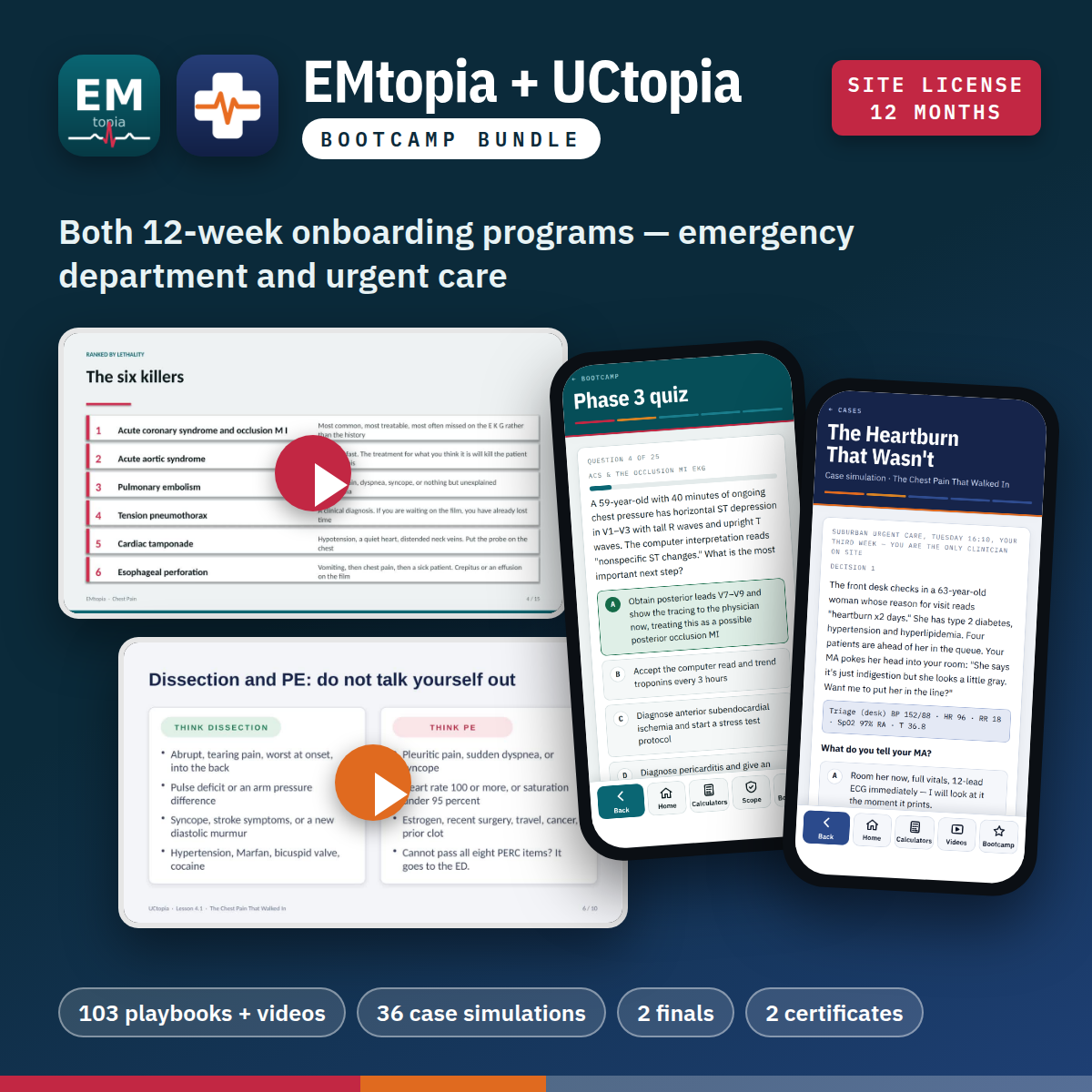
The sequence comes from the phase structure. New clinicians start with systems and survival skills, move into the common chief complaints, and finish with the high-risk syndromes. Every playbook uses the same layout, from the first ten minutes through disposition, discharge, charting, and when to call the physician, so the teaching sounds the same no matter which preceptor is on.
The shared standard comes from the clinical content itself: ranked can’t-miss lists, specific red flags, order-and-don’t-order guidance, the decision rules that apply, and a Landmines section for the traps new clinicians do not know to look for. Each playbook also carries a local block where a director can record site-specific policies, consultant expectations, and order sets, so the app reflects how your department actually works.
The record comes from the Bootcamp tier. It adds phase quizzes, case simulations, a final assessment, a certificate of completion, and a preceptor check-off sheet that tracks each topic as discussed, observed, or independent. For many departments, that sheet replaces the paper orientation checklist they already keep.
Where preceptors fit
None of this replaces the preceptor. It changes what the preceptor spends time on. When a new clinician has already worked through the chest pain playbook and watched its video, the conversation at the bedside can move past the basics and into judgment: why this patient is different, what the attending is worried about, and how this department handles the edge cases. That is the teaching only a senior clinician can do, and it is the part that tends to get squeezed out when orientation starts from zero.
Try it before you plan your next orientation
Free test-drive versions of both apps are open now, with sample content from every section. Spend fifteen minutes with them and ask one question: would your next new hire be safer on their first independent shift if they had this?