
For physician assistants (PAs), nurse practitioners (NPs), and physicians, managing a CME stipend is a critical part of professional maintenance. You are often provided an annual allowance to ensure your medical knowledge remains current and your certifications are maintained. However, not all CME programs are created equal. One of the most efficient ways to utilize these funds is through a CME package that includes a gift card add-on.
At CME Review Courses, we specialize in providing high-yield, peer-reviewed content that meets the rigorous standards of the NCCPA and other certifying bodies, while offering the added benefit of Amazon or Apple gift cards.
Logistical Details for CME with Gift Card Packages:
- Price: Packages start at $399.99.
- Duration: Most packages include 30 months of access to ensure you can complete your hours at your own pace.
- Deliverables: Up to 100 hours of AAPA Category 1 Credit (specifically for the PANRE Review Course), comprehensive practice questions, and peer-developed clinical content.
- Gift Card Options: Amazon and Apple gift cards ranging from $100 to $1,500.
1. What Exactly is CME with a Gift Card?
A CME with a gift card program allows you to purchase accredited medical education and add a promotional gift card to your order. This is a common practice in the industry that allows clinicians to maximize their employer-provided education budget. You receive the high-quality educational material you need to stay current in your practice, and you receive a gift card that can be used to further enrich your professional life with tools like new medical tablets, reference books, or high-quality stethoscopes.
2. How the Add-On System Works
The process is designed to be efficient. When you select a course, such as our PANRE Review Course, you have the option to include a gift card add-on. You choose the value: anywhere from $100 to $1,500: and this amount is added to the total cost of your CME package.
3. Flexibility of Gift Card Choice
We offer two of the most versatile gift card options available: Amazon and Apple.
- Amazon Gift Cards: Ideal for purchasing physical medical books, scrubs, or office supplies.
- Apple Gift Cards: Perfect for PAs and NPs who use iPads for charting or want to upgrade their mobile medical apps.

4. Maximizing Your CME Stipend
Many healthcare institutions provide a fixed annual CME budget. If you do not use it, you lose it. By utilizing a gift card add-on, you ensure that every dollar of your stipend is utilized effectively. If your stipend is $2,000 and the course is $400, adding a $1,500 gift card allows you to fully utilize your benefit while gaining access to top-tier Internal Medicine or Emergency Medicine content.
5. Accreditation Matters: AAPA Category 1 Credit
For Physician Assistants, the type of credit is paramount. Our courses are designed to meet the requirements for AAPA Category 1 Credit. This is the "gold standard" for PAs and is required for maintaining your NCCPA certification. While nurse practitioners can often claim Category 1 AAPA credit in many states, we recommend checking your specific state board requirements. For physicians, our content typically counts as Category 2 CME.
6. The 100-Hour Powerhouse: PANRE Review
The PANRE Review Course CME Package is our flagship offering. It provides 100 hours of AAPA Category 1 CME credit. This is specifically designed for the PA who needs a massive block of credits for their recertification cycle. It covers the entire NCCPA Blueprint to ensure you are prepared for the exam while simultaneously fulfilling your credit requirements.
7. Content Depth Across Specialties
We don't offer generic fluff. Our CME packages cover a broad range of high-yield specialties including:
- Emergency Medicine
- Family Medicine
- Internal Medicine Hospitalist
- Orthopedics
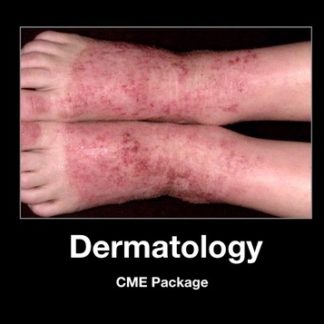
- Dermatology
- Psychiatry
- Cardiology
Each package is tailored to the specific diagnostic and management challenges found in those fields.

8. Developed by Physician Assistants for Physician Assistants
One of the unique aspects of CME Review Courses is that the content was written by PAs who understand the clinical nuances of the profession. We know the pressure of the 10-year recertification cycle and the daily demands of clinical practice. This expertise ensures the material is relevant, practical, and focused on what you actually need to know for the PANRE and your patients.
9. Long-Term Access and Efficiency
Medical practice is busy. Our packages offer 30 months of access, allowing you to chip away at your 100 hours of credit over a period of two and a half years. This flexibility is essential for busy clinicians who cannot afford to take a full week off for a live conference.
10. A Solution for Every Clinician
While our primary focus is on Physician Assistants, our value extends to the entire healthcare team.
- Nurse Practitioners (NPs): Can often use our AAPA Category 1 credits for their own certification requirements.
- Physicians: Find immense value in our Cardiology and Internal Medicine modules for Category 2 credit.
- CRNAs: Often utilize our high-yield pharmacology and emergency medicine content.
11. Looking for App-Based PA Prep? Check Out PAtopia.
For PA students and recent grads tackling the PANCE and EOR exams, PAtopia offers 11,000+ board-style questions, instant analytics, and a 3-day free trial — no account required. Learn more at cmereviewcourses.com/patopia-new-student-section/.
Clinical Review: Practice Questions
The following scenarios are designed to reflect the clinical depth found in our CME modules.
Internal Medicine Vignette
Your patient is a 64-year-old male with a history of hypertension and Type 2 Diabetes who presents with a 2-day history of a swollen, erythematous, and exquisitely tender right first metatarsophalangeal (MTP) joint. He denies recent trauma. His temperature is 100.2°F.
Which of the following is the most appropriate initial diagnostic step?
A) Serum uric acid level
B) Radiograph of the right foot
C) Arthrocentesis with synovial fluid analysis
D) Dual-energy CT (DECT) scan
Correct Answer: C) Arthrocentesis with synovial fluid analysis
Explanation: While the clinical presentation is highly suggestive of gout (podagra), arthrocentesis remains the gold standard to definitively diagnose crystalline arthropathy and, more importantly, to rule out septic arthritis. Serum uric acid levels (Choice A) can be normal during an acute gouty flare and are not diagnostic. Radiographs (Choice B) may show chronic changes like "punched-out" erosions but are not helpful in the acute phase. DECT (Choice D) is sensitive but is typically reserved for complex cases where arthrocentesis is not feasible.
Cardiology Vignette
Your patient is a 72-year-old female complaining of progressive dyspnea on exertion and one episode of near-syncope while walking up stairs. On physical examination, you note a harsh systolic crescendo-decrescendo murmur at the right upper sternal border that radiates to the carotids. The S2 is soft.
What is the most likely diagnosis?
A) Mitral Regurgitation
B) Aortic Stenosis
C) Hypertrophic Cardiomyopathy
D) Pulmonic Stenosis
Correct Answer: B) Aortic Stenosis
Explanation: The classic triad of aortic stenosis is "SAD": Syncope, Angina, and Dyspnea. The physical exam finding of a harsh systolic crescendo-decrescendo murmur at the right second intercostal space with radiation to the carotids is pathognomonic. Mitral regurgitation (Choice A) is typically a holosystolic murmur heard best at the apex with radiation to the axilla. Hypertrophic cardiomyopathy (Choice C) presents with a similar murmur but would decrease in intensity with squatting (increased preload), whereas aortic stenosis would increase or stay the same.

Emergency Medicine Vignette
Your patient is a 28-year-old female brought to the ER after a motor vehicle collision (MVC). She was the restrained driver. She is complaining of severe abdominal pain. Vital signs: BP 90/60 mmHg, HR 125 bpm, RR 24 bpm, SaO2 96% on room air. Physical exam reveals a rigid abdomen and a positive seatbelt sign.
What is the next best step in management?
A) CT Abdomen/Pelvis with IV contrast
B) Diagnostic Peritoneal Lavage (DPL)
C) Focused Assessment with Sonography for Trauma (FAST)
D) Immediate exploratory laparotomy
Correct Answer: C) Focused Assessment with Sonography for Trauma (FAST)
Explanation: This patient is hemodynamically unstable (hypotension and tachycardia) following blunt abdominal trauma. In an unstable patient, the goal is to quickly identify the source of bleeding. A FAST exam is the rapid, bedside test of choice. CT scan (Choice A) is only appropriate for hemodynamically stable patients. DPL (Choice B) is rarely performed now that ultrasound is widely available. While she may eventually need surgery (Choice D), the FAST exam provides the immediate evidence of hemoperitoneum required to justify surgical intervention.
Conclusion
Selecting a CME course is about more than just checking a box for your state board. It is about choosing a program that respects your time, your clinical expertise, and your professional budget. By choosing a CME with a gift card package from CME Review Courses, you gain access to high-quality AAPA Category 1 Credit while maximizing the value of your education stipend.
Whether you are preparing for the PANRE or simply need to stay current in Hospitalist Medicine, our packages provide the efficiency and clinical depth you require.
Explore our full catalog of CME with Gift Card packages here.